Quick answer
Mini sclera lenses cover part of the sclera (the white of the eye), usually around 15–17 mm across, while full sclera lenses cover the entire visible sclera, typically 18–22 mm or more. Choose mini sclera for everyday cosplay, photos, and better comfort; choose full sclera for maximum coverage in controlled shoots or stage looks where you can manage the fit and vision limits.
What mini and full sclera coverage actually means
Sclera lens coverage is measured by the lens diameter, not by how dramatic the design looks. A mini sclera lens is large enough to sit over part of the white of the eye but still leaves a ring of your natural sclera visible around the edge. A full sclera lens extends over the entire visible white, so the colored or printed area reaches from one corner of the eye to the other.
That difference changes three things: how the character reads in photos, how the lens feels after an hour, and how much of your normal field of view stays clear. Mini sclera lenses are a middle ground between a standard circle lens and a full sclera lens, which is why they show up often in casual cosplay and Halloween looks.
How to read a sclera lens size guide
Diameter is the number to check first. Standard soft contacts usually sit around 14.0–14.5 mm. Mini sclera lenses generally start around 15 mm and go up to roughly 17 mm. Full sclera lenses are usually 18 mm and above, with some reaching 22 mm or more. The bigger the lens, the more of the sclera it covers, but also the more it can interfere with blinking and tear flow.
Base curve matters just as much. A base curve that is too flat or too steep will not sit correctly, and a poorly fitting large lens is uncomfortable even if the diameter is right. Most sclera lenses use a base curve around 8.6 mm, which is a common starting point, but your own eye measurements are the real guide. If you have never worn lenses larger than a standard circle lens, start with a mini sclera pair before moving up.
Comfort and vision trade-offs
Mini sclera lenses are generally easier to tolerate because they cover less of the eye and allow more natural tear exchange and oxygen flow. Full sclera lenses cover more surface area, which can feel heavier and may reduce comfort during longer wear. They also tend to have a smaller clear pupil area, which can create tunnel vision or a vignette effect around the edges.
Neither type is a substitute for a proper contact lens fitting, and neither should be slept in or worn beyond the recommended time. If you are choosing between them for an event, think about how long you will actually wear them. A full sclera lens might be fine for a 30-minute photoshoot but frustrating for a four-hour convention.
Matching coverage to the look you want
If your character has mostly natural eyes with a subtle color change, a mini sclera lens can be enough. If the character has solid black, white, or red eyes, full sclera coverage usually sells the effect better because no natural sclera shows at the edges. For a middle-ground look, a mini sclera lens with a high-opacity design can read almost as bold as a full sclera lens in photos, especially when paired with makeup that extends the color to the lash line.
Consider the rest of your costume too. Full sclera lenses draw the eye immediately, so they work best when the face is the focal point. Mini sclera lenses blend more easily into everyday cosplay or casual styling, where you might not want the lenses to dominate every photo.
Trade-offs at a glance
- Coverage: Mini sclera lenses cover part of the white of the eye; full sclera lenses cover all of it. Full sclera gives a seamless, unnatural look, while mini sclera leaves a natural sclera ring visible at the edges. Pick full sclera if the character needs solid-color eyes with no natural white showing.
- Comfort and wear time: Mini sclera lenses are usually easier to tolerate for longer wear because they cover less surface area. Full sclera lenses can feel heavier and are best kept to shorter sessions. For all-day conventions, mini sclera is the safer starting point.
- Vision and pupil opening: Full sclera lenses often have a smaller clear pupil area, which can create tunnel vision or a vignette effect. Mini sclera lenses generally leave more of your normal field of view clear. If you need to move around crowds or navigate stairs, choose mini sclera or keep full sclera for controlled shoots.
- Prescription availability: Some sclera-style lenses are plano only, while others come in a range of prescription powers. Check the product page before assuming your prescription is available. If you need vision correction, confirm prescription options before buying any sclera lens.
Examples from our catalog
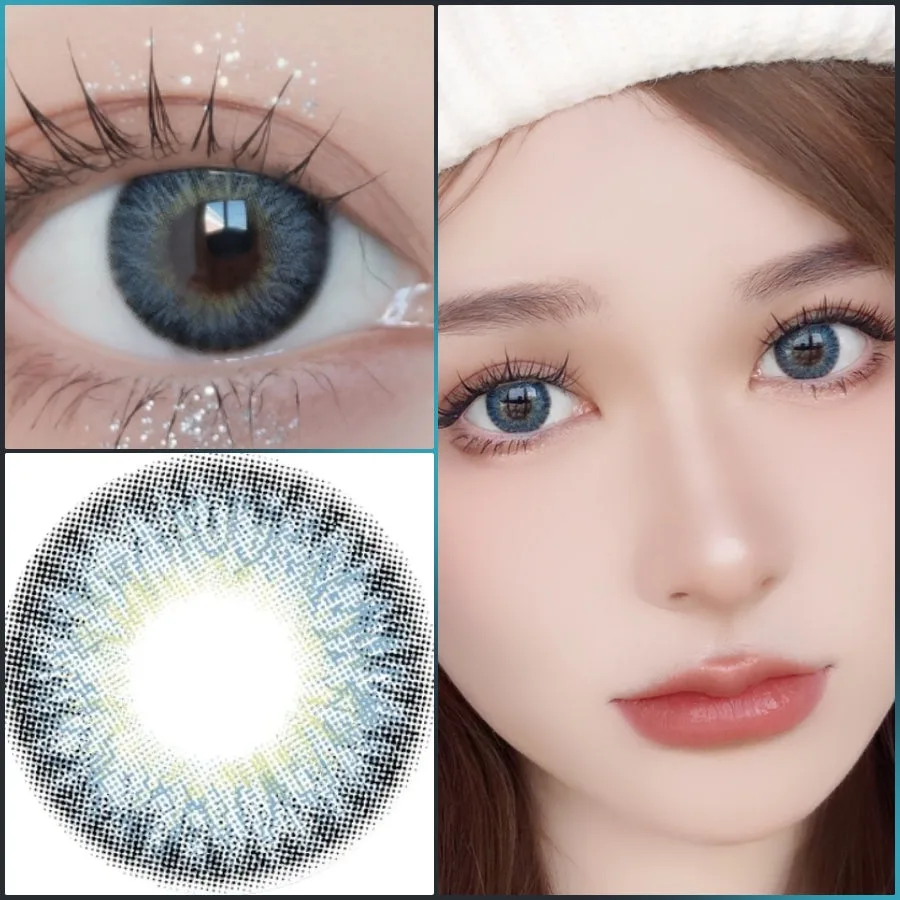
- Mission Blue (FD07): Mission Blue (FD07) circle lenses from Chusme have a 14.2 mm diameter, 40% water content, and an 8.6 mm base curve, with a one-year replacement schedule. This is a standard circle lens size rather than a sclera lens, so it gives a natural-enhancing effect with no sclera coverage. It is a useful reference point if you want a subtle color change instead of a full-eye look.
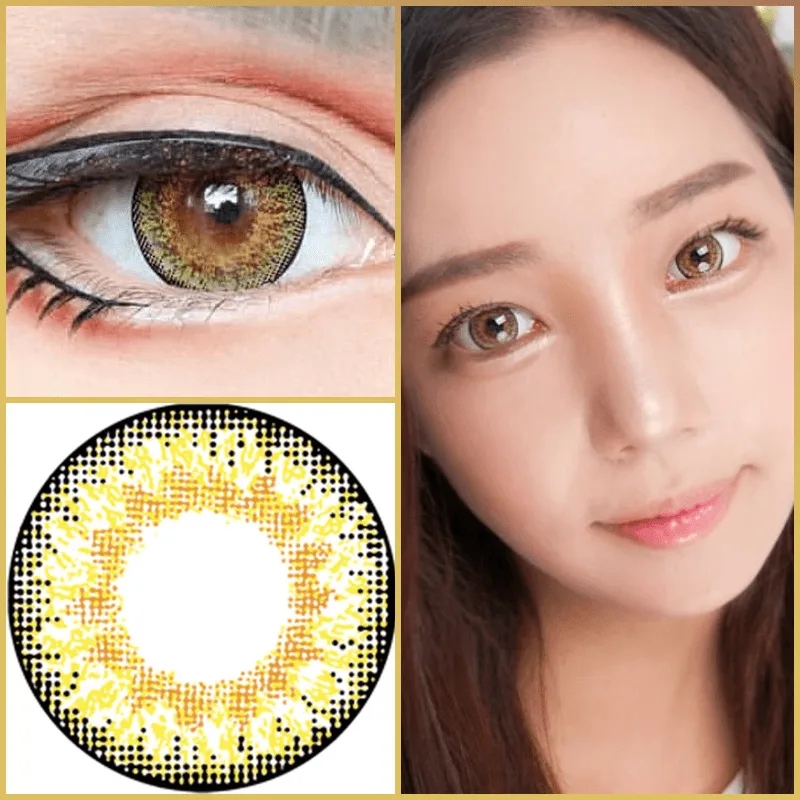
- Cherie 3 Brown: Cherie 3 Brown circle lenses from ICK are made in South Korea with a 15.0 mm diameter, 42% water content, 8.6 mm base curve, and one-year disposable lifespan. At 15.0 mm, this sits at the small end of the mini sclera range. It adds noticeable enlargement and some coverage over the sclera while staying closer to a standard lens feel, which suits wearers who want a step up without jumping to a full sclera lens.
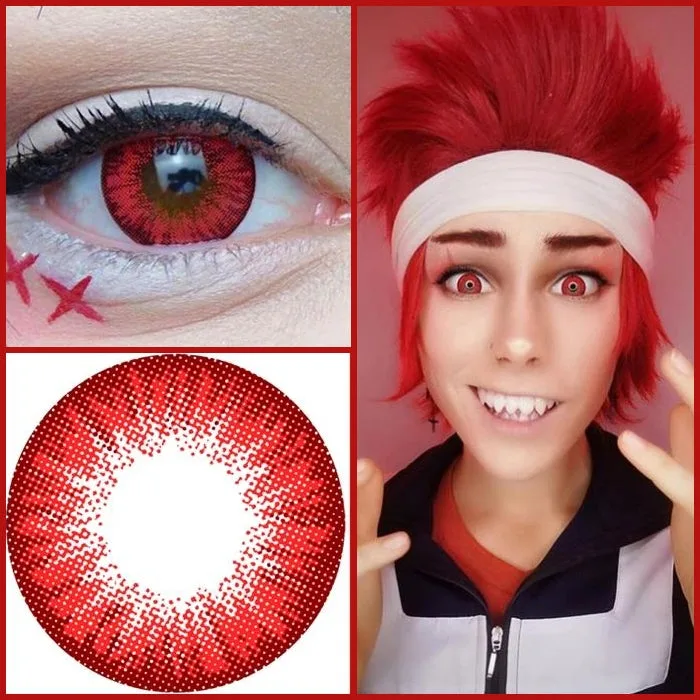
- Kazzue Poppy Red: Kazzue Poppy Red lenses are high-opacity red contacts with a slight enlargement effect, designed to work on any natural eye color and available in prescription options. High opacity matters for sclera-style looks because it blocks your natural iris color. If you are considering a mini sclera lens for a red-eyed character, this shows the kind of opacity to look for so the effect reads clearly in photos.
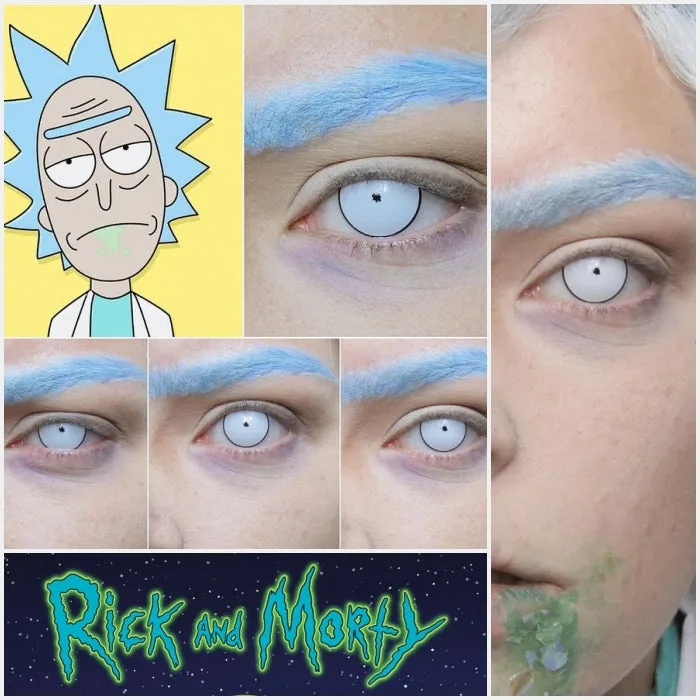
- Rick And Morty Contacts: Rick And Morty Contacts are SFX lenses with a 14.5 mm diameter, 8.6 mm base curve, 42% water content, one-year lifespan, and a small vision hole that can cause tunnel vision; they are plano only (0.00). This is a specialty SFX lens rather than a sclera lens, and it shows why vision area matters. The small vision hole creates a deliberate tunnel-vision effect for photoshoots or short cosplay appearances, the same limitation you need to plan for with large sclera lenses.
Which should you choose?
Best for
- Cosplayers who want a bold eye effect but need to wear lenses for several hours
- First-time sclera lens wearers who want to test a larger lens before going full size
- Photoshoots and casual events where some natural sclera showing is acceptable
Not for
- Characters who need completely solid-color eyes with no natural white visible — choose full sclera lenses instead
- Anyone who has not had a contact lens fitting or who cannot comfortably wear standard circle lenses
- Wearers who need a guaranteed prescription match without checking the specific product options