Quick answer
For most pros today, mirrorless bodies like the Canon EOS R7 offer faster autofocus, superior video, and lighter builds than DSLRs, but DSLRs still win on battery life and lens availability at lower prices.
Why the shift to mirrorless matters for professionals
Mirrorless cameras eliminate the reflex mirror, allowing smaller bodies and shorter flange distances. This enables faster electronic viewfinders, real-time exposure previews, and quieter operation. For event and wildlife shooters, these features mean you can capture decisive moments without the mirror slap of a DSLR.
DSLRs, however, retain an optical viewfinder that never blacks out during burst shooting—a real advantage for action photographers who dislike EVF lag. They also typically run longer on a single battery charge, which matters on all-day assignments without easy recharging.
Lens ecosystems and future-proofing
Canon’s RF mount (used by the EOS R7 and EOS R50 V) is designed for faster communication and better image stabilization than the older EF mount. Native RF lenses are generally sharper and lighter, but the RF lens lineup is still smaller than Canon’s extensive EF library. Adapters let you use EF glass on RF bodies, though that adds bulk and cost.
If you already own several EF lenses, a DSLR may be the more economical path. If you’re starting fresh or prioritize the latest lens technology, mirrorless gives you full access to the RF system without adapters.
Mirrorless vs DSLR tradeoffs for professionals
- Autofocus speed and accuracy: Mirrorless cameras like the Canon EOS R7 use on-sensor phase detection that covers the entire frame, giving you reliable eye AF and subject tracking even at the edges. DSLRs rely on a dedicated AF module that can be less consistent in low light or with fast-moving subjects.
- Video capabilities: Mirrorless bodies natively support 4K 60p and higher, while many DSLRs are limited to 4K 30p or require external recorders. The Canon EOS R50 V includes Canon Log 3 for colour grading, something no DSLR at its price offers. If video is a primary output, mirrorless is the clear winner.
- Battery life: DSLRs typically achieve 800–1200 shots per charge because the optical viewfinder uses no power. Mirrorless cameras run the EVF and sensor continuously, often delivering 300–500 shots per charge. Carry spare batteries for a mirrorless body on long shoots. DSLRs still lead for all-day field work without power access.
Product facts at a glance
-
Canon EOS R7 APS-C Mirrorless Camera Body: The Canon EOS R7 packs precision AF, state-of-the-art image stabilisation and incredible speed into a next-generation mirrorless EOS R series body. Its fast AF and stabilisation make it ideal for wildlife and sports pros who need sharp handheld shots without a tripod.
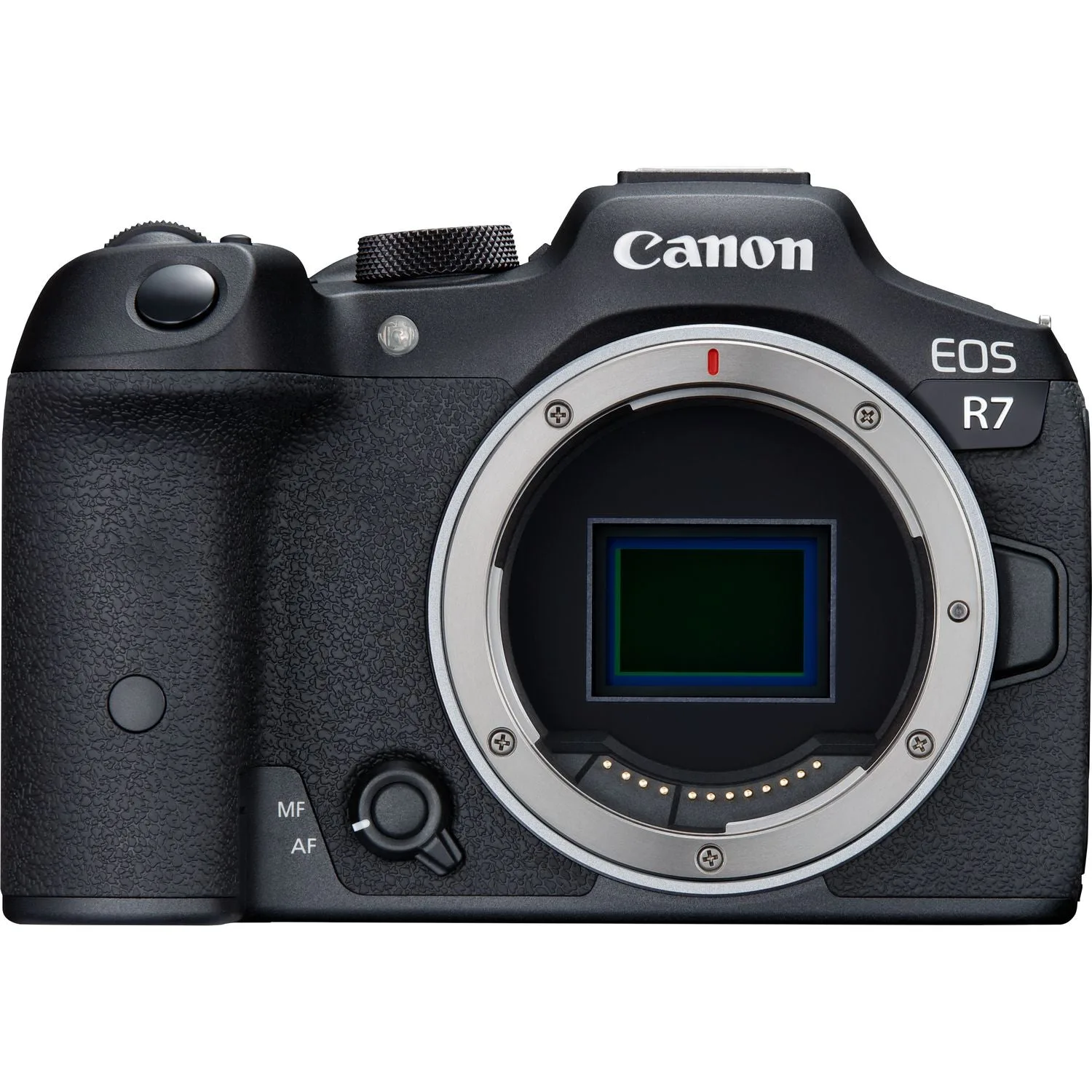
Canon EOS R7 APS-C Mirrorless Camera Body
-
Canon EOS R50 V APS-C Mirrorless Camera Body: The Canon EOS R50 V is built for content creators with a video-first approach, featuring 4K 60p recording, Canon Log 3, and custom colour profiles. If you produce video as much as stills, the R50 V’s video tools let you match colour with cinema cameras without needing an external recorder.
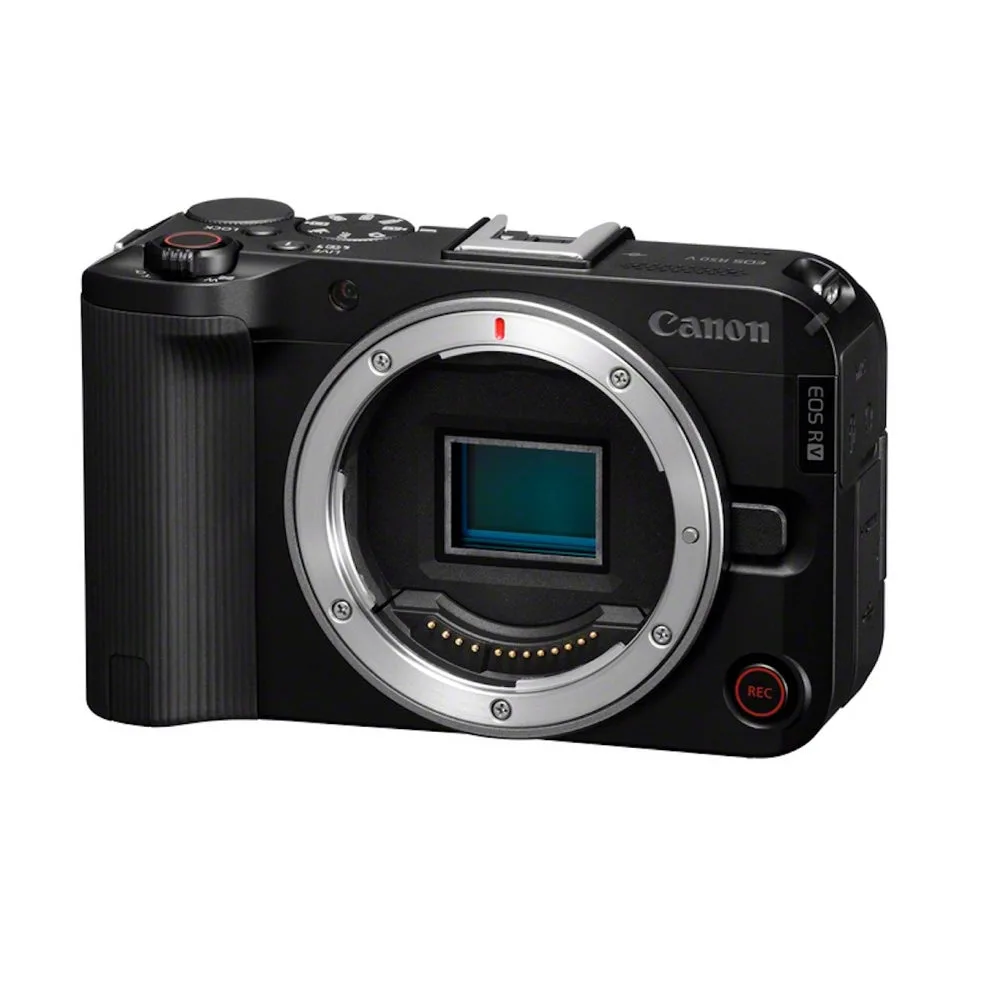
Canon EOS R50 V APS-C Mirrorless Camera Body
Which camera body fits your work?
Best for
- Pros who shoot fast action or wildlife and want the latest AF and stabilisation (choose Canon EOS R7)
- Video-first creators who need 4K 60p and Log profiles without an external recorder (choose Canon EOS R50 V)
- Photographers building a new system and want the lightest, most future-proof kit
Not for
- Pros with a large investment in EF lenses who don’t want to use adapters (stick with a DSLR)
- All-day event shooters who can’t swap batteries frequently (DSLRs offer longer run times)
- Budget-conscious buyers – DSLR bodies and lenses are still cheaper on the used market