Quick answer
For steady video and photos, choose a monopod with a weight capacity that exceeds your gear, a height range that suits your eye level, and consider carbon fibre if you carry it often.
Why a monopod? Stability without the weight of a tripod
A monopod gives you more stability than handholding, especially in low light or when using telephoto lenses, while being far lighter and quicker to set up than a tripod. It's a practical choice for events, travel, and locations where a tripod isn't allowed or practical.
The key trade-off is that a monopod still relies on you for some support. It reduces shake but doesn't freeze the camera completely like a tripod. For video, this means you'll still need to pan smoothly and brace the pole against your body or a wall for the steadiest results.
Carbon fibre vs aluminium: what actually changes
The main difference between carbon and aluminium monopods is weight and vibration damping. Carbon fibre is lighter and absorbs more vibration, which helps with sharper images when you're using longer lenses or shooting in windy conditions. Aluminium is heavier but more affordable and still perfectly capable for many setups.
If you're hiking or shooting for long periods, the weight saving of carbon fibre is worth the higher price. For studio or car-based work, aluminium's lower cost and sturdy feel may be the better value.
Height and weight capacity: match them to your gear
A monopod's height range determines whether you can shoot at eye level without bending. Check the maximum height against your own height plus the height of your camera's viewfinder. A monopod that's too short forces you to crouch, which defeats the purpose of reducing fatigue.
Weight capacity is a safety margin. Always choose a monopod rated for more than your heaviest camera and lens combination. A monopod that's overloaded can slip or fail, risking your gear. If you plan to upgrade your camera or lens later, a higher capacity gives you room to grow.
Decision rules for choosing your monopod
- Check weight capacity: Add up the weight of your camera body, heaviest lens, and any accessories like a flash or microphone. Choose a monopod with a maximum load capacity at least 1.5 times that total. If you plan to buy a heavier lens later, pick a monopod with extra capacity now.
- Match height range to your eye level: Stand naturally and measure the distance from the ground to your eye. Choose a monopod whose maximum height reaches that measurement, so you can shoot without bending. If you're tall and the monopod is too short, consider a model with a higher maximum height.
- Decide between carbon and aluminium: Choose carbon fibre if you carry the monopod for long distances or need better vibration damping for telephoto work. Choose aluminium if you want a lower price and don't mind the extra weight. If you're unsure, handle both types in a store to feel the weight difference.
- Consider stability features: Look for foldable tri-feet at the base if you need extra stability for video or when shooting from uneven ground. A ball head is useful for quick angle adjustments. If you mainly shoot video, tri-feet are a worthwhile addition.
Vanguard monopods to consider
-
VEO 2S CM-264TR 26mm Carbon Monopod with Smartphone Kit: The VEO 2S CM-264TR is a lightweight, compact carbon fibre monopod with foldable tri-feet for added stability. Carbon construction and tri-feet make it a strong choice for travel and video where extra stability helps without adding much weight.
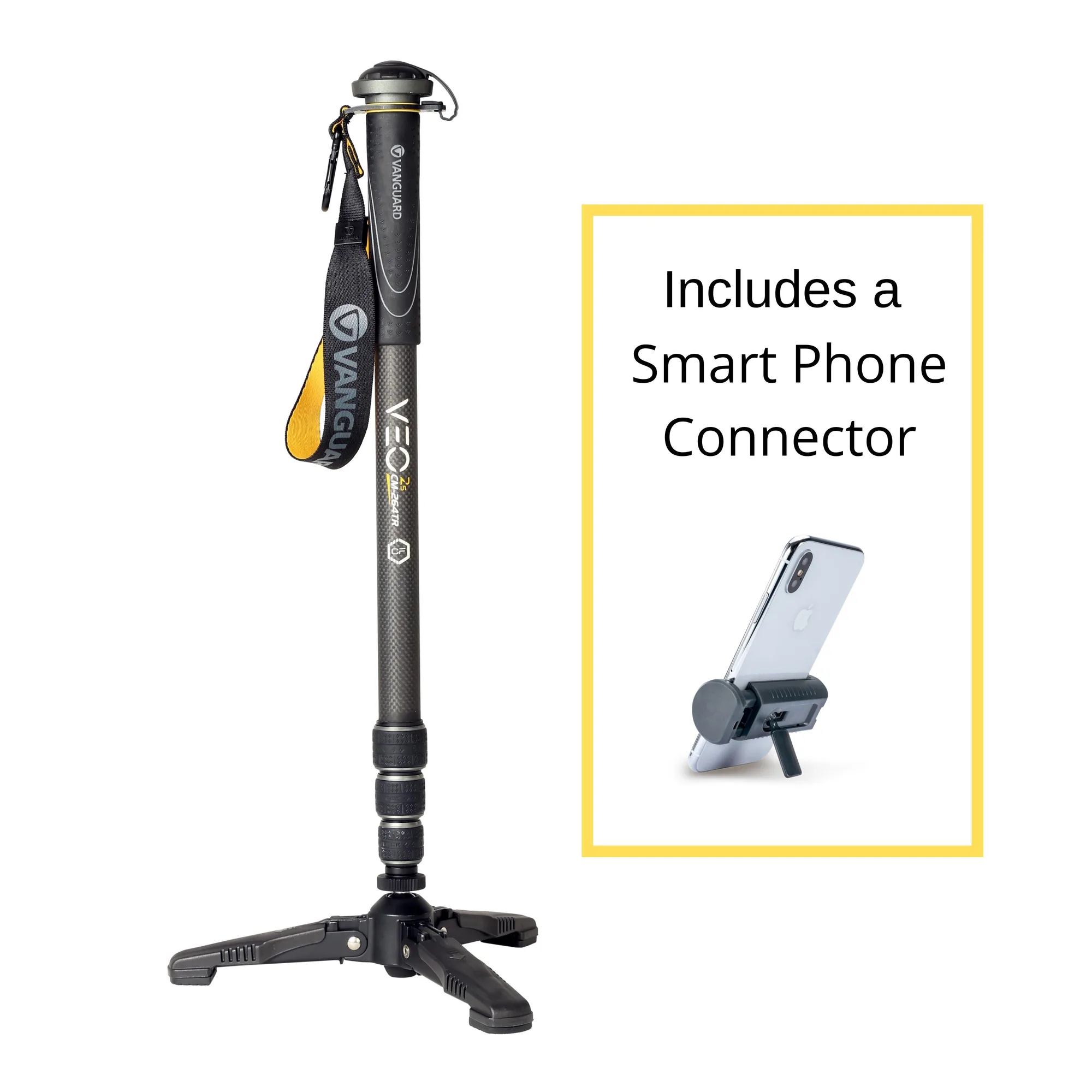
VEO 2S CM-264TR 26mm Carbon Monopod with Smartphone Kit
-
VESTA AM-234TRB Tri-Foot Aluminium Monopod Kit: The VESTA AM-234TRB is a lightweight 4-section aluminium monopod with foldable tri-feet and an Arca compatible ball head. The built-in ball head lets you adjust the camera angle quickly, and the tri-feet provide a stable base for video pans.
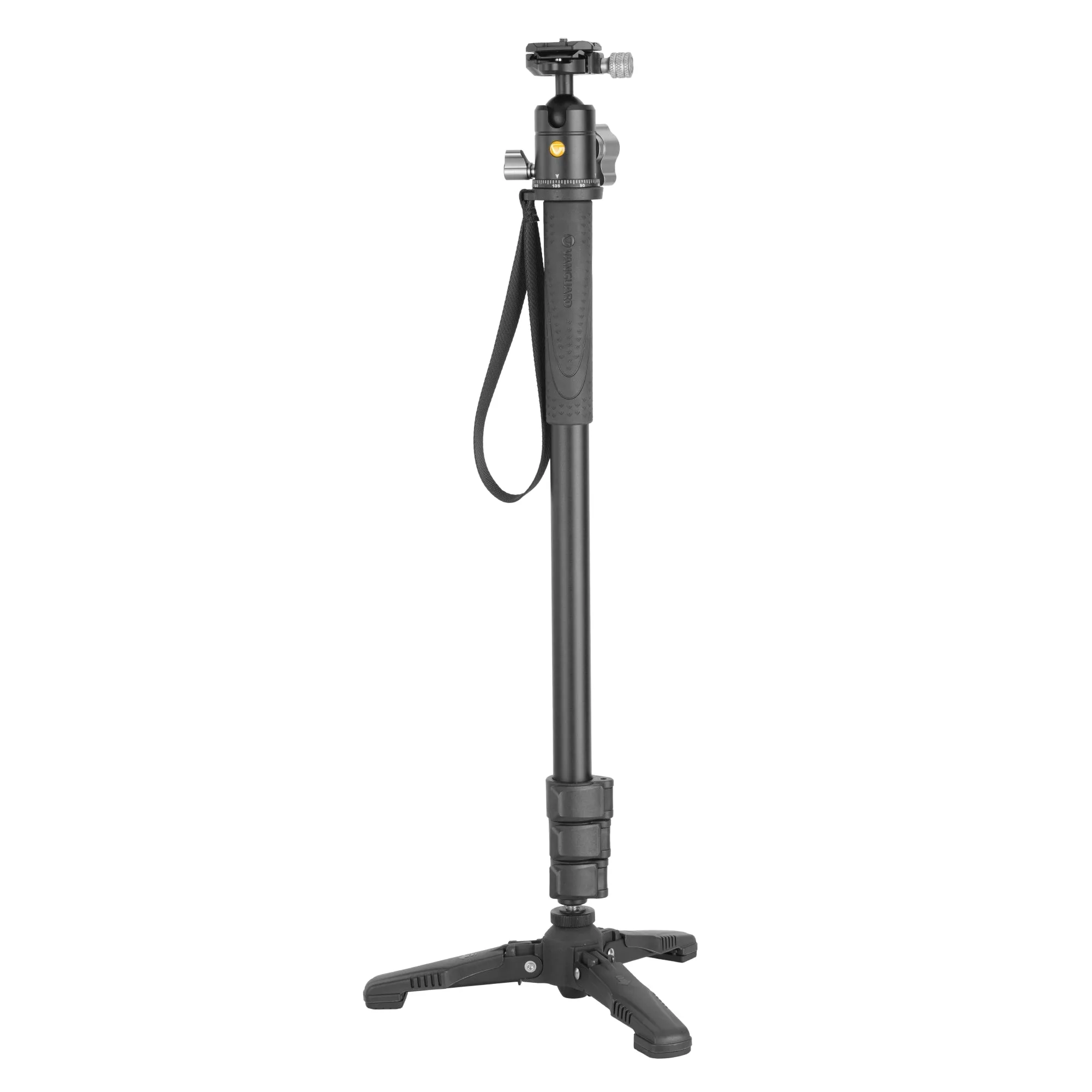
VESTA AM-234TRB Tri-Foot Aluminium Monopod Kit
Who should buy what
Best for
- Travel and hiking photographers who want the lightest option: carbon fibre monopod with tri-feet
- Budget-conscious shooters who need a stable base and a ball head: aluminium monopod with tri-feet
Not for
- Photographers who need completely hands-free support – a tripod is a better choice
- Those who only shoot at very low angles – a monopod with a short minimum height may not suit