Quick answer
Start with the Montessori Building Blocks if your child is 1 or older, because it introduces grasping and stacking earlier. Choose the Montessori Busy Board for a 2+ toddler who needs quiet, focused practice with buckles and fasteners. If you can only buy one now, match the age on the label, not the hype.
Age and material set the real starting point
The Building Blocks are labeled for age 1+ and made of eco-friendly wood with non-toxic paint. That makes them a natural first fine motor toy for a one-year-old who is still learning to grip and release. The Busy Board is labeled for age 2+ and made of soft felt with strong bindings. Its buckles, zippers, and buttons demand more precise finger control, so it fits a child who has already mastered basic grasping.
Material also affects how you use each toy. Wooden blocks can be wiped with a damp cloth and mild soap, then dried immediately. The felt busy board is spot-clean only, so it is less forgiving of spills and messy play. If your toddler still mouths toys or plays near food, the blocks are the lower-maintenance choice.
The trade-off: open-ended play vs. quiet focus
Building Blocks are open-ended. Your child can stack, sort, and knock down, which builds hand-eye coordination through trial and error. The Busy Board is more structured: each page or panel has a specific fastener or buckle, so it trains attention span and fine motor sequencing in a quieter way. Neither is better in every situation; they solve different problems.
If your child gets frustrated easily, the blocks offer instant feedback with no wrong answer. If your child needs a calm, screen-free activity for a restaurant or travel day, the busy board's soft felt and compact size (17.7 by 11.2 inches, 4.4 ounces) make it easier to pack. The blocks weigh 15.3 ounces and come as a board with 20 shapes, so they are better suited to floor play at home.
Key trade-offs to weigh
- Age gap: The Building Blocks start at 1+, the Busy Board at 2+. If your child is under 2, the blocks are the safer bet; if they are 2 or older and have basic grasping down, the busy board adds a new challenge. Check the age label before anything else.
- Play style: Blocks are open-ended and build coordination through stacking and knocking down. The busy board is task-based and builds attention span through buckles and fasteners. Choose based on whether your child needs free play or focused quiet time. Match the toy to your child's current attention span.
- Care and portability: The wooden blocks wipe clean with mild soap and water, while the felt busy board is spot-clean only. The busy board is lighter and easier to carry; the blocks are better for home floor play. Consider where and how often you will use the toy.
Product facts at a glance
-
Montessori Busy Board: Age 2+, soft felt with strong bindings, spot clean only, 17.7 x 11.2 x 0.8 inches, 4.4 ounces. The felt surface is gentle and quiet, but it needs careful cleaning, so it suits a child past the mouthing stage.
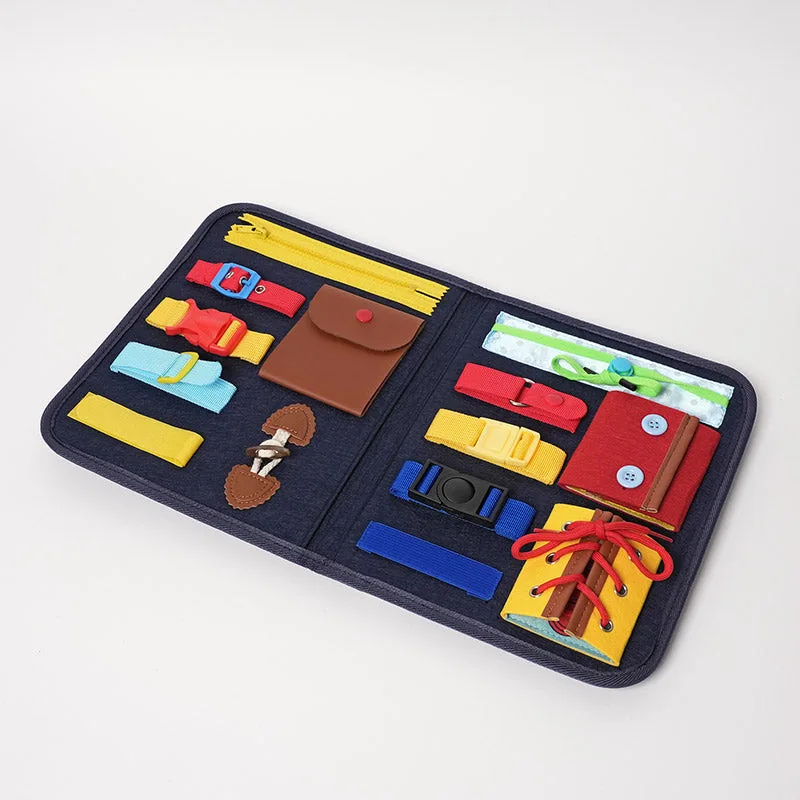
Montessori Busy Board
-
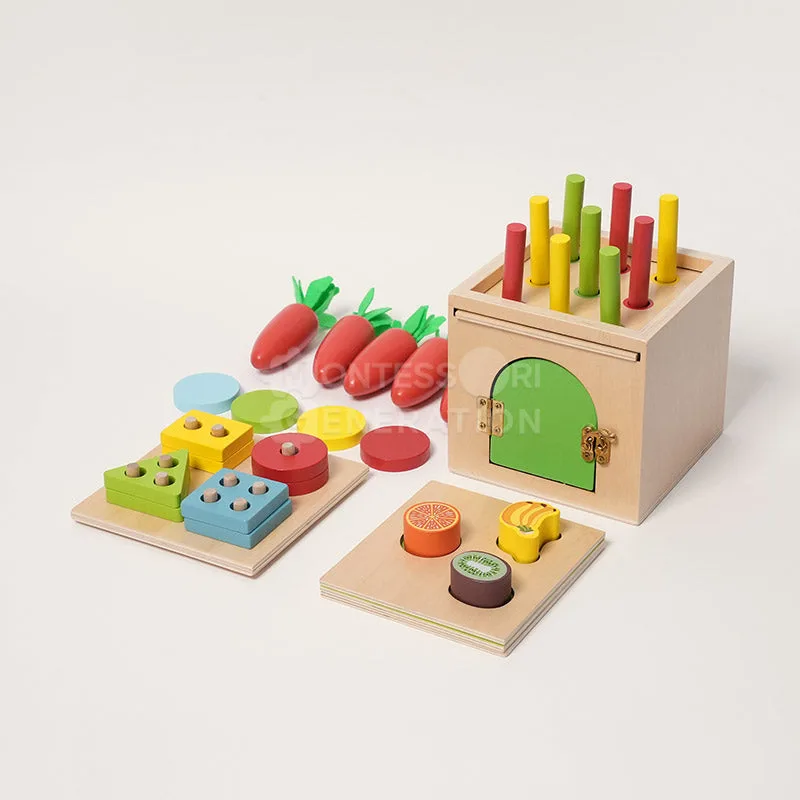
Montessori Building Blocks: Age 1+, one board with 20 shapes, eco-friendly wood with non-toxic paint, 15.3 ounces. The wooden pieces are durable and easy to wipe, making them a practical first toy for a one-year-old.
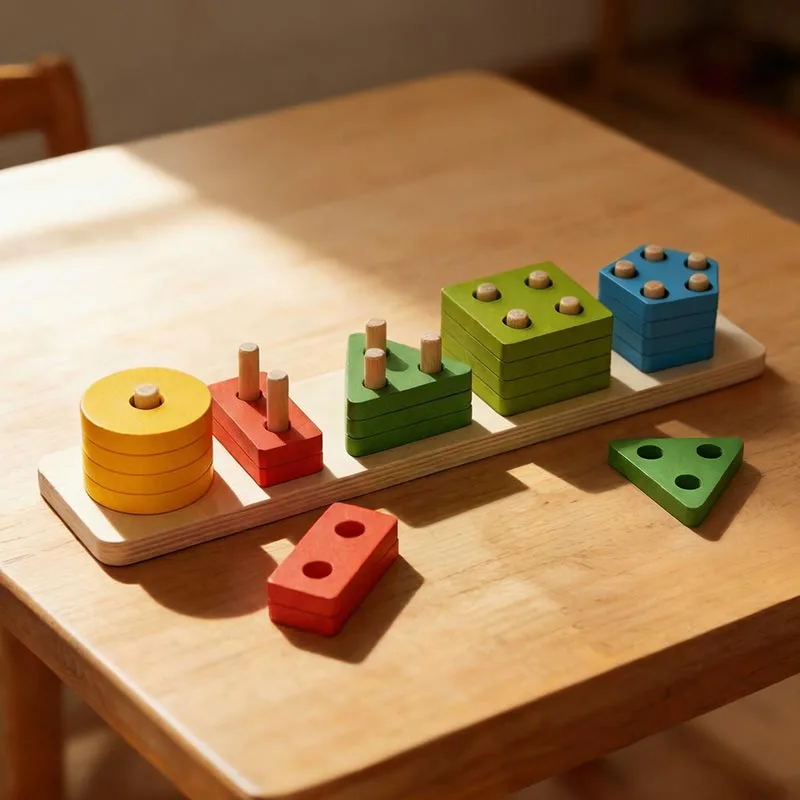
Montessori Building Blocks
Which one fits your child?
Best for
- A one-year-old who is just learning to grasp and stack
- A family that wants a wipe-clean, open-ended first toy
Not for
- A child under 2 who still mouths toys (choose the blocks instead)
- A parent looking for a quiet, travel-friendly activity (choose the busy board instead)