Quick answer
Choose the Montessori High Five Math if your child shows interest in counting and patterns, and the Montessori Ukulele if they are drawn to sounds and melodies. Both are excellent for ages 3+, but they target different foundational skills.
Why compare math and music?
At age 3+, children start developing distinct interests. Some love sorting and counting, while others hum and dance. The Montessori High Five Math and Montessori Ukulele both support independent learning, but they engage very different cognitive and motor skills.
The trade-off isn't about which is 'better'—it's about matching the toy to your child's natural curiosity. A math toy builds number sense and fine motor control through block placement, while a real instrument fosters auditory discrimination and rhythm.
Key differences at a glance
The High Five Math uses a wooden board, blocks, and flashcards to teach counting and early addition through hands-on play. It's a structured activity that rewards precision and repetition.
The Ukulele is a real instrument (not a toy) that lets children strum chords and create melodies. It encourages creativity and auditory exploration, but requires more parent guidance to learn proper technique.
How to choose: trade-offs
- If your child loves counting and patterns: The Montessori High Five Math provides a clear, repeatable system for learning numbers. The flashcards offer progression, while the blocks add a tactile element.
- If your child is musical or curious about sounds: The Montessori Ukulele gives them a real instrument to explore. They can strum, pluck, and eventually learn chords. It's more open-ended than the math toy.
- If you want a toy that grows with them: Both toys offer longevity. The math toy can be used for years as number concepts deepen, and the ukulele can be re-tuned and restrung as skills advance. Consider your child's current fascination rather than trying to cover both skills at once.
Product details
-
Montessori High Five Math: Includes a four-part wooden board, 13 wooden blocks, and 10 double-sided flashcards for ages 3+. The multiple components allow different play styles—visual learners can match flashcards, while kinesthetic learners stack blocks to represent quantities.
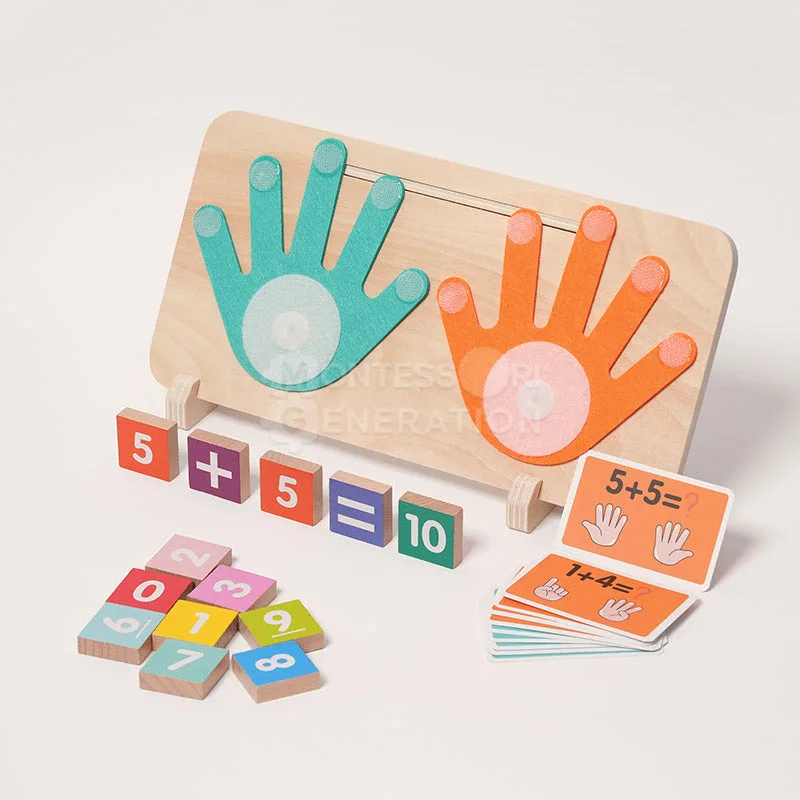
Montessori High Five Math
-
Montessori Ukulele: A real wooden ukulele for ages 3+ that plays actual chords and melodies. Because it's a functioning instrument, your child can develop genuine musical skills and ear training, not just pretend play.
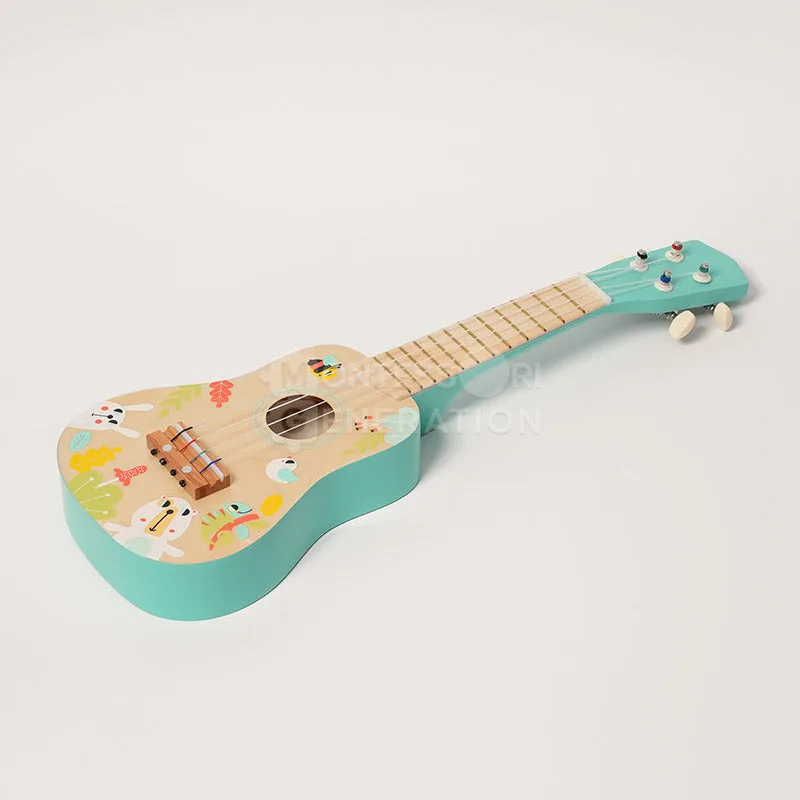
Montessori Ukulele
Which one fits your child?
Best for
- Children who enjoy sorting, stacking, and repeating patterns (choose High Five Math)
- Children who respond to music, sing, or mimic sounds (choose Ukulele)
Not for
- Children under 3 (both toys are designed for ages 3+)
- A child who already has a similar math or music toy and needs a different challenge