Quick answer
A montessori-music-set-749c25d876014318df4574a4-1541615">Montessori music set is usually a small collection of child-sized instruments such as a xylophone, shakers, a drum or a tambourine, chosen for real sound rather than flashing lights. For babies, start with soft rattles and contrast books; for toddlers, introduce one instrument at a time and let them lead. The right age range depends on the instrument: 0+ for cloth and contrast items, 2+ for simple wooden instruments, and 3+ for more complex sets with small pieces.
If you are searching for a Montessori music set, you probably want to know what is actually inside, whether it suits your child's age, and how to introduce instruments without overwhelm. This FAQ answers those questions directly, using real product examples from our catalog so you can compare options.
Montessori music toys for babies and toddlers share one principle: they make genuine sound and invite open-ended play. That means no batteries, no pre-recorded songs, and no single correct way to play. Below are the questions parents ask most, with concrete answers and honest tradeoffs.
What is in a Montessori music set?
A typical Montessori music set includes a small xylophone or glockenspiel, a shaker or maraca, a hand drum or tambourine, and sometimes rhythm sticks or a triangle. The exact contents vary by brand. What matters is that each instrument is child-sized, produces a clear tone, and can be played independently. Our Montessori Smart Safari Bus is a good example of a multi-activity wooden toy that includes a xylophone mallet, so it doubles as an early music experience for ages 2+.
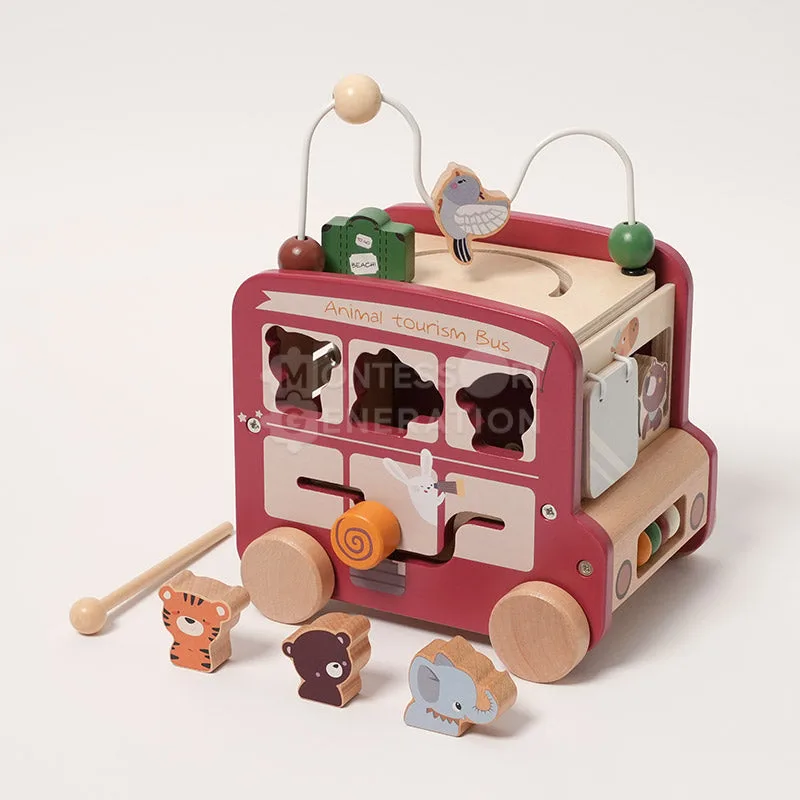
Montessori Smart Safari Bus
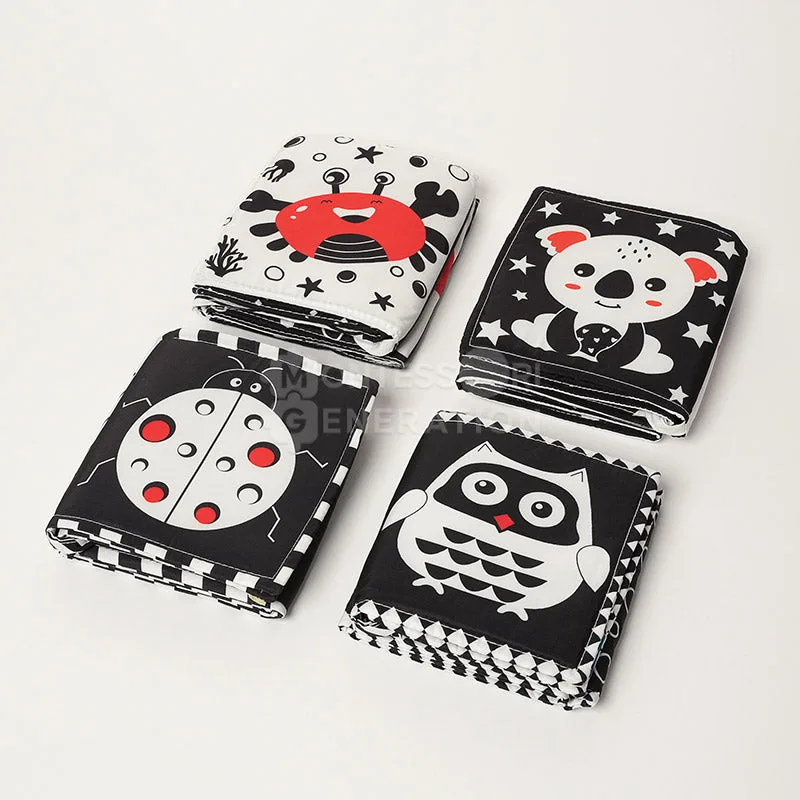
Some sets focus on one instrument, while others combine several. If you are buying for a baby under 12 months, look for soft shakers or cloth items rather than wooden instruments. The Montessori Newborn Contrast Book is a cloth option for ages 0+ that supports visual and sensory development, though it is not a musical instrument itself. For a first real instrument, a simple xylophone with a mallet is often the most rewarding.
- Check the age rating first: 0+ for cloth, 2+ for simple wooden instruments, 3+ for sets with small parts.
- Prefer instruments that make a true acoustic sound over electronic buttons.
- Start with one or two instruments, then add more as your child's interest grows.
What age range is a Montessori music set for?
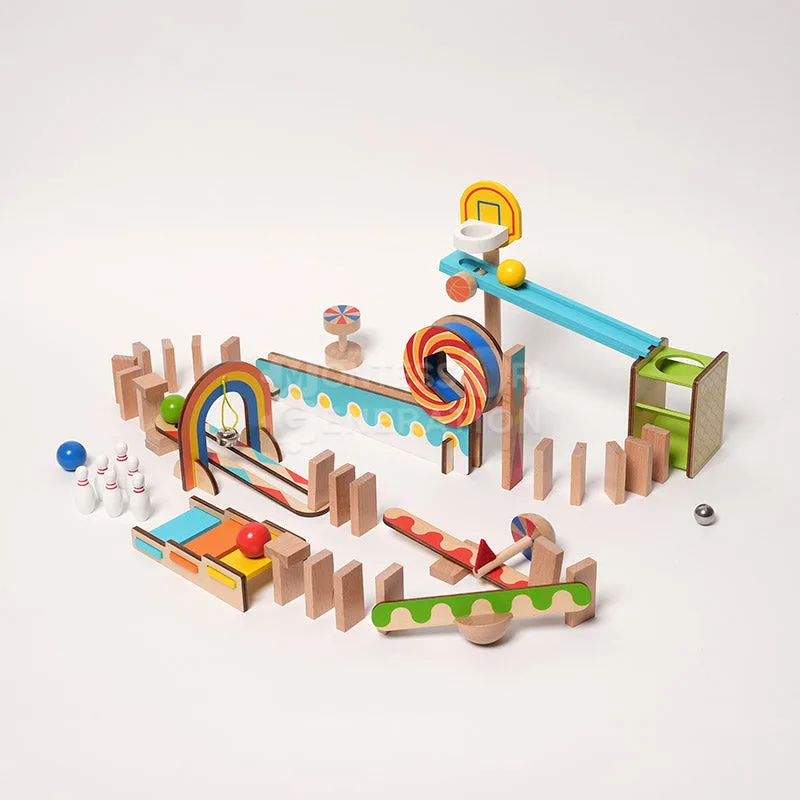
There is no single age range because instruments differ. Soft rattles and contrast items suit babies from birth. Simple wooden xylophones and drums are usually rated 2+ or 3+ because they need enough hand control to hold a mallet or strike a surface. Our Montessori Domino Run is rated 3+ and contains 57 wooden pieces, so it is not a music set, but it shows how piece count and size affect age suitability.
For toddlers, a music set with a xylophone, a shaker and a small drum works well around 2 to 3 years. If your child still mouths everything, choose larger instruments without small removable parts. Always follow the manufacturer's age rating on the product page rather than guessing from a photo.
- 0+ months: cloth books, soft rattles, contrast cards.
- 2+ years: wooden xylophone, hand drum, large shakers.
- 3+ years: multi-piece sets, rhythm sticks, triangle.
How do I introduce instruments to toddlers?
Introduce one instrument at a time and model how to use it without instructing. Sit on the floor, play a simple rhythm, and then hand it over. Let your toddler explore the sound, even if it is loud or repetitive. This is how they learn cause and effect and build coordination. If you have a multi-activity toy like the Montessori Smart Safari Bus, you can point out the xylophone part and let them try it separately from the other activities.
Keep sessions short, around five to ten minutes, and follow your child's cue. If they lose interest, put the instrument away and bring it back another day. Rotating instruments prevents boredom and keeps the novelty alive. Avoid correcting their rhythm; the goal is exploration, not performance.
- Model play first, then hand over the instrument.
- Keep sessions short and stop before frustration.
- Rotate instruments weekly to maintain interest.
Do Montessori music toys for babies really help development?
They support sensory exploration, fine motor skills and cause-and-effect learning, but they are not a shortcut to musical talent. A baby shaking a rattle is learning that their action creates a sound, which builds attention and coordination. That said, claims about boosting IQ are not supported by strong evidence. Treat music toys as one part of a rich environment, not a developmental cure.
For babies under 6 months, contrast and texture matter more than melody. The Montessori Newborn Contrast Book is designed for that stage with soft cloth and high-contrast images. Once your baby can sit and grasp, a simple shaker or a xylophone with a mallet becomes more appropriate.
- Focus on process, not performance.
- Match the toy to current motor skills.
- Combine music with movement, singing and daily routines.
What should I look for when buying a Montessori music set?
Look for natural materials, non-toxic finishes, and accurate age ratings. Wooden instruments tend to produce warmer tones and survive drops better than plastic. Check the size and weight: a xylophone that is too heavy for your toddler will frustrate them. Our Montessori Christmas Joy Set is a wooden shape-matching toy for ages 2+, not a music set, but it shows the material quality we look for: eco-friendly wood and non-toxic paint.
Read the care instructions. Wooden instruments should be wiped with a damp cloth, not soaked. Fabric items like the Montessori Baby Beehive are machine-washable, which is practical for babies who put everything in their mouths. If a product page does not list a specification you need, treat that as a gap and ask the seller before buying.
- Prioritize wood and non-toxic paint for durability and safety.
- Check weight and size for your child's grip.
- Confirm care instructions before purchase.
Montessori music set FAQ checklist
Age rating
Match the instrument to your child's age: 0+ for cloth, 2+ for simple wooden instruments, 3+ for small parts. If the rating is missing, ask the seller before buying.
Instrument type
Choose real acoustic instruments like a xylophone, shaker or drum over electronic toys with buttons. One good xylophone beats a box of plastic noisemakers.
Introduction method
Model play, hand over the instrument, and let your child explore without correction. Short, frequent sessions work better than long ones.
Materials and care
Wood and non-toxic paint are durable; fabric items should be machine-washable if used by babies. Wipe wooden instruments with a damp cloth, never soak them.
Product facts to know
- Montessori Smart Safari Bus: Age 2+, contains (1) wooden bus, (3) wooden figurines, (1) xylophone mallet, material: 100% safe, eco-friendly wood. This multi-activity toy includes a xylophone mallet, so it offers an early music experience alongside other educational activities for toddlers.
- Montessori Newborn Contrast Book: Age 0+, size 6.5" x 5.9" x 1.3", material: soft, 100% safe cloth, machine washable. A suitable first sensory item for newborns, though it is not a musical instrument; it supports visual development before instrument play begins.
- Montessori Baby Beehive: Age 6+ months, contains (5) plush bees and (1) plush hive, material: 100% baby-safe, soft plush, machine-washable. A soft, safe option for babies who mouth toys; it builds focus and coordination but does not produce musical sound.
A Montessori music set works best when it matches your child's current abilities and invites open-ended play. Start with one instrument, follow their interest, and add more as they grow. If you are unsure, choose a simple wooden xylophone for toddlers or a soft cloth item for babies, and always check the age rating before you buy.