Quick answer
Choose solid wood with non-toxic paint or soft felt with strong bindings, and match the material to your child's age and your care routine. Wood suits children 3 and up who mouth toys less, while felt suits toddlers 1 to 2 who need lightweight, quiet play. Always check the stated age rating and care instructions before buying.
Montessori toy materials are not a small detail. They decide how a toy feels in your child's hands, how long it survives daily use, and how much effort it takes to keep clean. When you compare a wooden puzzle with a felt busy board, you are really choosing between two different kinds of play and two different cleaning routines.
Montessori
This guide breaks down the materials you will find in Montessori toys, explains what safe finishes and non-toxic paint actually mean in a product listing, and gives you decision rules you can apply before you add anything to your cart.
Wooden Montessori toys: what to look for
Wood is the classic Montessori material because it gives weight, warmth and a natural resistance that plastic cannot match. In a product listing, look for phrases like high-quality eco-friendly wood and non-toxic paint, which tell you the manufacturer has considered what goes on the surface. A wooden toy with a smooth, sealed finish is easier to wipe clean than an untreated one, and it handles daily handling better.
The trade-off is weight and care. A set like Montessori Wooden Stones (21 Pieces) weighs 13.9oz (395g), which is heavy enough to stay put during play but not so heavy that a young child cannot move it. Wood should be cleaned with a damp cloth and mild soap, then dried immediately, because prolonged contact with liquids can damage the finish.
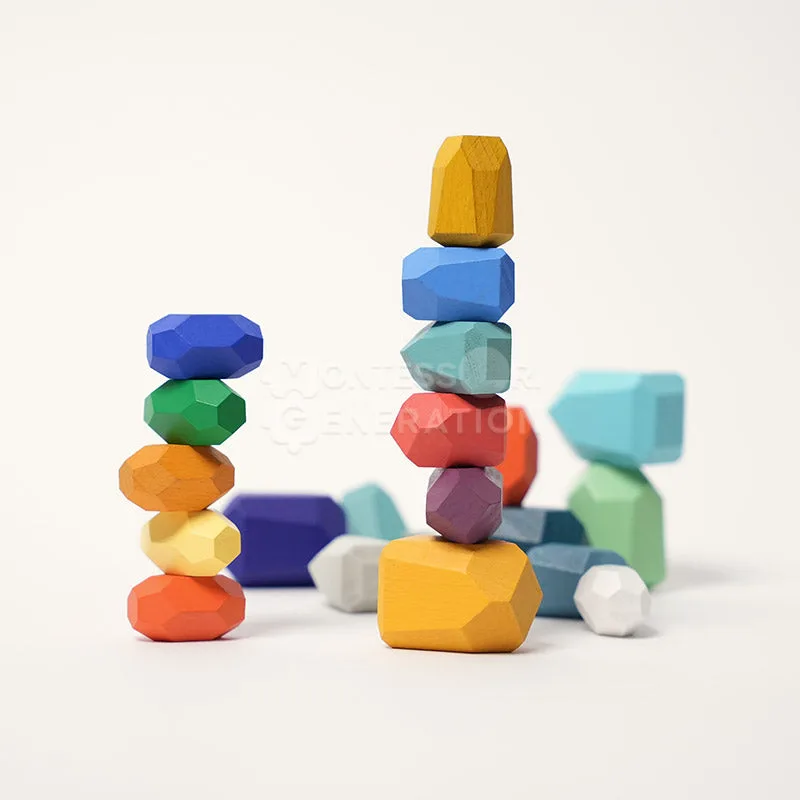
Montessori Wooden Stones (21 Pieces)
- Check the stated age rating: wood toys are often rated 3+ because small parts and harder surfaces are not ideal for mouthing babies.
- Prefer sealed or painted wood over raw, unfinished wood if your child is still putting things in their mouth.
- Dry wooden toys right away after cleaning; never soak them.
Fabric and felt Montessori toys: soft, quiet and portable
Felt and fabric toys are the practical choice for babies and young toddlers. They are soft, quiet and often lightweight, which makes them easy to bring to a restaurant or a doctor's waiting room. A felt toy with strong bindings holds up to repeated opening, closing and pulling, which is exactly what a busy board goes through.
Fabric does have limits. It stains more easily than wood, and most felt toys are spot clean only, meaning you cannot toss them in the washing machine. If your child is a heavy drooler or often eats while playing, a wipeable wooden toy may be the better fit. If you need a quiet, travel-friendly option, felt wins.
- Look for strong bindings and reinforced edges, especially on busy boards and felt books.
- Spot clean felt with a damp cloth; avoid soaking it.
- A clothes iron can flatten creases in felt, but check the care note first.
Safe finishes and non-toxic paint: what the labels mean
Safe toy finishes usually means the paint, stain or sealant on the toy has been chosen to reduce harmful substances. In catalog descriptions, you will often see non-toxic paint or BPA-free plastic. These are useful signals, but they are not a full safety certification. Use them alongside the age rating and the material description, not instead of them.
For wooden toys, a sealed painted surface is generally easier to keep clean than bare wood. For plastic parts, BPA-free is the phrase to look for, especially on items a child may put in their mouth. If a listing does not state the finish or material, treat that as a gap and ask the seller before buying.
- Non-toxic paint and BPA-free plastic are good starting points, not guarantees.
- If the finish is not stated, ask before you buy.
- Match the finish to your child's mouthing habits: sealed surfaces for mouthy toddlers, painted wood for older children.
How to compare materials in a real product listing
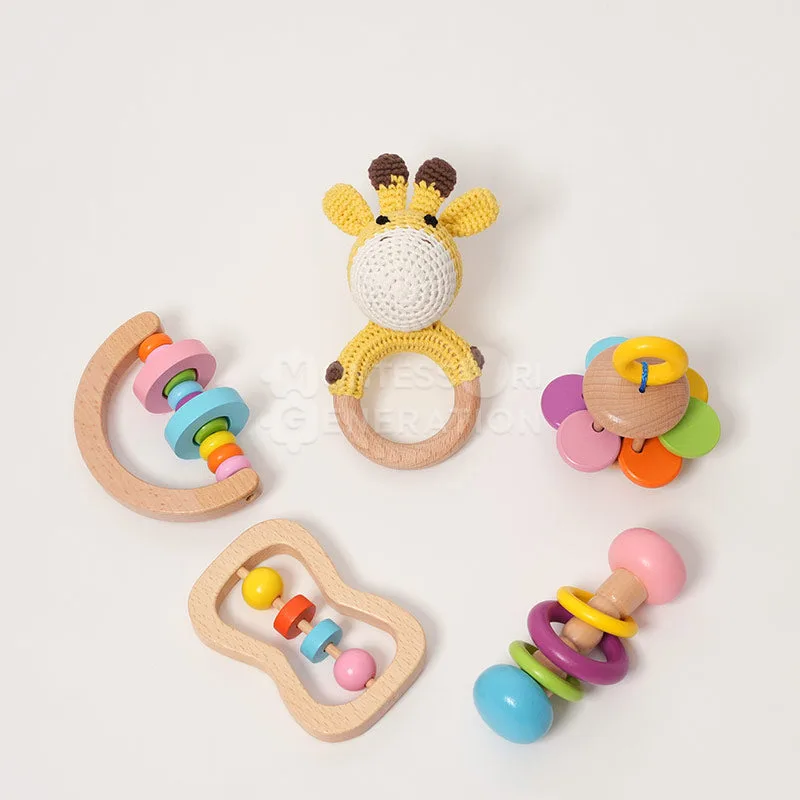
Start with the age rating, because it tells you what the manufacturer expects. Montessori Rattle Kit is rated 6+ months and contains five wooden rattles, which makes sense for a baby who is learning to grasp and shake. Montessori Brushing Teeth is rated 2+ and combines a teeth model with a toothbrush, so it uses both wood and BPA-free plastic in one small set.
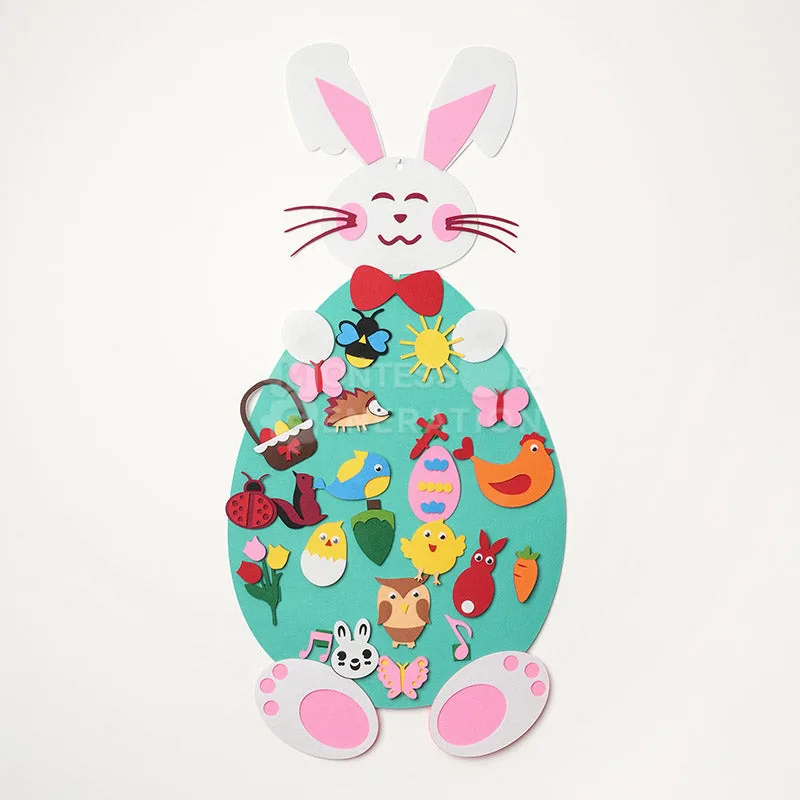
Next, look at size and weight. A toy that is too heavy for your child will sit on the shelf. Montessori Felt Bunny measures 16.9" x 36.6" (43cm x 93cm) and weighs 1lb 1.6oz (500g), so it is a floor or table activity, not a handheld toy. Finally, read the care note. If the care routine does not fit your life, the material is wrong for you, no matter how good it looks.
- Age rating first, then material, then care routine.
- Weight and size decide whether a toy gets used or stored.
- If the care note says spot clean only, be honest about whether you will actually do that.
Matching materials to your child's stage
Babies from 6 months to 1 year need lightweight, graspable materials. Wooden rattles and small felt pieces work well because they are easy to hold and safe to explore. At this stage, avoid anything with small detachable parts and check that painted surfaces are sealed.
Toddlers from 1 to 3 years are ready for more complex materials. A felt busy board with strong bindings supports fine motor skills, while a wooden nativity scene or wooden stone set introduces pretend play and sorting. Preschoolers 3 and up can handle smaller wooden pieces and more detailed sets, but they still need materials that survive being dropped.
- 6–12 months: wooden rattles, soft felt, no small parts.
- 1–3 years: felt busy boards, large wooden pieces, simple pretend play.
- 3+ years: smaller wooden sets, sorting and storytelling toys.
Decision rules for choosing Montessori toy materials
- If your child is under 1 year old: Choose lightweight wood or soft felt with no small detachable parts. Montessori Rattle Kit is rated 6+ months and uses eco-friendly wood with non-toxic paint. Prioritize graspable size and a sealed, wipeable surface.
- If your child still mouths toys: Look for non-toxic paint, BPA-free plastic, and sealed surfaces. Avoid raw unfinished wood and fabric that cannot be washed. Mouthing stage favors sealed wood and BPA-free plastic over untreated materials.
- If you need a quiet, travel-friendly toy: Felt and fabric are lighter and quieter than wood. Montessori Busy Board weighs 4.4oz (125g) and uses soft felt with strong bindings. Choose felt when portability and quiet matter more than stain resistance.
- If you want a toy that survives daily drops: Solid wood with a sealed finish handles impact better than thin fabric. Montessori Wooden Stones (21 Pieces) uses high-quality eco-friendly wood and non-toxic paint. Wood is the more durable choice for active, older toddlers.
- If you will not spot clean regularly: Skip felt toys that are spot clean only. Wood that can be wiped with a damp cloth and dried immediately is more forgiving of a quick routine. Be honest about your cleaning habits before you choose fabric.
Material facts from real Montessori toys
- Montessori Busy Board: Age 2+, size 17.7" x 11.2" x 0.8" (45cm x 28.5cm x 2cm), weight 4.4oz (125g), soft felt with strong bindings, spot clean only. Light and quiet enough for travel, but the felt surface means you cannot machine wash it. Plan for spot cleaning.
- Montessori Wooden Stones (21 Pieces): Age 3+, 21 wooden stones, size 8.4" x 5.6" x 1.8" (21.3cm x 14.1cm x 4.5cm), weight 13.9oz (395g), high-quality eco-friendly wood, non-toxic paint, clean with a damp cloth and mild soap, then dry immediately. A heavier wooden set that stays in place during play. The care note is specific: dry immediately and avoid prolonged contact with liquids.
- Montessori Nativity Scene: Age 3+, 20 wooden pieces, size 12.2" x 9.3" x 1.6" (31cm x 23.5cm x 4cm), weight 20.6oz (585g), high-quality eco-friendly wood, non-toxic paint, wipe with a damp cloth, avoid soaking. A larger wooden set for storytelling and pretend play. Wipe clean only, so it suits children who are past the mouthing stage.
- Montessori Rattle Kit: Age 6+ months, 5 wooden rattles, size 6.3" x 5.5" x 2.9" (16.1cm x 14cm x 7.4cm), weight 10.4oz (295g), high-quality eco-friendly wood, non-toxic paint, clean with a damp cloth and mild soap, then dry immediately. A first wooden toy set for babies. The 6+ month rating and light weight make it a practical starting point for grasping and shaking.
Who these material choices fit
Best for
- Parents comparing wooden vs fabric Montessori toys before buying
- Families who want non-toxic toy materials and clear care instructions
- Shoppers choosing a first Montessori toy for a baby or toddler
Not for
- Parents looking for machine-washable toys, since most felt and wooden Montessori toys are spot clean or wipe clean only
- Shoppers who need a fully plastic, dishwasher-safe option
- Buyers who want a single material recommendation for every age and stage
Material choice comes down to your child's age, mouthing habits and your cleaning routine. Pick wood for durability and easy wiping, felt for quiet portability, and always check the age rating and care note before you buy.