Quick answer
Montessori toy sets support self-directed, sensory-rich play that builds focus and problem-solving, while traditional toys often emphasize entertainment and passive engagement. For developmental milestones like object permanence and fine motor skills, Montessori sets offer a more intentional approach.
How Montessori toys differ in design
Montessori toys are typically made from natural materials like wood, have simple forms, and focus on one skill at a time. Traditional toys often include plastic, bright colors, lights, and sounds that can overstimulate a baby and reduce opportunities for independent exploration.
The Montessori approach values open-ended play where the child controls the activity. A stacking cup set, for example, can be used for nesting, sorting, or building, while a traditional electronic toy might only respond with a single button press.
Developmental stages and toy fit
For a 7-month-old, toys that encourage grasping, shaking, and object permanence are key. Traditional toys often include rattles and plush items, but Montessori sets like the Tiny Land Montessori Toys for Newborns (7–9 Months) include an Object Permanence Box and a Sensory Ball that target those exact skills.
For toddlers around 13–15 months, Montessori sets introduce self-correcting puzzles and stacking activities that promote problem-solving and concentration. Traditional toys at this age often focus on cause-and-effect sounds or simple push-button actions, which may not challenge growing cognitive abilities.
Trade-offs at a glance
- Self-directed vs. guided play: Montessori toys encourage independent exploration; traditional toys often require adult demonstration or batteries. If you want your baby to learn through trial and error, Montessori wins. If you prefer structured play with immediate feedback, traditional may feel easier initially.
- Simplicity vs. stimulation: Montessori sets use natural materials and muted colors to reduce distraction. Traditional toys often feature bright lights and sounds that grab attention but can overwhelm sensitive babies. Choose Montessori for calm, focused play; choose traditional if your child needs extra sensory input.
- Longevity across stages: Montessori sets like the Tiny Land Early Skills Baby Set (7–12 months) include progressive toys that grow with your baby. Many traditional toys are single-use or quickly outgrown. For value over time, Montessori sets often cover multiple developmental leaps. Check the age range on the box—Montessori sets are often designed for a 3–6 month window, so plan for the next stage.
Product facts
-
Tiny Land® Montessori Toys for Newborns (7–9 Months): Designed for 7–9 months, includes an Object Permanence Box, Sensory Ball, Treasure Basket Set, Stacking Cups, and a Mirror Puzzle. These items directly support early cognitive milestones like understanding that objects still exist when out of sight, while also developing fine motor skills through grasping and stacking.
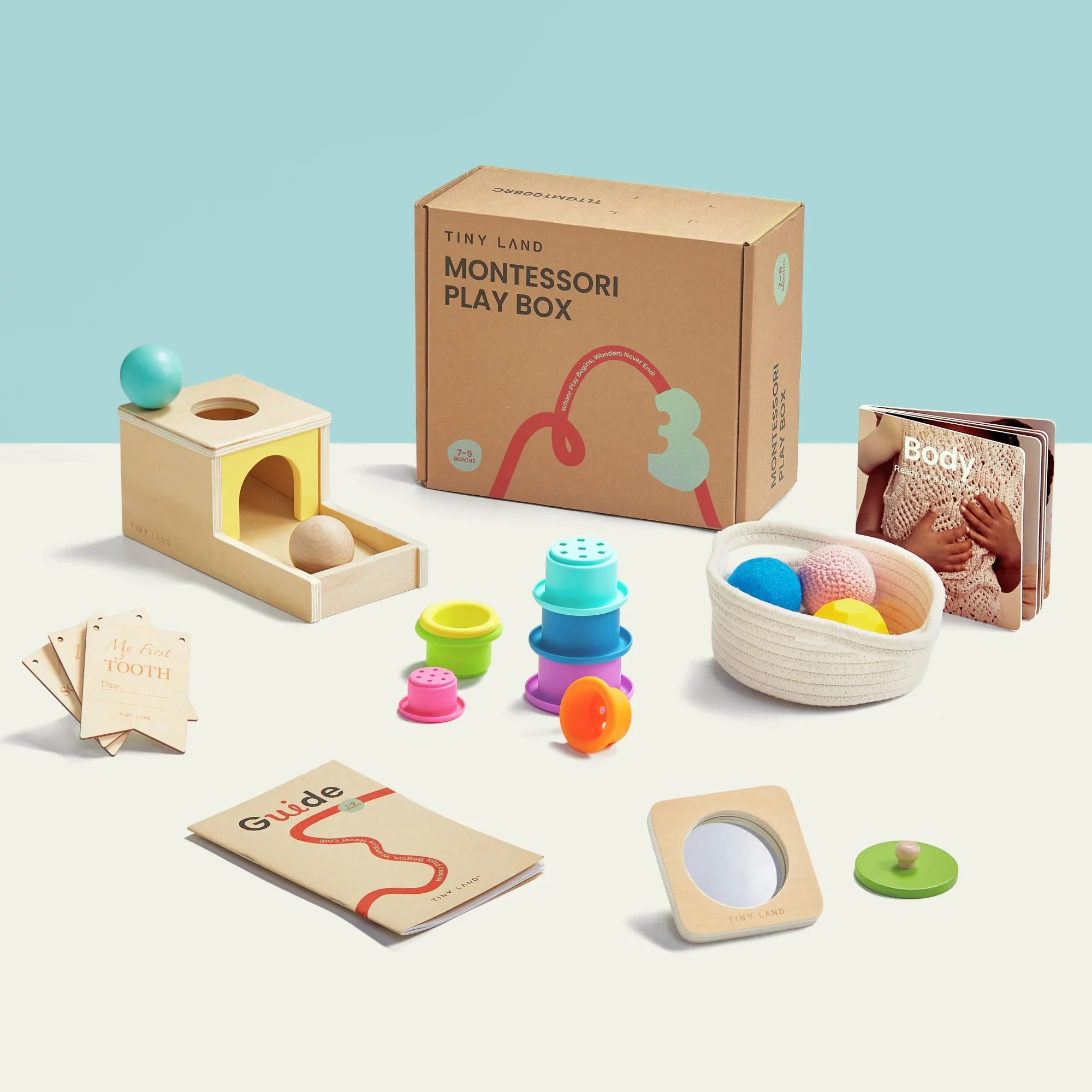
Tiny Land® Montessori Toys for Newborns (7–9 Months)
-
Tiny Land® Montessori Toys for Toddlers (13–15 Months): Curated for 13–15 months, includes a Parent’s Guide with growth milestone insights and creative activity ideas. The guide helps parents align play with their toddler's current developmental stage, making the set more than just toys—it's a learning system.
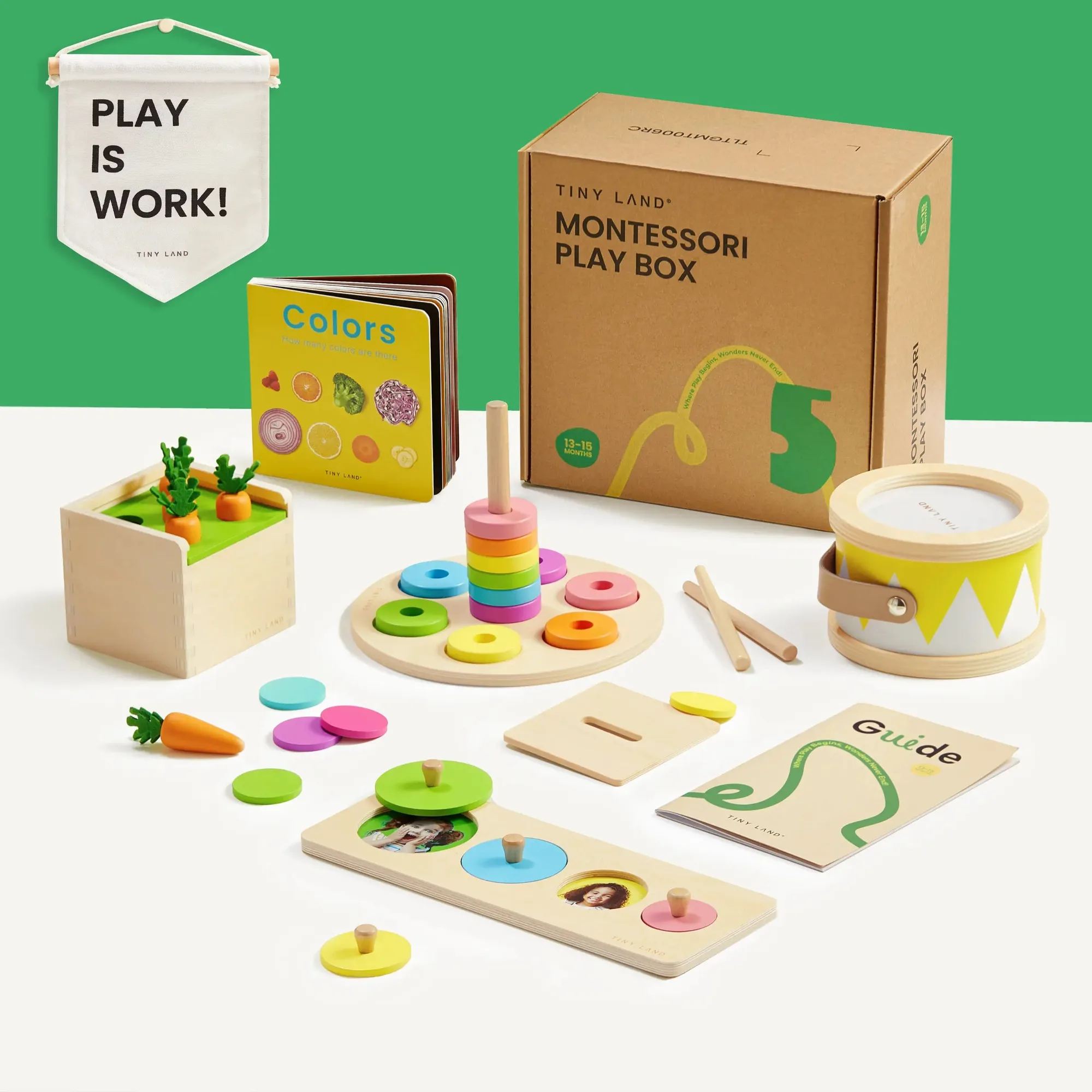
Tiny Land® Montessori Toys for Toddlers (13–15 Months)
Which should you choose?
Best for
- Parents who want toys that grow with their baby and support specific developmental milestones like object permanence and fine motor skills.
- Caregivers looking for screen-free, open-ended play options that encourage focus and problem-solving from an early age.
Not for
- Families who prefer flashy, electronic toys that provide instant entertainment with minimal setup or parent involvement.