Quick Answer
Hang a framed months of the year artwork at your child's eye level and use it during daily routines to naturally teach month names, seasons, and order.
Why a Framed Print Works Better Than a Poster
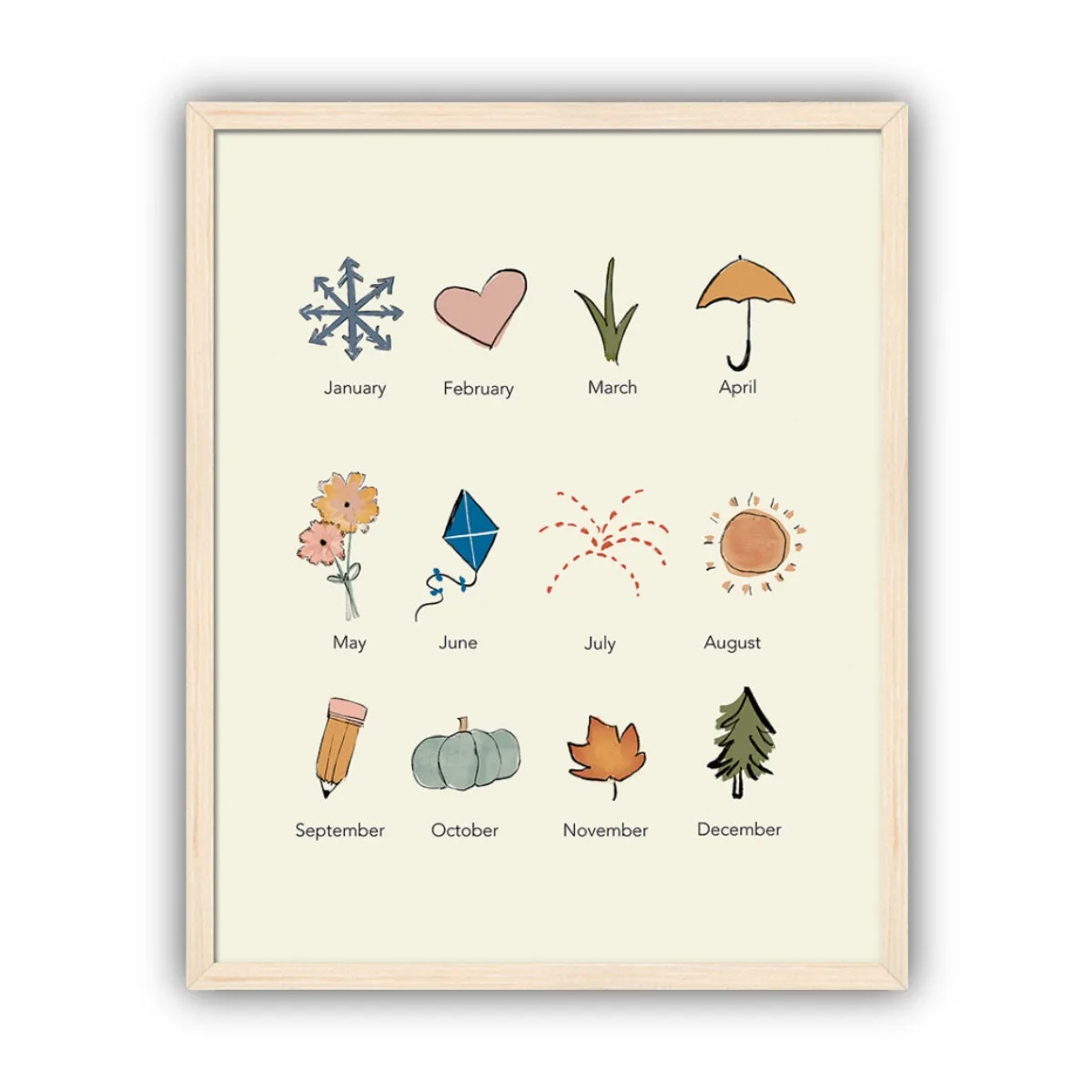
A framed print feels intentional and durable in a child's room. Unlike a flimsy poster that can tear or curl at the edges, a framed piece stays flat and safe behind glass or acrylic. The Months of the Year Artwork, Framed uses premium paper and a sturdy frame, so it holds up to daily pointing and touching without damage.
The visual structure matters too. Each month gets its own illustration, which helps kids associate a word with a concrete image—snowflakes for January, flowers for April. That pairing is the foundation of early literacy and calendar awareness.
Trade-Off: Limited Interactivity
A static print can't change or respond like a digital calendar app. Some kids learn best through movement or sound, so you may need to supplement with songs or physical calendar activities. The artwork is a visual anchor, not a complete curriculum.
If your child is very hands-on, consider pairing the print with a magnetic calendar or a simple whiteboard where they can mark the current date. The artwork sets the stage; you provide the action.
How to Use Months of the Year Artwork as a Learning Tool
- Hang at Eye Level: Mount the framed artwork on a wall where your child can easily see and reach it—typically 36–42 inches from the floor in a playroom or bedroom. Avoid placing it behind furniture or too high. If it's out of reach, they won't interact with it naturally.
- Point and Name One Month Each Day: During breakfast or morning routine, walk over to the print and point to the current month. Say the name clearly and describe the illustration: 'This is January. See the snowman?' Repeat for a few seconds only—keep it light. Don't quiz them. Repetition without pressure builds familiarity faster.
- Sing a Month Song While Pointing: Use a simple tune like the classic 'Months of the Year' song (to the tune of 'Ten Little Indians'). Point to each month as you sing it. Do this once a day until your child starts singing along. If you forget the tune, just chant the names rhythmically—consistency matters more than melody.
- Play 'Find the Month' Games: After a few weeks, ask your child to find a specific month: 'Can you show me the month with the pumpkin?' (October). Start with the most distinct illustrations and gradually use month names alone. If they guess wrong, gently guide their hand to the correct month and say the name again—no correction needed.
- Connect to Real-Life Events: When a birthday, holiday, or seasonal change approaches, point to the corresponding month on the print and talk about what will happen. 'In December we celebrate Christmas. See the tree?' This helps children understand that months are not just words but containers for real experiences.
Product Details
-
Months of the Year Artwork, Framed: Each month is paired with an adorable illustration printed on premium paper and beautifully framed. The illustrations give children a memorable visual cue for each month, making it easier to recall names and seasonal associations during daily practice.
Months of the Year Artwork, Framed