Quick answer
Use the Ms. Rachel Wooden Learning Blocks set for playful activities that build early literacy, math, and social-emotional skills without formal lessons.
Why these blocks work for learning through play
The Ms. Rachel Wooden Learning Blocks set includes 30 wooden blocks with letters, numbers, pictures, and game prompts, plus 14 double-sided activity cards. This design lets you introduce concepts like matching, counting, and turn-taking in a low-pressure, playful way. The blocks are large enough for small hands to grip and stack, which supports fine motor development alongside cognitive skills.
Because the set is co-designed with Ms. Rachel and early learning experts, the activities align with how toddlers naturally learn: through repetition, exploration, and social interaction. You don't need to plan a curriculum—just follow your child's lead and use the blocks as conversation starters.
Trade-off: open-ended vs. guided play
The activity cards provide structured prompts, which is great for parents who want guidance. However, some toddlers may prefer to ignore the cards and just stack or sort freely. That's fine—the blocks are equally valuable for open-ended play. Let your child decide when to follow a card and when to explore on their own. The key is to keep the experience positive and pressure-free.
5 educational play ideas with Ms. Rachel blocks
- 1. Letter hunt and match: Spread a few blocks letter-side up. Ask your child to find the block that matches the first letter of their name or a familiar object (like 'D' for dog). Use the activity cards as visual prompts. Common mistake: rushing to name all letters at once. Stick to 2-3 letters per session to avoid frustration.
- 2. Counting tower challenge: Stack blocks while counting aloud together. Start with 1-5 blocks, then gradually increase. Use the number blocks to match the count. Checkpoint: if your child loses interest, let them knock the tower down and start over—repetition reinforces counting naturally.
- 3. Picture storytelling: Choose a block with a picture (e.g., an apple or a cat). Ask your child to tell a simple story about that picture. Build a small scene with other blocks. Common mistake: expecting a full narrative. Accept one-word answers or gestures; the goal is expressive language, not plot.
- 4. Social-emotional turn-taking game: Sit facing your child. Take turns placing one block on a shared tower. Use phrases like 'My turn' and 'Your turn.' If the tower falls, celebrate the crash and start again. Checkpoint: if your child struggles to wait, use a visual timer or sing a short song between turns.
- 5. Sensory sorting by attribute: Ask your child to sort blocks by color, letter, or picture category (animals vs. objects). Use the activity cards as sorting mats. Common mistake: making the rule too complex. Stick to one attribute at a time until your child masters it, then add a second.
Product facts
-
Ms. Rachel™ Wooden Learning Blocks: The Ms. Rachel™ Wooden Learning Blocks + Activity Cards set includes 30 wooden blocks featuring letters, numbers, pictures, and game prompts, plus 14 double-sided activity cards. This variety means you can practice multiple skills—letter recognition, counting, matching, and social turn-taking—with a single toy, making it easy to rotate activities without buying new materials.
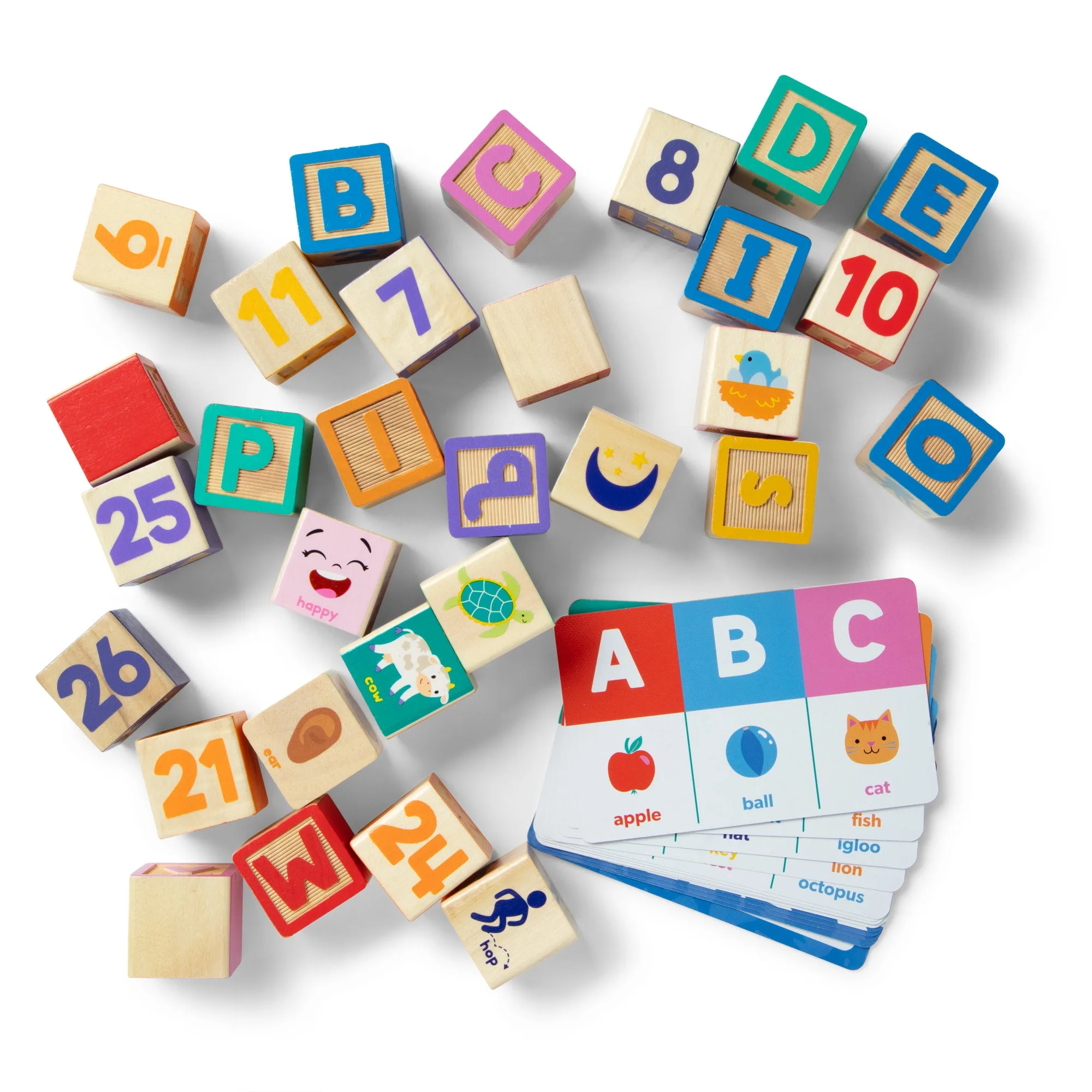
Ms. Rachel™ Wooden Learning Blocks