Quick answer
Most multichrome problems are not the polish dying. A dull shift usually comes from a ridge-filling base, a cloudy top coat, or a worn center layer, while chipping comes from a base that does not grip your nail. Use a smooth, thin base, two to three thin color coats, and a quick-dry glossy top coat, then store bottles upright, closed, and out of direct sun.
Why the shift weakens before the polish is empty
A multichrome shifts because light passes through layered pigments and reflects back at different angles. Anything that scatters or blocks that light flattens the effect: a thick ridge-filling base that leaves a cloudy layer under the color, a top coat that has thickened or yellowed, or a top coat applied so thick it sits like a lens over the pigment. The polish itself is usually fine.
The fix is to change what sits around the color, not to add more color. If your shift looks weaker than it did on day one but the bottle still flows smoothly, treat it as a layering problem first. If the bottle has thickened, separated, or smells strongly of solvent, treat it as a storage or age problem instead.
Build the look so the shift stays visible
Start with a thin base coat that smooths without bulk. Two to three thin color coats beat one thick coat because thick layers dry unevenly and can pull the pigment into streaks that break up the shift. Let each coat touch-dry before the next one; pressing a second coat into a wet first coat drags the pigment and muddies the color travel.
Finish with a quick-dry glossy top coat applied in a thin, even layer. Gloss keeps the surface reflective, which is what lets the shift read clearly. If you want a matte finish, expect the shift to look softer and more diffused; that is a finish choice, not a care failure. Wrap the tip of each nail with color and top coat to cut edge wear, and re-wrap the tip every couple of days rather than adding a full new top coat layer.
Storage habits that protect the shift
Store bottles upright with the cap tight, away from direct sun and away from hot rooms such as a bathroom shelf or a windowsill. Heat and light degrade the pigment and the solvent over time, and a loose cap lets solvent escape, which is what turns a once-fluid multichrome into a thick, streaky one.
Keep the neck and threads clean. Dried polish on the threads stops the cap from sealing, so wipe the neck with a lint-free pad before closing. If you use a thinner, add it a few drops at a time and roll the bottle between your palms instead of shaking; shaking traps air bubbles that show up as pits in the finished coat.
When to stop fixing and switch polishes
If a bottle has separated into a clear top layer and a hard pigment layer that will not recombine after rolling and a few drops of thinner, it is past reviving. If the color has visibly browned or the shift no longer moves at any angle in bright light, the pigment has degraded and no base or top coat will bring it back.
Stop adding thinner once the polish reaches a workable consistency; over-thinning weakens the film and causes chipping. At that point, choose a fresh bottle rather than fighting a tired one, and keep the new one in the storage conditions above so it lasts longer.
Diagnose the problem before you change anything
- Shift looks flat but the bottle flows normally: The pigment is intact; the layer above or below it is scattering light. Check for a thick ridge-filling base, a top coat that has thickened or yellowed, or a top coat applied too heavily. Switch to a thin base and a fresh quick-dry glossy top coat before blaming the polish.
- Color looks muddy or streaky in the center of the nail: Thick coats or pressing a new coat into a wet one drags pigment and breaks up the color travel. Thin coats that touch-dry between layers keep the shift clean. Rebuild with 2-3 thin coats; if the streaks remain, the bottle may need a few drops of thinner and a gentle roll.
- Polish chips at the tip within a day or two: Chipping is usually a base-adhesion or tip-wear issue, not a multichrome issue. Wrap the tip with color and top coat and re-wrap every couple of days. If tip wear continues, check that your base coat grips bare nail and that you are not over-thinning the polish.
- Bottle has separated, thickened, or browned: Roll the bottle between your palms and add thinner a few drops at a time. If the layers will not recombine or the shift no longer moves in bright light, the pigment has degraded. Stop here and replace the bottle; keep the new one upright, sealed, and out of direct sun.
Polishes that show the shift clearly
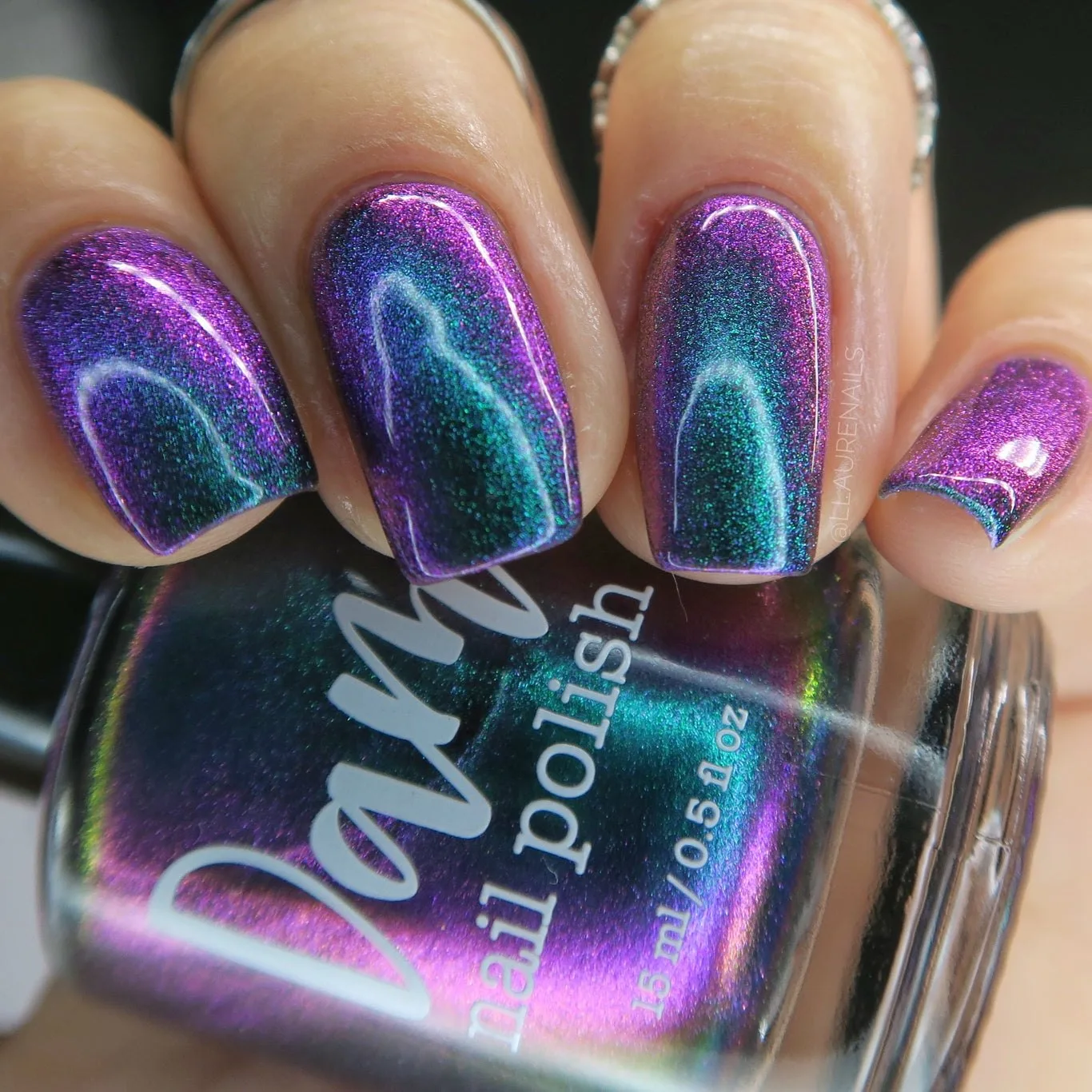
- Not Crying - Purple/Green/Blue/Gold Multichrome Nail Polish: Not Crying is an ultra shifty multichrome with shifts of purple, green, blue, and gold, and the catalog recommends 2-3 coats. A multi-angle shift like this makes layering mistakes obvious, so it is a good polish to test your base and top coat routine on.
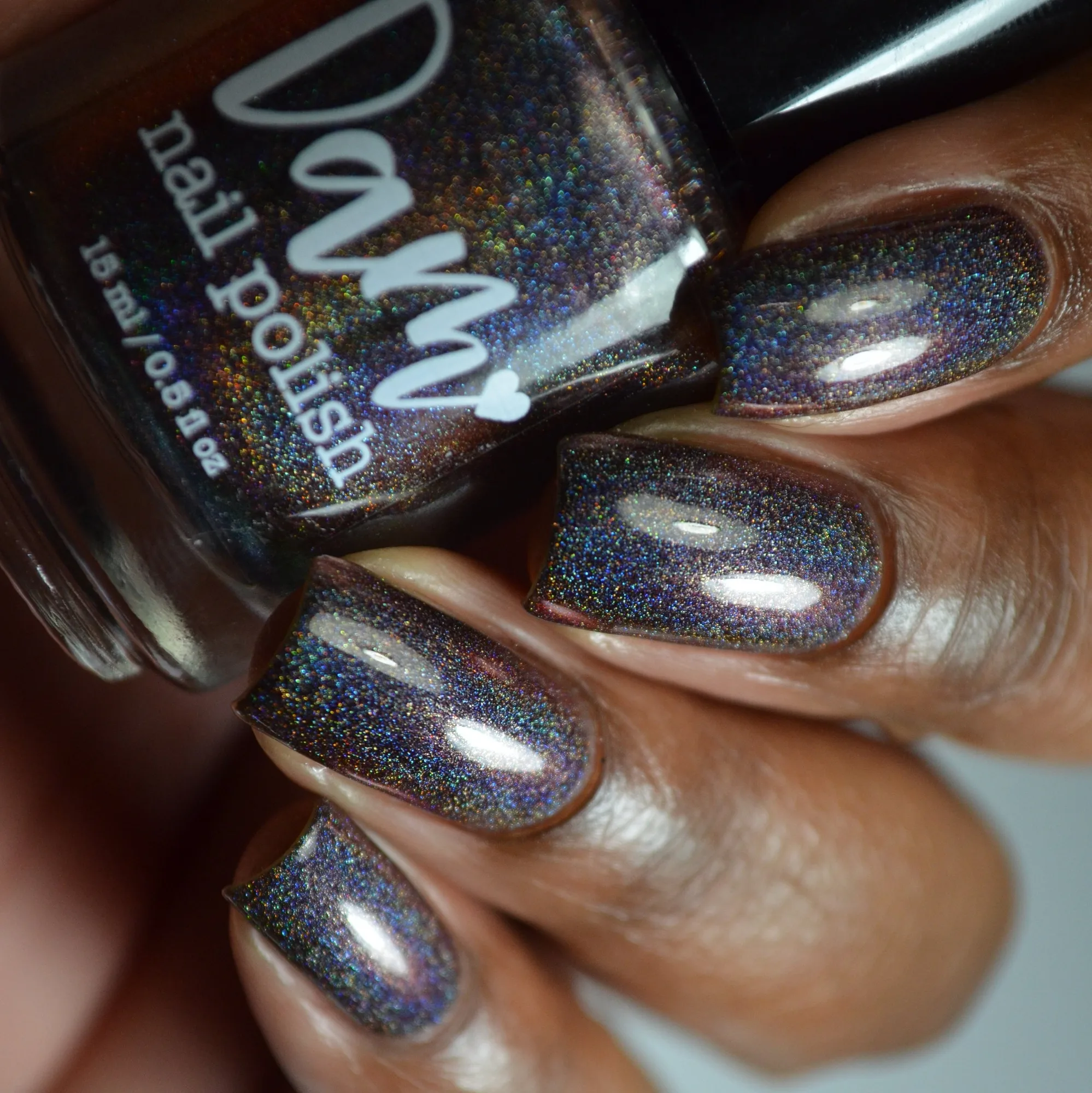
- Change of Heart (holo) - Black Red Multichrome Polish: Change of Heart (holo) is a black holochrome with red and orange shifts, and the catalog recommends 2-3 coats. The dark base means a cloudy or yellowed top coat will dull it fastest, so use a clear, fresh glossy top coat to keep the red-orange travel visible.
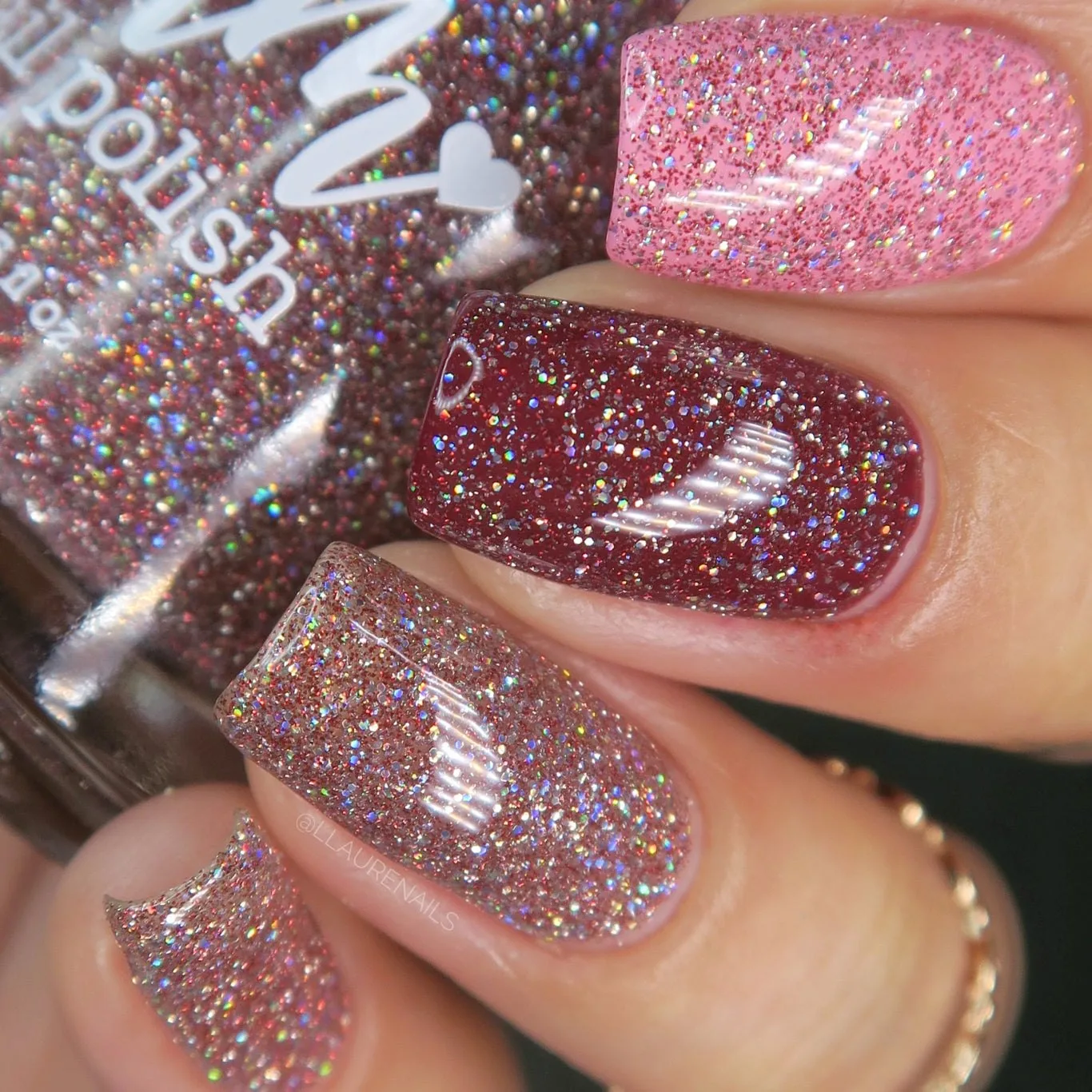
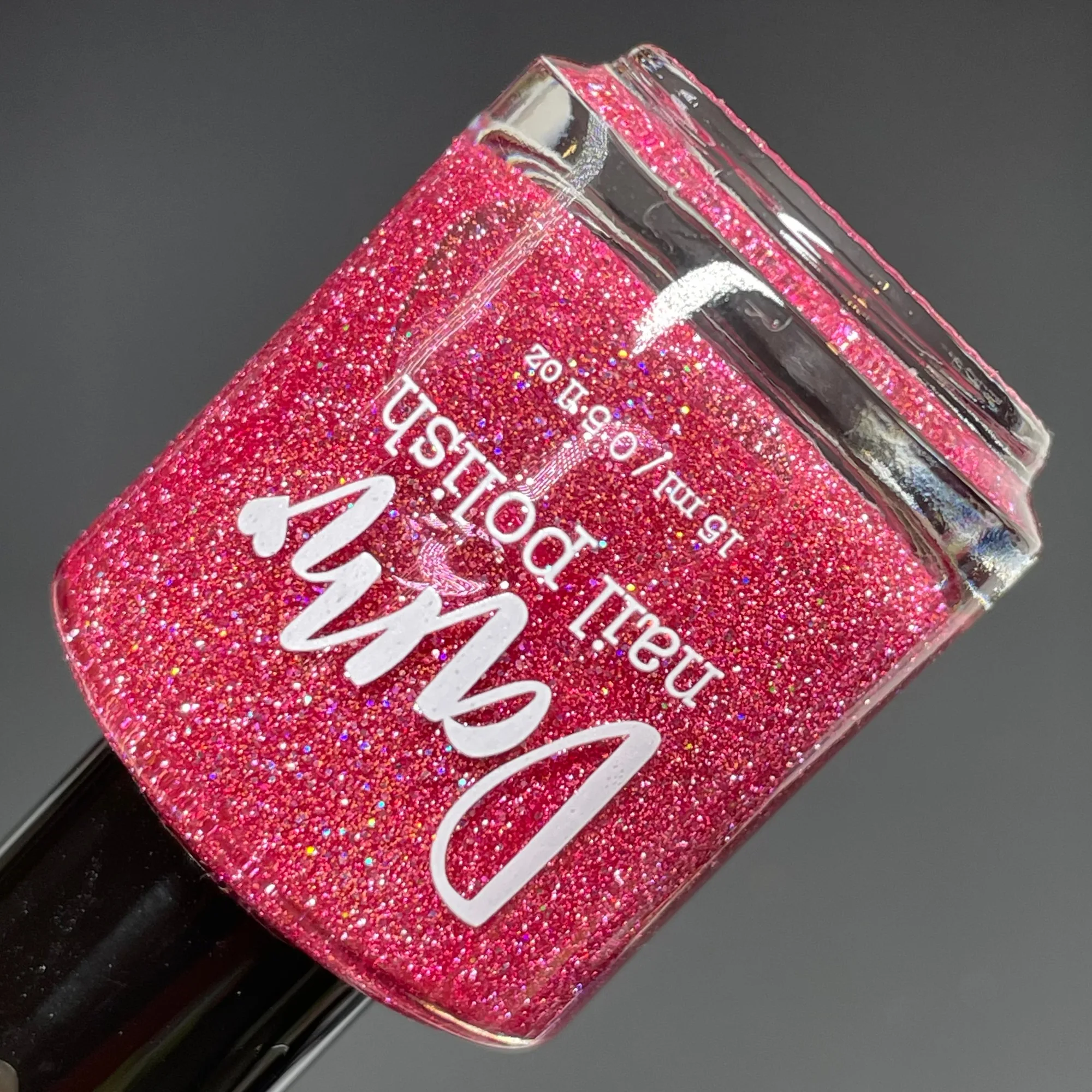
- Queen of Hearts - Red Holographic Reflective Glitter Nail Polish: Queen of Hearts is a red reflective glitter topper with ultra holographic glitters that sparkle in the sun and under flash, recommended at 1-3 coats, and it can be worn over a base color or as a standalone full coverage polish. Layering a topper over a multichrome adds sparkle without hiding the shift, but keep the topper layer thin so it does not scatter the light the multichrome needs.