Start with what a fit check can actually tell you
A harness fit check is a visual and hands-on inspection, not a one-time sizing event. Dogs change shape with coat, weight, and age, and a harness that sat well last season can shift. The goal is to catch small problems—straps that have crept loose, panels that sit off-center—before they turn into rubbing or escape risk.
For the Muse harness specifically, the supplied product information describes it as modular and low-profile, available in sizes XS through L in Trail Green. That tells you the harness is built to be adjusted and reconfigured, but it does not include manufacturer fitting instructions or care steps. So the guidance below focuses on what you can observe and feel, and flags where you should consult the product's own documentation rather than guess.
Signs your Muse harness needs adjusting
Work through these checks with your dog standing on a level surface. Look first, then feel gently—never force a strap or pull a panel into place.
- Straps that slide or hang slack: If a strap no longer holds its set length after a walk, or hangs in a loop below the body, the adjustment has likely slipped. Recheck the strap routing and tightness before the next walk.
- Rubbing or hair loss at contact points: Redness, thinning coat, or a dog who slows down or scratches at the harness can indicate chafing. Note exactly where the harness contacts the skin so you can adjust that area rather than tightening everything.
- The harness rotates or shifts to one side: A low-profile harness should stay centered. If it twists during walks, one side may be tighter than the other, or the straps may not be seated correctly.
- Gaps at the chest or back: A visible gap between the harness and the body—especially at the chest—can mean the harness is too loose or sitting too far back. Check that it is positioned where the design intends before adjusting length.
- A dog who backs out or paws at the harness: Resistance when you put the harness on, or a dog who tries to back out of it, is a fit signal. Stop and recheck the fit rather than forcing the harness on.
What to check before you change anything
Before you loosen or tighten straps, confirm the harness is the right size. The Muse harness comes in XS, S, M, and L. A harness that is the wrong size for your dog's girth can show the same symptoms as a poorly adjusted one—rubbing, rotation, or slack—and no amount of strap adjustment will fix a size mismatch.
Also check that the harness is on the right way around and that all straps are routed through their intended guides. A strap that has been threaded incorrectly can look loose even when the length is correct. If you are unsure how the Muse harness should be routed, refer to the product's own instructions rather than improvising.
Muse harness details relevant to fit
-
Muse™ harness: The Muse harness is described as modular and low-profile. Modular design means the harness can be reconfigured; check that each part is seated correctly before adjusting strap length.
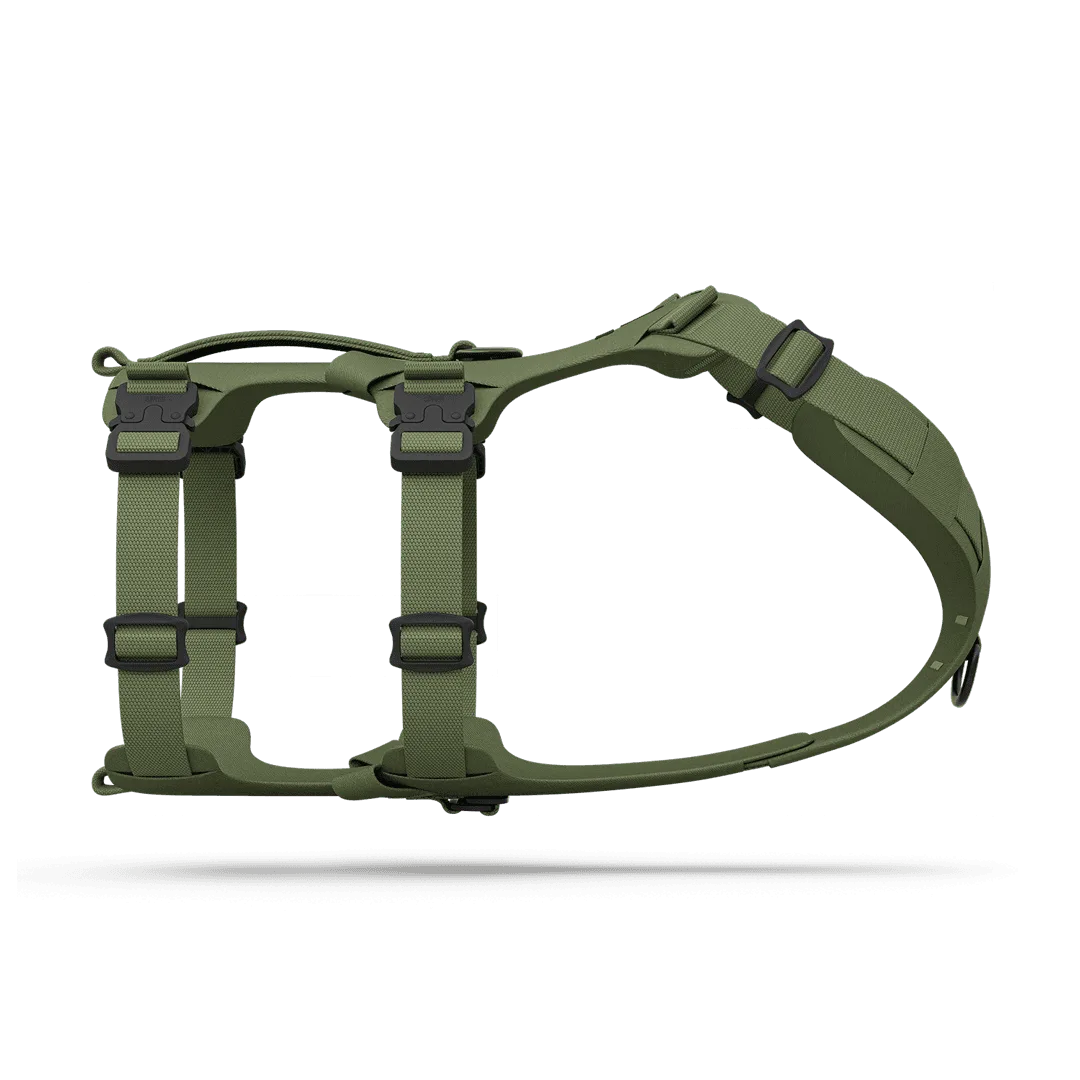
Muse™ harness
-
Muse™ harness: Available in sizes XS, S, M, and L in Trail Green. Size is the first fit variable. Confirm your dog is in the correct size band before fine-tuning straps.
How to adjust without guessing
The supplied product information does not include manufacturer adjustment steps, so treat the following as general fit-check principles rather than a Muse-specific procedure.
- Change one strap at a time: Adjust a single strap, then recheck the overall fit. Changing several at once makes it hard to tell which adjustment helped or caused a new problem.
- Aim for even tension left and right: Compare the two sides by feel. An uneven fit is a common cause of rotation and one-sided rubbing.
- Recheck after the first walk: Straps can settle once the dog moves. A quick post-walk check catches slippage before it becomes a habit.
- Stop if rubbing persists: If you have adjusted the harness and rubbing continues, do not keep tightening. Recheck size and positioning, and consult the product's documentation or a professional fitter.
When the problem is not the adjustment
Some fit problems are not solved by straps. If your dog has changed shape significantly, if the harness sits in the wrong place no matter how you adjust it, or if the rubbing is severe, the issue may be size or model suitability rather than adjustment. The Muse harness is available in four sizes; if you are at the edge of a size band, moving up or down may be more effective than forcing the current harness to fit.
The supplied information does not confirm cleaning requirements, replacement intervals, or specific adjustment limits for the Muse harness. For those details, check the product's care and instruction materials rather than relying on general advice.