Quick answer
If your baby is a drippy, drooly eater who needs constant absorption, go with a muslin bib set. If you want a bib that wipes clean in seconds for saucy, sticky meals, a silicone bib is the better choice. The right pick depends on whether you prioritize absorbency or easy cleanup.
How absorbency and cleanup differ
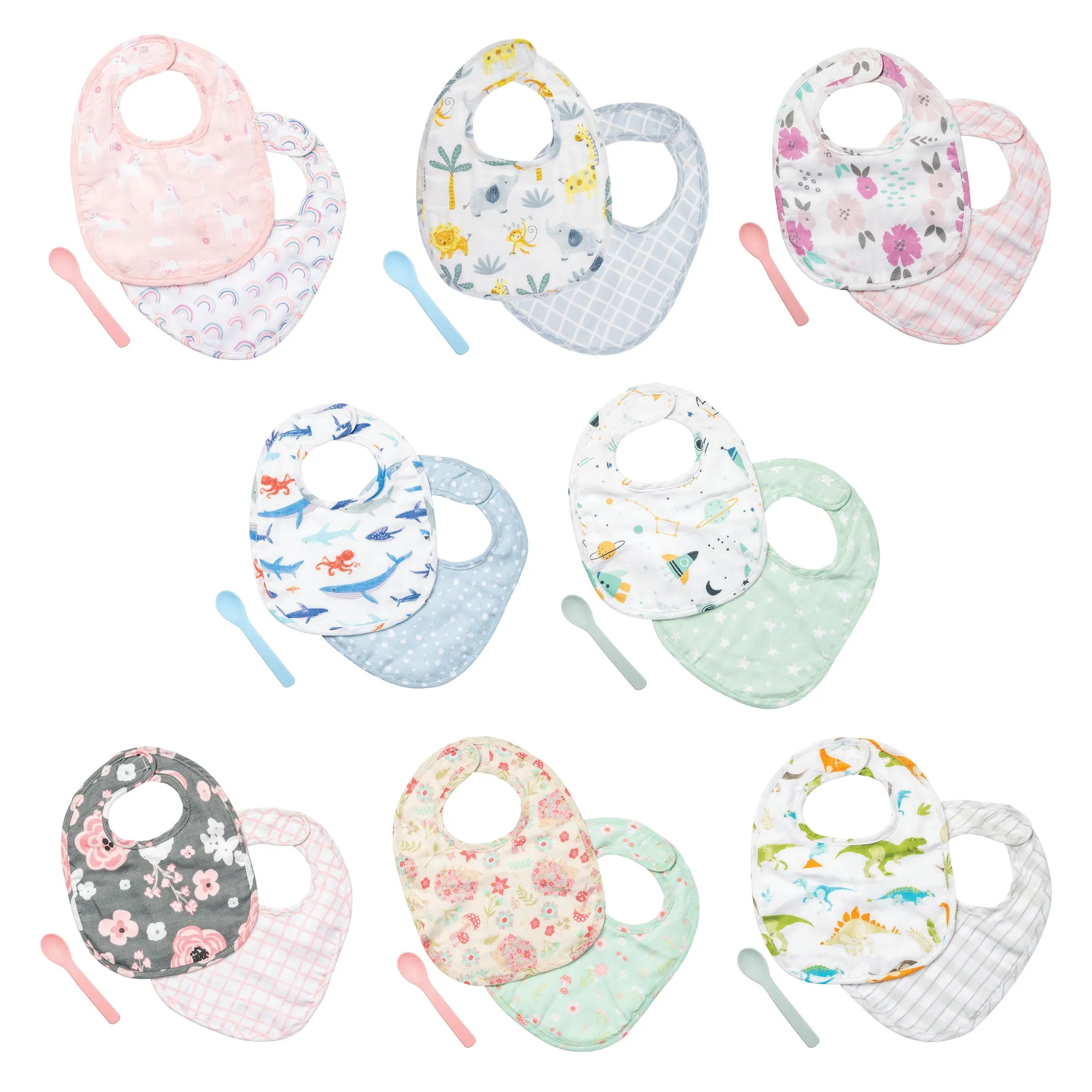
Muslin bibs, like the 100% cotton muslin sets from Stephen Joseph Gifts, are designed to soak up liquid—milk, drool, purees—keeping your baby’s clothes dry during and after meals. They come in sets of two with a coordinating spoon, so you always have a backup. The trade-off is that they need to be machine washed after each use, and they can stain if not treated quickly.
Silicone bibs, by contrast, are waterproof and non-absorbent. Food and liquid sit on the surface and can be wiped off with a damp cloth or rinsed under the faucet. They dry instantly and are great for messy finger foods or saucy meals. But they don’t absorb anything, so any liquid that runs off the bib can still wet your baby’s outfit underneath.
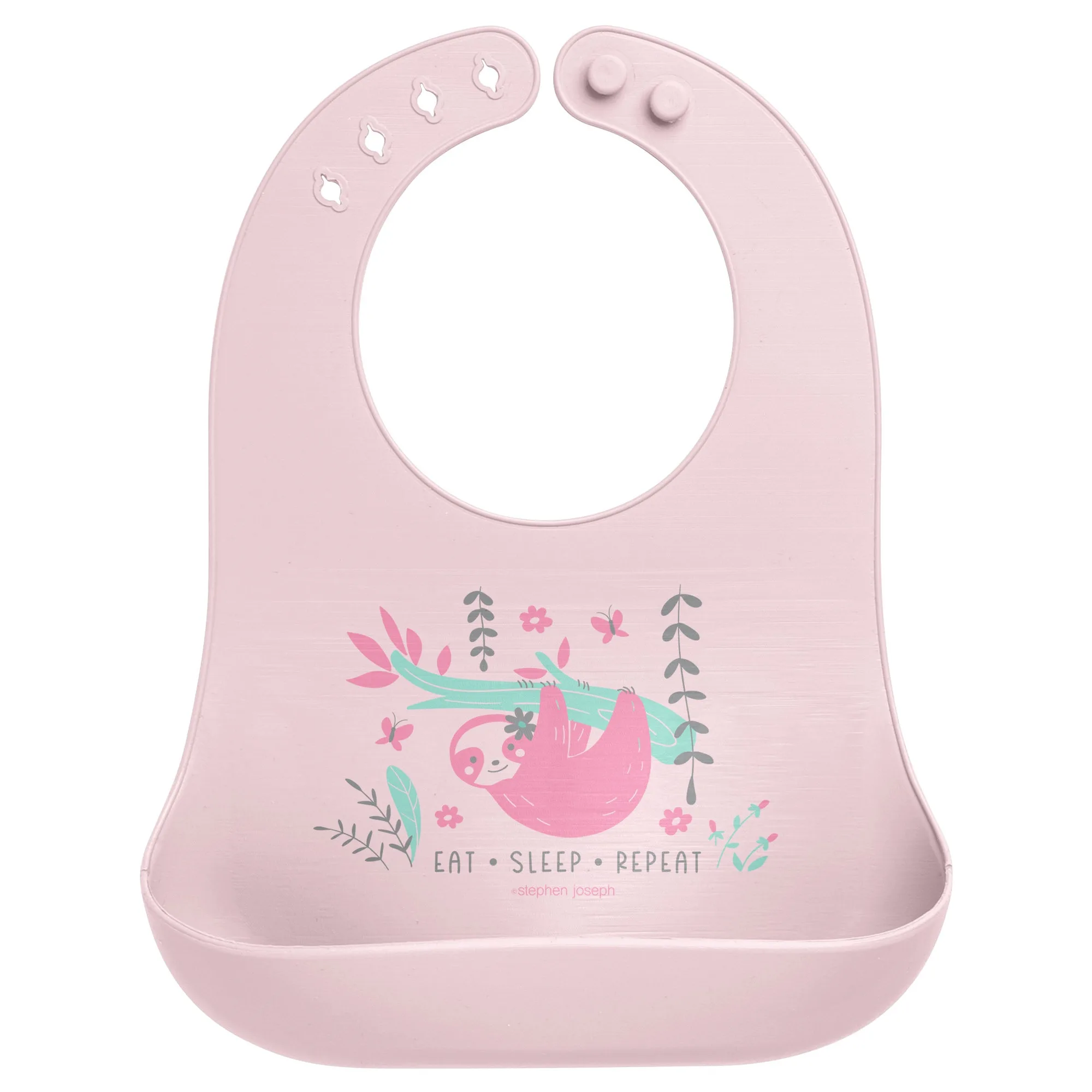
Silicone bibs
Portability and everyday use
Muslin bibs are lightweight, fold flat, and take up almost no space in a diaper bag. They double as a burp cloth in a pinch, which is handy for on-the-go feedings. The Stephen Joseph Muslin Bib Sets come in soft colors and prints that are cute enough for photos or outings.
Silicone bibs are bulkier and often have a pocket to catch food, which adds to their size. They’re great for home use but can be awkward to pack. If you’re eating out, a muslin bib is easier to carry and can be used as a wipe or napkin afterward.
Durability and long-term value
Muslin bibs are machine washable and can be used for months, but they may show wear after many washes—especially if you use bleach or high heat. The cotton fabric softens over time, which some parents prefer.
Silicone bibs are nearly indestructible. They don’t fade, stain, or wear out. A single silicone bib can last through multiple children. However, they can collect dust or lint in the pocket and may need occasional deep cleaning with vinegar or boiling water to prevent mold in the creases.
Muslin vs silicone: the trade-offs
- Absorbency: Muslin bibs soak up liquid; silicone bibs repel it. If your baby drools heavily or drinks from a bottle, muslin wins. For purees and solids, silicone keeps the mess contained. Choose muslin for wet messes, silicone for sticky messes.
- Cleanup effort: Muslin bibs need machine washing and drying. Silicone bibs wipe clean in seconds. If you do laundry daily, muslin is fine. If you want to skip laundry, silicone is easier. Silicone is lower effort per meal; muslin requires planning.
- Portability: Muslin bibs fold tiny and can double as a burp cloth. Silicone bibs are bulkier and less packable. Muslin is better for diaper bags and eating out.
Product facts at a glance
- Muslin Bib Sets: Set of 2, 100% cotton muslin bibs with a coordinating spoon. Machine washable; spoon is dishwasher safe. You get two bibs for rotation, and the cotton muslin fabric is highly absorbent for drool and liquids. The included spoon means you have a complete feeding kit in one package.
- Percussion Sets: Percussion set with two maracas and a tambourine, sized for little hands. While not a bib, this toy set shows Stephen Joseph’s focus on engaging, child-friendly design. If you’re looking for a coordinated gift, the same playful prints appear across their product lines.
Which bib fits your routine?
Best for
- Parents who want maximum absorbency for drool, milk, and runny purees
- On-the-go families who need a lightweight, packable bib that doubles as a cloth
Not for
- Parents who want a bib that wipes clean without laundry after every meal
- Babies who eat mostly solid, saucy foods where a waterproof barrier is more important than absorbency