Quick Answer
Choose a chroma key green screen when your main goal is clean video keying, because a non-reflective green surface and even lighting let editing software remove the background reliably. Choose a muslin backdrop when you want a softer, textured look for portraits or product shots and do not need to key the background. Many shooters keep both: green for video, muslin for stills.
Material and Surface: What Changes on Camera
The biggest practical difference is how the fabric behaves under light. A chroma key green screen is made to be non-reflective and evenly colored so keying software can isolate the subject. Muslin is a woven cotton fabric that often shows gentle folds and texture, which reads as a natural studio backdrop in portraits but creates uneven color for keying. If you shoot both stills and video, treat them as two tools rather than one upgrade path.
Size and Support: Matching Backdrop to Room
Backdrop size decides whether you can frame a full body or only a head-and-shoulders shot. The 6 x 9 ft chroma key green screen with an 8 ft high by 10 ft wide stand fits tighter rooms and solo creators. The 10 x 12 ft chroma key kit with a stand that extends to 8 ft high and 10 ft wide gives more floor and width for full-body framing or two people. Check your ceiling height and the widest shot you plan before buying, because a stand that opens wider than your room allows will not help.
Lighting and Keying: Where Green Screens Earn Their Keep
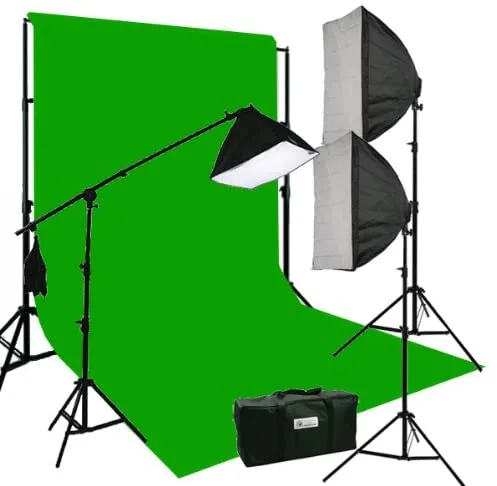
Keying quality depends on even light across the green surface. Softboxes help here because they spread light and reduce hot spots that make green read unevenly. A kit such as the three-softbox 2700W lighting kit includes softboxes and daylight-balanced bulbs, which supports the even coverage a chroma key background needs. Muslin portraits are more forgiving: you can light for mood and let shadows fall across the fabric without breaking a key.
Setup, Storage, and Portability
Both backdrop types ship with support hardware in the kits compared here, but the details differ. The 6 x 9 ft green screen uses a 3-inch rod pocket and stitched edges, and the stand and poles store in a carrying bag. The 10 x 12 ft kit includes a carrying case for the stand, and the 6 x 9 ft sandbag kit adds two sandbags plus a case. Sandbags matter on smooth floors or in shared spaces where a stand can be bumped. If you move between locations, count the bags and cases you will actually carry.
Trade-Offs at a Glance
- Keying vs texture: Chroma key green gives software a flat, non-reflective color to remove. Muslin shows weave and folds that look natural in stills but create uneven color for keying. Pick green for video keying, muslin for portrait texture.
- Size vs room space: The 6 x 9 ft green screen fits tighter spaces, while the 10 x 12 ft kit opens to 10 ft wide and 8 ft high for full-body or two-person frames. Measure your ceiling and widest shot before choosing a size.
- Kit extras vs simplicity: The 6 x 9 ft sandbag kit adds two sandbags and a case for stability on smooth floors; the 6 x 9 ft rod-pocket kit keeps setup simple with a storage bag. Choose sandbags if your stand shares a floor with foot traffic.
Product Facts Behind This Comparison
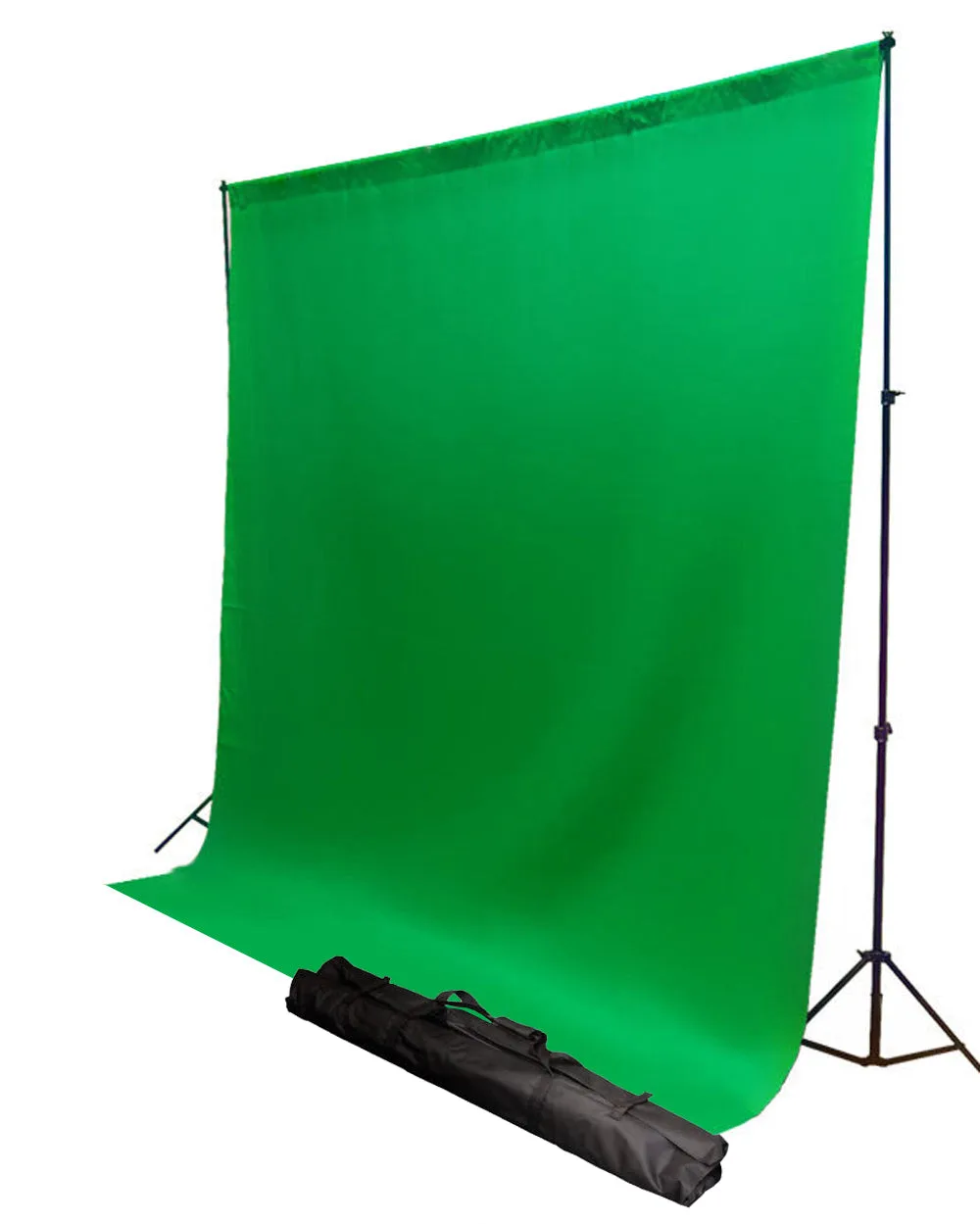
- 6' x 9' Chroma Key Green Screen Photography Video Chromakey Muslin Backdrop Background with Background Stand H80469G: 6 x 9 ft chroma key green screen with an 8 ft H x 10 ft W background stand, non-reflective material, 3-inch rod pocket, stitched edges, and a storage bag. A compact, non-reflective green surface with a rod pocket is a practical starting point for solo video keying in a small room.
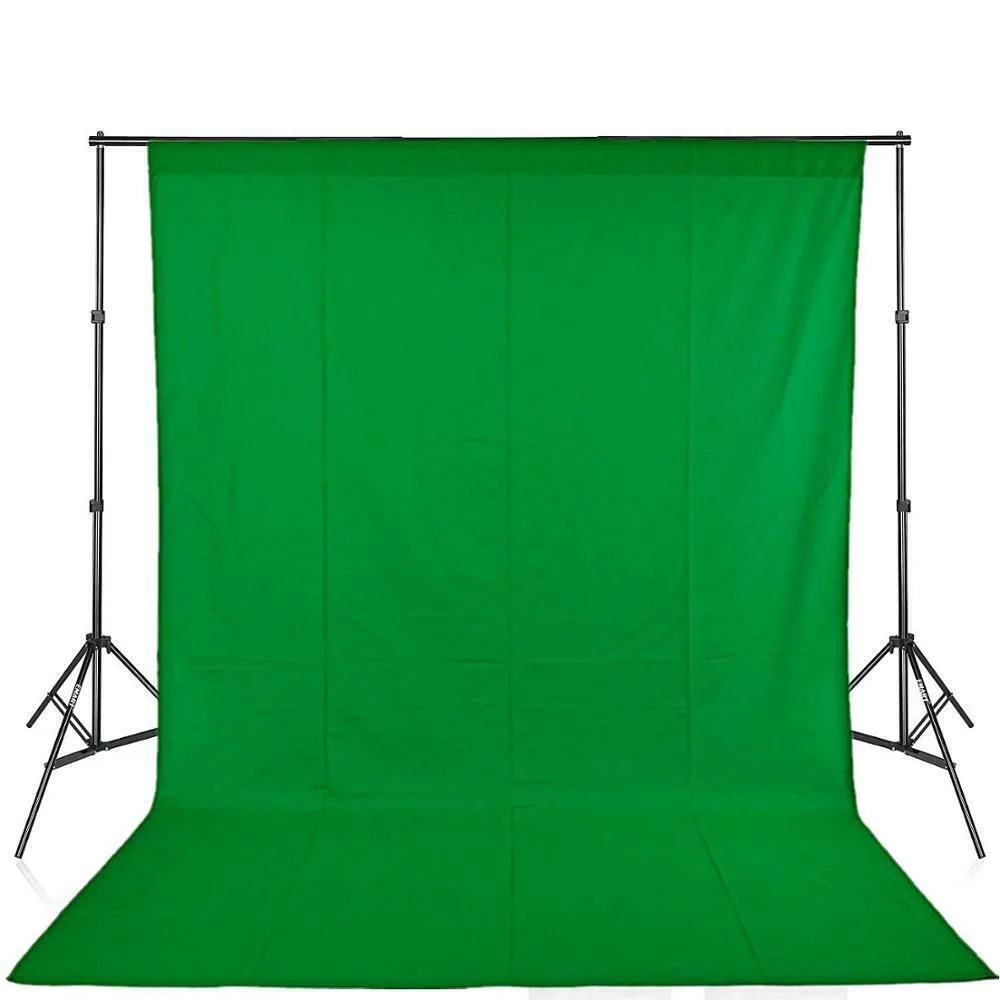
- 10' X 12' Video Photography Studio Chroma Key Chromakey Green Screen Cotton Muslin Backdrop Seamless and Background Supporting System Kit with Carrying Case: 10 x 12 ft chroma key green muslin backdrop with a stand that extends to 8 ft high and 10 ft wide, three sectional crossbars, two 8 ft supporting stands, and a free carrying case for the stand. The larger fabric and wider stand support full-body framing or two-person shots, while the sectional crossbars and case make transport and storage manageable.
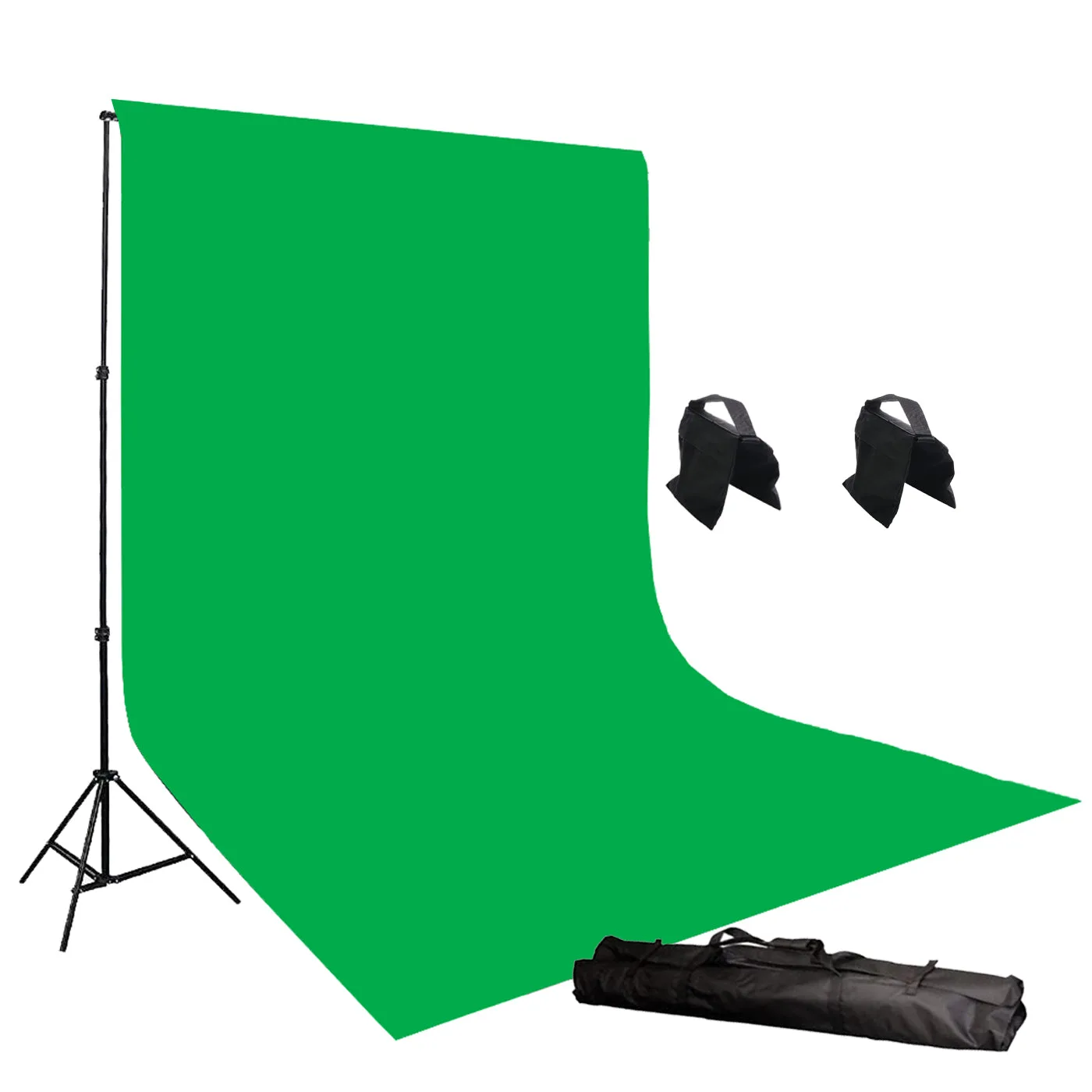
- 6' x 9' Chroma Key Green Screen Photography Video Chromakey Backdrop Background Stands & 2 sandbags H804-69G2S: 6 x 9 ft chroma key green backdrop with a lightweight aluminum stand, four crossbars extending to 10 ft wide, stands extending to about 8 ft high, two sandbags, and a carrying case. The included sandbags add stability on smooth floors, and the four crossbars give more width than a basic stand for the same fabric size.
- Three Softbox 2700 Watt Photography Video Hair Boom Light Lighting Kit Chromakey Green Muslin Background Support Stand Case Kit: Three softbox 2700W lighting kit with softboxes, internal white covers, four daylight studio bulbs, and an on/off switch, operating at 110-120V. Softboxes soften and spread light, which helps keep a green screen evenly lit for cleaner keying and gives muslin portraits a controllable light source.
Which Backdrop Fits Your Shoot?
Best for
- Video creators who need a clean chroma key background for editing
- Portrait and product photographers who want a soft muslin texture without keying
- Shooters who can light the backdrop evenly with softboxes
Not for
- Anyone expecting a muslin backdrop to key as cleanly as a chroma key green screen
- Shooters who cannot fit the stand width or height in their room
- Buyers who do not want to manage sandbags or carrying cases