Start with the mess you're cleaning
Baby bibs are not one-size-fits-all. The right choice depends on whether you're dealing with steady drool, teething slobber, or spoon-fed purees. Muslin and terry cloth are two popular fabrics, but they behave differently in each situation. This guide compares them so you can pick the best baby bibs for your routine.
Muslin vs terry cloth at a glance
Both fabrics are soft and gentle, but their strengths differ. Muslin is lightweight, breathable, and dries quickly. Terry cloth is thicker, more absorbent, and better for heavy drool. Your feeding style and how often you do laundry will point you to one.
- Muslin: Lightweight and breathable. Dries fast, so you can rotate through fewer bibs. Best for light feeding messes and warm weather.
- Terry cloth: Thicker and more absorbent. Holds more moisture, making it ideal for heavy drool and teething. Takes longer to dry.
When muslin bibs shine
Muslin's open weave makes it airy and quick-drying. That's a real plus if you're changing bibs multiple times a day or live in a humid climate. The fabric is also naturally hypoallergenic, which helps if your baby has sensitive skin.
What a muslin bib offers
-
2-Pack Muslin Bibs: Soft-washed 100% organic cotton muslin The soft wash means the bib is gentle against delicate skin from the first use, without a break-in period.
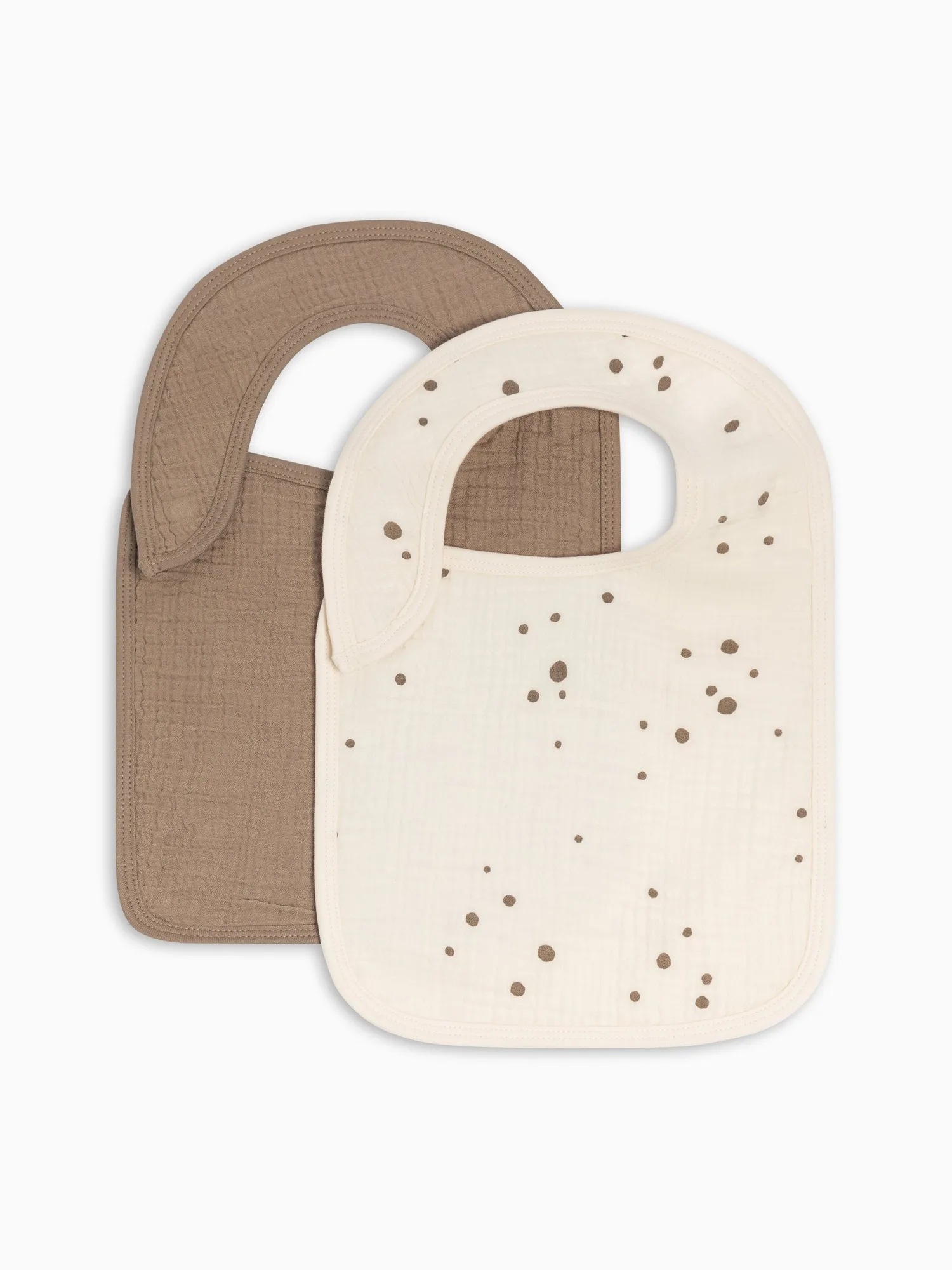
2-Pack Muslin Bibs
-
2-Pack Muslin Bibs: Double snap allows for an adjustable fit You can adjust the neck size as your baby grows, so one bib can serve longer than a fixed-size option.
-
2-Pack Muslin Bibs: Water-based dyes ensuring long-lasting color vibrancy and durability Repeated washing won't fade the pattern quickly, so the bib keeps looking good through heavy rotation.
-
2-Pack Muslin Bibs: Naturally hypoallergenic For babies with sensitive skin, a hypoallergenic fabric reduces the chance of irritation around the neck and chin.
When terry cloth is the better pick
Terry cloth's looped pile traps more liquid, which is why it's a classic choice for heavy droolers and teething babies. If your baby soaks through a bib in an hour, terry cloth will hold more before you need to swap it. The trade-off is drying time: thicker fabric takes longer, so you may need more bibs in rotation.
Fit and adjustability matter more than you think
A bib that's too tight irritates, and one that's too loose lets food slip down the neck. Look for adjustable closures like snaps. The 2-Pack Muslin Bibs from Colored Organics use a double snap, which gives you two settings to fine-tune the fit as your baby grows. That's a practical feature whether you choose muslin or terry cloth.
Care and durability: what to expect
Both fabrics are machine washable, but muslin's lighter weight means it dries faster and is less likely to hold onto odors. Terry cloth can trap more moisture and may need a second rinse if food residue lingers. Always follow the care label: for example, the Colored Organics muslin bibs are machine wash cold, which helps preserve the water-based dyes.
Decision rules for choosing your bib
Choose muslin if: you want a lightweight, quick-drying bib for light feeding or warm weather, or if your baby has sensitive skin. Choose terry cloth if: your baby is a heavy drooler or you need maximum absorbency for teething. Still unsure? Buy a small pack of each and see which one you reach for more. Many parents end up using both: terry cloth for drool-heavy days, muslin for meals and outings.