Quick answer
Choose a muzzle brake if you want the most noticeable reduction in felt recoil and muzzle rise, and you mostly shoot outdoors or in a bay where you can pick your spot. Choose a flash hider if you shoot at an indoor range, next to other shooters, or at dusk, because it spreads the flash and usually adds less concussion and noise to the shooter's ear. The two jobs are different, and one device rarely does both well.
What each device actually does
A muzzle brake uses side-facing ports to redirect propellant gas sideways and slightly rearward. That redirection pushes against the rifle's rearward movement, which is why shooters report less kick and less muzzle rise, and why the rifle settles back on target faster between shots. The trade-off is that the same gas is pushed out to the sides, so the blast and noise land on anyone standing beside you, and the concussion felt by the shooter can increase.
A flash hider, sometimes called a flash suppressor, is built around tines or slots that break up the burning gases as they leave the bore. It does not try to push the rifle forward; it tries to cool and disperse the flash so your night vision is not wiped out by a bright bloom. Recoil reduction is usually minimal compared with a brake, but the device tends to be shorter, lighter, and easier on the people next to you.
Recoil: the honest difference
If your main question is does a muzzle brake reduce recoil, the answer is yes, and the effect is usually larger than what a flash hider gives you. Ports that vent gas sideways and up reduce both rearward push and muzzle climb. A flash hider may slightly change the feel of the shot, but it is not designed as a recoil tool, so do not buy one expecting brake-level control.
That said, recoil reduction is not free. A brake that vents aggressively will be louder and more concussive, and on a short-barreled rifle the difference is obvious. If you shoot long strings from a bench or in a match where split times matter, the brake's control is worth the noise. If you shoot a few magazines at a time for fun, a flash hider may be the more comfortable all-around choice.
Flash, concussion, and range etiquette
Indoor ranges amplify everything. A muzzle brake for indoor range use is a common search for a reason: the side-vented gas bounces off lane dividers and walls, and the shooter two lanes down feels it. Many indoor ranges do not ban brakes, but they do ask shooters to be considerate, and a brake that is fine outdoors can be genuinely unpleasant in a narrow bay.
A flash hider is usually the friendlier device in that setting. It does not eliminate noise, but it does not deliberately throw gas sideways at your neighbor, and it keeps the flash from blooming in low light. If you shoot at an indoor range most of the time and still want some muzzle control, a moderate brake with smaller ports is a middle path, but expect a louder report than a plain flash hider.
Thread pitch and fit before you buy
Most .223/5.56 AR15 barrels use 1/2x28 threads, which is why you see ar15 1/2x28 muzzle brake listings everywhere. Check your barrel's thread pitch before ordering, because a 1/2x28 device will not fit a 5/8x24 .308 barrel, and a 1/2x36 9mm device will not fit a .223 barrel. The thread pitch is stamped or listed by the barrel maker, and it is the one spec you cannot work around with a crush washer.
Timing matters too. A brake or flash hider with a closed bottom or a specific top orientation needs to be shimmed or crush-washered so the ports face the right way. Crush washers are a one-time use item; if you remove and reinstall the device, use a fresh washer and check alignment again. For a device that is symmetrical, timing is less critical, but you still want it snug and not over-torqued.
Trade-offs at a glance
- Recoil control vs noise: A brake trades a quieter, friendlier report for less felt recoil and muzzle rise. The more aggressively it vents gas, the more concussion you and your neighbors get. Pick the brake if split times or shoulder comfort matter more than being the quietest shooter on the line.
- Flash suppression vs recoil: A flash hider trades recoil reduction for lower visible flash and less side blast. It is the better choice for low light and for indoor lanes where you are packed in close. Pick the flash hider if you shoot indoors, at dusk, or next to other people most of the time.
- Length and weight vs control: A short brake keeps the rifle handy; a long-extension brake adds inches past the muzzle and can change how the rifle balances and how it fits in a case or bag. Measure your case and your storage before choosing a 5.5 inch extended device.
Two 1/2x28 options and what they tell you
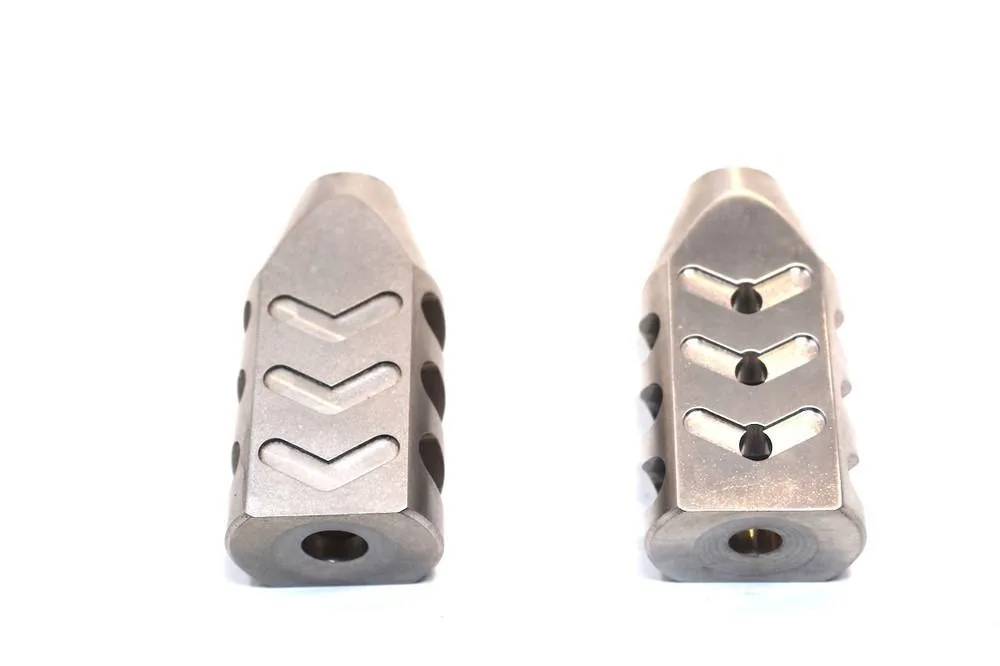
- AR15 .223 1/2"x28 Tanker 50 Style Stainless Steel Muzzle Brake: AR15 .223 1/2x28 Tanker 50 Style Stainless Steel Muzzle Brake, stainless steel, 1/2x28 thread pitch, 2.8125 inches long, 1.375 inches wide, 1 inch tall, 0.375 inch exit hole, 0.55 lb, with crush washer and lock nut included. This is a tanker style muzzle brake in stainless steel, so it is a recoil-focused device with a closed, corrosion-resistant body. The included crush washer and lock nut mean you can time and secure it without hunting for extra hardware, and the 0.375 inch exit hole is sized for .223 bullets.
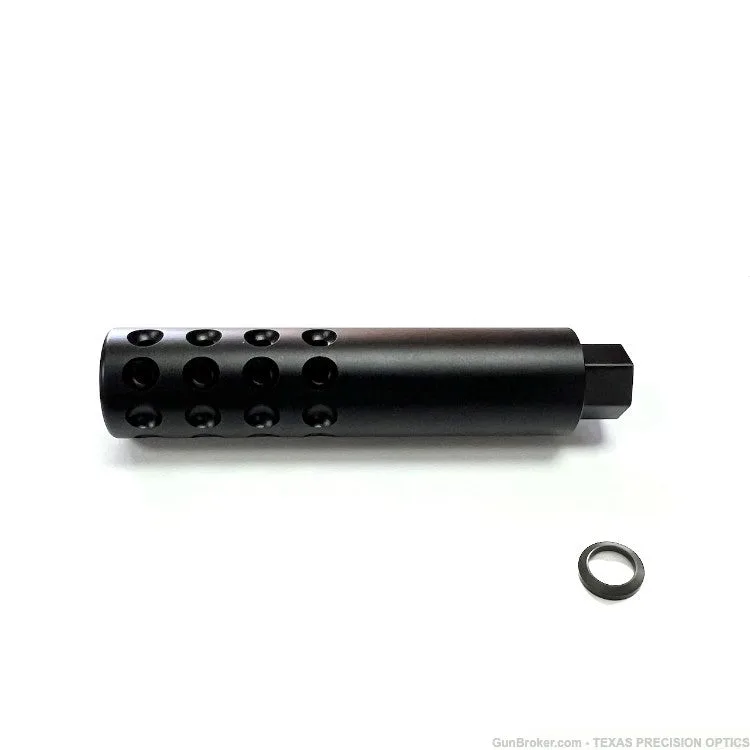
- 1/2x28 thread 5.5 inch extra long muzzle brake for .22LR/223/556 w/washer: 1/2x28 thread 5.5 inch extra long muzzle brake for .22LR/223/556 with washer, CNC machined 7075 aluminum billet, 1/2-28 pitch, crush washer included, 5.5 inch length, 5 inch extension, 1 1/8 inch outside diameter, reduces felt recoil up to 70 percent, for hunting rifle. This is the long-extension option: 5.5 inches overall with a 5 inch extension past the muzzle, so it adds significant length and weight is kept down by the aluminum billet body. It is threaded 1/2x28 and includes a crush washer, and the maker rates it for .22LR, .223, and 5.56, which covers the common AR15 chamberings.
Which one fits your shooting
Best for
- Shooters who want maximum recoil and muzzle-rise control for range sessions, matches, or long strings of fire
- Outdoor shooters who can space out on the line and are not worried about side blast
- Builders who already know their barrel is threaded 1/2x28 and want a stainless steel muzzle brake AR15 option with hardware included
Not for
- Shooters who mostly use a crowded indoor range and do not want to concuss the lanes beside them
- Hunters or shooters who need the least visible flash at dawn or dusk
- Anyone who has not confirmed their barrel thread pitch, since a 1/2x28 device will not fit a 5/8x24 or 1/2x36 barrel