Quick answer
Start by tipping every piece out and sorting it together, then build one small scene rather than the whole set at once. Add a story prompt, let your child rearrange it, and reset it at the end of play. This keeps a wooden forest set interesting for years instead of one afternoon.
A forest floor set fails for one boring reason: everything gets placed the same way every time. The fix is not more pieces, it is a repeatable routine that gives your child a job to do before the animals ever appear.
These seven steps work with the Tender Leaf My Forest Floor set and with most woodland play sets. Run them in order the first time, then let your child lead once they know the pattern. Each step includes the mistake that quietly kills the play.
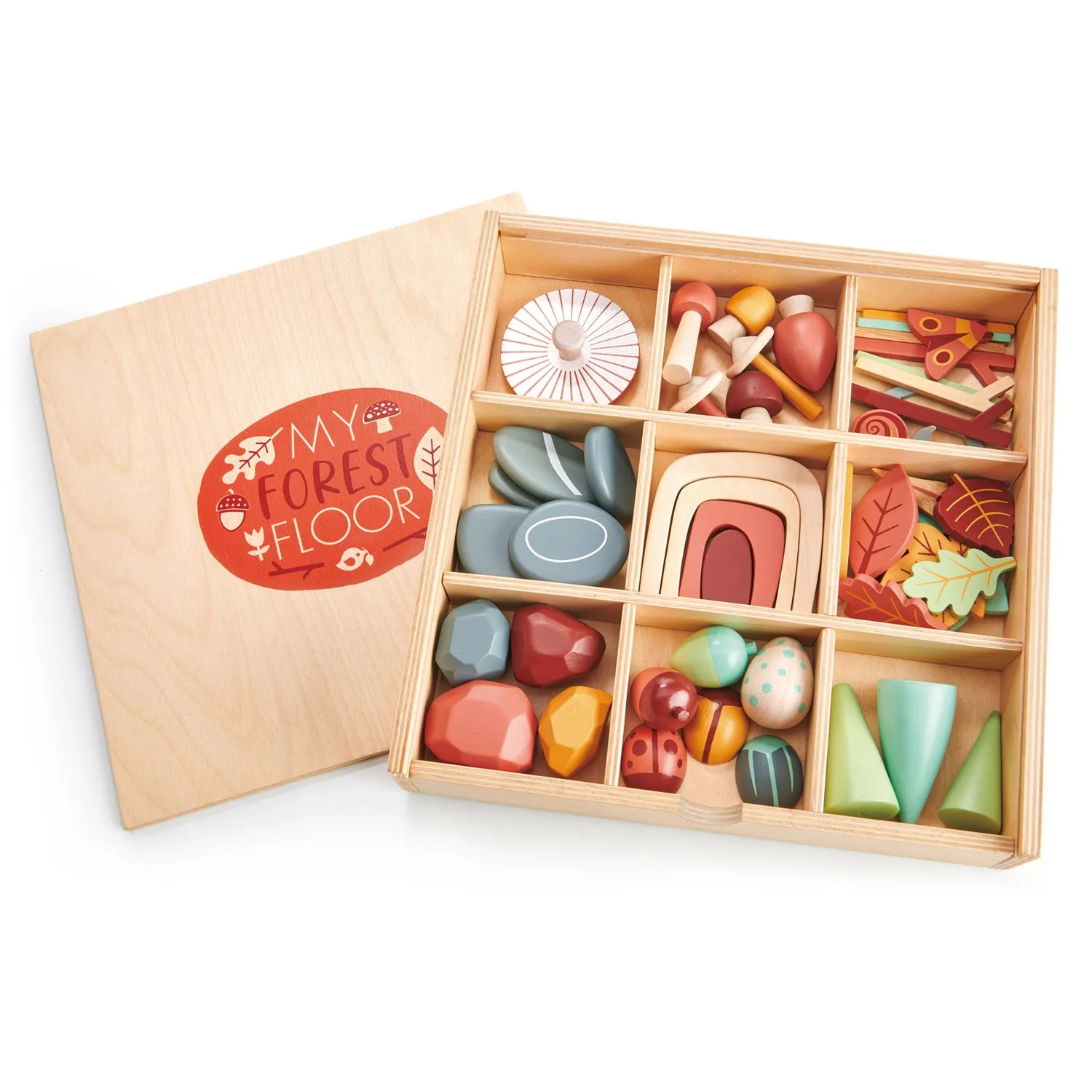
My Forest Floor
Set up a base that survives daily play
Choose a low, flat surface at your child's height, such as a coffee table, a play mat, or the floor beside a shelf. Keep the set there rather than packing it away each day, because a woodland scene that has to be rebuilt from scratch rarely gets rebuilt.
Store loose pieces in one open basket or tray. Open storage matters more than tidy storage here: if your child can see the pieces, they will use them. A lidded box that lives on a high shelf turns a daily toy into a weekend toy.
- Keep the base out of walkways so pieces are not constantly knocked over.
- Put the basket beside the base, not across the room.
Sort the pieces together before you build
Tip everything out and sort by type: trees, animals, ground pieces, loose parts. Ask your child to name each group as it forms. This is the step most parents skip, and it is the one that does the most work, because sorting builds the vocabulary your child needs to direct the play later.
If your child is impatient, sort only the animals and let the rest stay in the pile. A partial sort still gives you a shared starting point. The checkpoint is simple: your child should be able to tell you what is in at least two groups before you start building.
- Name colors, sizes, and animal types out loud as you sort.
- Let your child choose which group gets built first.
Build one small scene, not the whole forest
Place three or four pieces to suggest a clearing, a path, or a stream, then stop. A sparse scene leaves room for your child to add to it, while a fully built forest leaves them nothing to do but look at it. Resist finishing the picture for them.
This is where the common mistake appears: adults build a beautiful complete scene, the child admires it for two minutes, and play ends. Build the frame, hand over the pieces, and let the scene stay unfinished on purpose.
- Leave at least half the pieces in the basket for your child to place.
- Ask where the path should go instead of deciding yourself.
Add a story prompt, then step back
Give one open question, not a plot: who lives here, what happened last night, where are they going. Then stay quiet for a minute. Children who are used to being entertained will wait at first, so give them the silence to fill.
Rotate the prompt each session so the set does not settle into a single story. One day it is a search for food, the next it is a storm, the next it is a new animal arriving. The same pieces support all three.
- Write three prompts on slips of paper and let your child draw one.
- Avoid correcting the story, even when the animals behave strangely.
Mix in a second toy for cross-play
Woodland play gets a second life when another set visits the forest. Small vehicles, stacking toys, or a doll's chair can all become part of the scene, and the mixing is where the richest language tends to appear.
If you already own the Stacking Cars, the wheeled recovery truck makes a natural forest vehicle, and the seven brightly coloured cars give your child something to load, count, and park. This is also a good moment to check that small pieces from other sets are not a choking risk for children still mouthing toys.
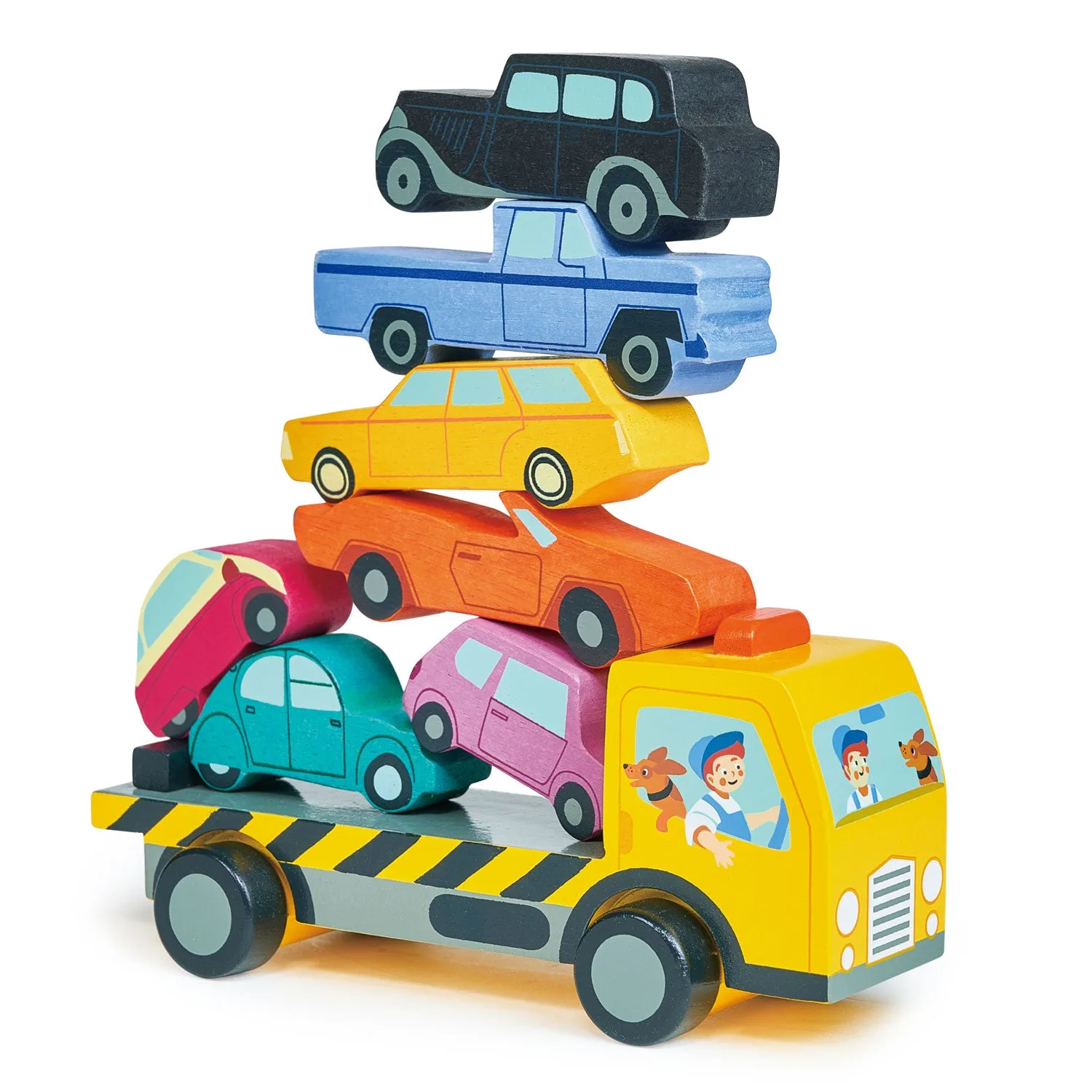
Stacking Cars
- Bring in one extra toy at a time so the scene stays readable.
- Put the extra toy away at the end of the session to keep the forest special.
Let your child reset it their way
At the end of play, ask your child to put the pieces back in the basket rather than doing it yourself. The reset is part of the routine and signals that the next session will start fresh. If they resist, make it a sorting race or a counting game.
The checkpoint here is whether the set is usable tomorrow. If pieces end up scattered under furniture, the base is in the wrong place or the basket is too small. Fix the storage before you blame the toy.
- Count pieces back into the basket to catch strays early.
- Keep the basket at your child's height so they can start play alone.
Grow the set only when play stalls
Before buying anything new, change the routine instead: a new prompt, a new location, or a new companion toy usually revives interest for weeks. Add pieces only when your child has genuinely exhausted the current ones, and add them one at a time.
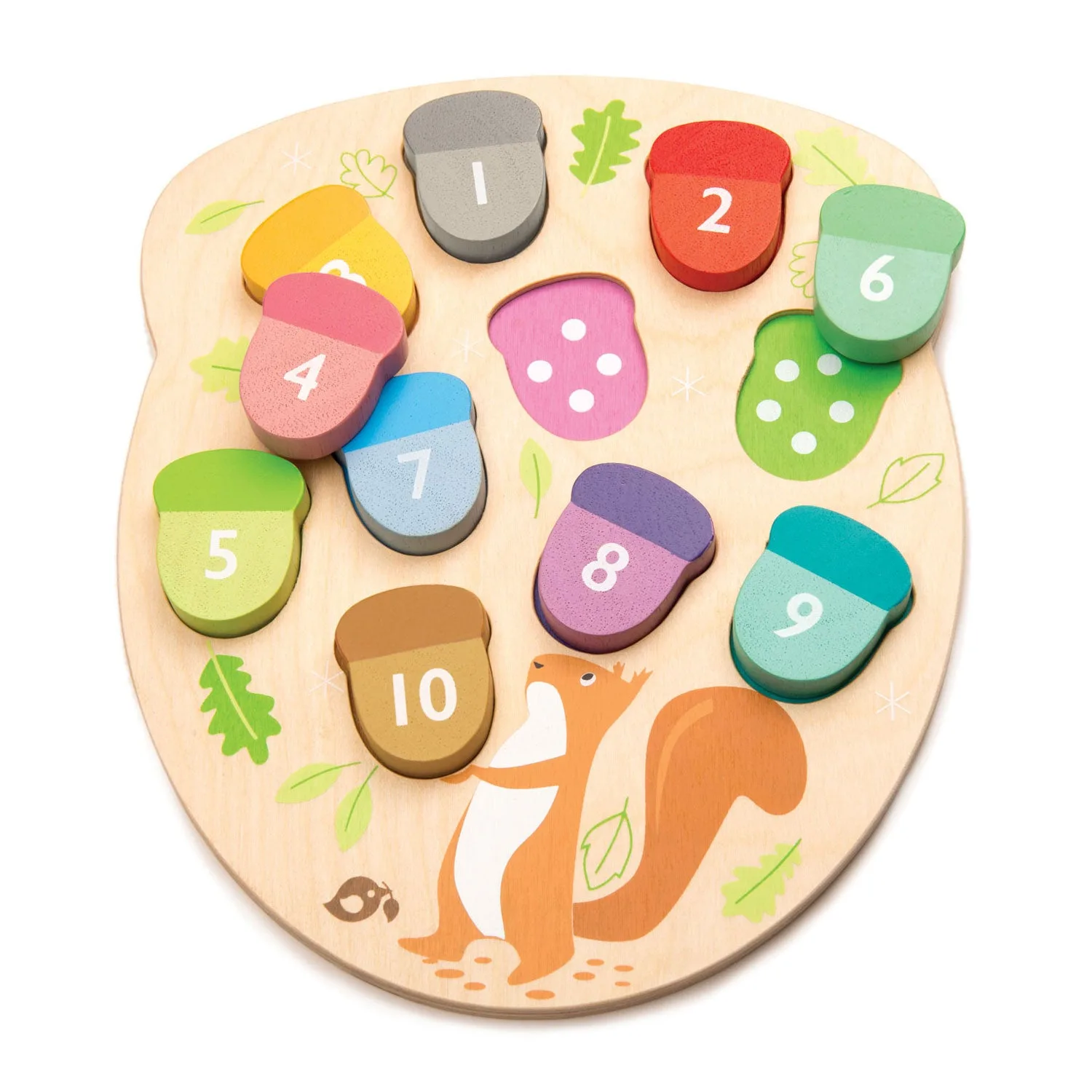
Small, cheap additions often do more than a large set. The How Many Acorns? counting set, for example, gives you ten colored wooden acorns that slot straight into a forest scene as food, treasure, or counting practice, and it costs far less than expanding the forest itself.
- Track which pieces get ignored for a month before buying more.
- Rotate one piece out when one piece comes in.
Seven-step forest floor play routine
- Set the base: Choose one low, flat surface at your child's height and keep the set there between sessions. Checkpoint: your child can reach the base and the basket without help.
- Sort together: Tip all pieces out and sort into trees, animals, ground pieces, and loose parts, naming each group. Mistake to avoid: sorting alone while your child waits.
- Build a partial scene: Place three or four pieces to suggest a clearing, path, or stream, then hand the rest to your child. Mistake to avoid: finishing the whole forest yourself.
- Give one story prompt: Ask a single open question such as who lives here or where are they going, then stay quiet. Checkpoint: your child adds at least one piece in response.
- Invite a second toy: Bring in one extra set, such as the Stacking Cars recovery truck, to act as a forest vehicle. Mistake to avoid: adding several toys at once and losing the scene.
- Reset as a game: Have your child return pieces to the basket, counting or racing to make the reset quick. Checkpoint: the set is ready to use again tomorrow.
- Extend only when play stalls: Change the prompt or location first, then add one small piece such as the How Many Acorns? set. Mistake to avoid: buying a large new set before the routine has been varied.
Woodland pieces that extend the play
- How Many Acorns?: Includes 10 colored wooden acorns, each revealing the corresponding color and number of dots, for learning numbers and colors. The acorns work as forest food, treasure, or a counting game inside the same scene, so they extend woodland play without adding a second setup.
- Stacking Cars: 7 brightly coloured wooden toy cars plus a wheeled recovery truck that the cars stack onto, developing fine motor skills and hand-eye coordination. The truck can visit the forest as a delivery or rescue vehicle, and the stacking itself gives younger children a simpler task alongside the open-ended scene.
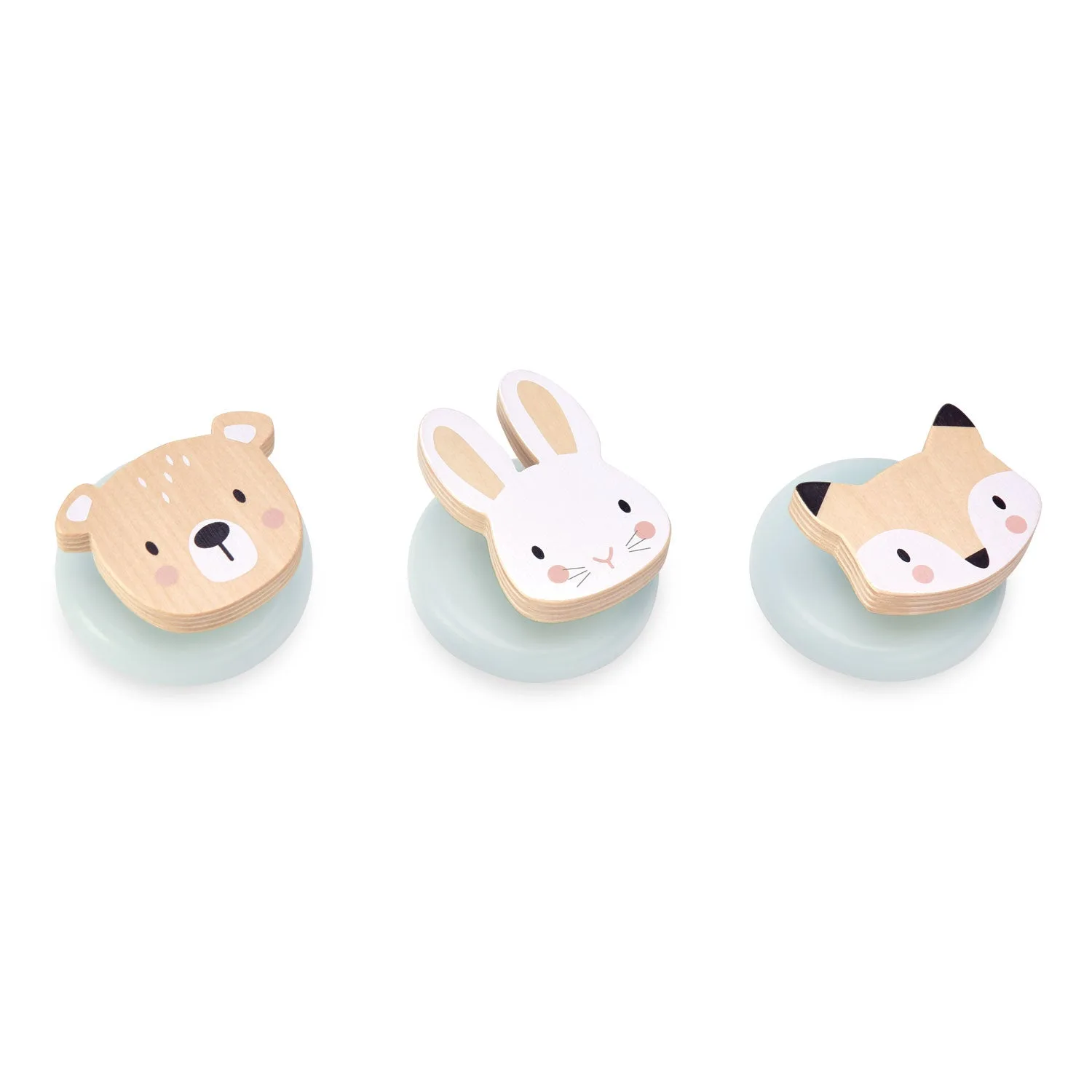
- Forest Hooks: 3 hooks shaped as a fox, bear, and rabbit. Useful for storing a play bag or dress-up items near the play base so the forest theme carries into the room without more loose pieces on the floor.
Forest floor play rewards routine more than it rewards new pieces. Run these steps for a few weeks, keep the base out and the basket open, and the same wooden forest set will keep producing new stories long after the novelty of a single afternoon would have worn off.