Quick Answer
No, you don't always need 160gsm paper for everyday planning. While 160gsm paper eliminates ghosting and bleed-through with wet media like markers and paint pens, many daily tasks—pencil, ballpoint, or light gel pen—perform perfectly on 100gsm or 120gsm paper. The right paper weight depends on what you actually write with and how you use your planner.
The Myth: Heavier Paper Is Always Better for Planning
A common belief in the planner community is that only 160gsm paper can handle daily use without ghosting or bleeding. This leads many to assume that any notebook with a lower gsm is automatically inferior. But the truth is more nuanced: paper weight is just one factor in the writing experience, and the best choice depends on your tools and habits.
For example, the A5 Dot Grid Notepad: Bluescale uses our signature 160gsm paper with a 5mm dot grid. It's designed for heavy ink users and those who like to tear out pages for binders. But if you mostly use a pencil or a fine-liner, that same 160gsm might feel unnecessarily thick and heavy, adding bulk to your bag without any practical benefit.
When 160gsm Paper Actually Matters
160gsm paper shines when you use wet media: fountain pens, brush pens, markers, or paint pens. The extra thickness prevents ink from seeping through to the next page, so you can use both sides of the sheet without distraction. The Gentle Breeze: Dot Grid Notebook, with its 160gsm pages, is ideal for scrapbooking and visual journaling where water-based markers and glue are common.
Similarly, the B5: Nostalgia Composition Dot Grid Notebook offers 160gsm pages that can handle doodles and sticker-heavy layouts without buckling. If your planning style includes mixed media or heavy ink, the extra weight is a real advantage.
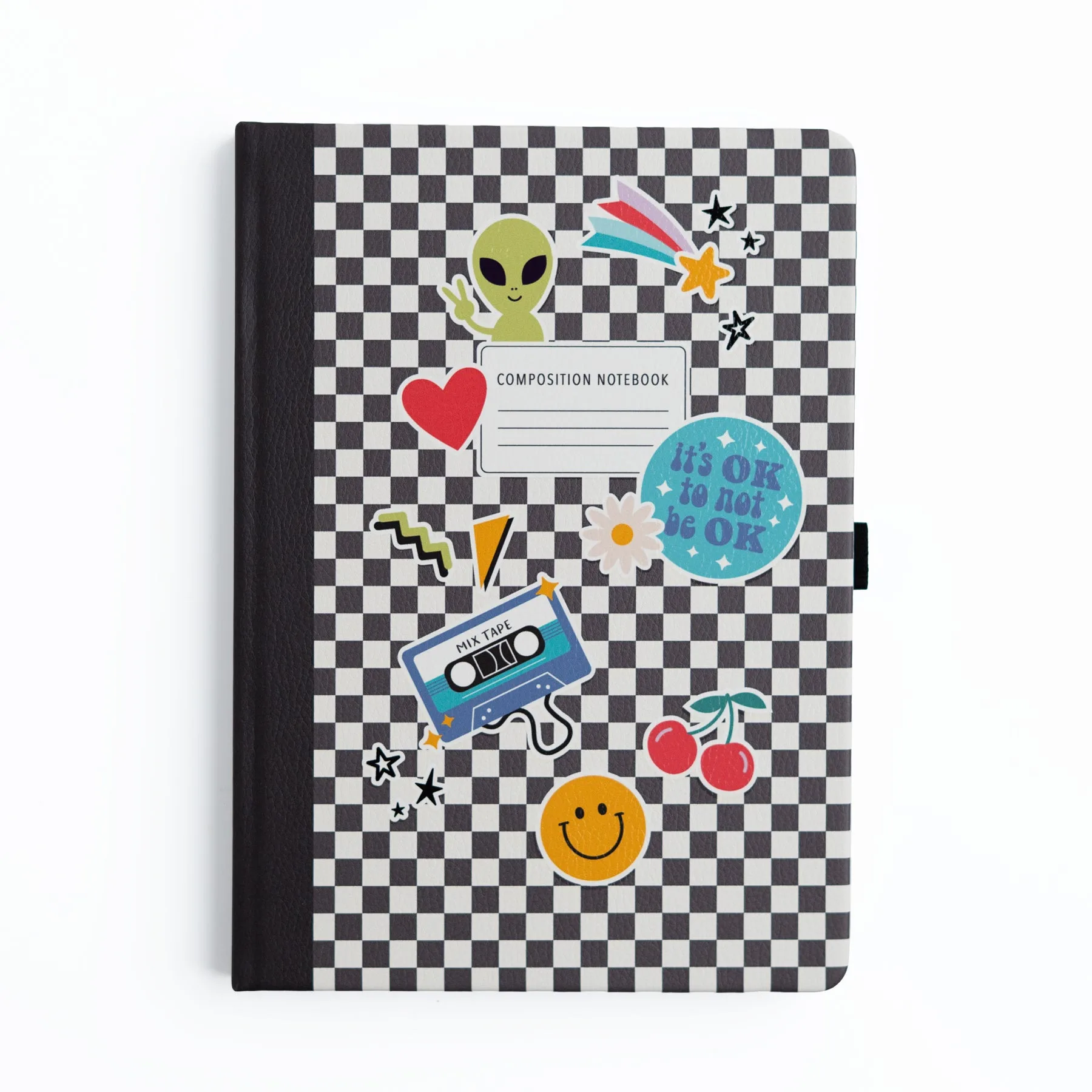
B5: Nostalgia Composition Dot Grid Notebook
When You Can Save Money with Lighter Paper
If your daily planning consists of writing with a ballpoint pen, a pencil, or a light gel pen, you likely don't need 160gsm paper. Lighter paper weights (like 100gsm or 120gsm) are perfectly adequate, cheaper, and make your notebook thinner and more portable. The trade-off is that you might see faint ghosting on the reverse side, but for many users this is barely noticeable and doesn't affect readability.
The key is to match the paper to your pen. Test your everyday pen on a sample page before committing to a heavy notebook. If you see no ghosting on 100gsm, there's no need to pay extra for 160gsm.
Verdicts on Common Paper Weight Myths
- Myth: 160gsm is always necessary to avoid ghosting: Ghosting depends on ink type and pen pressure, not just paper weight. Many 100gsm papers show no ghosting with dry pens. Test your pen on a sample page first.
- Myth: Heavier paper means better quality overall: Paper quality includes smoothness, opacity, and coating. A well-made 120gsm paper can feel more pleasant than a rough 160gsm sheet. Look for paper that feels good to write on, not just a high number.
- Myth: You need 160gsm for all planning styles: Bullet journaling with pencil or fine-liner works fine on lighter paper. Save 160gsm for projects involving wet media or heavy layering. Match paper weight to your actual tools.
Paper Weight in Practice
- A5 Dot Grid Notepad: Bluescale: A5 Dot Grid Notepad: Bluescale uses our signature 160gsm paper with 5mm dot grid and 160 perforated pages. The perforated pages let you tear out sheets without sacrificing the thick paper that prevents bleed-through. Great for desk use where you might switch between pens and markers.
- Gentle Breeze: Dot Grid Notebook: Gentle Breeze: Dot Grid Notebook features 160gsm dot grid pages ideal for scrapbooking, visual journaling, and creative planning. If your planning involves glue, paint pens, or heavy ink, this notebook's paper weight handles it all without ghosting or buckling.