Quick answer
Nail clippers shorten the free edge of the nail, while cuticle nippers remove dead cuticle tissue around the nail plate. They are not interchangeable. For acrylics, use a cuticle nipper for cuticle work and avoid standard clippers for shortening unless they are sharp and specifically suited to thick enhancements. If you are unsure, start with a cuticle nipper for maintenance and a separate clipper for length.
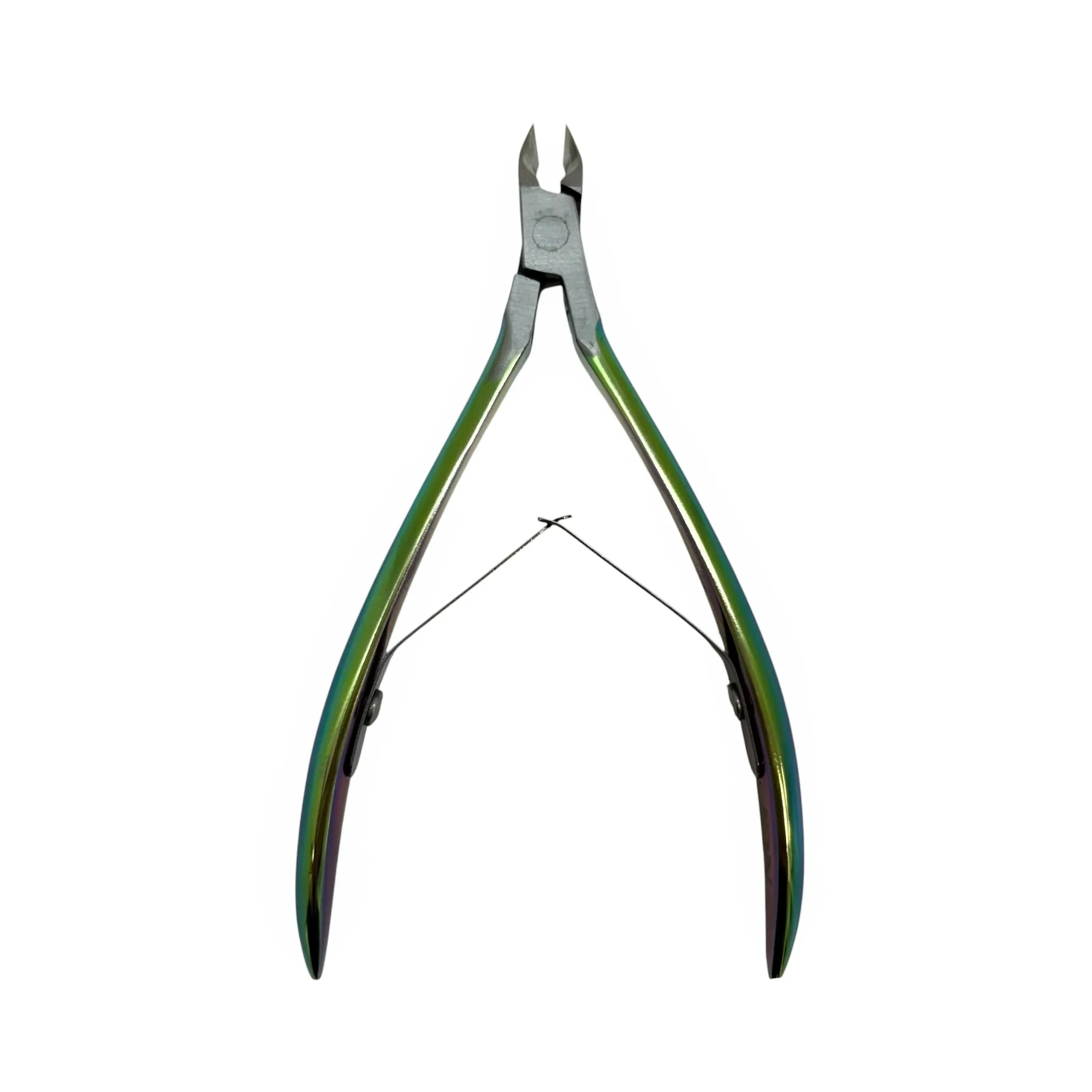
cuticle nipper
If you have ever reached for a cuticle nipper to trim a long nail or used nail clippers to tidy up a ragged cuticle, you already know the result is rarely clean. The two tools look similar but are designed for completely different jobs. Understanding the difference between nail clippers and a cuticle nipper saves you from splitting acrylics, nicking skin, and ruining a fresh set.
This comparison breaks down what each tool does, how they perform on natural nails versus acrylics, and which one belongs in your kit for which step. We will also cover how to choose based on your service menu and why some clippers work better on thick enhancements than others.
What nail clippers actually do
Nail clippers are made to shorten the free edge of the nail. They have a curved cutting jaw that wraps around the nail plate and a lever that applies pressure to shear through the nail in one motion. Standard clippers work well on natural nails and thin enhancements, but they can crack or split thick acrylic if the blade is dull or the jaw is too small.
For acrylics, you need a clipper with a sharp, sturdy jaw and enough opening to accommodate the thickness of the enhancement. If the clipper struggles or you hear a cracking sound, stop. That is a sign the tool is not suited to the job and you risk damaging the enhancement or the natural nail underneath.
- Use clippers only on the free edge, never on the cuticle or sidewalls.
- For acrylics, choose a clipper with a wide jaw and replace it when it starts tearing rather than cutting.
- If you are unsure whether your clipper can handle acrylics, test on a tip first.
What a cuticle nipper actually does
A cuticle nipper has two small, sharp jaws that meet precisely to trim dead cuticle tissue and hangnails around the nail plate. The jaws are much smaller than clipper blades and are designed for controlled, close cuts on skin, not for cutting through the nail plate. Using a nipper to shorten a nail is unsafe and will damage the cutting edge.
Cuticle nipper uses include removing dead skin after cuticle softener, cleaning up hangnails, and detailing around the eponychium. For acrylic services, a nipper is essential for prep and maintenance, but it should never be used to clip length. Keep it clean and sharp; a dull nipper tears skin instead of cutting it cleanly.
- Sanitize nippers between clients and store them with the jaws closed to protect the edge.
- Never use a nipper on the nail plate; it is designed for skin only.
- If the nipper pulls or tugs instead of snipping, it needs sharpening or replacement.
Nail clipper types and what they mean for acrylics
Nail clipper types range from standard curved clippers to straight-edge toenail clippers and heavy-duty acrylic clippers. Standard clippers have a curved jaw for fingernails and work on natural nails. Toenail clippers have a straighter, larger jaw for thicker nails. Acrylic clippers are specifically built with a wider opening and stronger spring to handle enhancements without cracking them.
If you regularly work with acrylics, a dedicated acrylic clipper is worth the investment. It cuts cleanly and reduces the risk of lifting or fracturing the enhancement. For natural nails or thin gel, a standard clipper is fine. The trade-off is that acrylic clippers are bulkier and less precise for detailed shaping, so you still need a file for final refinement.
- Match the clipper type to the thickness of the nail you are cutting.
- Never use a cuticle nipper as a substitute for a clipper on acrylics.
- Replace clippers when the blade dulls; a dull blade causes more damage than a sharp one.
Cuticle nipper vs nail scissors: a quick clarification
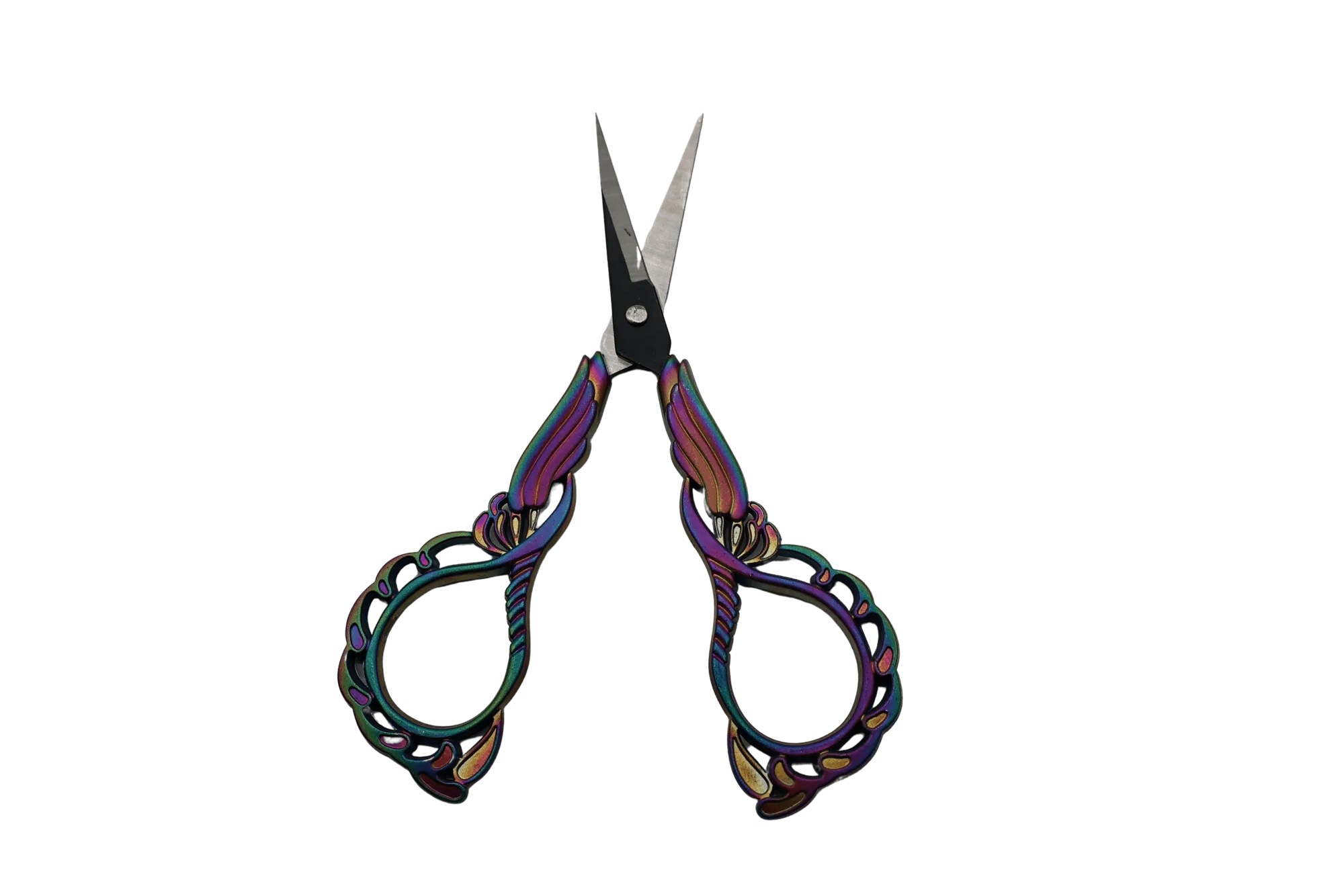
scissors
Cuticle nippers and nail scissors are also different tools. Nail scissors have longer, curved blades for trimming nails or detailed shaping, while nippers have short, precise jaws for cuticle skin. Scissors can be useful for trimming excess length on soft gel or natural nails, but they are not ideal for thick acrylics because the blades can twist or bend.
For acrylics, stick with a proper acrylic clipper or a coarse file for length reduction. Scissors are best kept for natural nail trimming or dry cuticle work where a nipper might be too aggressive. The key is to match the tool to the task and the material you are cutting.
- Use scissors for natural nail trimming, not for thick acrylics.
- Keep nippers for cuticle skin only; do not use them on the nail plate.
- If you are unsure, default to a file for shaping and a clipper for length.
Trade-offs at a glance
- Nail clippers: Designed to shorten the free edge. Best for natural nails and thin enhancements. Acrylic-specific clippers handle thick enhancements but are bulkier and less precise for detail work. Choose clippers for length, not for cuticle care.
- Cuticle nippers: Designed to trim dead cuticle skin and hangnails. Precise and sharp, but unsafe for cutting nails. Requires regular cleaning and sharpening. Choose nippers for cuticle detail, never for shortening.
- Nail scissors: Longer curved blades for trimming natural nails or soft gel. Can twist or bend on thick acrylics, making them a poor choice for enhancement length reduction. Keep scissors for natural nails; use clippers or a file for acrylics.
Product facts that matter for this choice
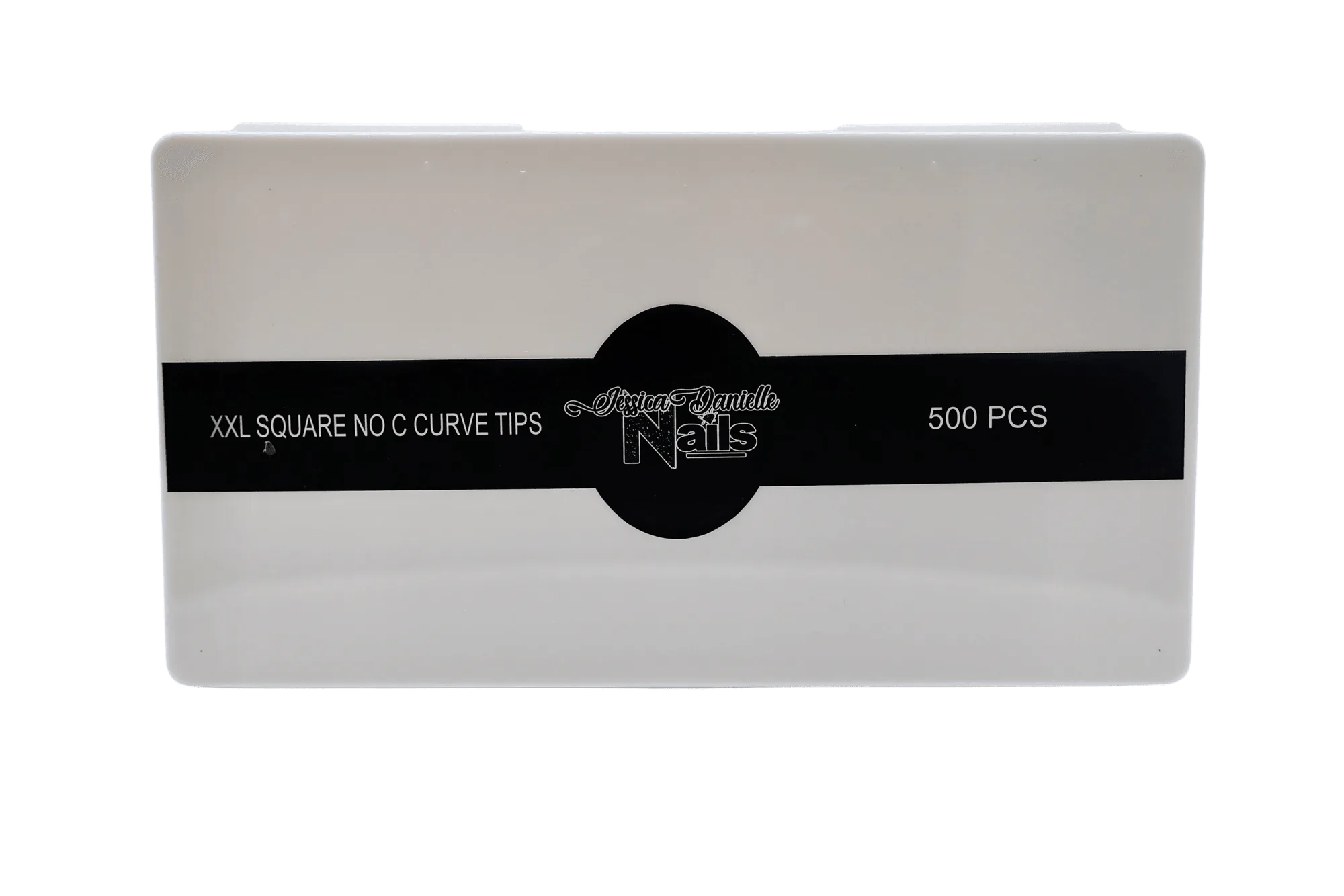
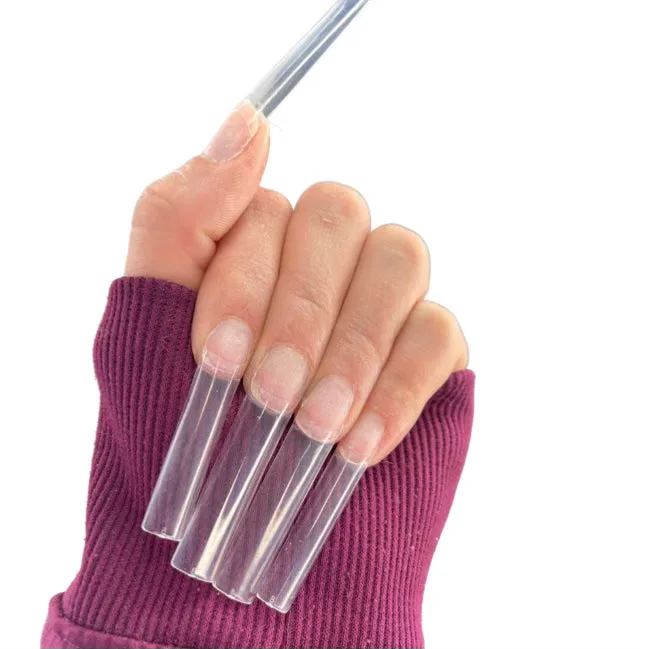
- https://jessicadaniellenail.com/products/refills-xl-square-nail-tips-e8c85a1c51828ca6709975bd-2600395Super Long Square Nail Tips- Refill Bags: Refill bags in bulk (contains 600 pcs). Choose from sizes 0-3, 4-6, or 7-9. No c-curve. Pre-shaped super long square tips. Minimal filing needed due to their perfect form. Suitable to create any length. Easy to achieve flawless shaping. Crystal Clear Tips. FOR PROFESSIONAL USE ONLY. These tips are pre-shaped and require minimal filing, so you can focus on cuticle work and length control. They are not a substitute for clippers or nippers, but they show why you need separate tools: the tip provides the shape, while clippers shorten and nippers clean up cuticle.
- Super Long Square Tips- Individual Refill Bags: Refill bags comes with 50 pcs. Choose from sizes 0,1,2,3,4,5,6,7,8, or 9. No c-curve. Pre-shaped super square coffin tips. Minimal filing needed due to their perfect form. Suitable to create any length. Easy to achieve flawless shaping. Crystal Clear Tips. FOR PROFESSIONAL USE ONLY. Individual refill bags let you restock only the sizes you use most, which is practical if you keep a small kit. Like the bulk bags, these tips are pre-shaped, so your clipper and nipper work stays focused on length and cuticle detail.
Which tool fits your service?
Best for
- Nail clippers: shortening natural nails, thin gel, or acrylics with a dedicated acrylic clipper.
- Cuticle nippers: removing dead cuticle, hangnails, and detailed prep around the nail plate.
- Nail scissors: trimming natural nails or soft gel when a clean, curved cut is needed.
Not for
- Nail clippers: cuticle work or detailed skin trimming.
- Cuticle nippers: shortening nails or cutting through acrylic.
- Nail scissors: thick acrylic enhancements, where they can twist or bend.
Keep clippers and nippers separate in your kit and use each for its intended job. For acrylics, a dedicated acrylic clipper and a sharp cuticle nipper cover length and cuticle care without damaging the enhancement. If you are building your kit, start with a quality nipper for prep and add an acrylic clipper when you begin offering enhancements.