Quick Answer
Use nail polish remover when you want polish off your nails, and nail polish thinner when a bottle has thickened but you want to keep wearing it. They are not interchangeable: remover dissolves and destroys polish, while thinner replaces the solvents that evaporated so the formula flows again. If you are mid-manicure and the bottle is stringy, reach for thinner. If you are done with the color, reach for remover.
What Each Product Actually Does to the Formula
Remover is a solvent blend, usually acetone or a gentler non-acetone mix, designed to break down cured polish so it lifts off the nail plate. It is meant to be destructive. Thinner is a solvent blend with no film-forming ingredients, designed to top up the solvents a polish loses every time you open the bottle. It restores the original consistency without adding pigment or changing the color.
That difference explains the most common mistake: pouring remover into a thickened bottle. Acetone will thin the polish temporarily, but it also attacks the resins and nitrocellulose that make polish stick and dry glossy. The bottle may look fixed for one manicure, then turn lumpy, cloudy, or unable to dry hard. Thinner is the only one of the two that is formulated to be added to polish.
Can I Use Thinner as Remover?
No. Thinner is a small dose of solvent meant to be diluted into a whole bottle of polish. Poured onto a manicure, it will not dissolve a cured film evenly, and it can smear pigment into the nail and surrounding skin while leaving most of the polish intact. If you have run out of remover, wait and buy remover rather than improvising with thinner.
The reverse swap is just as bad. Remover in a bottle of polish is the fastest way to ruin a formula you cannot replace, which matters more with indie shades made in small batches than with a drugstore basic.
Acetone vs Non-Acetone Remover: A Quick Trade-Off
Acetone remover works in seconds and handles glitter, reflective finishes, and multiple coats without much rubbing. It is also drying, and it will dull or dissolve some nail enhancements. Non-acetone remover is gentler on nails and skin but slower, and it struggles with dense glitter formulas that sit close to the nail.
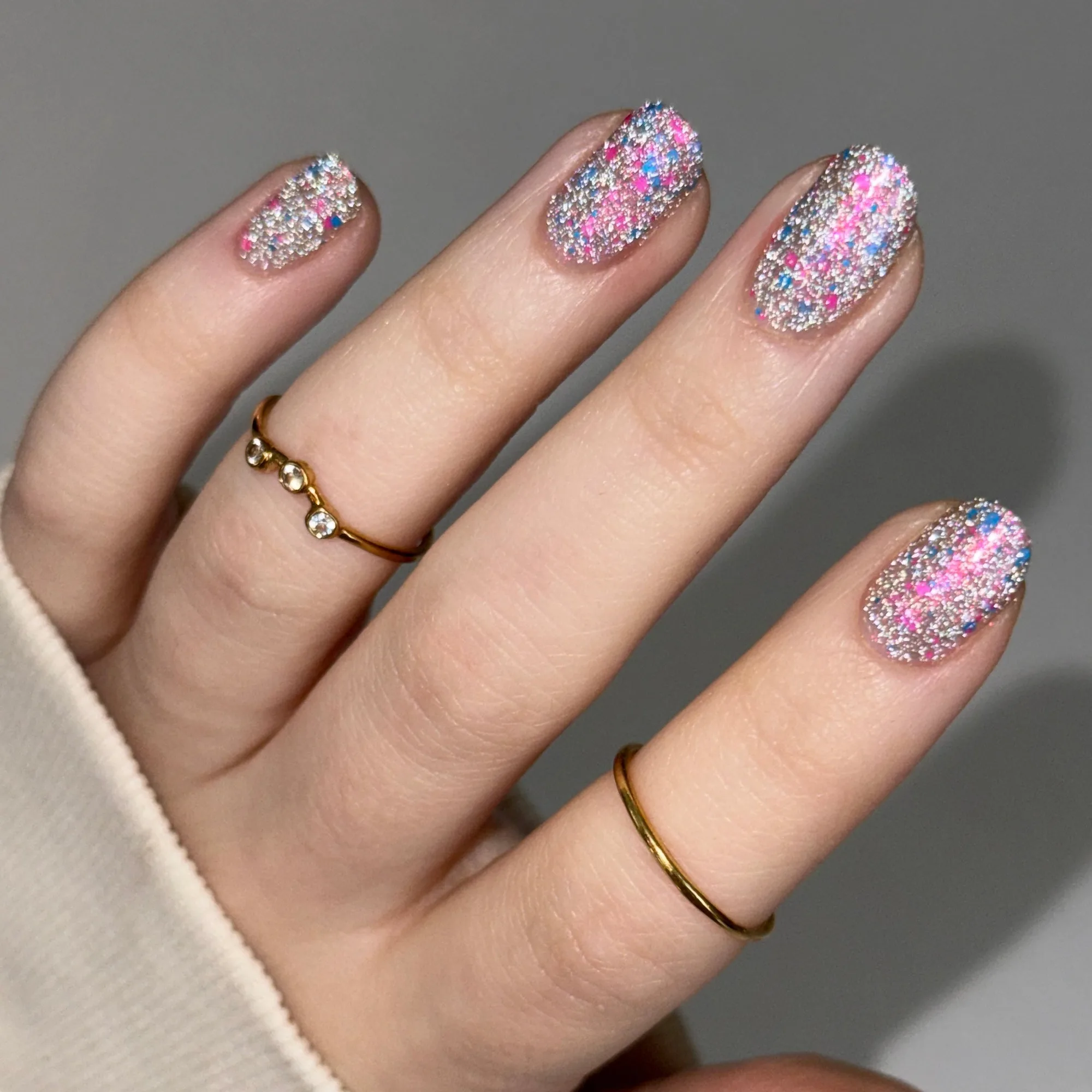
Match the remover to the finish you are wearing. A reflective glitter like Squid Pro Quo, which uses a silver reflective glitter base with pink, gold, and green shifting shimmer plus assorted neon blue and pink glitters, comes off far faster with acetone than with a gentle non-acetone soak. For a simple two-coat shimmer, a non-acetone remover is usually enough.
When Thinner Is the Right Call
Reach for thinner when a polish has thickened from normal use, when the brush drags and leaves streaks, or when the formula has started to string between the brush and the bottle. Add it a few drops at a time, cap the bottle, roll it between your palms, and give it a few minutes before testing. You can always add more; you cannot take it back out.
Thinner will not fix every problem. Separation, color shift, or a polish that has dried solid at the bottom of the bottle is past saving, and thinner will not restore pigment that has settled into a hard cake. It also will not help a polish that is thick because it was always meant to be a thick one-coat formula.
Protecting the Polishes You Thin
Thinned polish behaves best when you keep the bottle clean at the rim, close it tightly, and store it upright and out of direct sun. Every open bottle loses solvent, so working quickly and not leaving the cap off while you paint both hands will slow the thickening you are trying to reverse.
If you thin a bottle and it still applies unevenly, check the coats you are using against the label. A holographic like Yellow Topaz is built for 1-2 coats, and a shimmer like Don't Kiss Your Sis expects 2-3, so a formula that looks patchy at one coat may simply need the second pass rather than more thinner.
Remover vs Thinner: The Trade-Offs
- Speed vs nail condition: Acetone remover clears glitter and reflective finishes in seconds but leaves nails dry and can dull enhancements. Non-acetone remover is kinder but slower and needs more rubbing on dense glitters. Choose based on the finish you are removing, not habit.
- Reviving vs ruining a bottle: Thinner restores evaporated solvents and keeps the formula's color and finish intact. Remover poured into a bottle thins it briefly while breaking down the resins that make it dry and adhere. Only thinner belongs in a polish bottle.
- Fixing vs accepting a formula: Thinner helps a polish that has thickened with age or open-air use. It cannot fix settled pigment, dried-out bottles, or a formula that is thick by design. Thin a little at a time and stop when the brush glides.
Polishes That Show the Difference
- Squid Pro Quo - Silver Reflective Glitter Nail Polish with Pink Shimmer and Neon Glitter - Squids Fly High Sibling: Silver reflective glitter base with pink, gold, and green shifting shimmer and assorted neon blue and pink glitters; recommended 2 coats, 15ml. Dense glitter and reflective particles are the hardest finishes to remove, so this is the kind of polish that justifies keeping acetone remover on hand rather than a gentle non-acetone formula.
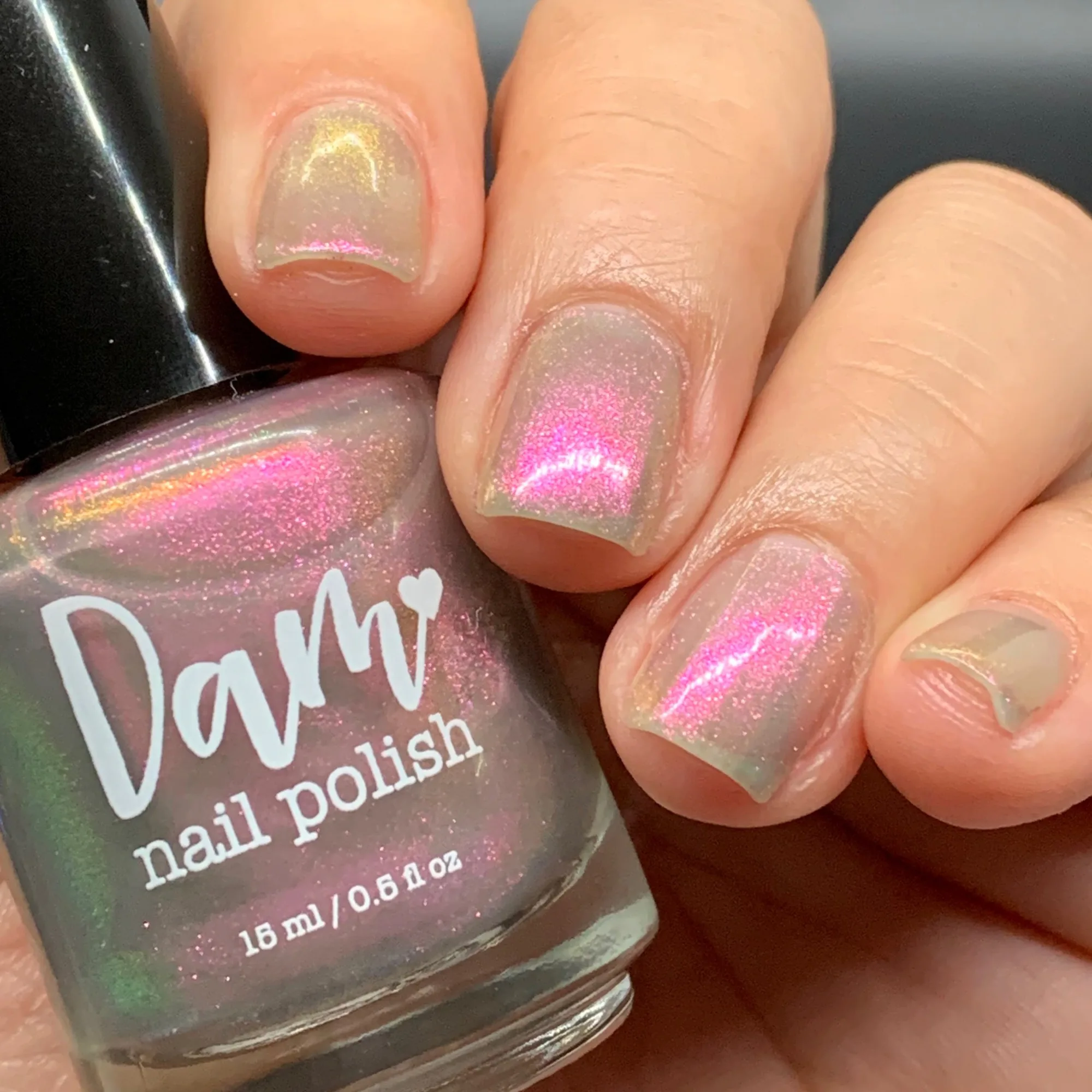
- Don’t Kiss Your Sis - Pink Shimmer Nail Polish - Trust the Shimmer Collection: Sheer gray base with pink, gold, and green shimmer; recommended 2-3 coats, 15ml. A sheer shimmer builds in layers, so if it starts applying streaky, check whether you are at the recommended coat count before assuming the bottle needs thinner.
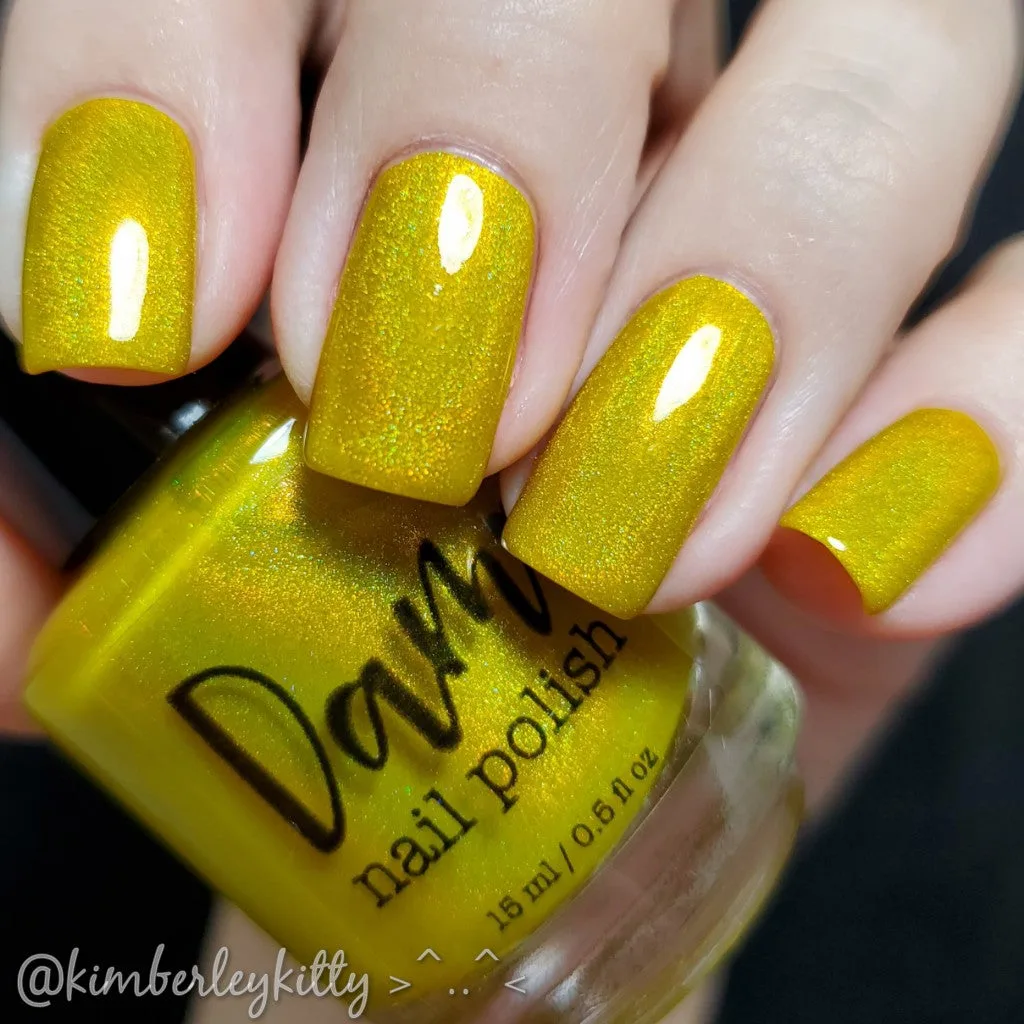
- Yellow Topaz - Yellow Holographic Polish - Gemstone Rainbow: Yellow holographic polish with a strong holographic effect; recommended 1-2 coats, 15ml. A one-to-two-coat holographic is a good test case for thinner: if it stops flowing at one coat, the formula has thickened, but if it just looks thin, you need the second coat instead.
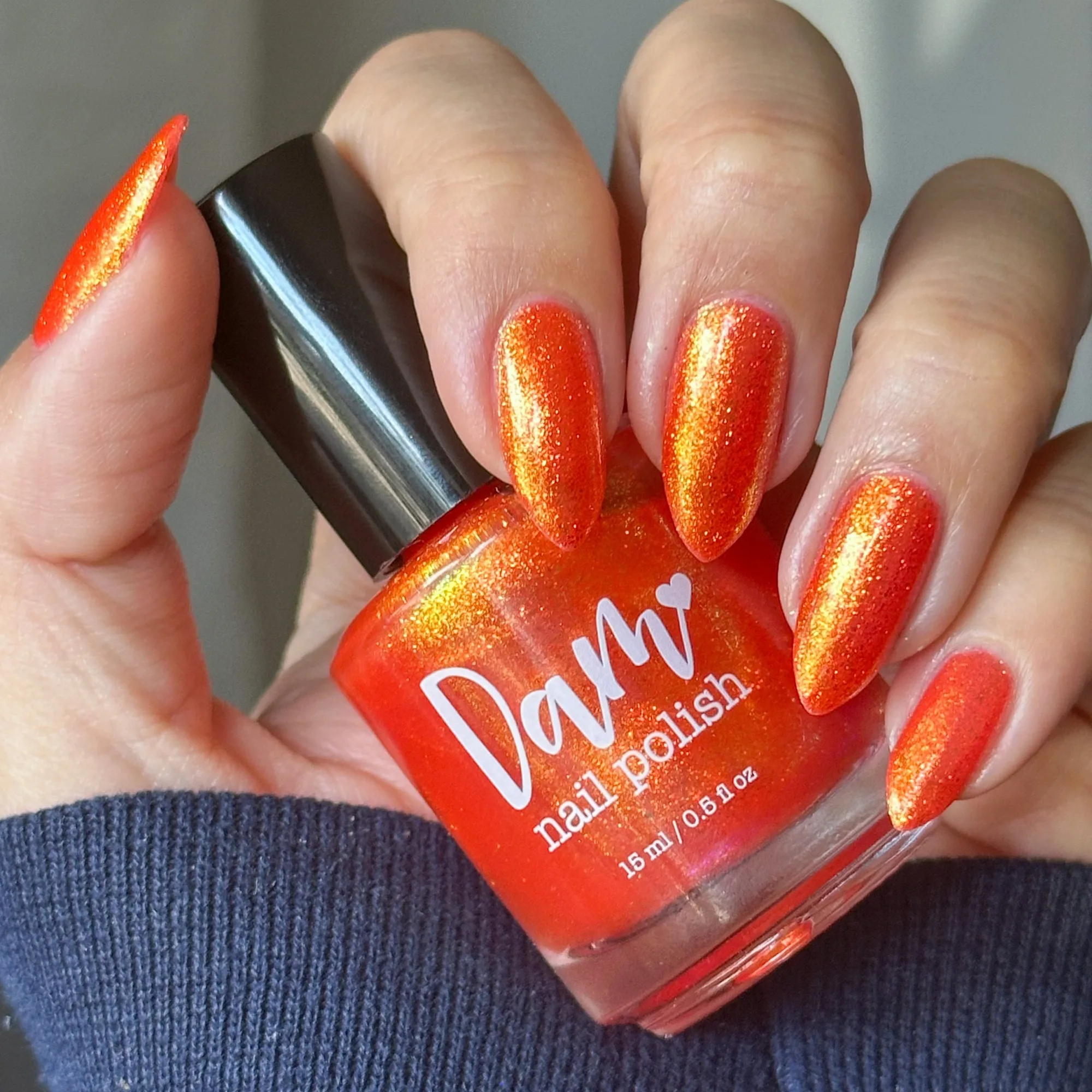
- Creep - Orange Shimmer Nail Polish - Bonus Track Collection: Orange jelly base with gold, green, and blue shifting shimmer; recommended 2-3 coats, 15ml. Jelly formulas rely on their solvent balance for that translucent depth, so use thinner sparingly here and only when the polish genuinely drags rather than when it looks sheer.
Which One Should You Reach For?
Reach for thinner when
- A polish you still want to wear has thickened, drags, or strings from the brush
- You are trying to save a small-batch indie shade that is hard to replace
- The color and finish are still correct and only the consistency has changed
Reach for remover instead when
- You want the polish off your nails, including glitter and reflective finishes that need a solvent soak
- The bottle has separated, dried solid, or lost its pigment
- You are tempted to pour remover into polish to thin it