Quick answer
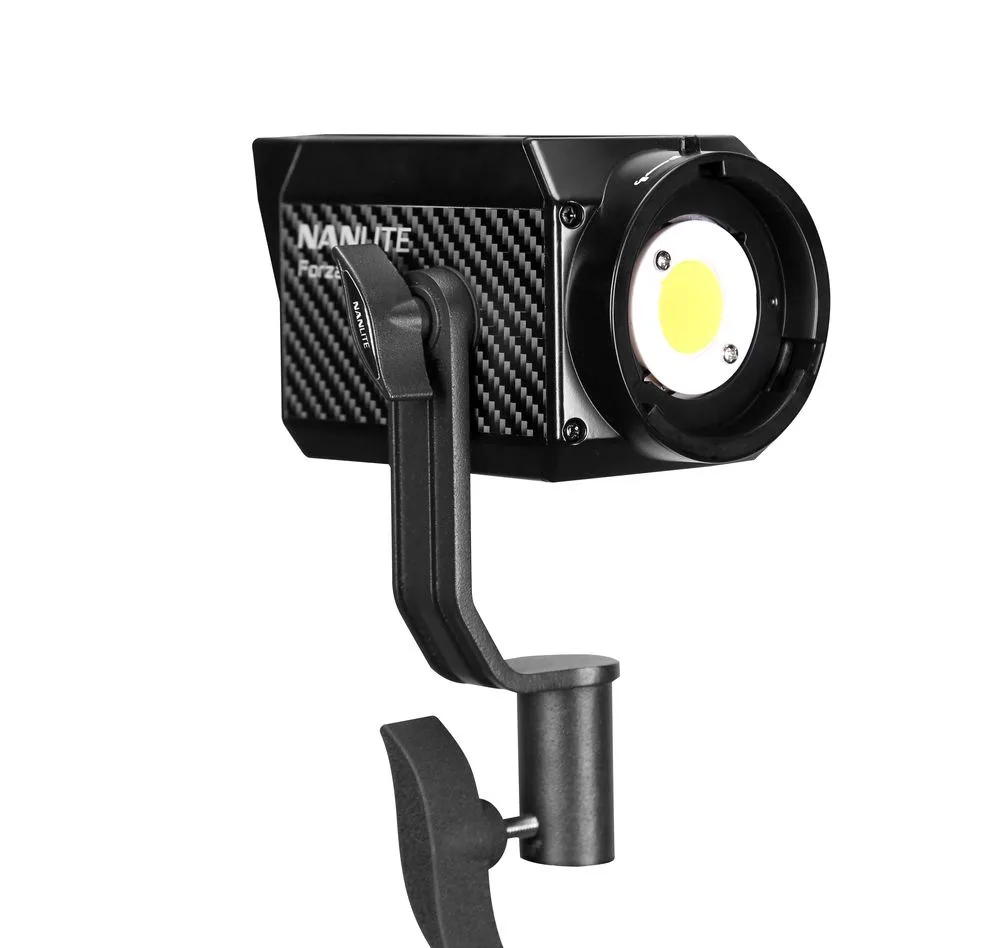
Mount the Nanlite Forza 60 on a stand using its 5/8-inch receiver, fit a modifier to the 55-degree reflector mount, power it via mains or battery, then set 5600K daylight and dial brightness from 0 to 100%. Test at your working distance before committing to a shoot.
Why the Forza 60 suits small studio and location work
The Forza 60 weighs 0.8kg and delivers 11950 lux, so it is easy to reposition on a single stand without a counterweight. Its 5600K daylight color temperature matches typical window light and most flash setups, which simplifies white balance when you mix it with ambient light or a battery strobe. Because it runs on either battery or mains, you can move from a studio corner to a location shoot without changing your lighting approach.
What to prepare before you start
Clear a working area and decide whether you will power the light from a wall outlet or a battery. Have your stand, the Forza 60, the supplied 55-degree reflector, and any modifier you plan to use within reach. If you are shooting portraits, plan your subject distance first; the 11950 lux output is measured at a specific distance, so moving the light closer or further changes your exposure significantly.
Positioning and power choices that affect your workflow
For portraits, place the light at roughly 45 degrees to the subject and slightly above eye level as a starting point. The 5/8-inch receiver fits standard light stands, so you can use a boom or a low stand without adapters. If you are on location without mains power, switch to battery operation and keep a spare charged. Remember that the Forza 60 is a daylight-balanced fixture, so if you want warmer tones you will need gels or a different light source rather than a color temperature dial.
Step-by-step Forza 60 setup
- Mount the light on a stand: Slide the 5/8-inch receiver onto your stand's spigot and tighten the locking knob. Check that the stand is stable and the tilt lock is secure before letting go. Common mistake: not tightening the receiver fully, causing the light to droop mid-shoot.
- Fit the reflector or modifier: Attach the supplied 55-degree reflector by aligning it with the mount and turning until it locks. If you use a softbox or umbrella, ensure the modifier's speed ring or shaft is compatible with the Forza 60's mount. Checkpoint: give the modifier a gentle tug to confirm it is seated.
- Choose your power source: Plug into mains for unlimited runtime, or attach a battery for location work. If using battery, check the charge level before the session. Common mistake: forgetting to switch the unit off after battery use, draining it for next time.
- Set color temperature and brightness: The Forza 60 is fixed at 5600K daylight, so set your camera white balance to daylight or use a custom reading. Adjust dimming from 0 to 100% to control exposure without moving the light. Checkpoint: take a test frame at your intended distance to confirm exposure.
- Position for your subject: For portraits, start with the light at 45 degrees to the subject and slightly above eye level. Use the reflector's beam angle to feather light across the face or background. Common mistake: placing the light too close, causing hot spots; move it back and increase power if needed.
Key specs that shape your setup
- Nanlite Forza 60 monolight 5600K LED light: 11950 lux output and 0.8kg weight Light enough for a single stand, but bright enough to shape portraits without straining your support.
- Nanlite Forza 60 monolight 5600K LED light: Battery or mains powered unit You can shoot in a studio or on location without changing lights, as long as you manage battery charge.
- Nanlite Forza 60 monolight 5600K LED light: 55-Degree Reflector and 5/8-inch Receiver The reflector narrows the beam for more control, and the standard receiver fits common stands and accessories.
- Nanlite Forza 60 monolight 5600K LED light: 5600K Daylight Color Temperature and 0 to 100% Dimming Matches daylight and flash, and lets you fine-tune exposure without moving the light.