Quick answer
Set up a narcotics training odor by choosing a real-odor source like GETXENT Canine Detection Odour, then follow a step-by-step process to introduce the scent, pair it with a reward, and phase in distractions.
Why real odors matter for narcotics training
Synthetic mimics can confuse a dog’s nose because they lack the full chemical profile of actual narcotics. Real-odor products such as GETXENT Canine Detection Odour – Narcotics provide the exact scent profile a dog will encounter in the field, which builds reliable alert behaviors from the start.
The trade-off is cost and handling. Real odors require careful storage to avoid cross-contamination and must be replaced periodically to maintain potency. For handlers who train multiple dogs or work in high-turnover environments, the investment pays off in fewer false alerts during real searches.
Choosing your training aid
GETXENT offers over 29 narcotics odors, so you can match the specific substances your dog will encounter. The product comes in a liquid form that you can apply to a cotton swab, training towel, or hide box. This flexibility lets you vary the hiding method without changing the odor itself.
If you are training a single dog on a narrow set of substances, a smaller kit may suffice. For multi-dog teams or agencies, consider ordering multiple vials so each dog gets a fresh, uncontaminated sample.
How to set up a narcotics training odor: 5 steps
- Prepare the odor source: Open the GETXENT vial and apply 2–3 drops to a clean cotton swab or a small piece of absorbent fabric. Seal the vial immediately to preserve the remaining odor. Common mistake: applying too much odor, which can overwhelm the dog and mask the target scent.
- Introduce the odor in a low-distraction area: Place the swab inside a simple hide (e.g., a small cardboard box) in a quiet room. Let the dog sniff the area and reward any interest in the hide. Repeat 3–5 times until the dog shows clear anticipation near the hide. Checkpoint: The dog should pause or orient toward the hide before you reward. If not, reduce the distance or make the hide more obvious.
- Pair the odor with a final alert behavior: Once the dog consistently indicates the hide, add a specific alert cue (e.g., sit, stare, or paw). Reward only after the dog performs the alert near the odor. Practice 10–15 repetitions in the same session. Common mistake: rewarding the dog for approaching the hide instead of for the final alert, which teaches the dog to stop at approach rather than finish the behavior.
- Increase difficulty gradually: Move the hide to different surfaces (carpet, concrete, grass) and increase the search area. Introduce mild distractions such as background noise or other scents. If the dog misses the odor, go back one step and rebuild. Checkpoint: If the dog starts ignoring the odor, check for cross-contamination from previous hides or stale odor. Replace the swab every 10–15 searches.
- Maintain odor integrity: Store the GETXENT vial in a cool, dark place away from other training aids. Replace the odor swab for each new training session to avoid scent degradation. Discard any swab that has been exposed to heat or direct sunlight for more than an hour. Common mistake: reusing the same swab across multiple days, which introduces variable odor strength and confuses the dog’s discrimination.
Product facts
-
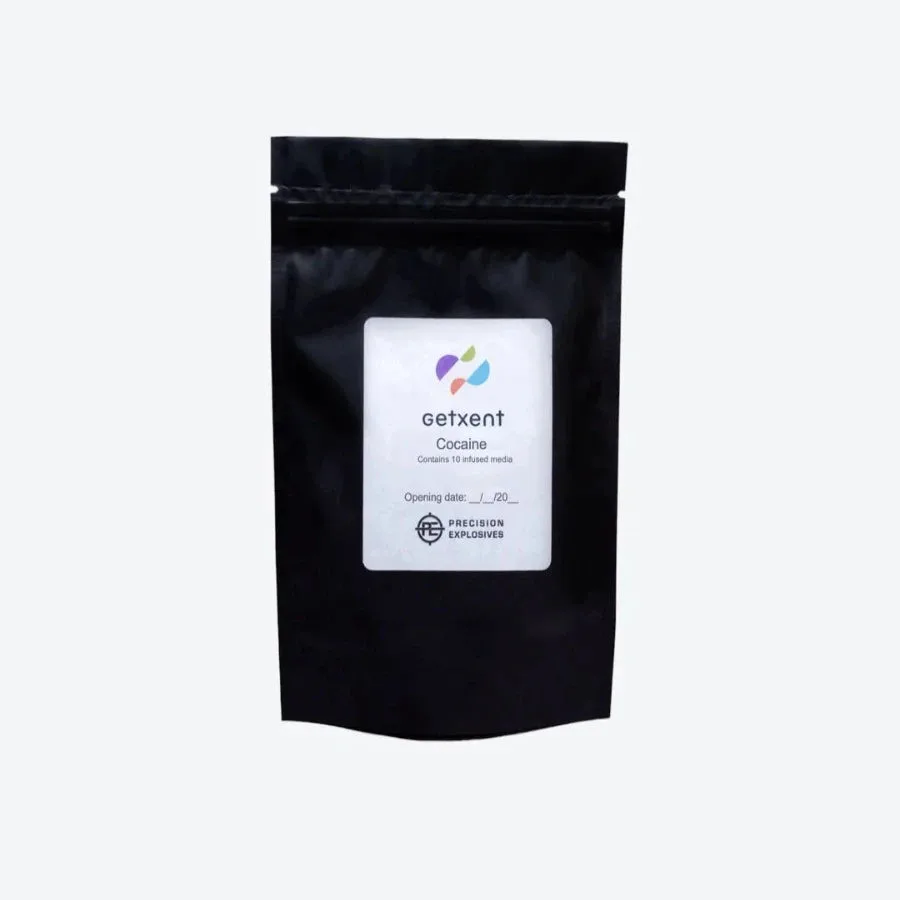
GETXENT - Canine Detection Odour - Narcotics: GETXENT Canine Detection Odour – Narcotics uses 100% real odors for reliable detection. Real odors eliminate the risk of the dog learning to ignore synthetic substitutes, ensuring the training transfers to actual narcotics finds.
GETXENT - Canine Detection Odour - Narcotics