Quick answer
Use saline first, then suction. Saline spray or drops thin and loosen mucus so the aspirator can pull it out instead of dragging on dry, sticky tissue. If your baby's nose is only mildly stuffy and feeding and sleep are fine, saline alone may be enough. If breathing, nursing, or sleeping is disrupted, add suction right after the saline.
Why the order matters more than the tool
Saline and suction do two different jobs. Saline adds moisture and helps break up thick or crusted mucus. Suction removes what is now loose enough to move. Reverse the order and you are asking the aspirator to pull on mucus that has not been softened, which means more passes, more irritation, and a fussier baby.
This is why saline drops before suction is the standard sequence for a baby nasal congestion routine, whether you are using a bulb syringe, a mouth-powered tube, or a powered aspirator.
Saline spray vs. saline drops: pick by age and tolerance
Sprays are faster to apply and reach more of the nasal passage, but the mist and pressure can startle a newborn. Drops are slower and messier but easier to control when you are aiming at a very small nostril. Many parents keep both: drops for the first weeks, spray once the baby is bigger and less reactive.
Whichever you choose, use only saline labeled for infants, and never use medicated decongestant sprays on a baby unless a clinician tells you to.
Manual vs. powered suction: what changes in practice
Manual options like bulb syringes and mouth-powered aspirators give you direct control and cost little, but they depend on your technique and how long you can keep a wriggling baby still. Powered aspirators trade some of that control for consistent suction that does not tire your hand or your lungs.
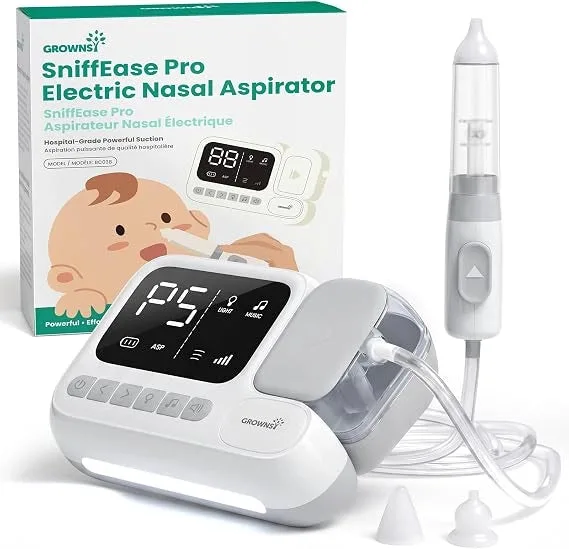
The Grownsy Hospital-Grade Infant Nasal Aspirator with Boost Mode is an example of the powered end of that range: it offers multiple suction levels and a one-touch boost for stubborn congestion. More suction is not automatically better for every baby, so start at the lowest level that works and only step up when needed.
A simple routine you can repeat
Lay your baby semi-upright or on their side, not flat on their back. Apply saline to one nostril, wait about a minute so it can loosen mucus, then suction that side. Repeat on the other side. Limit suction to short passes and stop if the nose starts looking raw or the baby is clearly done.
For newborns, keep sessions brief and focus on the times that matter most: before feeds and before sleep. If you are suctioning more than a few times a day for more than a week, or you see blood, call your pediatrician.
Trade-offs to weigh before you buy
- Saline alone: Low cost, no suction, and usually enough for mild stuffiness. It does not remove mucus, so it will not help much when the nose is fully blocked. Start here for mild congestion.
- Saline plus manual suction: Cheap and fully parent-controlled, but results depend on technique and a cooperative baby. Bulb syringes are hard to clean thoroughly. Good backup, less predictable for heavy congestion.
- Saline plus powered suction: Consistent suction and adjustable levels, as with the Grownsy Hospital-Grade Infant Nasal Aspirator with Boost Mode. Costs more and can be overused if you default to the strongest setting. Best when congestion is frequent or feeding is disrupted.
Products that fit this routine
- Hospital-Grade Infant Nasal Aspirator with Boost Mode: Hospital-grade suction with a one-touch boost mode and multiple suction levels for everyday congestion. Lets you start gentle and increase suction only when mucus is thick, instead of using one fixed strength for every situation.
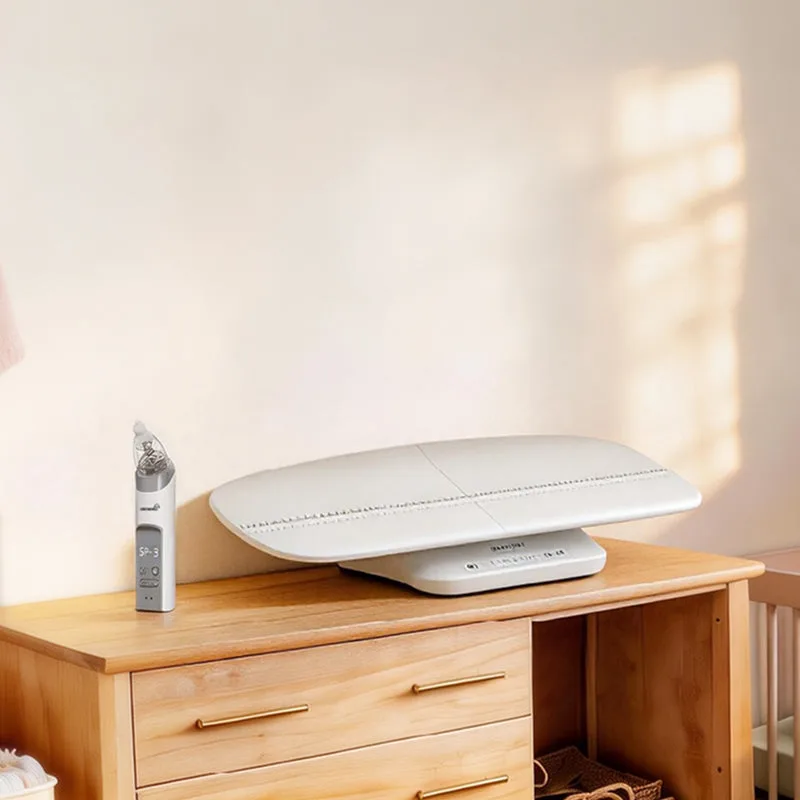
- Grownsy SniffEase OG Adjustable Suction NasalAspirator + Multifunctional Baby Weight Scale: A duo that pairs an adjustable suction nasal aspirator with a multifunctional baby weight scale. Useful if you want congestion relief and growth tracking in one purchase, since poor feeding during a stuffy nose can show up in weight trends.
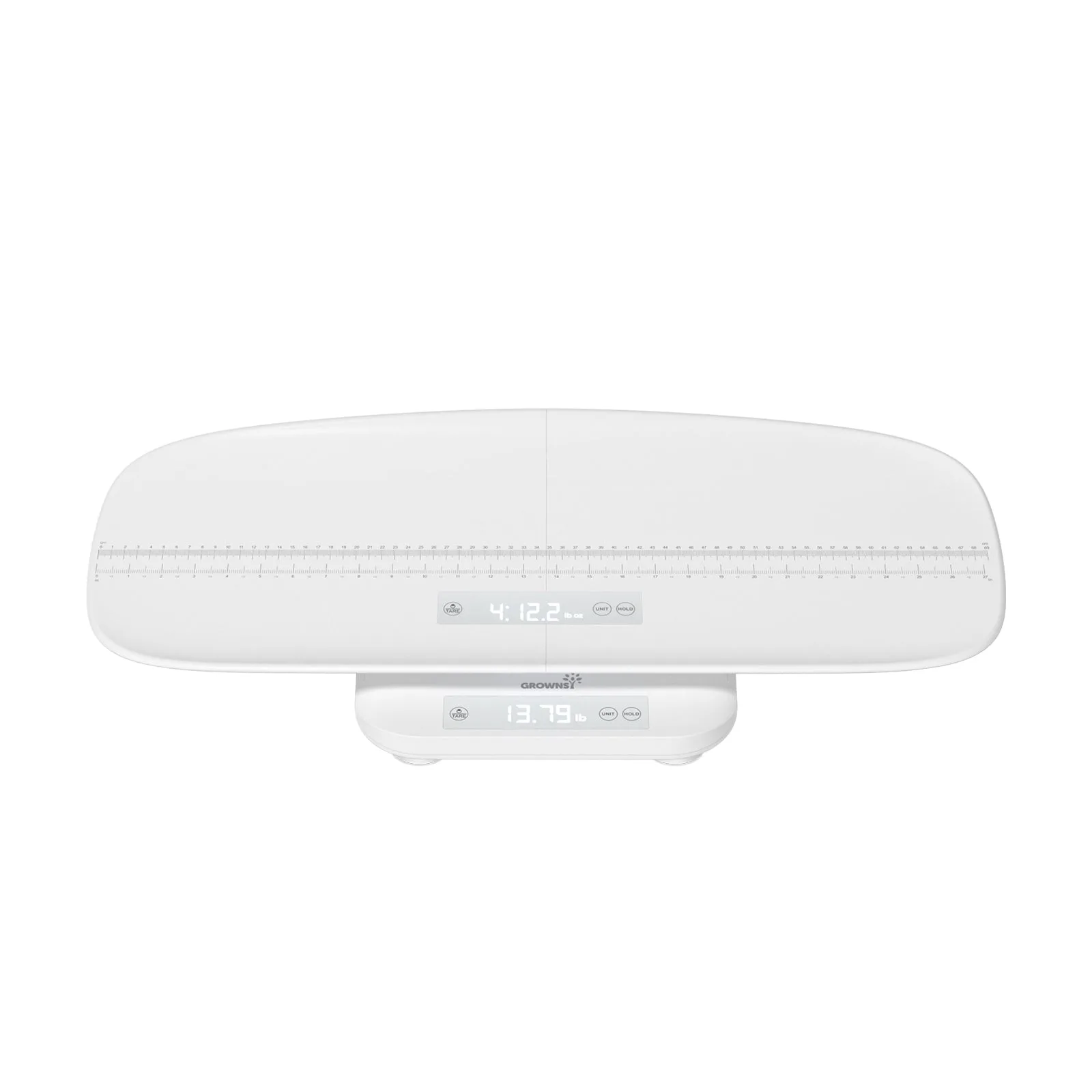
- Electronic Infant Scale with Height Measurement: High-precision sensor and smart chip, five measurement units, a 27-inch height platform, and a 330 lb capacity with a hold function. If you are tracking whether congestion is affecting feeding, a scale that holds a stable reading makes those checks easier.
Which approach fits your baby
Best for
- Parents of newborns who want the gentlest first step and will start with saline drops
- Families dealing with frequent congestion who need adjustable powered suction
- Caregivers who also want to track weight and height while feeding is disrupted
Not for
- Babies with suspected structural airway problems or chronic congestion that has not been evaluated by a clinician
- Parents looking for a medicated spray, since infant-safe saline is the only spray this routine calls for
- Anyone expecting suction to replace a pediatric visit when breathing is labored