Quick answer
For most babies, a natural rubber teether is the better everyday choice: it is soft, flexible, and made from plant-based rubber rather than plastic. Plastic alternatives win on price and dishwasher convenience, but they can be firmer and may not suit very young gums. If you want a non toxic teether for babies and prefer plastic free teething toys, start with natural rubber and keep one plastic option for travel.
Teething usually starts around 4 to 7 months, and the material your baby chews on matters more than most parents expect. Natural rubber and plastic are the two materials you will see most often, and they behave very differently in the mouth, in the sink, and over months of daily use.
This comparison looks at both options using the facts we can verify: what each material is made from, how it holds up, and who each one actually suits. You will also see where natural rubber falls short, because no single teether is perfect for every baby.
What each material actually is
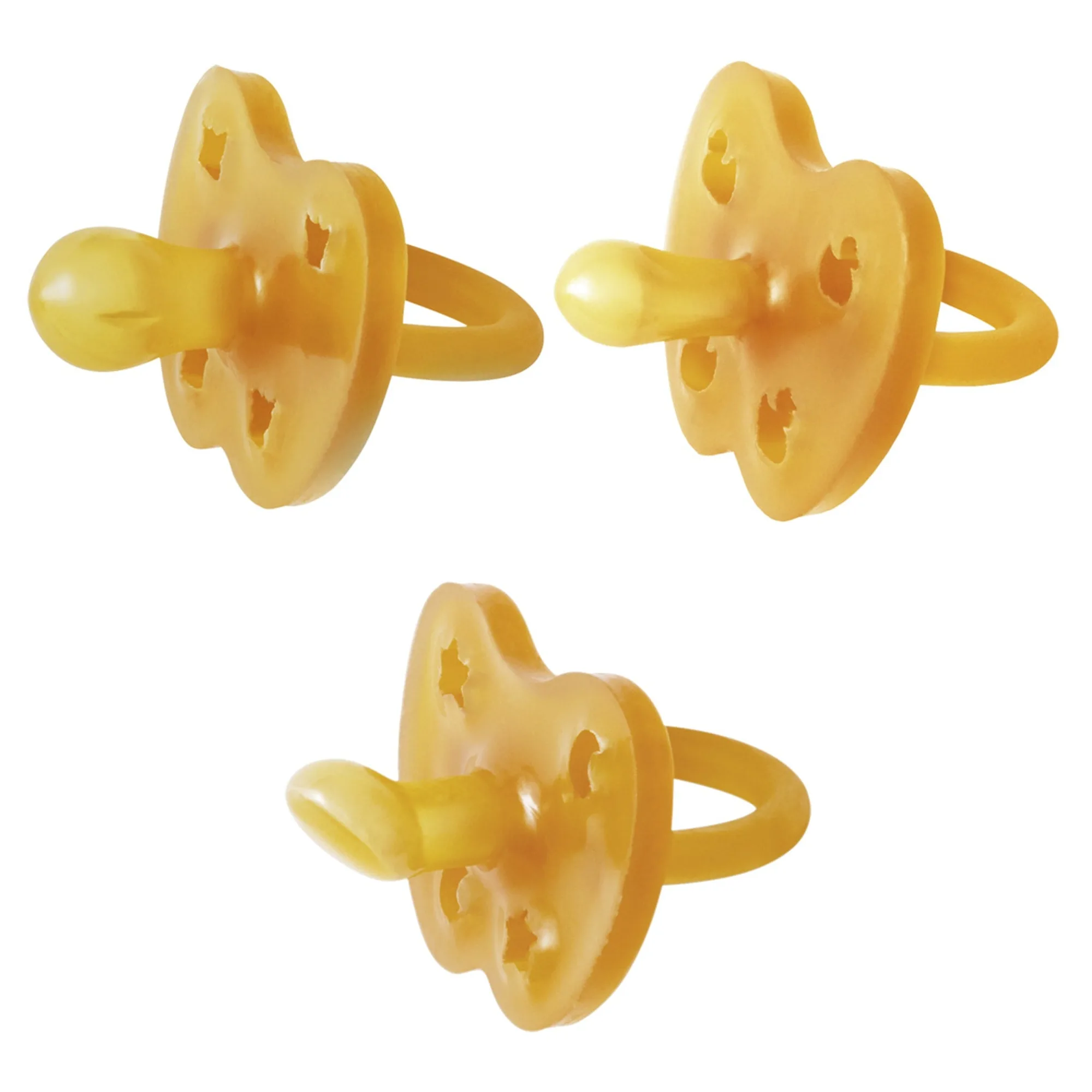
Natural rubber teethers are made from latex tapped from the Hevea brasiliensis tree. HEVEA uses this plant-based rubber in products such as the Pacifier Newborn 0+ Months Single-Pack - Round, which is described as having a soft round teat and a seamless, one-piece construction. That one-piece build matters because there is no joint where water can sit and no internal cavity for mould to build up.
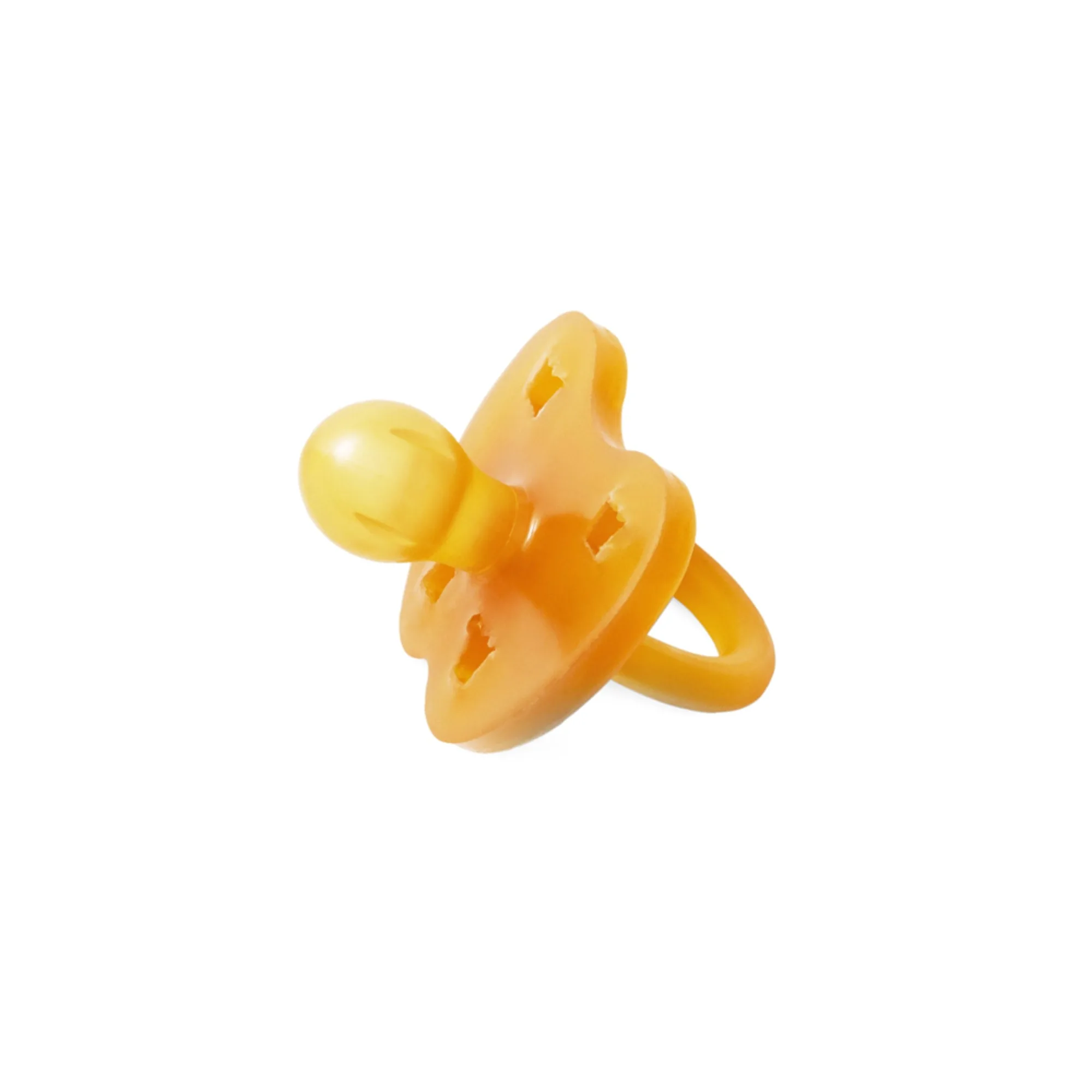
Pacifier Newborn 0+ Months Single-Pack - Round
Plastic teethers are typically molded from synthetic polymers. They can be made in many shapes and colors, and many are filled with water or gel so they can be chilled. The trade-off is that plastic is not plant-based, and firm plastic edges can feel harsh on sore gums compared with soft rubber.
- Check the label for the base material, not just the word 'safe'.
- One-piece designs are easier to keep hygienic than toys with seams or holes.
Softness, grip, and how babies actually use them
A natural rubber teether is soft and squeezable, so it gives slightly under pressure. That gentle give is why many parents reach for rubber during the first teeth, when gums are swollen and tender. The Pacifier Newborn 0+ Months Single-Pack - Round uses a soft round teat designed to mimic the maternal breast, which helps babies who are used to that shape settle more easily.
Plastic teethers are usually firmer. Some babies prefer that extra resistance when molars are coming through, and textured plastic can reach the back of the mouth well. The downside is that firm plastic can be uncomfortable for a younger baby who is still getting used to the feeling of chewing.
- Offer a soft rubber option first for early teething; keep a firmer one for later molars.
- Watch how your baby reacts: pulling it out repeatedly usually means the material is too firm.
Hygiene and long-term wear
Hygiene is where the material difference shows up most. The HEVEA Round Pacifier is described as having a seamless, one-piece construction that prevents water retention and internal mould buildup. That is a real advantage over plastic teethers with seams, valves, or water-filled chambers, where moisture can linger inside even after washing.
Natural rubber does have a lifespan. It can degrade over time with repeated washing and sunlight, so inspect it regularly for cracks, stickiness, or changes in texture and replace it when you see them. Plastic tends to hold its shape longer, but it can also crack, and a cracked plastic surface is harder to clean than a smooth rubber one.
- Squeeze the teether near your ear: if you hear water or air moving inside, it has a cavity that can trap moisture.
- Replace any teether at the first sign of cracking, tackiness, or a lingering smell.
Cost and convenience
Plastic teethers are often cheaper at the checkout and many are dishwasher safe, which is convenient on busy days. Natural rubber usually costs more up front and needs hand washing in warm soapy water, with air drying rather than a hot dishwasher cycle.
That higher price buys a plant-based material and, in HEVEA's case, a design that avoids internal cavities. If budget is tight, a hybrid approach works well: one natural rubber teether for daily use at home and a cheaper plastic one for the nappy bag, where losing it matters less.
- Hand wash natural rubber in warm soapy water and let it air dry fully.
- Keep a spare teether in the freezer bag only if the manufacturer says it is freezer safe.
Tradeoffs to weigh before you buy
- Material source: Natural rubber comes from the Hevea brasiliensis tree and can be plastic-free; plastic teethers are synthetic and often cheaper to produce. Choose natural rubber if plant-based material is your priority; choose plastic if lowest cost matters most.
- Hygiene design: A seamless one-piece rubber teether has no internal cavity for water or mould; many plastic teethers have seams, valves, or water-filled chambers. Inspect any teether for openings before buying, especially if it will be used in the bath.
- Durability and care: Natural rubber can degrade with repeated washing and sun exposure and needs hand washing; plastic holds shape longer and is often dishwasher safe. Check rubber teethers monthly for cracks or tackiness and replace them when the surface changes.
- Firmness: Natural rubber is soft and gives under pressure; plastic is usually firmer and can feel harsh on early teething gums. Start with soft rubber for the first teeth and keep a firmer option for later molars.
Product facts that matter for this choice
- Pacifier Newborn 0+ Months Single-Pack - Round: Made from 100% natural rubber latex tapped directly from the Hevea brasiliensis tree, plastic-free, with a soft round teat that mimics the maternal breast and a seamless, one-piece construction that prevents water retention and internal mould buildup. The one-piece build removes the hidden cavity that makes many plastic teethers hard to keep clean, and the soft round shape suits newborns who are already used to a breast-like feel.
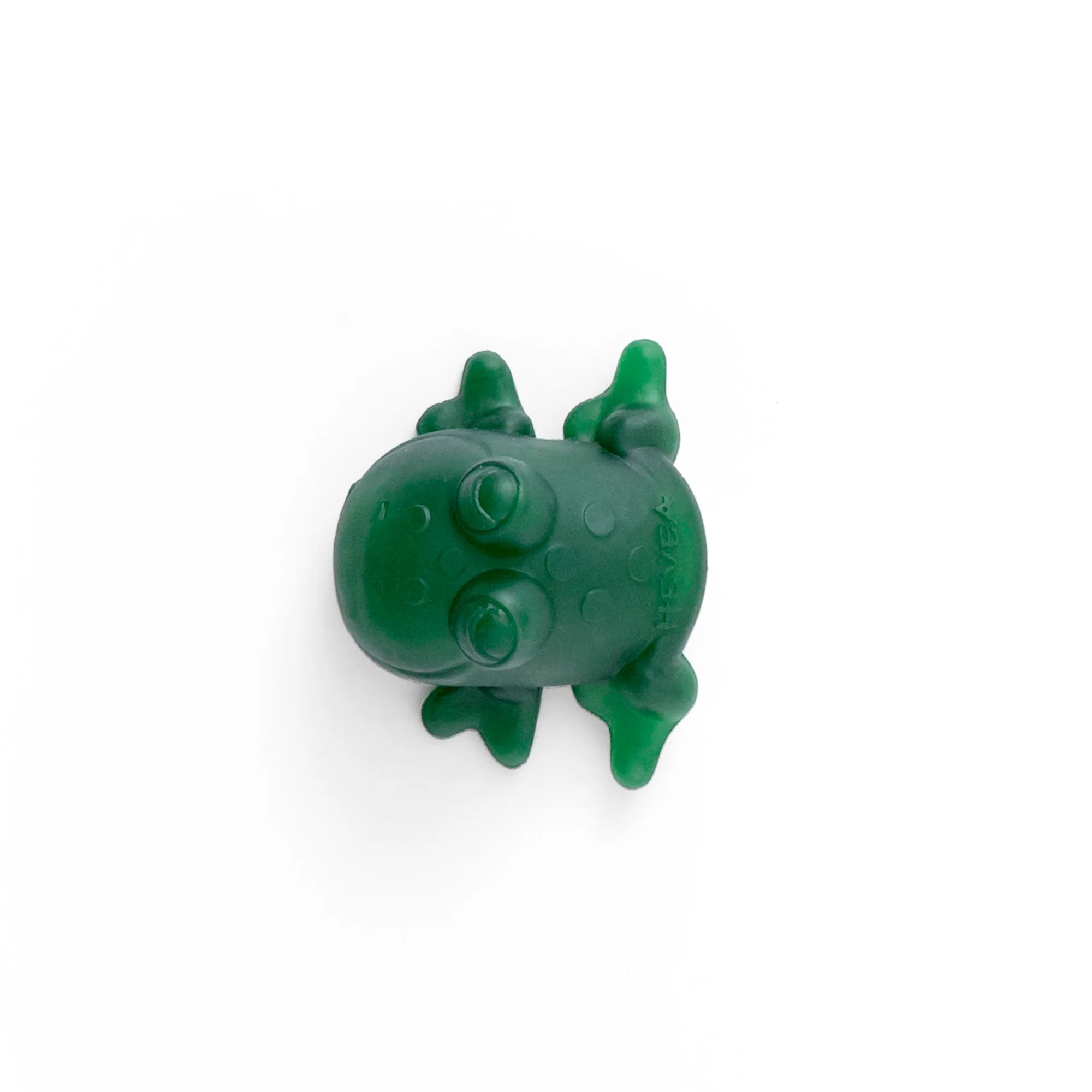
- Squeeze'n'Splash Whale Bath Toy: Made from upcycled natural rubber from the Hevea brasiliensis tree using production cut-offs from HEVEA's own manufacturing, soft and squeezable, and fitted with a removable sealing mechanism so parents can open the toy after use. It shows how the same plant-based rubber is used beyond teething, and the removable seal lets you dry the inside properly instead of leaving water trapped in a closed toy.
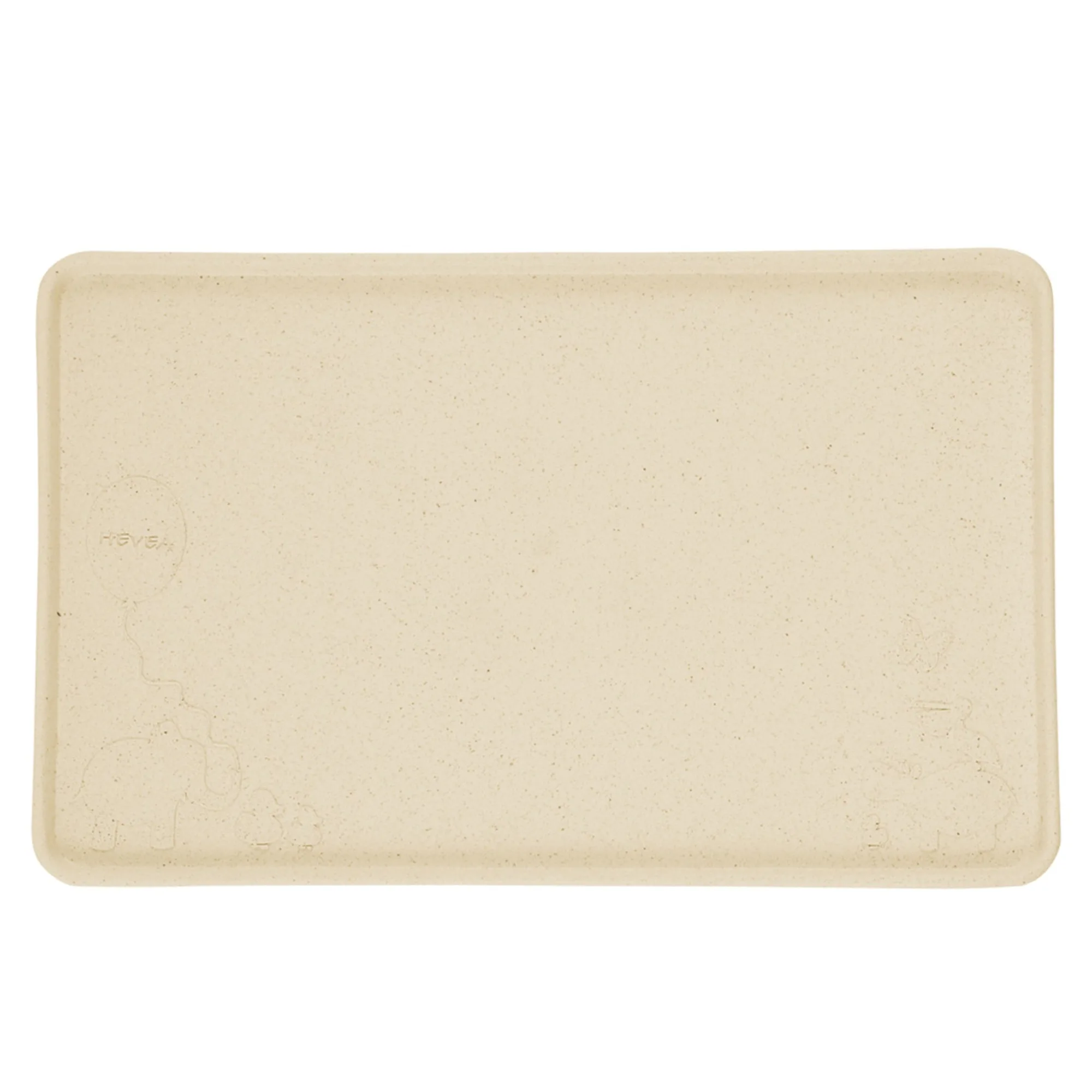
- Placemat: Made from upcycled natural rubber from the Hevea brasiliensis tree with four integrated suction cups and a raised edge designed to help contain spills. If you are moving toward plastic-free feeding gear, this shows the material works for mealtime too, not just for items that go in the mouth.
Which should you choose?
Natural rubber is best for
- Parents who want a non toxic teether for babies and prefer plastic free teething toys
- Newborns and younger babies who need a soft, breast-like shape
- Families who want a one-piece design with no hidden cavity for water or mould
Plastic may be the better fit for
- Tight budgets where the lowest price is the deciding factor
- Parents who rely on dishwasher cleaning for every baby item
- Babies who clearly prefer a very firm chew and reject softer materials
Natural rubber and plastic each solve a different problem: rubber gives you a soft, plant-based, easy-to-clean teether, while plastic gives you a cheaper, firmer, dishwasher-friendly one. For most babies, start with natural rubber for daily teething and keep a plastic spare for travel, then replace either one as soon as the surface shows wear.