Quick answer
For most bag making fabrics, start with a 90/14 universal or sharp needle and a 40-weight polyester thread. Drop to a 70/10 or 80/12 microtex for ripstop and other thin, slick fabrics, and move up to a 100/16 or 110/18 for bonded poly nylon, multiple layers, or zipper tape. When in doubt, match the needle to the fabric weight and the thread to the seam load, then test on a scrap sandwich.
Bag making breaks the rules you learned in garment sewing. You are not sewing one layer of cloth; you are sewing fabric plus stabilizer plus interfacing plus zipper tape, often through a curve. That stack punishes the wrong needle and thread combination with skipped stitches, puckers, and popped seams.
The fix is not one magic needle. It is a small set of rules based on fabric family, thread weight, and how much bulk you are crossing. This guide gives you those rules, plus the trade-offs so you can choose with confidence instead of guessing.
Start with fabric family, not needle brand
Every bag fabric falls into one of three behavior groups: thin and slick, medium and stable, or thick and bonded. Ripstop and other lightweight polyester fabrics are thin and slick, so they need a sharp point that pierces without pushing the weave. SewSmooth and similar water-resistant polyester fabrics are medium and stable, so a universal or sharp needle in the 80/12 to 90/14 range handles them well. Bonded poly nylon and heavy canvas are thick and bonded, so they need a larger needle with enough shaft strength to punch through without flexing.
Choose the group first, then pick the size. If you pick the size first, you will fight the fabric all the way to the end of the seam.
- Thin and slick: 70/10 or 80/12 microtex or sharp
- Medium and stable: 80/12 to 90/14 universal or sharp
- Thick and bonded: 100/16 to 110/18 universal or denim
Match thread weight to seam load
Thread for bag making is usually 40-weight polyester, and that is the right default for seams that carry weight. It is strong, has a little stretch, and fills the needle holes left by a 90/14 or 100/16 needle. If you use a thin 60-weight thread in a heavy bag, the seam can fail before the fabric does. If you use a heavy 30-weight thread in ripstop, the thread can act like a saw and cut the fabric under load.
The practical rule: use 40-weight polyester for structural seams, 50-weight for topstitching where you want a finer look, and 30-weight only when the fabric and needle can support it. Always match the top thread and bobbin thread weight so the tension balances.
- Structural seams: 40-weight polyester
- Topstitching and detail work: 50-weight polyester
- Heavy straps and bonded fabrics: 40-weight, not heavier, unless the needle supports it
Needle size for canvas and heavy stacks
When people search for needle size for canvas, they usually mean the point where the machine starts skipping or the needle bends. For a stack of canvas plus stabilizer plus zipper tape, a 100/16 or 110/18 universal or denim needle gives you the shaft strength to punch through without deflecting. A 90/14 can work on two layers of canvas, but it will struggle once you add a zipper and a folded seam.
Do not jump straight to the biggest needle. A needle that is too large leaves visible holes and can weaken the fabric along the seam. Size up one step at a time and test on the thickest part of your project.
- Two layers of canvas: 90/14 to 100/16
- Canvas plus stabilizer plus zipper: 100/16 to 110/18
- Bonded poly nylon: 100/16 minimum, 110/18 for corners
Needle for ripstop and thin, slick fabrics
Ripstop is the fabric that exposes a dull or wrong-shaped needle fastest. A universal needle can push the weave instead of piercing it, which causes puckering and skipped stitches. A 70/10 or 80/12 microtex or sharp needle solves this because the point is designed to separate the fibers cleanly. Use a fresh needle every time you start a ripstop project; a needle that has sewn canvas is already dull enough to cause problems.
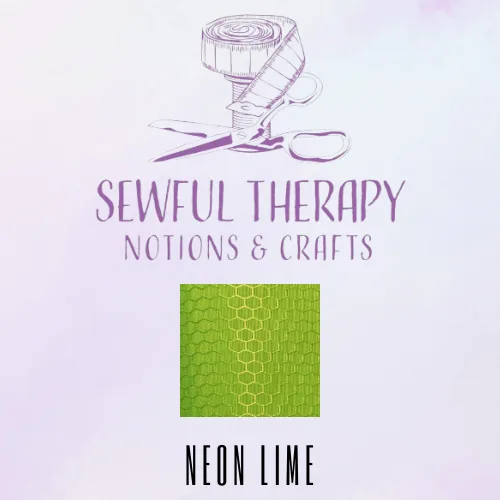
For a lining or exterior fabric like Hex Polyester Ripstop 420D Neon Lime, pair the sharp needle with 40-weight or 50-weight polyester thread and a slightly shorter stitch length. This combination keeps the seam flat and prevents the slick fabric from shifting.
- Use a microtex or sharp needle, not a universal, on ripstop
- Change the needle before every ripstop project
- Shorten stitch length slightly to control slick fabric
Zipper tape, adhesive layers, and needle gum
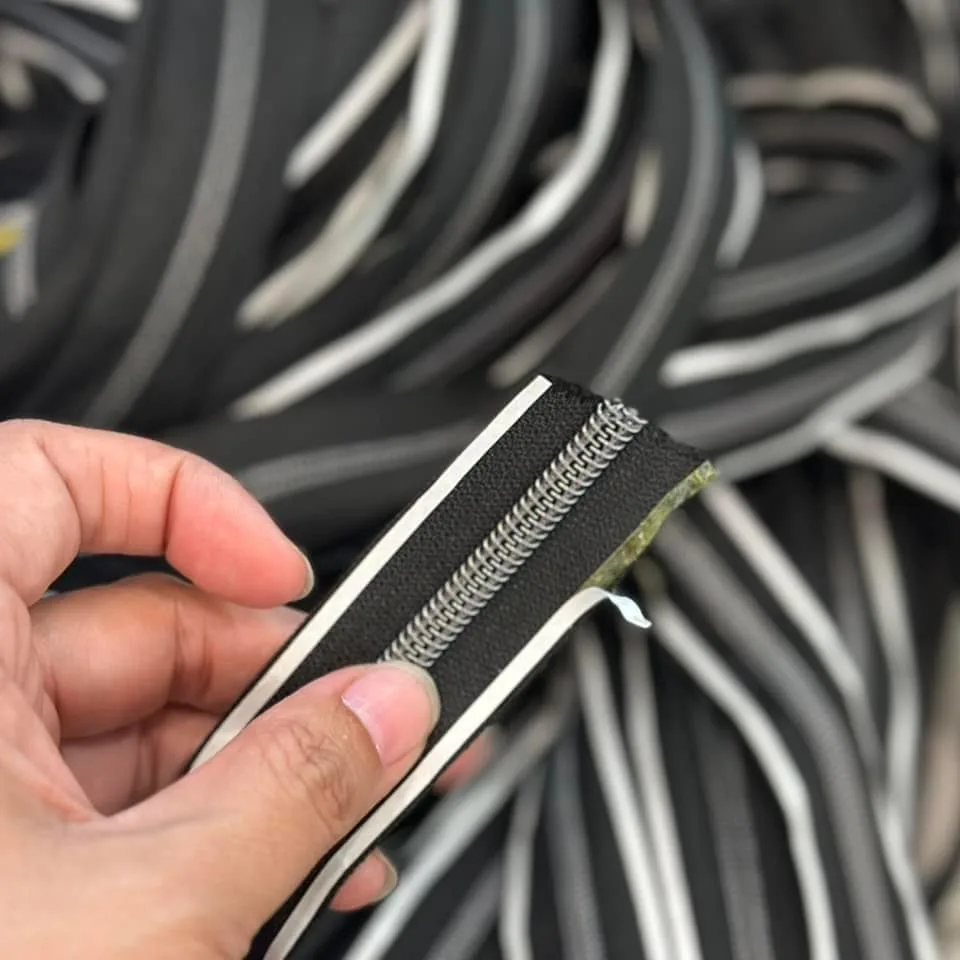
Adhesive zipper tape and fusible interfacing can leave residue on the needle, which then grabs the fabric and causes skipped stitches. If you are sewing through pre-applied double-sided tape, like the #5 Gunmetal Teeth Black Adhesive Zipper Tape, clean the needle with alcohol after the seam or switch to a fresh needle. A titanium-coated or non-stick needle can help if you sew a lot of adhesive-backed materials.
The trade-off is cost. Non-stick needles cost more and do not stay sharp longer; they just resist buildup. If you only occasionally sew adhesive tape, a standard sharp needle and a quick alcohol wipe is the better value.
- Wipe the needle with alcohol after sewing adhesive tape
- Use a non-stick needle only if you sew adhesive materials often
- Never use a bent or gummed needle on the next project
How to test before you commit
Before you sew the real bag, build a scrap sandwich that matches your project: the same fabric, the same stabilizer, the same number of layers, and a piece of zipper tape if you are using it. Sew a curved seam and a straight seam. If the stitches are even and the fabric is not puckered, your needle and thread are correct. If you see skipped stitches, go up one needle size or switch to a sharper point. If you see puckers, go down one size or shorten the stitch.
This test takes two minutes and saves an hour of seam ripping. Keep a small notebook of which needle and thread worked for each fabric so you do not have to rediscover it next time.
- Test on the thickest part of the project, not a single layer
- Change one variable at a time: needle size, then point type, then thread
- Record the winning combination for repeat projects
Decision rules for needle and thread
- If the fabric is thin and slick (ripstop, lightweight polyester): Use a 70/10 or 80/12 microtex or sharp needle with 40-weight or 50-weight polyester thread. Change the needle before the project starts. Sharp point, smaller size, fresh needle.
- If the fabric is medium and stable (SewSmooth, quilting cotton, mid-weight canvas): Use an 80/12 to 90/14 universal or sharp needle with 40-weight polyester thread. Size up one step if you add stabilizer and interfacing. Universal or sharp, 80/12 to 90/14, 40-weight thread.
- If the fabric is thick and bonded (bonded poly nylon, heavy canvas, multiple layers): Use a 100/16 to 110/18 universal or denim needle with 40-weight polyester thread. Test on a scrap stack that matches the thickest part of the bag. Larger needle, 40-weight thread, test the full stack.
- If you are sewing through adhesive zipper tape or fusible interfacing: Use a sharp needle and wipe it with alcohol after the seam, or switch to a non-stick needle if adhesive buildup is a recurring problem. Clean needle, or non-stick if you sew adhesive often.
Fabric facts that change your needle choice
- Hex Polyester Ripstop 420D Neon Lime (Yard): This durable, ultrathin polyester ripstop is water-resistant and designed for lining or exterior use. Its thin, slick weave is exactly the case for a 70/10 or 80/12 microtex or sharp needle and 40-weight to 50-weight polyester thread.
- Midnight Peonies in Bloom SewSmooth (Yard): SewSmooth is a domestic-friendly, water-resistant polyester fabric with a smooth, nylon-like right side and a crease-free appearance. A medium-weight, stable fabric like this pairs well with an 80/12 to 90/14 universal or sharp needle and 40-weight thread.
- Weft & Warp Slick - Orange Stripe Floral (Yard): This is a bonded poly nylon fabric, precut to 1 yard at 36 inches by width of fabric. Bonded poly nylon is a thicker, denser stack, so plan on a 100/16 or 110/18 needle to punch through without bending.
- #5 Gunmetal Teeth Black Adhesive Zipper Tape (3 Yards): This zipper tape has pre-applied 1/8-inch double-sided tape (DST) on the edges for precise placement. The adhesive can gum up a needle, so use a sharp needle and clean it with alcohol, or choose a non-stick needle if you sew tape often.
Who this guidance fits
Best for
- Bag makers who switch between ripstop, SewSmooth, and bonded poly nylon and want one clear rule set
- Sewists who are tired of skipped stitches and puckers on curved, layered seams
- Anyone building a small needle and thread kit for bag making
Not for
- Garment sewers working only with lightweight knits or delicate fabrics
- Quilters looking for free-motion or longarm needle recommendations
- Anyone who needs industrial machine needle systems rather than domestic sizes
Pick the needle by fabric family, pick the thread by seam load, and test on a scrap stack before you sew the real bag. Keep a 70/10 microtex, a 90/14 universal, and a 100/16 denim needle on hand, plus 40-weight and 50-weight polyester thread, and you can handle almost any bag making fabric without guesswork.