Quick answer
Mesh count is the number of canvas threads per inch, and it decides how much thread you need to cover the surface. Choose 10 or 12 count for beginners, fast coverage, and large designs; 13 count as the all-around middle ground; 18 count when you want fine detail and a smaller finished piece. If the canvas is already painted, the mesh count is set for you, so match your thread and stitch to it rather than the other way around.
Mesh count is the single number that changes almost everything about a needlepoint project: how big the finished piece turns out, how much thread you'll use, how much detail a design can hold, and how forgiving the stitching feels in your hand. Get it right and the project flows. Get it wrong and you're either fighting the canvas or running out of thread.
This guide walks through what 10, 13, and 18 count actually mean in practice, how mesh count drives thread coverage, and how to choose a count before you buy. It also covers the trade-offs so you can pick deliberately instead of guessing.
What mesh count actually measures
Mesh count is the number of threads per inch in the canvas. A 13 count canvas has 13 threads in every inch, an 18 count has 18. That's it at the base level, but the consequences ripple outward. More threads per inch means smaller individual holes, which means finer stitches and a smaller finished design for the same painted area. Fewer threads per inch means bigger holes, faster stitching, and a larger finished piece.
Because the count is baked into the canvas itself, you can't change it after purchase. A design painted on 18 mesh will always be smaller and denser than the same design painted on 13 mesh. That's why mesh count is the first thing to check, not the last.
- Lower count = bigger holes, faster stitching, larger finished size
- Higher count = smaller holes, finer detail, smaller finished size
- The painted design and the mesh count are tied together, so check the listing before buying
How mesh count changes thread coverage
Thread coverage is where mesh count stops being abstract. On a 10 or 12 count canvas, the holes are large and the surface area is generous, so you need thicker thread or more strands to fill the space. On an 18 count canvas, the holes are tight and the surface is dense, so a thinner thread or fewer strands covers the same visual area. Use too thin a thread on a low count and you'll see canvas peeking through. Use too thick a thread on a high count and the canvas will buckle.
This is why thread selection and mesh count have to be chosen together. A non-strandable fiber like Planet Earth Milan, for example, is designed for 13 or 18 mesh, so it slots naturally into those counts without guesswork. If you're working on 10 or 12 count, you'll typically want something with more body.
- Match thread weight to mesh count, not the other way around
- Test a small area before committing to a full project
- When in doubt, a slightly thicker thread covers better than a slightly thinner one
10 and 12 count: the fast, forgiving end
Low-count canvas is the beginner's friend and the large-project workhorse. The holes are easy to see, the needle goes in and out without a fight, and a design that would be tiny on 18 mesh becomes a substantial piece on 10 or 12. If you're making a pillow, a large ornament, or anything where speed and visibility matter more than fine detail, low count is the practical choice.
The trade-off is detail. A 10 count canvas simply can't hold the same intricate shading or tiny motifs that an 18 count can. If your design has fine lines or small facial features, low count will blur them. It's also less ideal for very small finished pieces, since even a modest design will come out larger than you might expect.
- Great for beginners, large pieces, and projects where speed matters
- Poor fit for intricate detail or very small finished sizes
- Plan for thicker thread or more strands to cover the surface
13 count: the middle ground that fits most projects
If you want one count that handles the widest range of projects, 13 is it. It's coarse enough to stitch comfortably and fine enough to hold real detail. Ornaments, small pillows, and decorative pieces all work well on 13 mesh. It's also the count most commonly paired with non-strandable fibers, which makes thread selection simpler.
The catch is that 13 count sits in the middle on every axis. It's not the fastest and not the finest. If your project leans hard toward either extreme, a different count will serve you better. But for the broad middle of needlepoint projects, 13 count is the safe, sensible default.
- Best all-around count for ornaments, small pillows, and decorative pieces
- Pairs easily with non-strandable fibers suited for 13 or 18 mesh
- Not the fastest or the finest, but rarely the wrong choice
18 count: detail, density, and smaller finished pieces
18 count needlepoint canvas is where fine work lives. The tight mesh holds small motifs, delicate shading, and detailed faces that would disappear on lower counts. It also produces a smaller finished piece for the same painted area, which is useful when you want a compact ornament or a precise miniature. Many designers paint specifically for 18 mesh because it preserves their detail.
The trade-off is pace and forgiveness. The holes are small, so stitching takes longer and mistakes are harder to undo cleanly. Thread coverage also demands more attention, since a too-thick thread will distort the canvas. If you're new to needlepoint or working on a deadline, 18 count is a stretch. If you want detail and don't mind slowing down, it's the right call.
- Choose 18 count for fine detail and small finished sizes
- Expect slower stitching and less margin for error
- Use thinner thread or fewer strands to avoid buckling the canvas
Beyond 18: when higher counts make sense
Counts above 18 exist, and they push even further into miniature territory. The same rules apply: smaller holes, finer detail, smaller finished size, and a greater demand for precision. These counts are for specific projects where scale and detail are the whole point, not for general stitching.
Unless a design is painted specifically for a higher count, there's rarely a reason to seek one out. The practical range for most needlepoint projects is 10 through 18, and the choice within that range comes down to the design, the desired finished size, and how much time you want to spend.
- Higher counts are niche, not general-purpose
- Only choose them when the design calls for that scale
- Stick to 10-18 for the vast majority of projects
Decision rules for choosing a mesh count
- If you're a beginner or want speed: Choose 10 or 12 count. The larger holes are easier to see and stitch, and the work progresses faster. Expect to use thicker thread or more strands to cover the surface. Prioritize comfort and pace over fine detail.
- If you want one count for most projects: Choose 13 count. It handles ornaments, small pillows, and decorative pieces well, and it pairs easily with non-strandable fibers rated for 13 or 18 mesh. 13 count is the reliable default when you don't have a strong reason to go elsewhere.
- If detail and small finished size matter most: Choose 18 count. It holds fine motifs and produces a compact finished piece, but stitching is slower and thread coverage needs more care. Accept the slower pace in exchange for detail.
- If the canvas is already painted: The mesh count is set. Match your thread and stitch to that count rather than trying to change it. Check the listing for the mesh number before buying thread. Thread follows canvas, not the reverse.
- If you're unsure between two counts: Test a one-inch square with your intended thread before committing to the full project. Coverage problems show up fast in a small test and are expensive to fix later. A five-minute test saves a re-stitch.
How mesh count shows up in real canvases
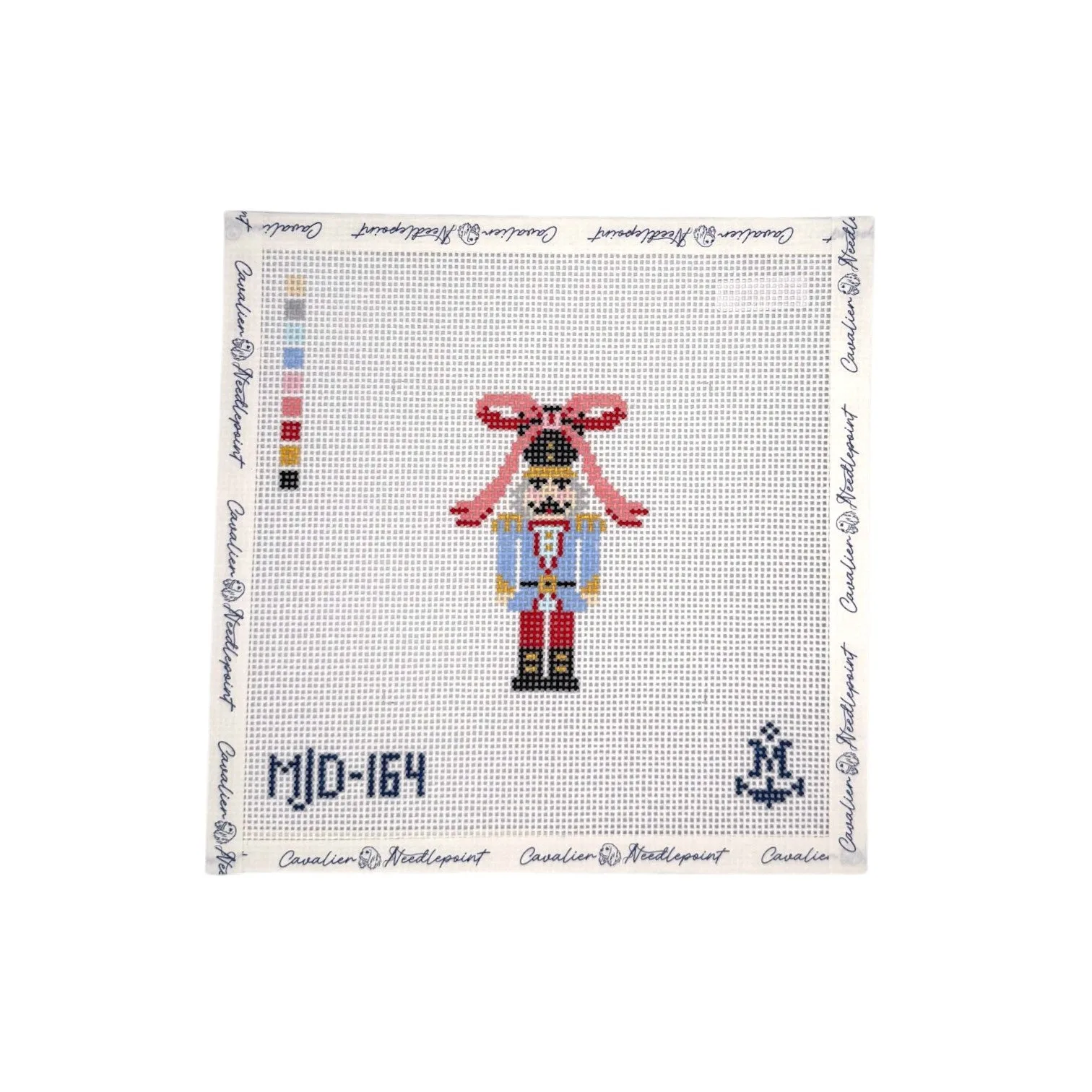
- Nutcracker with Bow: 13 mesh, design size 2.5" x 3.75" A 13 mesh canvas at this size stitches up quickly and holds enough detail for a recognizable nutcracker, making it a comfortable choice if you want a small project without the tight holes of 18 count.
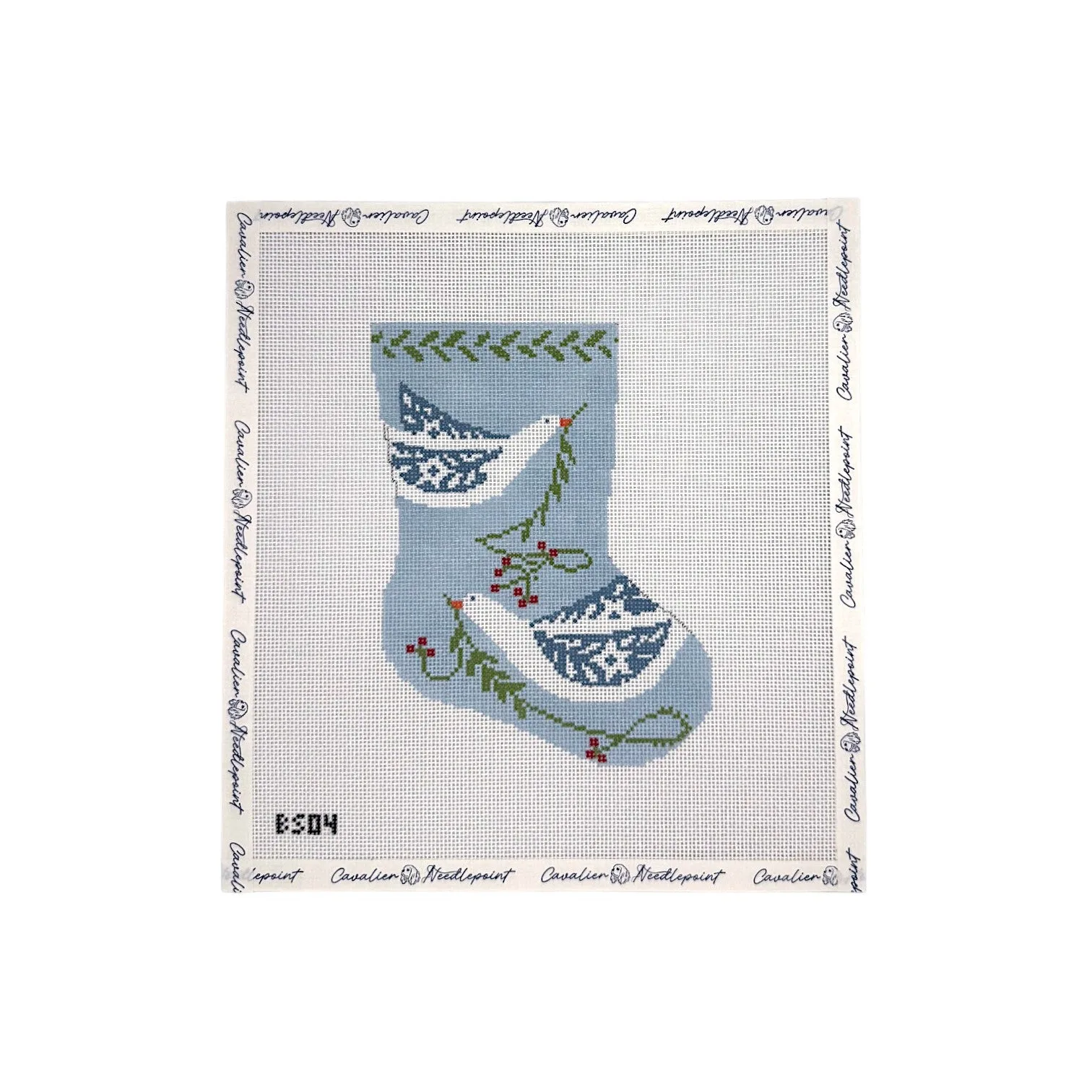
- Peace Birds on Blue Ornament Size Bauble Stocking: 18 mesh, design size 6" x 4.25" 18 mesh preserves the fine detail of the birds against the blue background, and the 6" x 4.25" size shows how much detail 18 count can pack into a compact ornament.
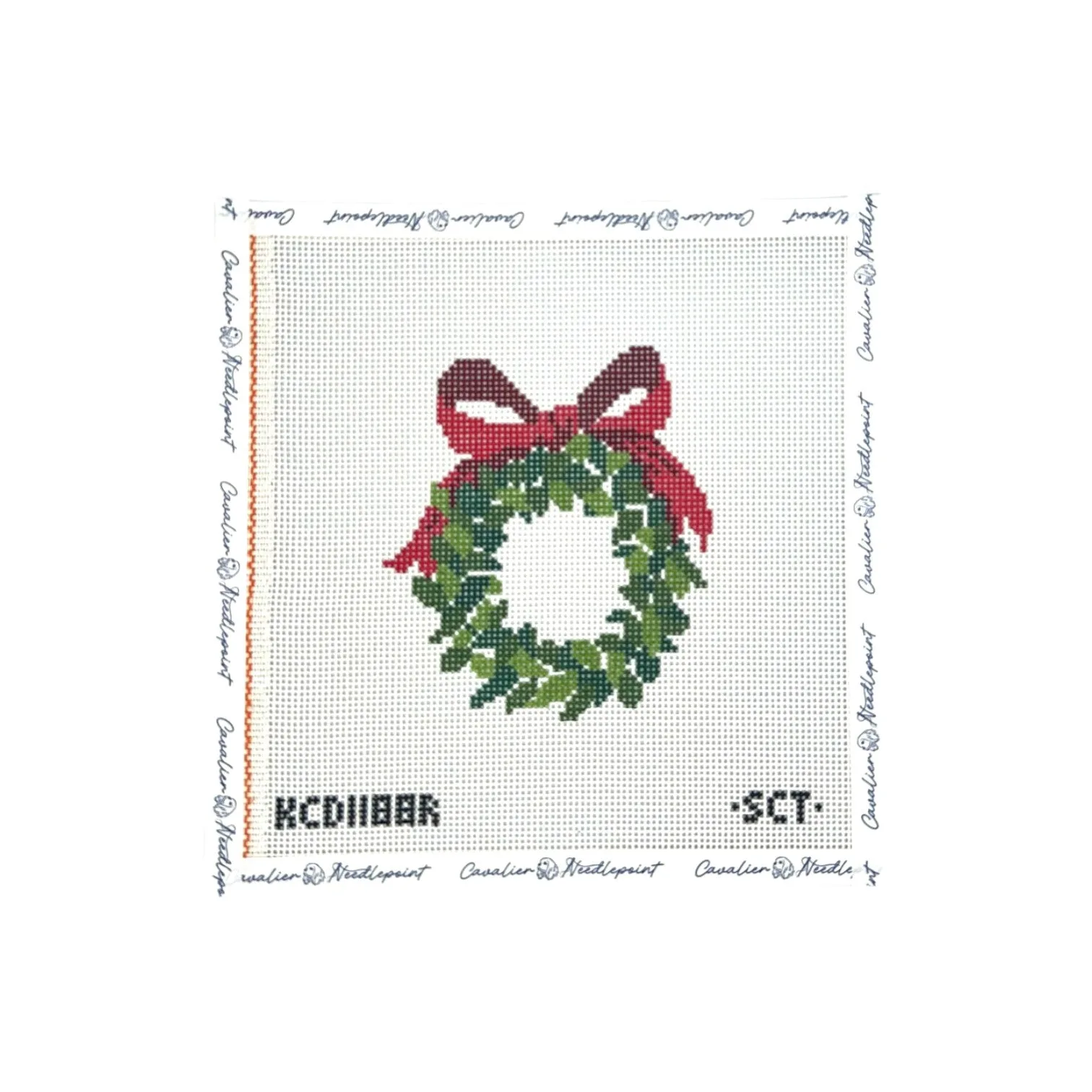
- wreath-blue-a3bc19756317610c724836fc-1483256">Blue Wreath: 13 mesh, design size 4.5" x 5" Another 13 mesh example, this one larger than the nutcracker, which shows how the same count scales up in finished size while staying easy to stitch.
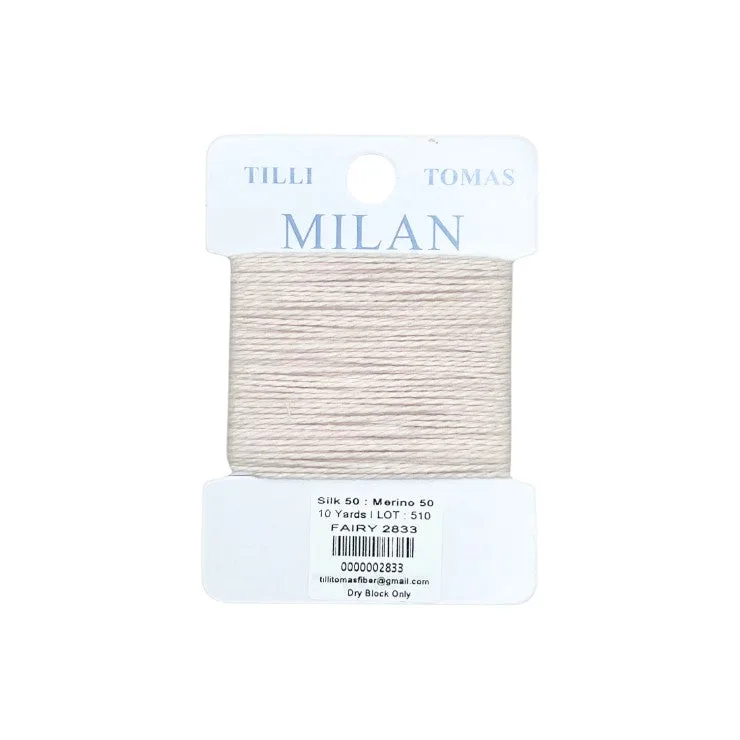
- Milan Card - Fairy 2833: Planet Earth Milan Fiber, 50% silk / 50% wool, non-strandable, 10 yards, suited for 13 or 18 mesh A thread explicitly rated for 13 or 18 mesh removes the coverage guesswork on those counts, so you can match fiber to canvas without testing.
Which mesh count fits your project
Best for
- Beginners who want visible holes and faster progress (10-12 count)
- Ornaments, small pillows, and decorative pieces where 13 count handles the middle ground
- Detailed designs and compact finished sizes where 18 count preserves fine work
Not for
- Stitchers who want fine detail on a 10 count canvas, since the mesh is too open to hold it
- Anyone on a tight deadline choosing 18 count, because the tight holes slow stitching down
- Projects where the painted design already dictates a different count than the one you prefer
Mesh count is the first decision, not the last. Check the count on any painted canvas before you buy thread, match your fiber to that count, and let the design's detail level guide you between 13 and 18. When you're choosing a canvas from scratch, pick the count that fits your pace and your desired finished size, then build the rest of the project around it.