Quick answer
Needlepoint uses a rigid, open-weave canvas and covers the surface with stitches like tent or basketweave, while counted cross stitch uses an evenweave fabric and follows a chart to make X-shaped stitches. Choose needlepoint for durable, textured pieces like key charms or paperweights; choose counted cross stitch for detailed, pixel-like images on fabric.
If you are new to hand embroidery, the terms needlepoint and counted cross stitch can sound interchangeable. They are not. Both use a needle and thread, but the materials, the way you count, and the final look are different enough that picking the wrong one can make a project frustrating.
This comparison breaks down the needlepoint vs cross stitch decision using real product examples from August Design Works. You will see how canvas count, thread coverage, and finishing options change what you can make, so you can pick the craft that matches your patience, eyesight, and end goal.
The foundation: canvas vs evenweave fabric
Needlepoint starts with a stiff, open-weave canvas. The holes are easy to see, which is why many stitchers find it more forgiving than counted cross stitch. Canvas comes in counts like 13 mesh (13 holes per inch) and 18 mesh (18 holes per inch). A 13 mesh canvas is faster to cover because the holes are larger; an 18 mesh canvas allows finer detail but requires more stitches per inch.
Counted cross stitch uses an evenweave fabric such as Aida or linen. You count the threads or blocks to place each X. There is no printed design on the fabric, so you follow a chart. That counting is the main difference: needlepoint canvas often has a hand-painted or printed design to follow, while cross stitch relies entirely on the chart and your count.
- If you struggle to see small holes, start with 13 mesh needlepoint canvas.
- If you enjoy following a chart and counting, counted cross stitch may feel natural.
Stitches and coverage: tent stitch vs cross stitch
In needlepoint, the most common stitches are tent stitch and basketweave. They cover the canvas in a diagonal, textured pattern. You can also use decorative stitches to add dimension. The goal is usually to cover every thread of the canvas, which creates a durable, upholstery-like surface. That durability is why needlepoint works well for items that get handled, such as key charms or paperweights.
Counted cross stitch builds the image from X-shaped stitches. The fabric shows through between the Xs, giving a lighter, more pixelated look. Cross stitch is often used for framed art, samplers, and towels. It can be more delicate because the fabric is softer and the stitches do not fully cover the surface.
- Needlepoint tent stitch covers the canvas fully; cross stitch leaves fabric visible.
- Cross stitch charts can create fine detail; needlepoint relies on canvas count for detail.
Which is easier: needlepoint or counted cross stitch?
Many beginners find needlepoint easier to start because the canvas holes are visible and the design is often painted on the canvas. You do not have to count every stitch from a chart. The trade-off is that needlepoint can use more thread and may require blocking or finishing. Counted cross stitch is often considered easier to learn from a chart, but it demands careful counting and can be slower to build an image.
Your personal preference matters. If you like following a map, cross stitch may click. If you prefer to see the design and fill it in, needlepoint may be less frustrating. Neither is inherently harder; they just ask for different attention.
- Try a small needlepoint canvas with a painted design to test your comfort.
- Try a simple cross stitch kit with a small chart to see if counting suits you.
Finished look and practical uses
Needlepoint produces a thick, textured fabric that holds its shape. It is ideal for three-dimensional objects: key charms, ornaments, paperweights, and bag charms. The stitched surface is sturdy and can handle daily use. Counted cross stitch produces a flatter, more delicate fabric. It is best for framed pieces, wall hangings, and items that will not be handled roughly.
If you want to make a gift that gets used, needlepoint is often the better choice. If you want to create a detailed picture to frame, cross stitch gives you finer control over shading and detail.
- Needlepoint: key charms, paperweights, ornaments, bag charms.
- Cross stitch: framed art, samplers, decorative pillows.
Trade-offs to weigh before you choose
- Time to cover the surface: Needlepoint tent stitch covers canvas quickly on 13 mesh, but 18 mesh takes longer. Counted cross stitch can be slower because each X is counted and placed. If you want a fast finish, choose 13 mesh needlepoint.
- Thread and material cost: Needlepoint often uses more thread to cover the canvas fully. Counted cross stitch may use less thread but requires evenweave fabric. Kits like the paperweight kit exclude threads, so budget for them. Check what is included before buying; some kits need separate thread.
- Durability of the finished piece: Needlepoint creates a sturdy, textured fabric suitable for handled items. Cross stitch is flatter and more delicate, better for framed display. For key charms or paperweights, needlepoint is the practical choice.
Real needlepoint options from August Design Works
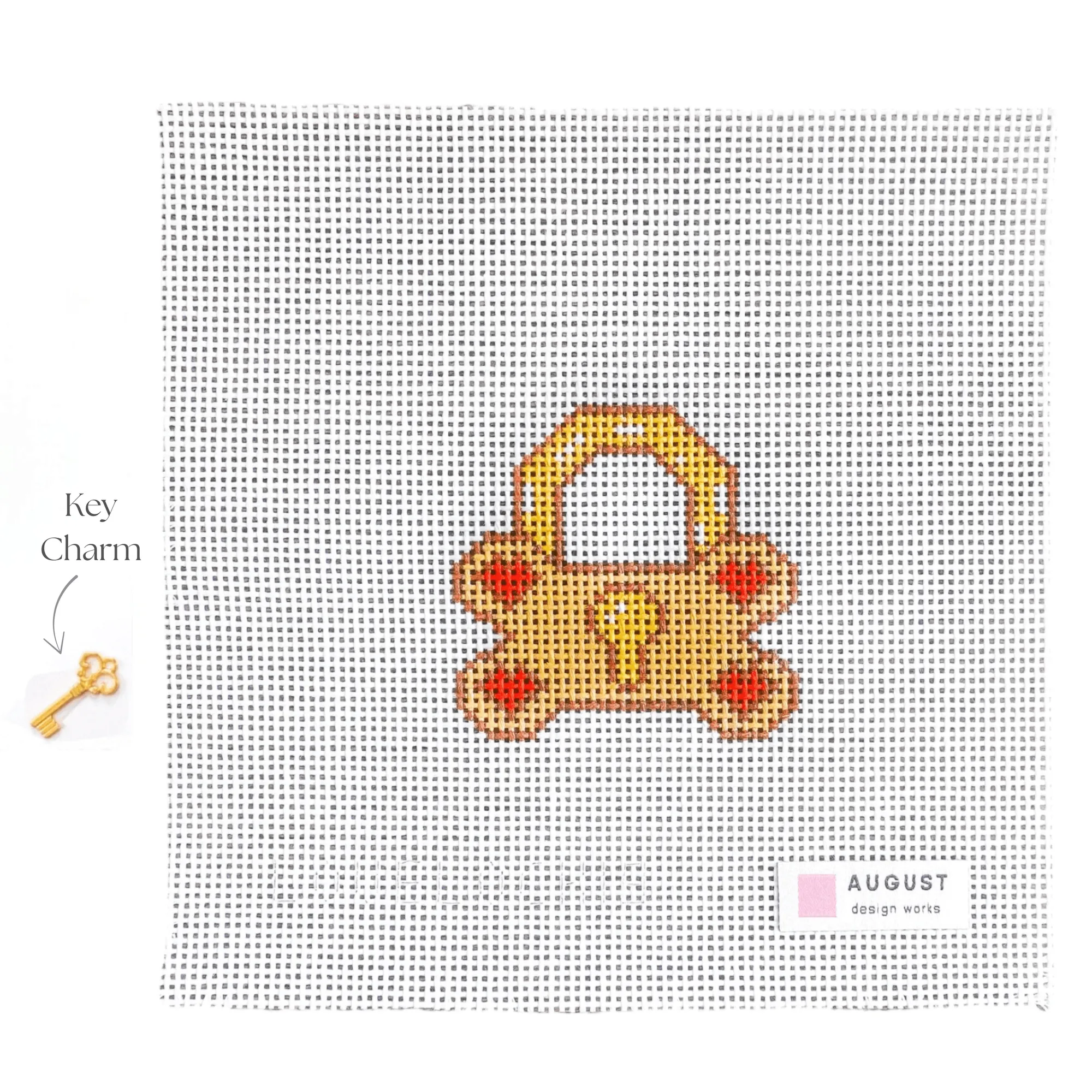
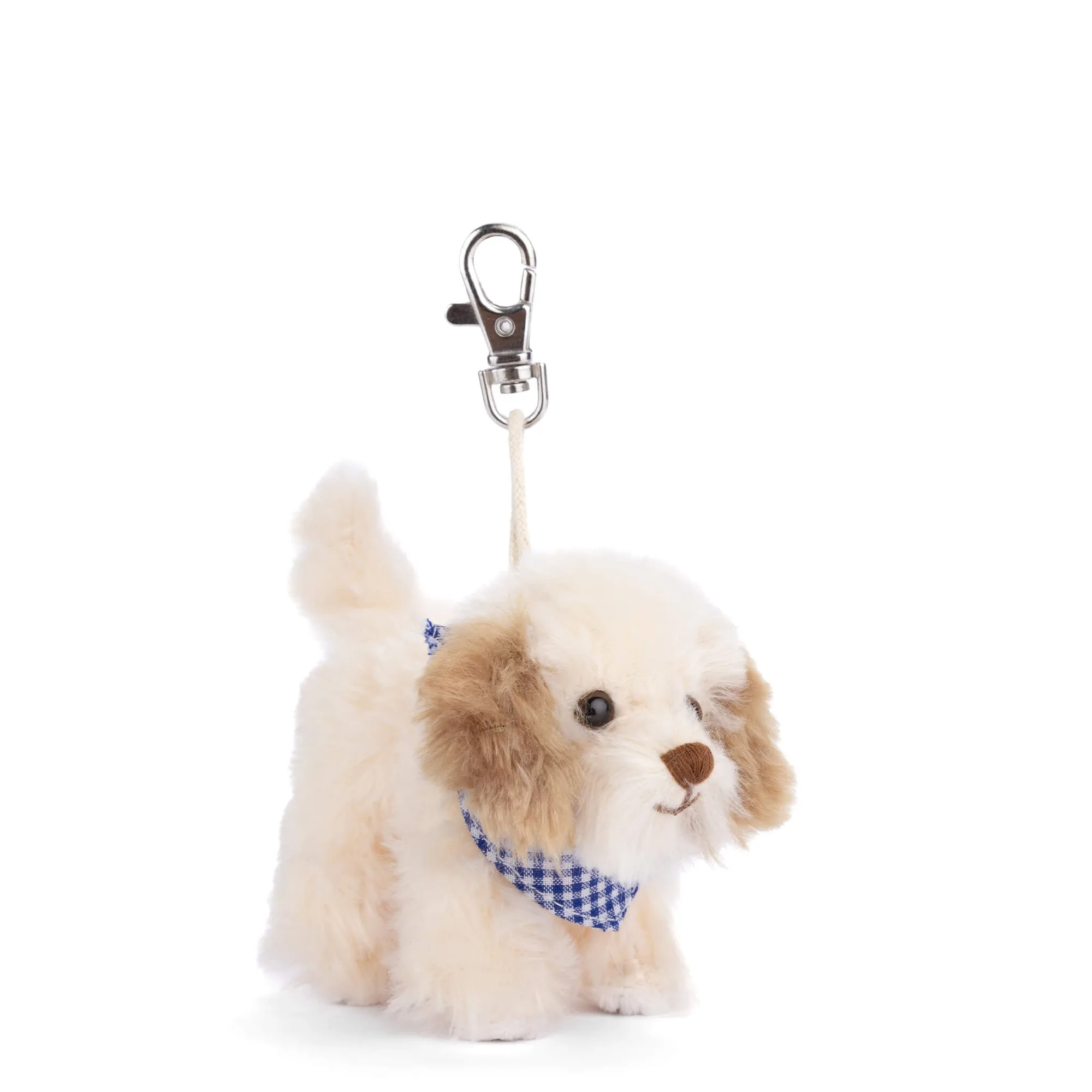
- Dog Tag Love Lock - Needlepoint Canvas + Key Charm (Wholesale): 13 mesh needlepoint canvas with a key charm, inspired by the Love Lock tradition of marking meaningful bonds. 13 mesh is easier to see and stitch, making this a good first needlepoint project if you want a finished key charm.
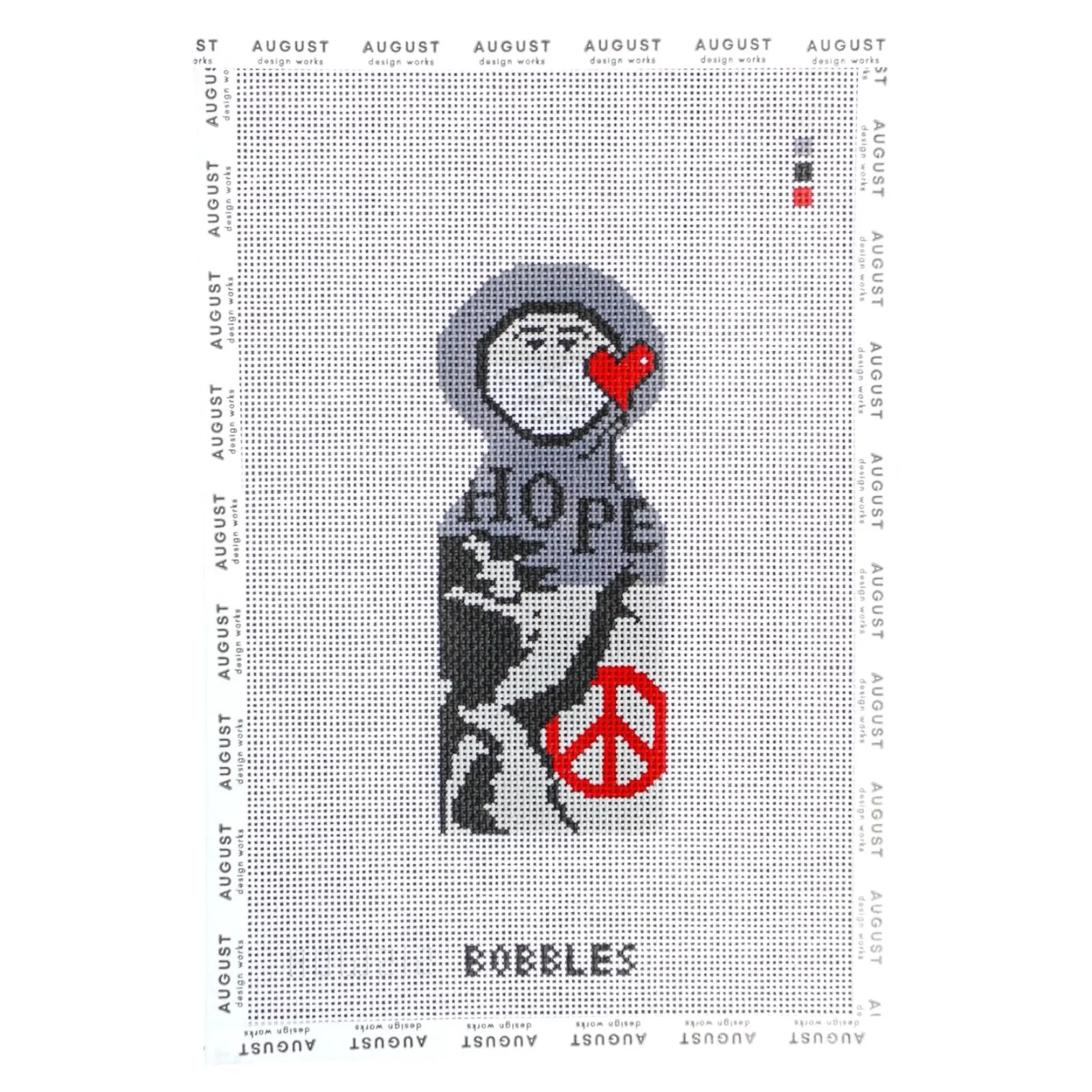
- https://augustdesignwork.com/products/banksy-bobble-wholesale-b73e42650c53b45ba07a34e8-1481546Banksy Bobble - Needlepoint Canvas (Wholesale): 18 mesh hand-painted canvas from the Bobbles Series, celebrating iconic figures. 18 mesh gives finer detail for a collectible piece, but requires more stitches per inch and good lighting.
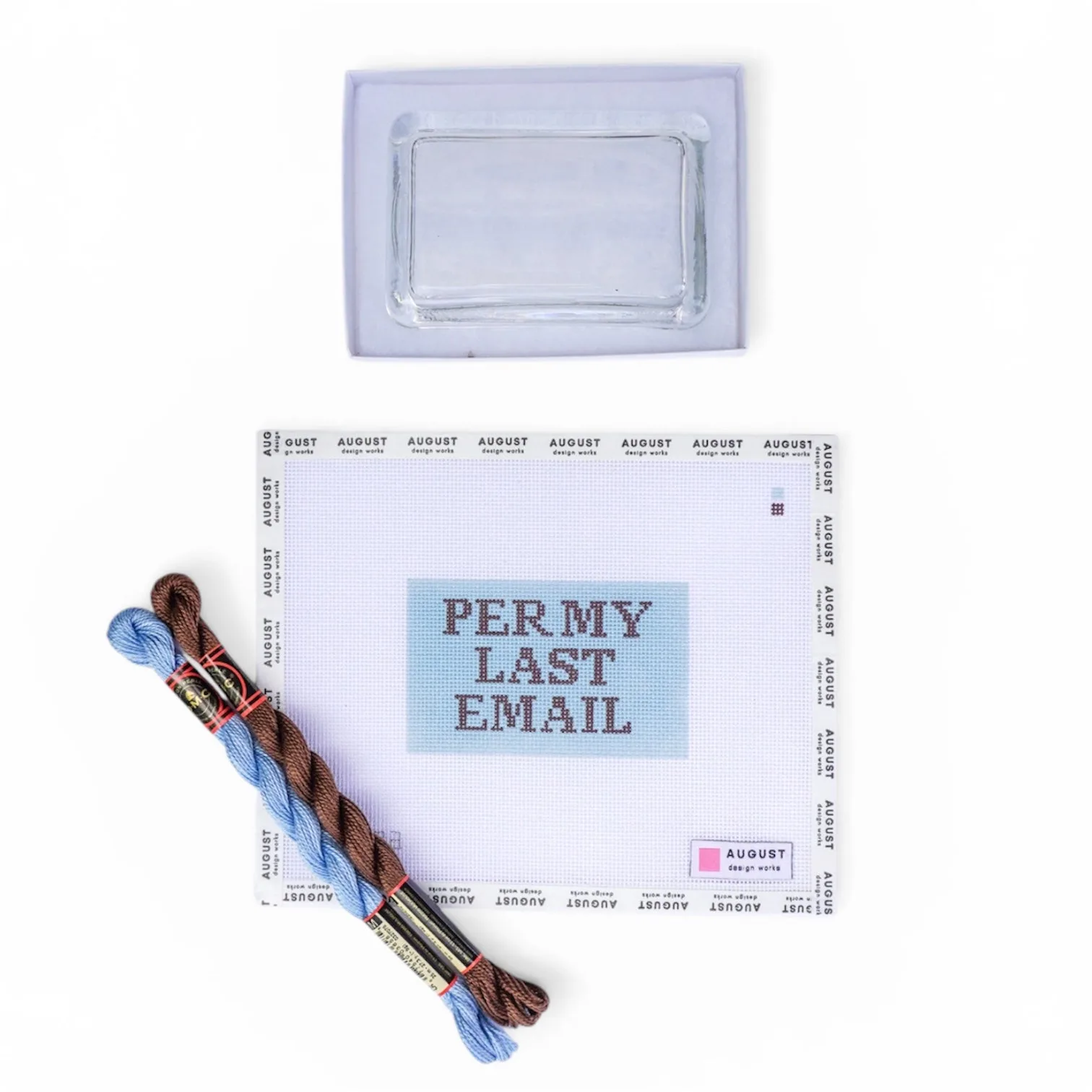
- Per My Last Email - Needlepoint Paperweight Kit (Wholesale - EXCLUDES THREADS): Glass paperweight kit for a self-finishing needlepoint experience; wholesale orders do not include threads. Shows how needlepoint can become a functional desk object, but you must supply your own thread, such as DMC Pearl Cotton Size 5.
Which craft fits you?
Needlepoint is best for
- Stitchers who prefer a visible canvas and painted design over counting a chart
- Anyone making durable, handled items like key charms, ornaments, or paperweights
- Those who want a textured, fully covered surface
Needlepoint is not for
- Stitchers who want a fine, pixel-like image on soft fabric
- Those who dislike finishing or blocking steps
- People who prefer to work entirely from a chart without a printed design
Needlepoint and counted cross stitch are different crafts with different strengths. If you want a sturdy, textured piece you can use, start with a needlepoint canvas like the Dog Tag Love Lock or a paperweight kit. If you want a detailed, flat image to frame, counted cross stitch may suit you better. Pick the one that matches how you like to stitch, and you will enjoy the process more.