Quick answer
The most useful needlepoint industry news right now is not a single gadget or thread line. It is the steady arrival of hand-painted canvases that let you choose a mesh count and design size before you buy thread. If you want a new project that is easy to finish, start with a 13 mesh canvas around 12 x 10 or smaller from August Design Works, then add thread and tools once you know the design's scale.
Needlepoint news usually reaches stitchers as a trickle: a new canvas series here, a mesh option there, a tool that promises to end tangles. The practical question is simpler. Which of these new needlepoint products actually change how you shop, and which ones just add to the pile?
This update looks at what is genuinely useful in the current canvas and tool landscape, using real catalog examples from August Design Works. You will see how mesh count, canvas size and design size interact, why hand-painted canvases vary, and how to decide what to buy next without guessing.
What's actually new in needlepoint canvas
The biggest shift in needlepoint canvas news is not the canvas itself. It is how clearly designers now present mesh count and size before purchase. A 13 mesh canvas has larger holes and covers faster, which suits bold shapes and beginners. An 18 mesh canvas has finer holes and shows more detail, which suits small designs and stitchers who enjoy precision. Knowing the mesh before you buy thread is the single most useful piece of information a listing can give you.
Hand-painted canvases remain the norm for expressive designs, and they come with an honest tradeoff. Each one is painted by hand, so slight variations between canvases are expected rather than a defect. That variation is part of what makes a painted canvas feel like a small work of art, but it also means you should not expect a machine-identical repeat of a photo. If exact color matching matters to you, treat the listing image as a guide.
- Check mesh count first, then design size, then thread needs.
- Expect minor variation in any hand-painted canvas.
- Buy thread after the canvas arrives so you can match dye lots to the painted areas.
Mesh and size: the decision that shapes your project
Mesh count and canvas size are different numbers, and mixing them up leads to mismatched thread and frames. Canvas size is the full piece of canvas you receive. Design size is the painted area you actually stitch. A canvas listed as 13 x 10 with a 9 x 6 design gives you roughly two inches of margin on each side for framing, finishing or a hoop. That margin matters more than most stitchers expect, especially for ornaments and small framed pieces.
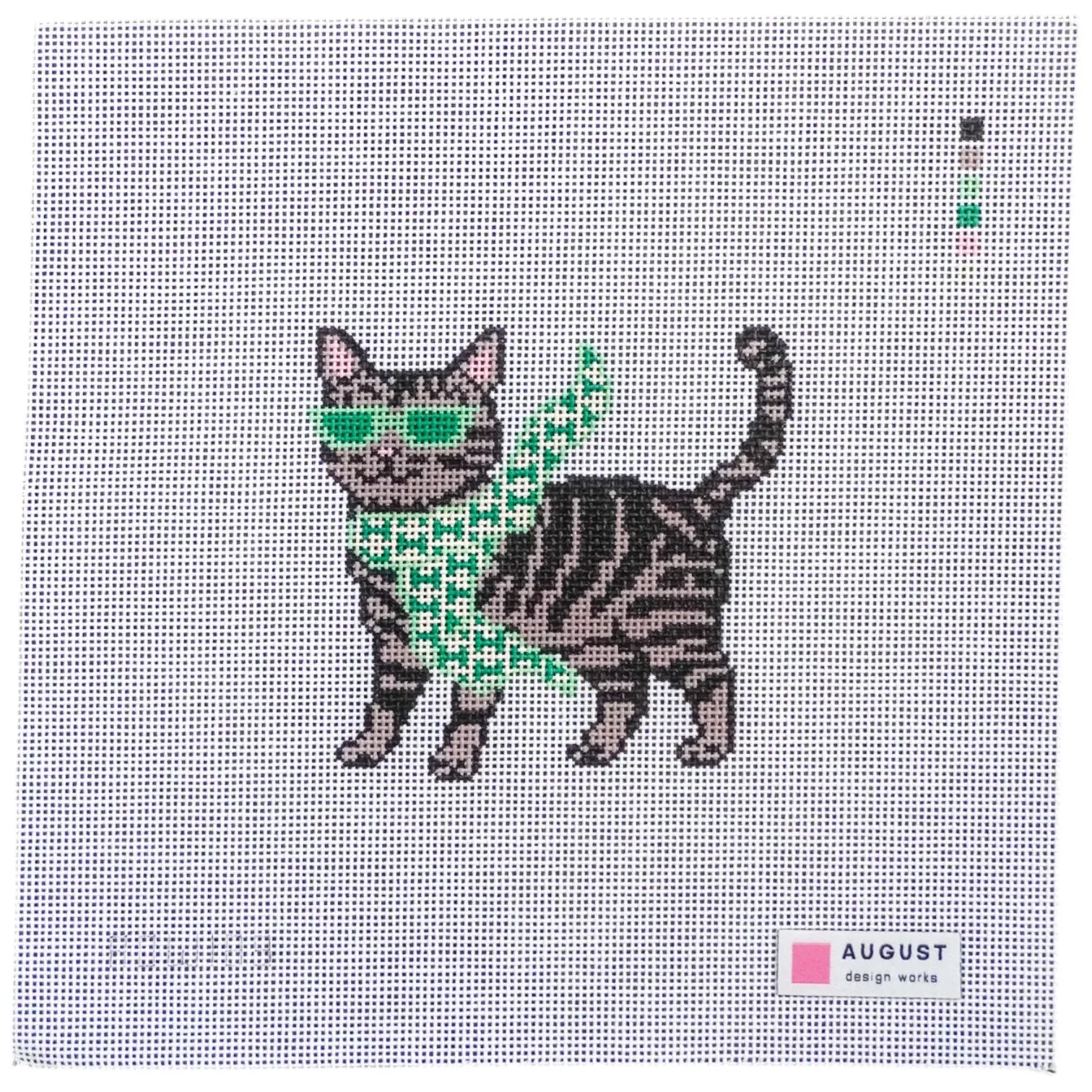
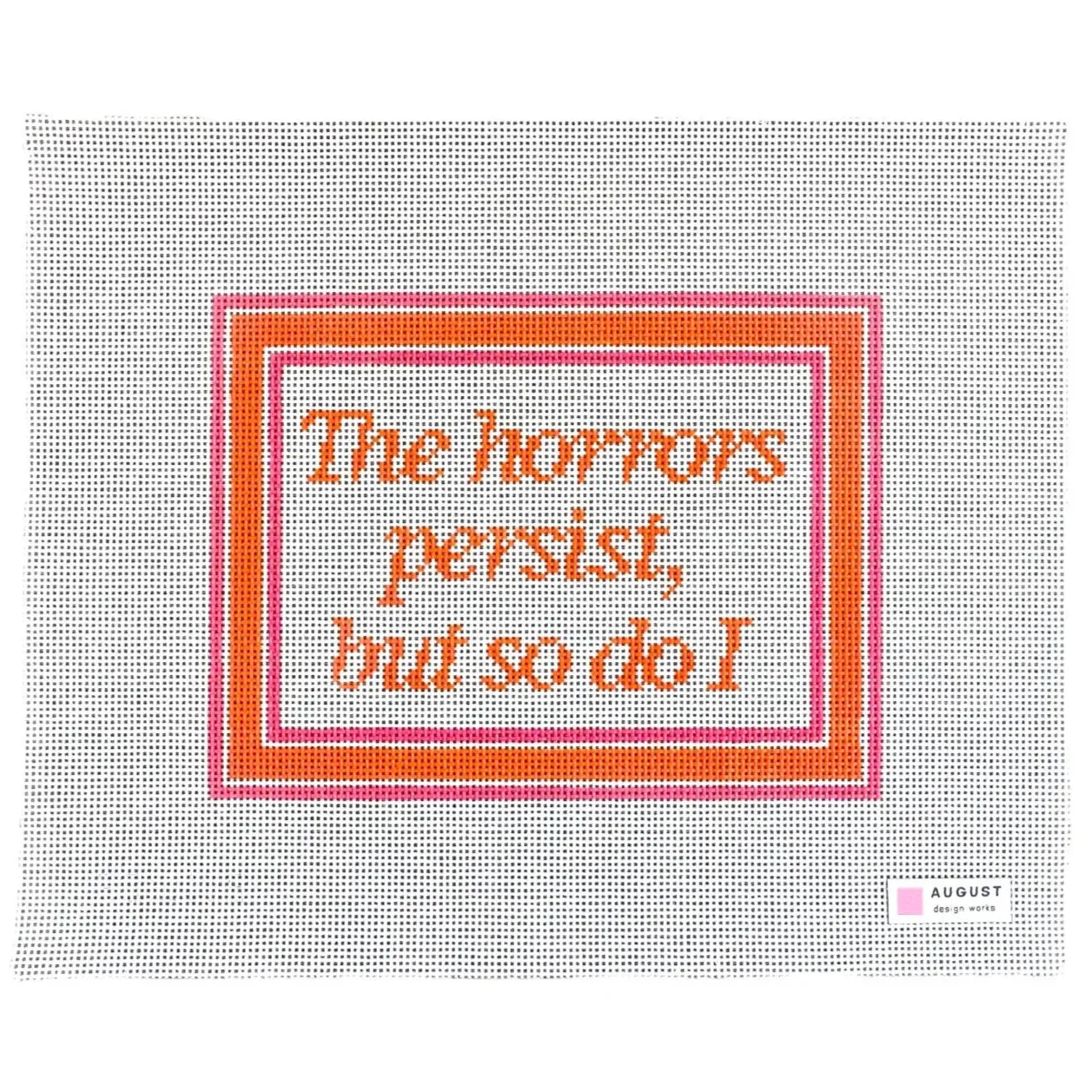
A 13 mesh canvas is the faster choice. A 12 x 10 canvas with an 8 x 6 design, such as The Horrors Persist But So Do I, covers quickly and leaves room for a simple background. An 18 mesh canvas is the detail choice. The Bougie Tabby Cat uses a 7.5 x 7.5 canvas with a 3.5 x 3.5 design, so the smaller painted area still holds fine features. Neither mesh is better. They answer different questions about time and detail.
- Choose 13 mesh when you want visible progress in a few sittings.
- Choose 18 mesh when the design has small features or lettering.
- Keep at least an inch of unstitched canvas beyond the design on every side.
Threads and tools: what is worth adding
Thread is where new stitchers overspend fastest. None of the canvases in this update come with thread, so the thread decision is yours. The honest rule is to buy thread for one project at a time. Pick a palette that matches the painted areas, then stitch a small test patch to check coverage on your chosen mesh. A 13 mesh canvas usually needs fewer strands to cover than an 18 mesh canvas, but the exact number depends on the thread and your tension.
Tools are a smaller category than they appear. A needle that suits your mesh, a pair of sharp scissors and a way to hold the canvas taut will carry most projects. Specialty tools can help, but they rarely rescue a project that has the wrong mesh or too little canvas margin. Spend on the canvas and thread first. Add tools when a specific problem, such as tangling or uneven tension, shows up in your stitching.
- Buy thread per project rather than stockpiling colors.
- Test coverage on a scrap area before committing to a full background.
- Add tools to solve a real problem, not to prepare for every possible one.
How to read a needlepoint listing before you buy
A useful listing answers four questions: what is the mesh count, what is the canvas size, what is the design size, and does thread come with it. When one of those is missing, treat it as a decision limitation. You can still buy the canvas, but you will need to measure or ask before you choose thread and finishing supplies. That is not a flaw in the product. It is simply information you should gather before checkout.
Price and comparison price are separate from value. A canvas at a lower price is not automatically the better buy if the design size is too small for your intended finish, or if the mesh is too fine for the time you have. Match the canvas to the project you will actually finish. A design you complete and display is worth more than a larger one that stays in a bag.
- Write down mesh, canvas size and design size before choosing thread.
- Ask about thread inclusion if the listing does not state it.
- Choose the project you will finish, not the one with the biggest painted area.
Decision rules for buying new needlepoint products
- Start with mesh, not price: If you have limited stitching time, choose a 13 mesh canvas such as Can't, So Busy Tonight or The Horrors Persist But So Do I. If you want fine detail in a small area, choose an 18 mesh canvas such as the Bougie Tabby Cat. Mesh count decides how fast the project moves and how much detail it holds.
- Match design size to your finish: A 9 x 6 design on a 13 x 10 canvas leaves useful margin for framing. A 3.5 x 3.5 design on a 7.5 x 7.5 canvas suits a small ornament, charm or framed miniature. Measure the design area against the finished object you have in mind.
- Budget thread after the canvas: Every canvas in this update is sold without thread. Buy thread once you can see the painted colors and test coverage on your mesh. Thread bought too early often goes unused.
- Treat hand-painted variation as normal: Hand-painted canvases may vary slightly from one another. That is expected, not a defect, and it means your canvas is individual. Judge the design and mesh, not a pixel-perfect color match.
- Add tools only for a real problem: A suitable needle, sharp scissors and a way to keep canvas taut cover most projects. Specialty tools help with specific issues such as tangling or tension. Solve the problem you have before buying for the one you might have.
Catalog examples worth knowing
- Can't, So Busy Tonight - Needlepoint Canvas (Wholesale): 13 x 10 canvas size, 9 x 6 design size, 13 mesh, hand-painted, and does not come with thread. The 13 mesh and 9 x 6 design make this a fast, readable project with generous canvas margin for framing or finishing.
- The Horrors Persist But So Do I - Needlepoint Canvas: 12 x 10 canvas size, 8 x 6 design size, 13 mesh, hand-painted, available in a color option, and does not come with thread. The smaller design area on a 13 mesh canvas suits stitchers who want a bold phrase finished without a long commitment.
- https://augustdesignwork.com/products/bougie-tabby-cat-wholesale-c061ba132e951f58a826968c-1481517Bougie Tabby Cat - Needlepoint Canvas (Wholesale): 7.5 x 7.5 canvas size, 3.5 x 3.5 design size, 18 mesh, hand-painted, and does not come with thread. The 18 mesh holds fine detail in a small design, making it a good choice for a delicate animal portrait or a charm-sized finish.
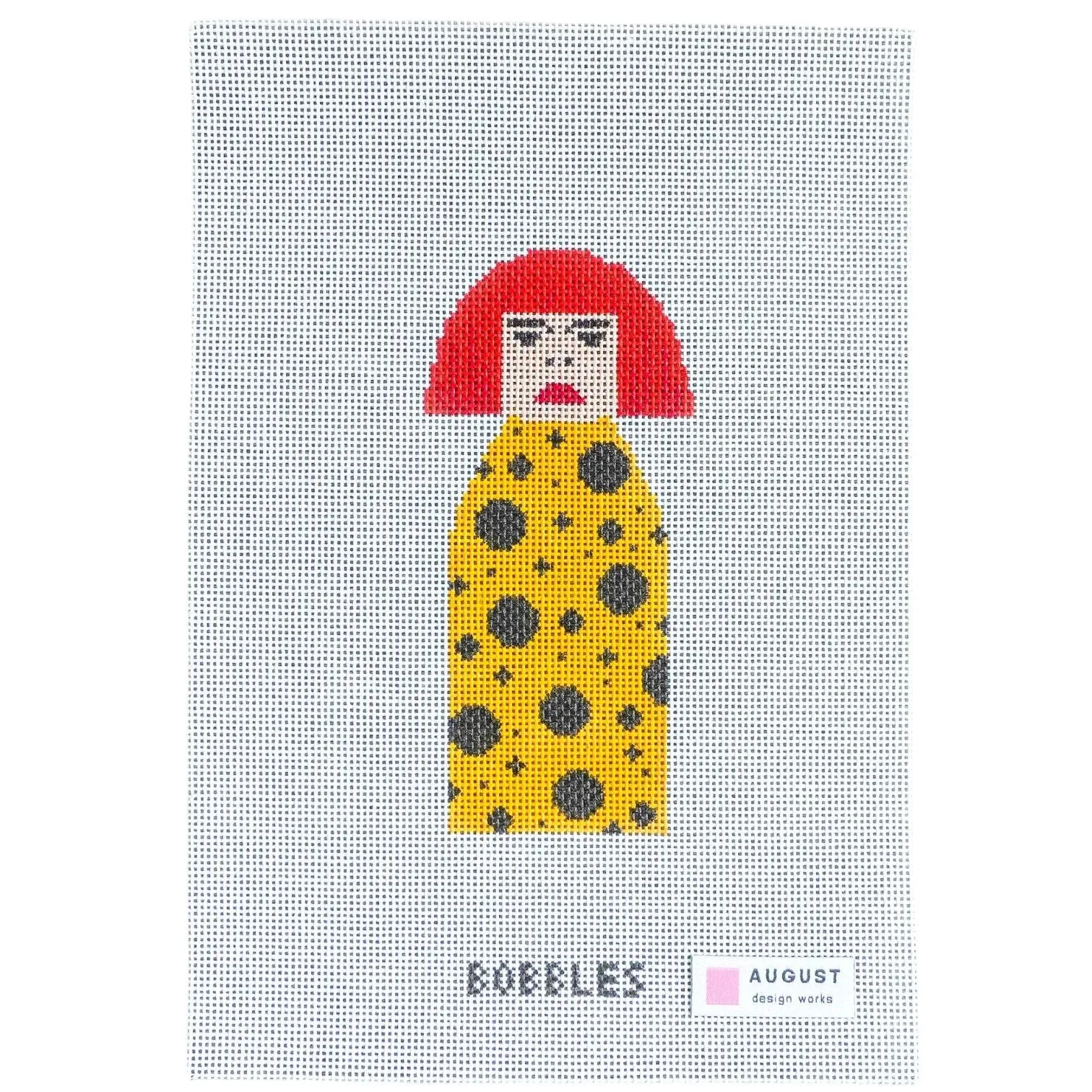
- https://augustdesignwork.com/products/kusama-bobble-needlepoint-canvas-wholesale-81b35c5de182a6fdb977ba8a-1481579Kusama Bobble - Needlepoint Canvas (Wholesale): Part of the Bobbles Series of hand-painted needlepoint canvases celebrating iconic figures, inspired by Yayoi Kusama's use of color, pattern and repetition. A collectible canvas for stitchers who want a design with a story and a display purpose beyond the stitching itself.
Who this update suits
Best for
- Stitchers choosing a new hand-painted canvas and wanting clear mesh and size guidance
- Gift buyers looking for a collectible or themed needlepoint canvas with a story
- Stitchers who finish small projects and want to match design size to framing or charms
Not for
- Stitchers who want a kit with thread included, since these canvases are sold without thread
- Buyers who need an exact machine-identical repeat of a painted design
- Anyone looking for a large floor-standing project rather than a small or medium canvas
The useful needlepoint industry news is not a flood of new categories. It is better information on the canvas itself. Check mesh, canvas size and design size, buy thread after the canvas arrives, and choose the project you will actually finish. That approach turns any new needlepoint product into a project you can complete and enjoy.