Quick answer
A needlepoint thread kit bundles the hand-painted canvas with a curated set of silk and wool fibers, a thread ring, a tapestry needle, and a stitch brochure. Buy a thread kit when you want every color matched and ready to stitch; choose canvas only when you already have a thread stash or want to pick your own fibers.
Thread kits remove the guesswork of matching fibers to a painted canvas. Instead of hunting down individual skeins, you get a curated set of silk and wool fibers chosen for that specific design, plus the small tools that keep a project organized. The trade-off is cost and less freedom to substitute your own threads.
This guide breaks down what is actually inside a needlepoint thread kit, how it differs from buying canvas only, and which projects justify the kit price. It uses real examples from Wheelhaus Needlepoint so you can see the difference in practice.
What is in a thread kit
A standard thread kit includes the hand-painted, stitch-painted canvas, a curation of all the silk and wool fibers needed for the design, a thread ring, a tapestry needle, and a stitch brochure. Some kits also include a reusable PVC protective project baggy and a WIP project card. The exact contents vary by product, so check the individual listing before buying.
The fibers are the main value. Silk and wool have different sheens and textures, and a curated kit means the colors and quantities are already matched to the canvas. That saves time and reduces the risk of running short mid-project.
- Canvas only includes the painted canvas, a stitch pamphlet, a WIP project card, and a reusable PVC project baggy.
- Thread kits add the fiber curation, thread ring, tapestry needle, and stitch brochure.
- Canvas does not come finished or stitched, and threads are not included unless the kit is purchased.
Canvas only vs. thread kit: the real trade-offs
Canvas only is the lower-cost entry point. You get the painted canvas and basic project accessories, but you supply your own threads. That is a good fit if you already own a thread stash, enjoy choosing fibers yourself, or want to control the exact palette. The downside is time spent matching colors and the chance of misjudging how much thread a stitch area needs.
A thread kit costs more upfront but removes those decisions. You get fibers selected for the design, which is helpful for complex or gift projects where you want a predictable result. The trade-off is less flexibility: you are committing to the kit's fiber choices rather than experimenting with alternatives.
- Choose canvas only if you have a thread stash or want to customize fibers.
- Choose a thread kit if you want a turnkey project with matched colors.
- Neither option includes finishing or stitching; you still do the needlework.
How to use a thread kit without waste
Start by reading the stitch brochure and laying out the fibers next to the canvas. Match each thread to its painted area before you stitch so you can spot any substitutions or shortages early. Keep the thread ring handy to separate active strands and prevent tangling.
Work in small sections rather than jumping around the canvas. This helps you gauge thread usage and keeps the project baggy organized. If you are new to a stitch, practice it on a scrap of canvas first. The kit gives you the materials; the stitch pamphlet gives you the guidance.
- Lay out all fibers against the canvas before the first stitch.
- Use the thread ring to keep strands separated and untangled.
- Store the project in the reusable PVC baggy between sessions.
When a thread kit is worth it
A thread kit is worth it when the design uses many colors, when you want to avoid shopping for individual skeins, or when the project is a gift and you want a reliable result. It is also useful if you are new to needlepoint and do not yet have a thread stash to draw from.
It is less worth it if you already own a broad fiber collection, if you enjoy sourcing your own threads, or if you plan to stitch many pieces from the same palette. In those cases, canvas only plus your own threads is usually more economical.
- Worth it: complex designs, gift projects, beginners without a stash.
- Skip it: large existing stash, preference for custom fibers, repeat stitching from the same palette.
Decision rules for buying a thread kit
- Do you already own a thread stash?: If you have a broad collection of silk and wool fibers, canvas only is usually the better value. If you are starting from scratch, a thread kit saves you from buying individual skeins. Stash owners: canvas only. New stitchers: thread kit.
- How complex is the color palette?: Designs with many colors and subtle shading benefit most from a curated kit because matching fibers is harder. Simple, limited-palette designs are easier to supply yourself. More colors means more value from a kit.
- Is this a gift or a one-off project?: For gifts or one-off projects, a thread kit reduces the chance of a missing color or a mismatched fiber. For repeat stitching from the same palette, canvas only plus bulk threads is more economical. Gift or one-off: kit. Repeat palette: canvas only.
- Do you want to choose your own fibers?: A thread kit commits you to the curated silk and wool selection. If you enjoy experimenting with different threads, canvas only gives you that freedom. Want control: canvas only. Want turnkey: thread kit.
Thread kit examples from the catalog
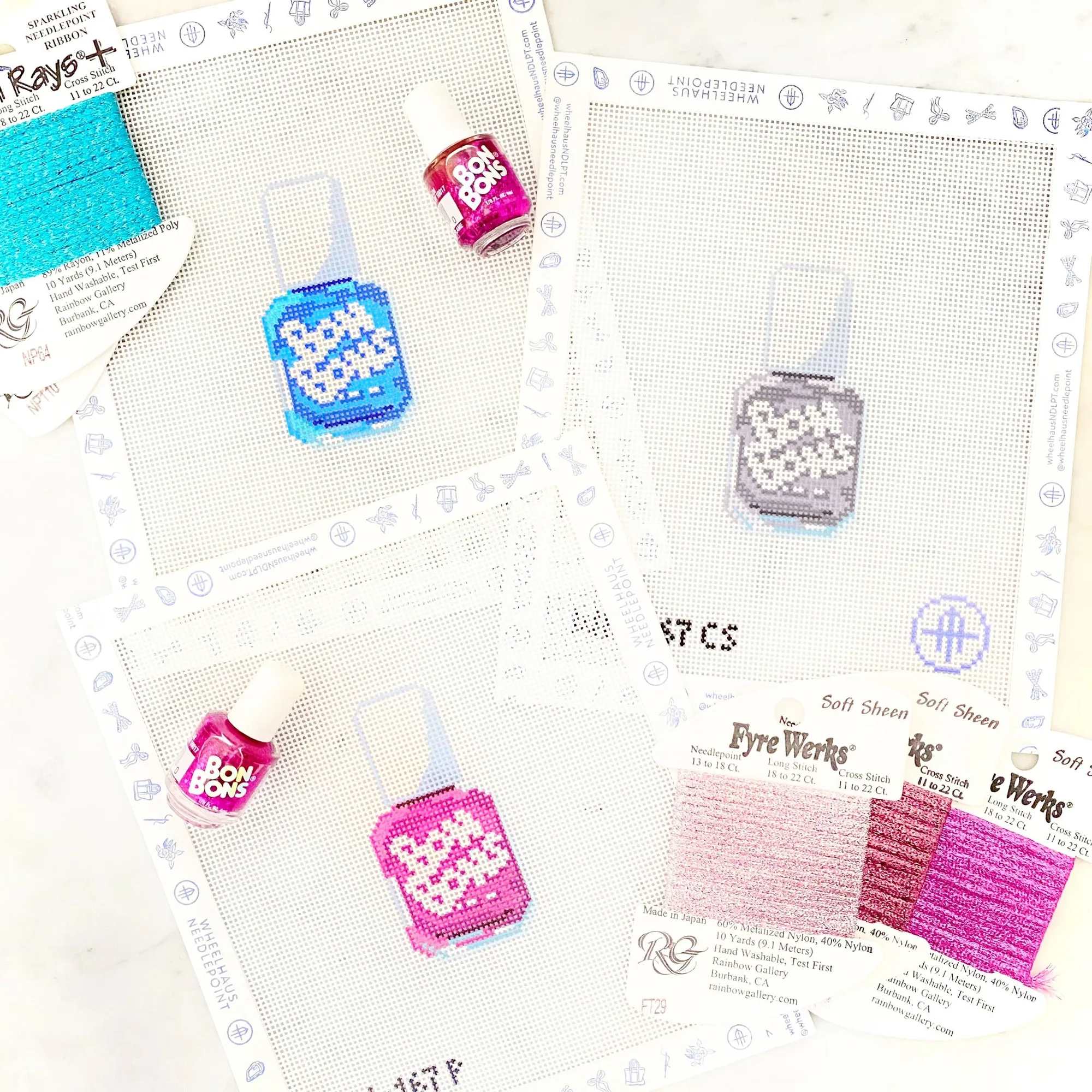
- Bon Bons Nail Polish: 18 mesh, design 1.25W x 3H. Canvas only includes the hand-painted, stitch-painted canvas, one of seven stitch pamphlets, a WIP project card, and a reusable PVC protective project baggy. The thread kit adds a curation of all silk and wool fibers needed, a thread ring, and a tapestry needle. A small design like this is a low-commitment way to try a thread kit. The kit removes color-matching work, while canvas only suits stitchers who already have fibers.
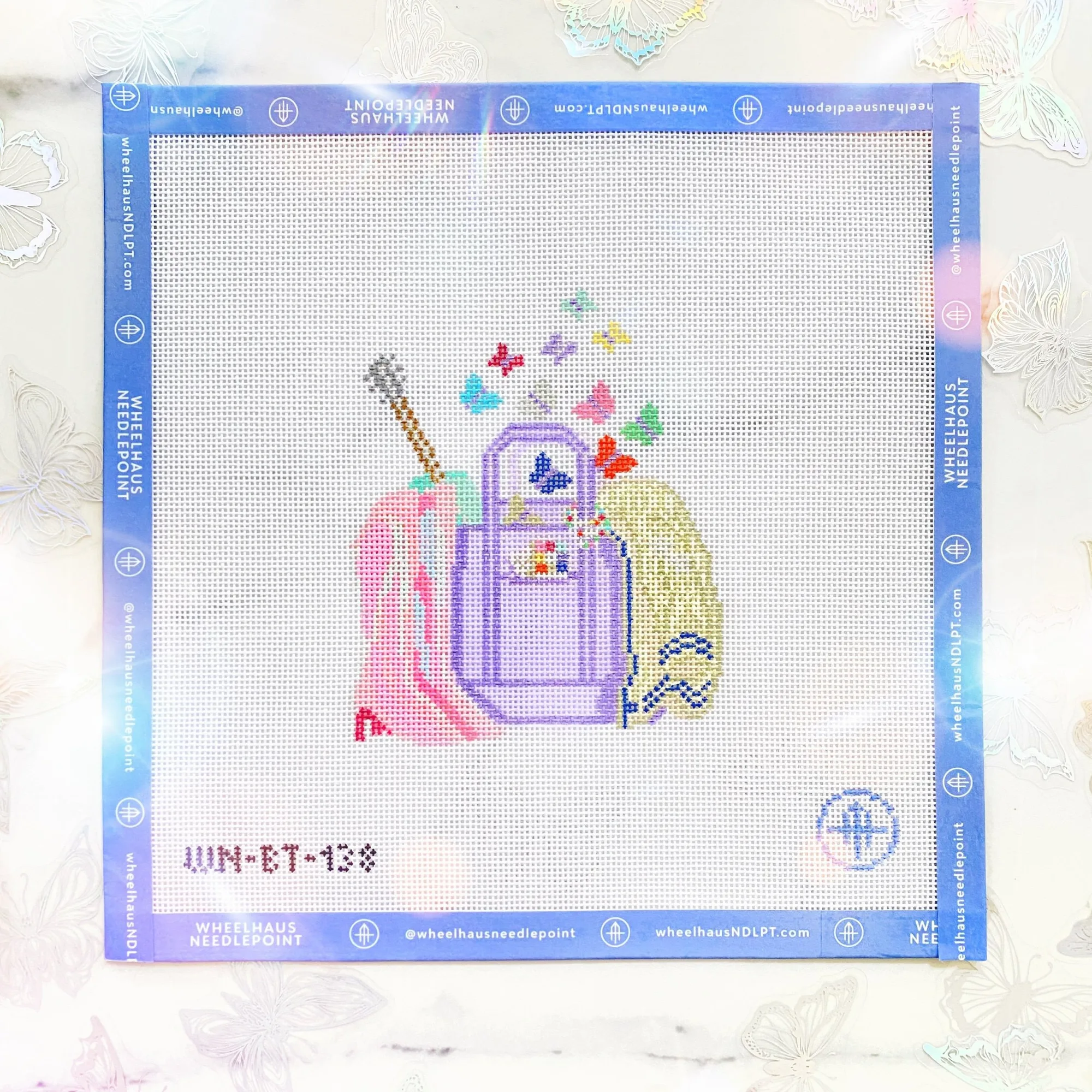
- My Lover Tote: 18 mesh, stitch painted, design 4.25 x 4.5. Canvas only includes the painted canvas, one of seven stitch pamphlets, a WIP project card, and a reusable PVC protective project baggy. The thread kit includes the canvas, a curation of silk and wool fibers, a thread ring, a tapestry needle, and a stitch brochure. A mid-size tote design gives you enough area to see how far the kit fibers go. The included thread ring and needle matter more on a larger project where organization affects stitching time.
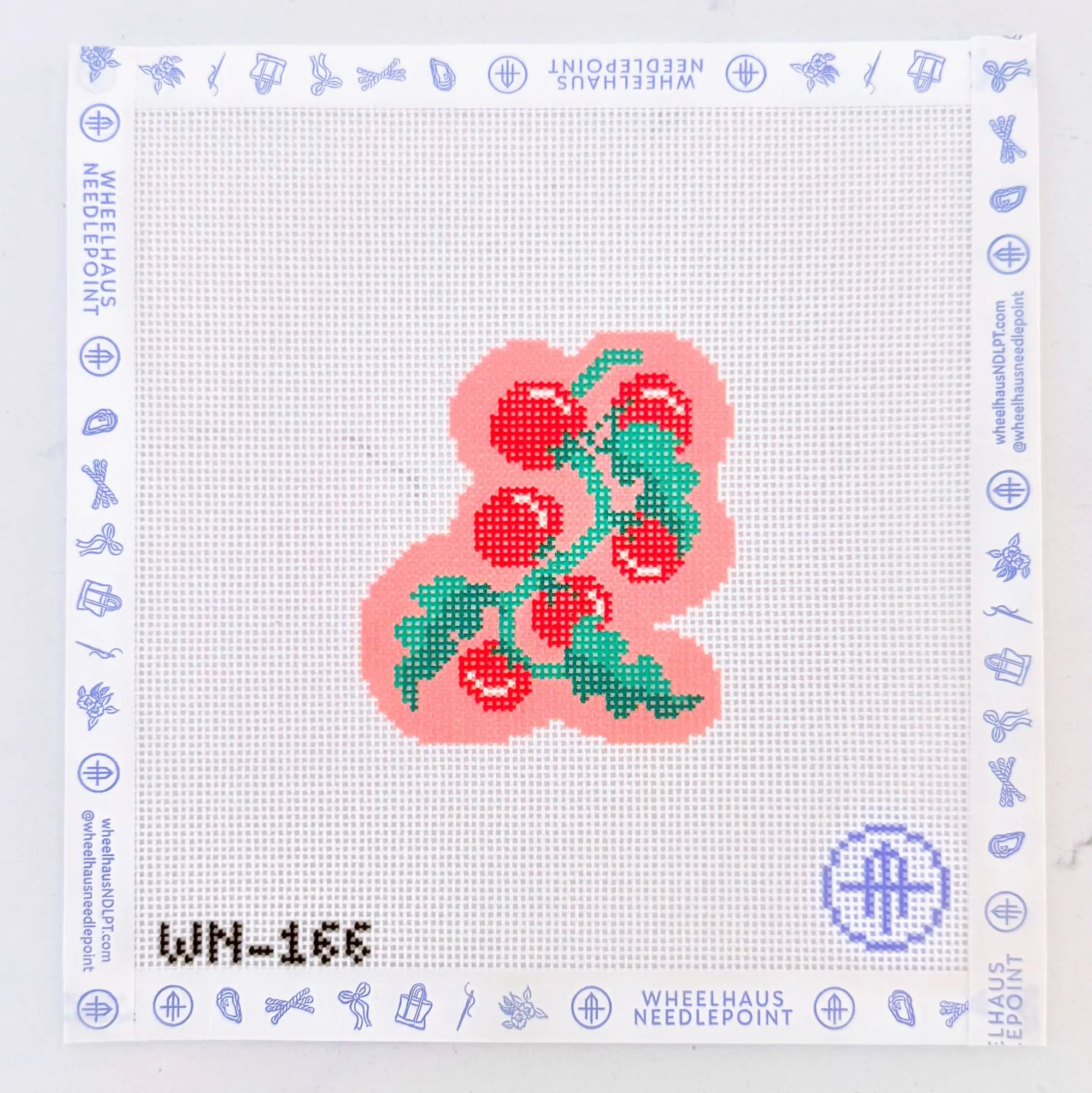
- Euro Summer Mini - Tomatoes: 18 mesh, design 3 x 2.5, StitchPerfect painted, stitch painted canvas. Includes one of seven stitch pamphlets, a WIP project card, and a reusable PVC protective project baggy. Threads are not included unless the kit is purchased. A mini canvas is a practical test project if you are unsure about kit versus canvas only. The small size keeps thread usage low, so a kit is less risky if you are still learning how much fiber a design consumes.
Who should buy a thread kit
Best for
- Stitchers who want a turnkey project with matched silk and wool fibers
- Beginners who do not yet have a thread stash
- Gift projects where a predictable result matters
Not for
- Stitchers with a large existing fiber collection
- Stitchers who prefer to choose their own threads
- Repeat projects using the same palette where bulk threads are more economical
A thread kit is a convenience purchase, not a requirement. If you value matched fibers and a ready-to-stitch setup, it earns its place. If you already have threads and enjoy choosing them, canvas only is the smarter buy. Check each listing for exact contents before you decide.