Quick answer
Most needlepoint tote bag myths come from mixing up three different things: the painted canvas design, the finished tote, and the thread you stitch with. A hand-painted canvas like Philly Special Tote is a design on 18 mesh, not a completed bag, and it does not include threads unless the listing says so. Check mesh count, whether the listing is canvas only or a thread kit, and what is actually included before you buy.
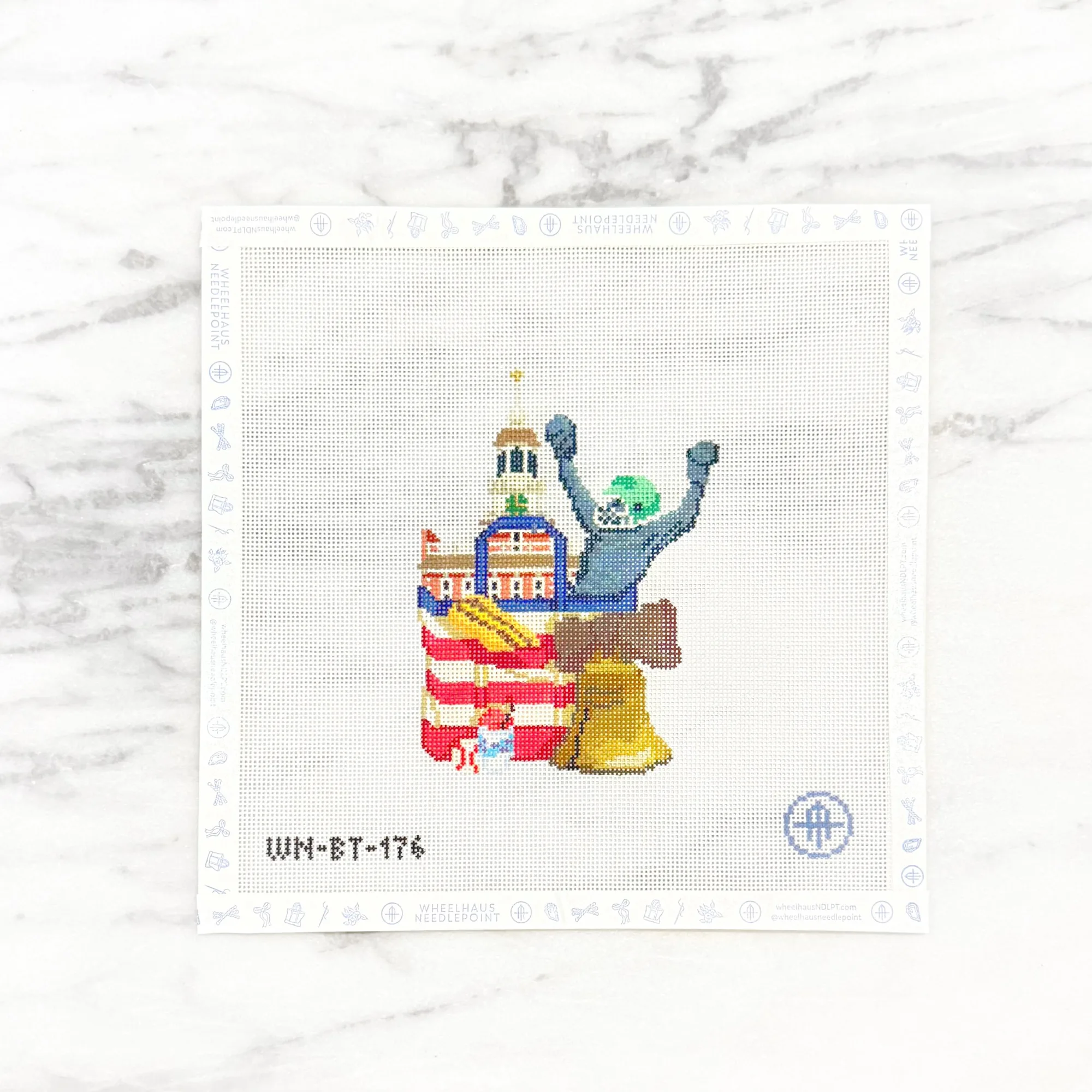
Philly Special Tote
Needlepoint tote bags look simple from the outside, which is exactly why so many myths grow around them. Shoppers see a tote-shaped design, assume it arrives finished, and then wonder why the listing says canvas only. Others worry a painted canvas is fragile, or that a tote bag for needlepoint projects is only for travel.
The honest answer is less dramatic than the myths. A needlepoint tote is a stitched canvas project, and the real variables are mesh count, whether threads are included, and how you treat the canvas while you work. Here are the claims I hear most often, with clear verdicts based on what the product listings actually say.
Myth: A needlepoint tote arrives ready to carry
Verdict: false. Listings such as Philly Special Tote and Camo NDLPT Tote are canvas only unless a thread kit option is selected. The canvas does not come finished or stitched, and threads are not included unless the kit is purchased. That means the tote shape you see is the design area you stitch, not a sewn bag waiting in the box.
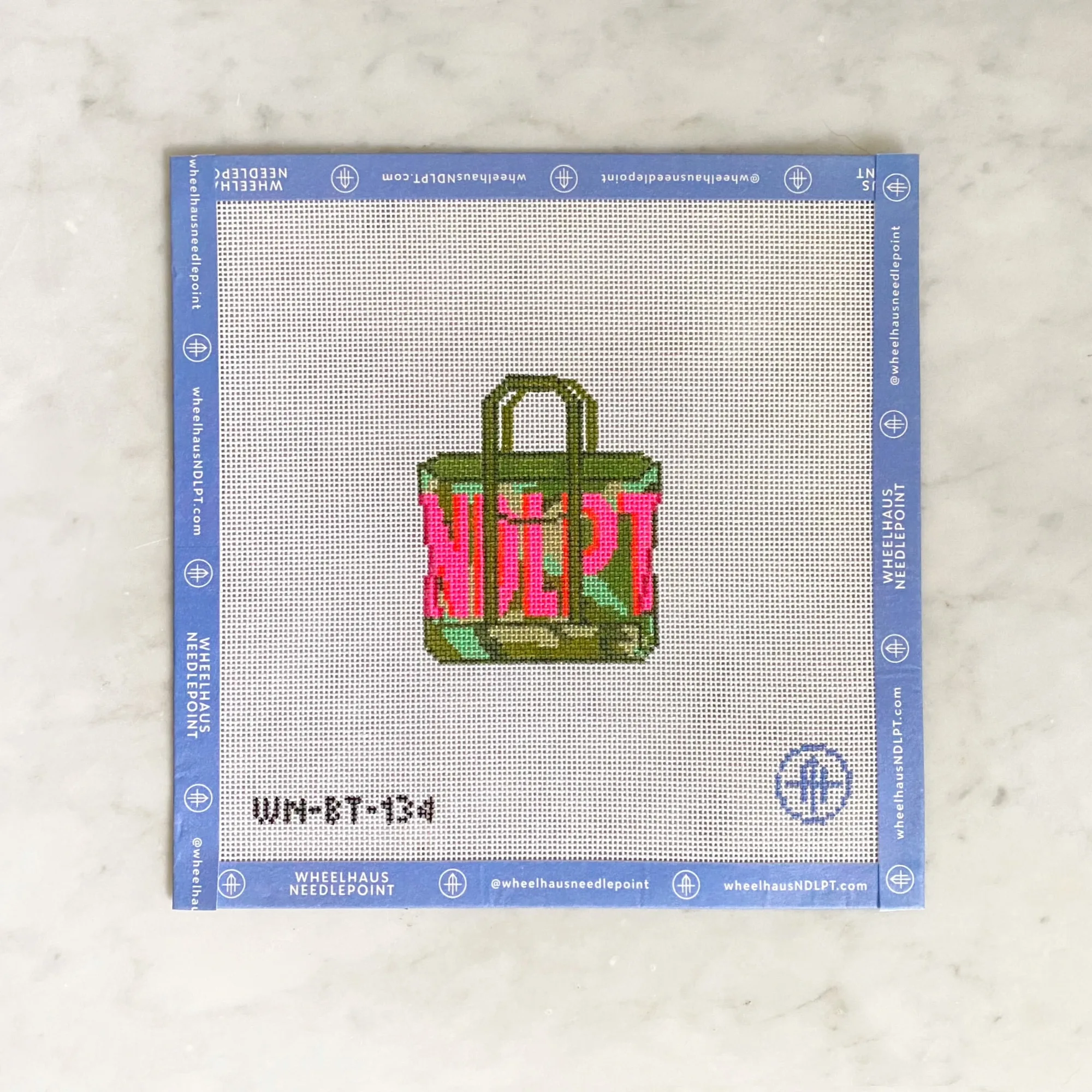
Camo NDLPT Tote
This is not a flaw; it is how needlepoint works. You buy the painted canvas, add your own threads or a curated kit, stitch the design, and then finish it into a bag or pillow. If you want a project that is ready to carry on day one, a canvas tote is the wrong product. If you want a tote you made yourself, the canvas-only format is exactly right.
- Check the listing for the words canvas only or thread kit before you assume threads are included.
- Budget for finishing separately, since a stitched canvas still needs to be made into a bag.
Myth: Mesh count is just a number and does not change the project
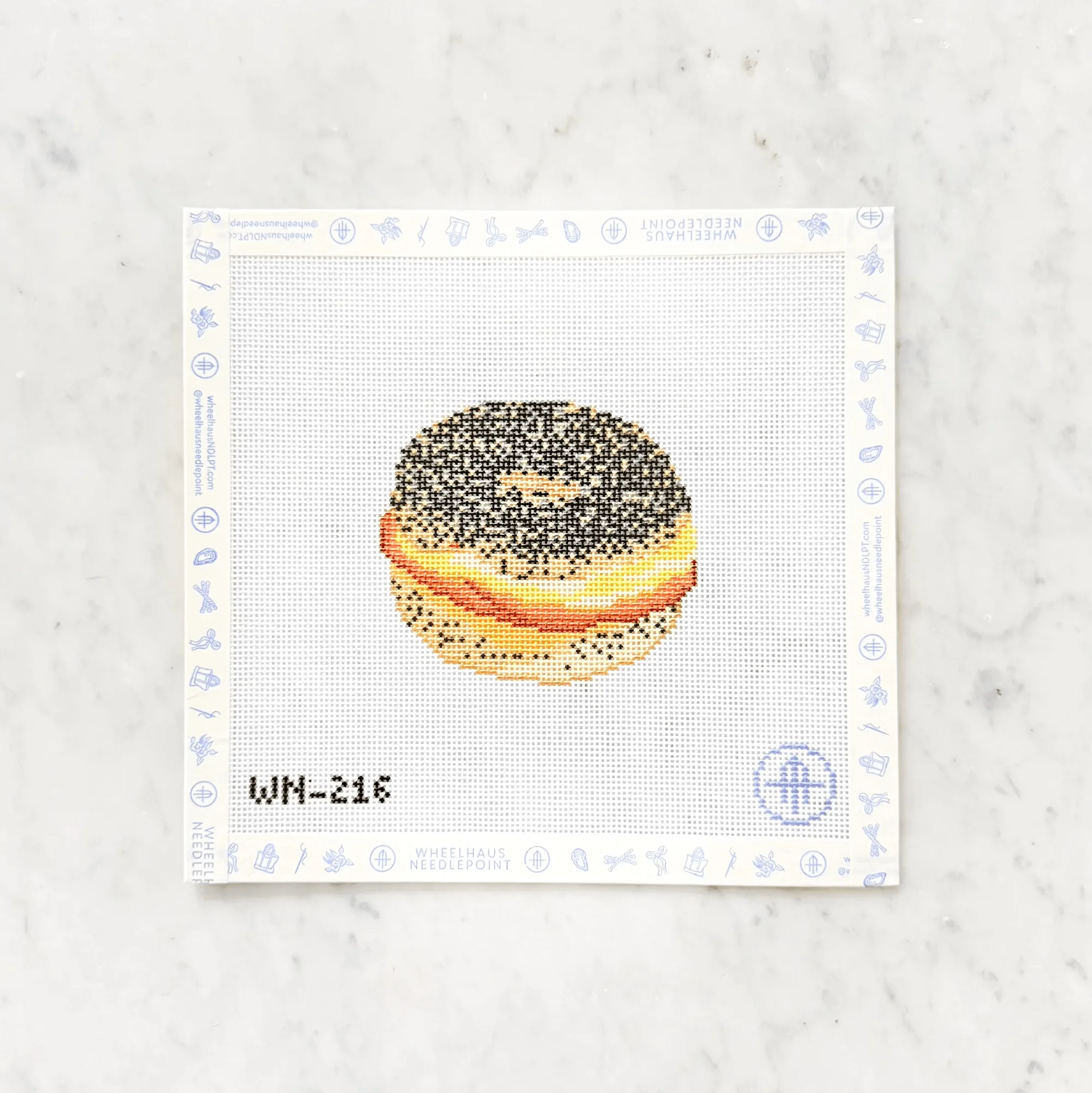
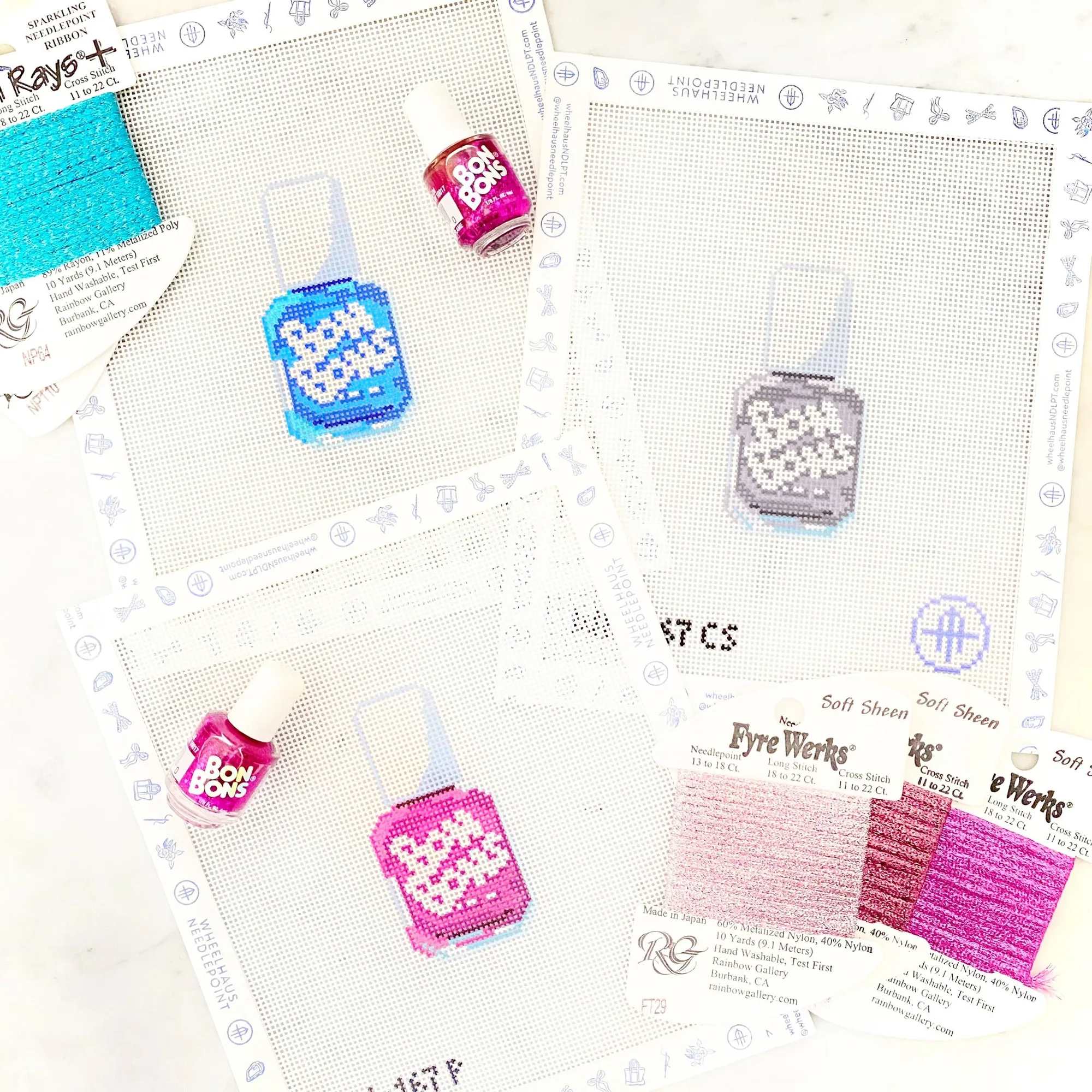
Verdict: false. Mesh count tells you how many threads per inch the canvas has, and it directly affects how the design stitches up. Philly Special Tote is stitch-painted on 18 mesh, and Camo NDLPT Tote is also 18 mesh. The Pork Roll (Taylor Ham), Egg, and Cheese on a Poppy Bagel is 18 mesh as well, while Bon Bons Nail Polish is 18 mesh with a 1.25W x 3H design.
On 18 mesh, small details stay crisp because the grid is fine. That is helpful for lettering, food motifs, and tiny shapes. The tradeoff is that fine mesh can feel slower to cover than a larger mesh, and it rewards good lighting. If you already know you prefer a chunkier mesh, check the listing instead of assuming every tote canvas is the same.
- Match mesh count to the detail level of the design, not to a generic preference.
- Use brighter light on 18 mesh so you can see the grid without straining.
Myth: Hand-painted canvas is too delicate for a tote
Verdict: misleading. Hand-painted, stitch-painted canvas is the standard for designs like Flamingo Float Tote and Personalized Nautical Flags Tote - Day 2. Stitch-painted means the design is painted onto the canvas grid so the colors guide your stitches. It is meant to be stitched, not framed untouched.
Delicacy depends on handling, not on the paint itself. Keep the canvas in its reusable PVC protective project baggy when you are not stitching, and avoid dragging it across rough surfaces. The listings include that baggy for a reason: it protects the painted surface and keeps your work-in-progress clean between sessions.
- Store the canvas flat or rolled in its project baggy rather than folded tightly.
- Keep drinks and pets away from an open canvas to avoid stains and snags.
Myth: Canvas tote care is complicated and full of special rules
Verdict: simpler than it sounds. The care that matters most happens before finishing: protect the painted canvas while you stitch, and follow the finishing method you choose for the stitched piece. The listings do not promise machine-washable finished totes, so do not assume you can toss a stitched tote in the wash without checking your finishing method first.
For the canvas itself, the supplied facts point to practical habits rather than rituals. Use the reusable PVC protective project baggy, keep the WIP Project Card with the project so you remember your threads and progress, and store the canvas away from direct sun and damp. Those steps cover most of what people worry about.
- Treat the project baggy as everyday equipment, not packaging to throw away.
- Ask your finisher about cleaning before you commit to a finishing style.
Myth: A tote bag for needlepoint projects is only for travel
Verdict: false. Tote-shaped canvases are popular because the finished piece is useful, but the stitching itself is the point. Camo NDLPT Tote and Flamingo Float Tote are 18 mesh designs with compact dimensions, which makes them manageable at home on the couch as well as on a trip.
The travel myth usually comes from confusing the canvas with a project bag. A project bag carries your supplies; a tote canvas is the project. You can stitch a tote design without ever leaving the house, and you can carry your supplies in any bag you already own. Choose a tote canvas because you like the design and size, not because you have a trip planned.
- Pick a tote design by finished size and motif, not by travel plans.
- Keep a separate project bag for tools so your canvas stays protected.
Myth verdicts at a glance
- Totes arrive finished: Listings such as Philly Special Tote and Camo NDLPT Tote are canvas only unless a thread kit is selected, and the canvas does not come finished or stitched. Verdict: false. Plan for threads and finishing.
- Mesh count does not matter: Philly Special Tote, Camo NDLPT Tote, Pork Roll (Taylor Ham), Egg, and Cheese on a Poppy Bagel, and Bon Bons Nail Polish are all 18 mesh, which keeps small details crisp. Verdict: false. Check mesh count against the detail you want.
- Hand-painted canvas is too fragile to stitch: Hand-painted, stitch-painted canvases are made to be stitched, and each listing includes a reusable PVC protective project baggy for storage between sessions. Verdict: misleading. Handle with care and use the baggy.
- Canvas tote care is complicated: The supplied facts point to simple habits: keep the canvas in its project baggy, use the WIP Project Card, and ask your finisher about cleaning before finishing. Verdict: false. Basic protection covers most concerns.
- Tote canvases are only for travel: Tote-shaped canvases are stitching projects first, and compact 18 mesh designs work just as well at home as on a trip. Verdict: false. Choose by design and size.
What the listings actually say
- Philly Special Tote: 4.25 x 5 inch design, hand-painted and stitch-painted on 18 mesh, canvas only, and includes a stitch pamphlet, WIP Project Card, and reusable PVC protective project baggy. A compact 18 mesh canvas with a project card and baggy, so you can start stitching once you add threads and plan your finishing.
- Camo NDLPT Tote: 18 mesh with a 3.75 x 3.25 design; the thread kit includes the canvas, a curation of silk and wool fibers, a thread ring, a tapestry needle, and a stitch brochure. If you want fewer decisions, the thread kit option bundles the fibers and tools so you are not sourcing threads separately.
- Bon Bons Nail Polish: 18 mesh canvas with a 1.25W x 3H design, hand-painted and stitch-painted, with a thread kit option that includes fibers, a thread ring, a tapestry needle, and a stitch brochure. A small, narrow design that suits a quick project or a gift, and the kit option removes the guesswork of matching threads.
The fastest way to avoid disappointment is to read the listing like a stitcher: mesh count, canvas only or kit, and what is included. Once you know those three things, most needlepoint tote bag myths disappear, and you can pick a canvas that fits how you actually stitch.