Quick answer
Nero Marquina marble can be a stunning choice for a kitchen, but it requires careful consideration of your cooking habits, maintenance willingness, and the specific surface (countertop vs. backsplash vs. floor). Prioritize honed or leathered finishes to reduce etching visibility, and always seal the marble properly.
The beauty and the trade-off: dramatic contrast vs. delicate stone
Nero Marquina marble is prized for its deep, rich black background and striking white veins. In a kitchen, this contrast can create a bold, sophisticated focal point, whether on an island, a backsplash, or a full countertop. The drama is undeniable.
However, marble is a natural stone, and it is softer and more porous than engineered quartz or granite. In a kitchen, that means it can be vulnerable to staining from red wine, tomato sauce, and oil, and etching (a dull mark) from acidic liquids like lemon juice and vinegar. The black surface of Nero Marquina makes white etches particularly visible. You must be willing to accept patina or commit to diligent sealing and cleaning.
Where you use it matters: countertop vs. backsplash vs. floor
A marble backsplash sees far less direct acid contact than a countertop, making it a lower-risk way to enjoy the stone. A black marble countertop, especially on a busy island, will show every spill and wipe. Marble floors in a kitchen can be beautiful but will require frequent cleaning to hide footprints and crumbs against the dark surface, and they can be slippery when wet. Choose your placement based on your lifestyle.
Consider using the Scarpa in Nero Marquina tile as a backsplash or accent wall. Its small-format, handcrafted appearance can add texture and visual interest without the high-maintenance surface area of a large countertop slab.
Finish and maintenance: choosing realism over pristine perfection
A polished Nero Marquina countertop will be the most reflective and luxurious, but it will also show every etch. A honed (matte) or leathered finish hides etching and fingerprints far better, making them the practical choice for serious cooks. Sealing is not optional: apply a high-quality impregnating sealer every 6-12 months. Clean spills immediately with a pH-neutral stone cleaner.
Decision rules for using Nero Marquina marble in your kitchen
- Assess your kitchen activity level: If you are a heavy cook who frequently uses acidic ingredients, a marble countertop will require constant vigilance. Lean toward a backsplash or accent installation instead.
- Choose your finish wisely: Honed or leathered finishes are far more forgiving of etching and fingerprints than polished ones. Polished is only recommended for low-traffic or decorative areas. Always request a sample to see how the finish looks against your specific kitchen light.
- Commit to a maintenance routine: Seal the marble every 6-12 months with a stone-specific impregnating sealer. Clean daily with a pH-neutral stone cleaner. Wipe spills immediately, especially acidic liquids. A maintenance schedule is not optional if you want to prevent permanent stains or etches.
- Consider the surface area and format: Large slab countertops maximize visual drama but also maximize susceptibility to damage. Smaller-format tiles like Scarpa in Nero Marquina are easier to replace and can be used in backsplashes or as accents to minimize risk.
Product consideration
-
Scarpa in Nero Marquina: Scarpa in Nero Marquina is a marble tile from Zia Tile, offered here in the Scarpa style. This listing is for the Standard variant, SKU ZT-RMO-SCA-NERO, and is also available as a sample variant. The Scarpa style provides a small-scale, handcrafted look that can introduce Nero Marquina marble in a backsplash or accent area with less surface-area maintenance than a full slab countertop.
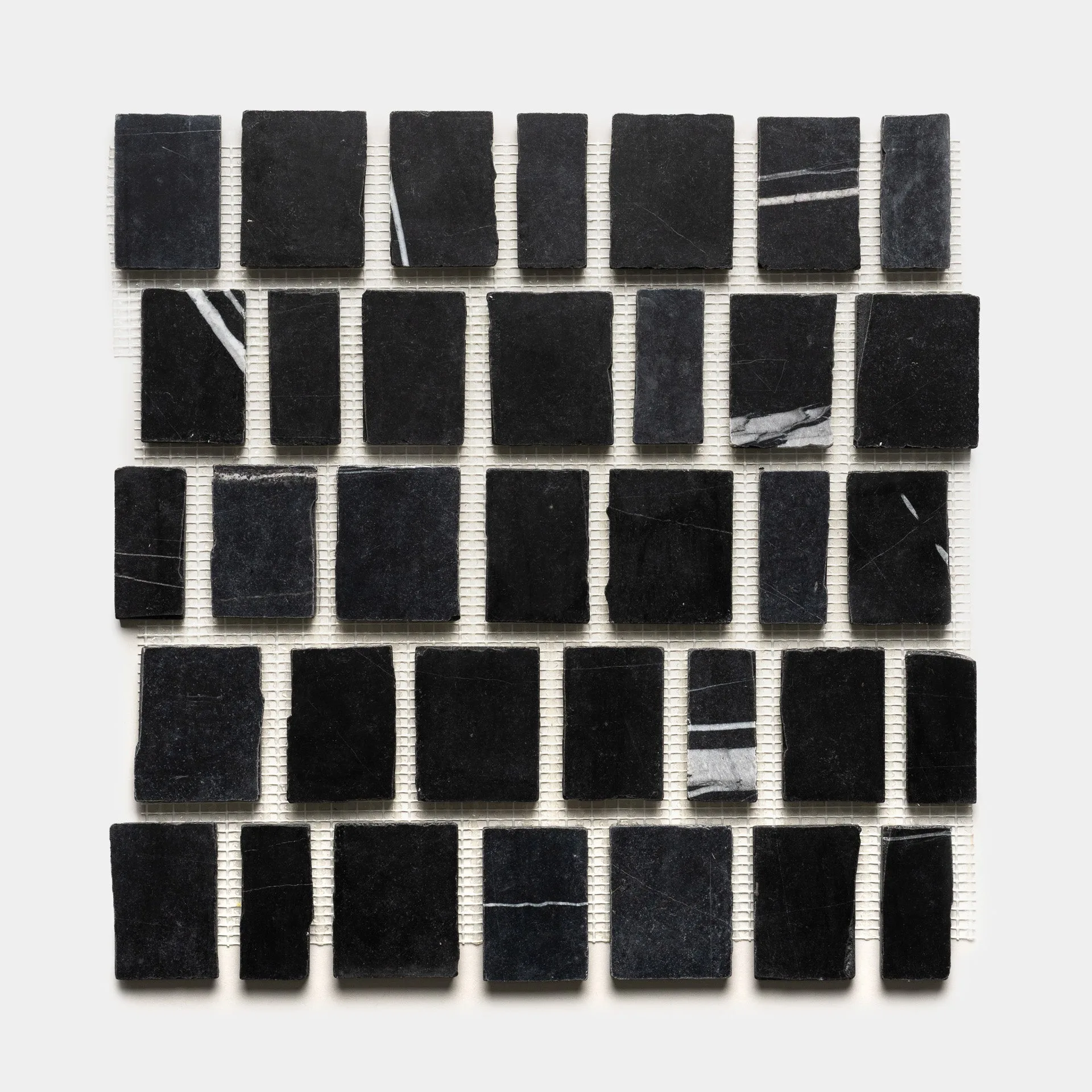
Scarpa in Nero Marquina
Who should—and shouldn't—use Nero Marquina marble in their kitchen
Ideal for
- Homeowners who love the dramatic look of black and white marble and are willing to accept natural patina and a regular maintenance routine.
- Kitchen designs where marble is used as a backsplash or accent rather than the main countertop, to reduce acid and stain exposure.
Not ideal for
- Busy family kitchens with heavy daily cooking and young children, where spills are frequent and maintenance is difficult to prioritize.
- Homeowners expecting a perfect, no-maintenance surface that won't show any wear or etching over time.