Quick Answer
The Clip 2.0 carrier is safe for newborns when used correctly—always keep your baby facing you and ensure their hips are in a natural spread-squat position.
Why the Clip 2.0 does not support forward-facing carry
The Clip 2.0 is designed for inward-facing carries only. The brand notes that no forward-facing position is available, which is intentional to protect your baby's developing spine and hips. Forward-facing can overstimulate a newborn and place stress on their hips and back. Staying with inward-facing also allows you to monitor breathing and maintain a good seal.
Hip health and positioning basics
For healthy hip development, your baby's legs should be in an M-shape (knees higher than hips) with their bottom fully seated in the carrier's seat. The Clip 2.0's adjustable seat width and ergonomic design help achieve this naturally. Avoid letting their legs dangle straight down, which can strain the hip joints. Always check that the fabric supports from knee pit to knee pit.
Newborn safety FAQ for the Clip 2.0
Can I use the Clip 2.0 with a newborn?
Yes. The Clip 2.0 is suitable for newborns when properly adjusted. Ensure the seat width is narrow enough to support from knee to knee, and that your baby's back is snug against your chest. The carrier's upright position is safe for healthy newborns, but always check with your pediatrician if your baby was premature or has any health concerns. Check the seat width and tighten the sling to achieve a deep seat.
How do I check for proper breathing?
You should be able to see your baby's face clearly. Make sure their chin is off their chest (at least a finger's width), and their face is visible and unobstructed. The fabric should not press against their nose or mouth. The TICKS rule applies: Tight, In view, Close enough to kiss, Keep chin off chest, Supported back.
What is the best position for hip health?
The optimal position is an M-shape: knees higher than the hips, with the baby's bottom in a deep squat. The seat fabric should run from one knee pit to the other, supporting the thighs without pressing on the back of the knees. This natural position helps prevent hip dysplasia. If your baby's legs dangle straight down, adjust the seat to bring their knees up.
When should I stop using the Clip 2.0?
The Clip 2.0 is designed for infants and toddlers, but stop using it once your child's head reaches the top of the carrier or if they feel heavy and uncomfortable to carry. There is no specific weight limit given, but use your judgment and ensure the fabric still supports their hips properly. Discontinue if the carrier shows signs of wear. Check the carrier fabric and hardware regularly for wear.
Product fact
-
Hudson Clip 2.0: The Hudson Clip 2.0 will not provide a forward-facing carry position. This design choice ensures newborns stay properly supported and avoids hip and spine strain. Always use the carrier inward-facing for infants.
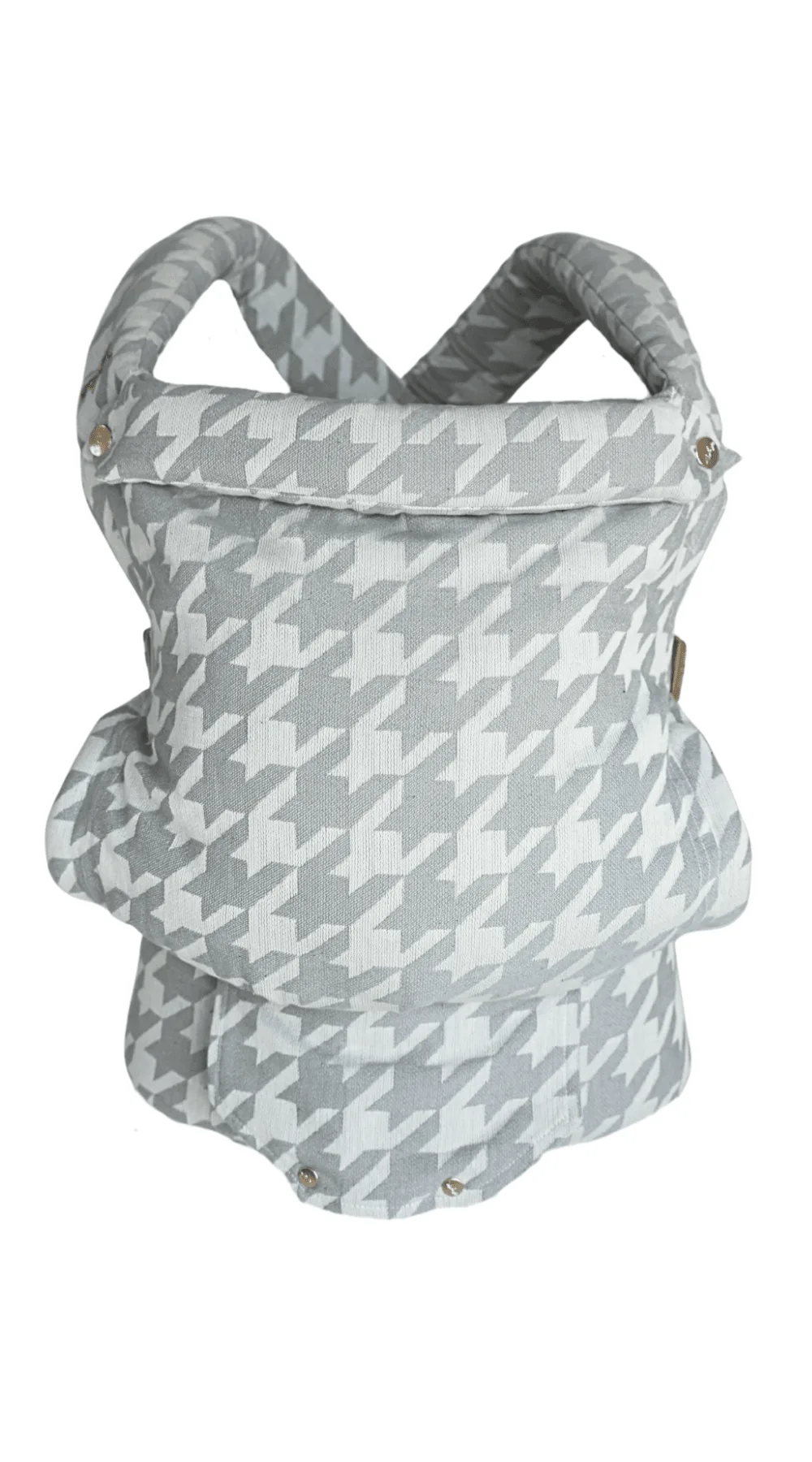
Hudson Clip 2.0