Quick Answer
If your priority is stunning near-circular bokeh and the highest rendering performance for portraits, choose the Nikon NIKKOR Z 135mm f/1.8 S Plena. If you need flexible framing from 70mm to 200mm for events or sports, the Canon RF 70-200mm f/2.8 Z is the practical choice.
The Core Trade-Off: Prime Bokeh vs Zoom Flexibility
The Nikon NIKKOR Z 135mm f/1.8 S Plena is a prime lens built around a single focal length. Its f/1.8 aperture and advanced optics deliver expansive, round bokeh that can isolate a subject like no zoom. The Canon RF 70-200mm f/2.8 Z covers a versatile range, letting you adjust composition without moving your feet, but its f/2.8 aperture and zoom design produce a different, less pronounced background blur.
This difference matters most in portrait photography. If you shoot mostly headshots or full-body portraits in controlled settings, the Plena's rendering will give you that dreamy, three-dimensional look. If you photograph weddings, events, or sports where moments happen quickly and at varying distances, the zoom's flexibility often outweighs the prime's optical purity.
Reach and Composition: When Zoom Wins
The Canon RF 70-200mm f/2.8 Z gives you a 70-200mm range, which is ideal for capturing subjects at different distances without swapping lenses. At 135mm, the Nikon Plena is fixed, so you must physically move to change your framing. For candid shots or fast-moving subjects, the zoom's flexibility can be the difference between getting the shot and missing it.
The Plena, however, excels when you can control the distance. Its 135mm focal length is a classic portrait length, offering flattering compression without the need to stand extremely far from your subject. If your work is primarily posed portraits, the prime's consistency and optical quality are hard to beat.
Aperture and Bokeh: The Plena's Signature
The Nikon NIKKOR Z 135mm f/1.8 S Plena is designed to create near-circular bokeh even at f/1.8. This means smoother, more rounded out-of-focus highlights that can make backgrounds melt away. The Canon RF 70-200mm f/2.8 Z, while excellent, has a maximum aperture of f/2.8, which lets in less light and produces shallower depth of field only at the long end.
For low-light situations, the Plena's f/1.8 aperture is a significant advantage, allowing faster shutter speeds and lower ISO settings. However, the Canon zoom's constant f/2.8 is still capable in most conditions and offers the benefit of a zoom without sacrificing aperture across the range.
How to Decide: Trade-Offs to Consider
- Bokeh Quality: If you prioritize the highest rendering performance and near-circular bokeh for portraits, the Nikon Plena is the clear winner. Its f/1.8 aperture and specialized design deliver unmatched background blur. Choose the Plena when your main goal is creamy, dreamy backgrounds.
- Focal Length Flexibility: If you need to shoot subjects at varying distances without changing lenses, the Canon RF 70-200mm f/2.8 Z offers the versatility of a zoom. This is crucial for events, sports, or travel photography. Pick the zoom if you value adaptability over maximum bokeh.
- Low-Light Performance: The Plena's f/1.8 aperture lets in more light than the f/2.8 zoom, which is a major advantage in dimly lit environments. You can use faster shutter speeds and lower ISO settings for cleaner images. If you shoot often in low light, the prime's aperture advantage is significant.
Product Facts
-
Nikon NIKKOR Z 135mm f/1.8 S Plena: The NIKKOR Z 135mm f/1.8 S Plena introduces a new imaging era, rendering expansive, round bokeh that envelops the entire frame, even at f/1.8. This means you can achieve stunning, near-circular background blur that makes portraits stand out with a unique, professional look.
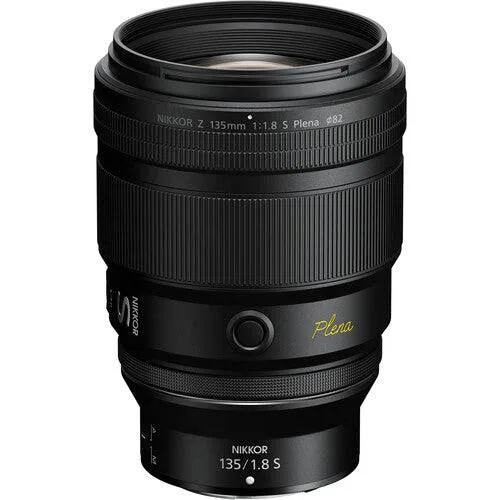
Nikon NIKKOR Z 135mm f/1.8 S Plena
Who Should Choose Which
Best for
- Portrait photographers who want the ultimate bokeh and optical quality from a prime lens.
- Videographers seeking smooth, round bokeh in video footage at a fixed focal length.
Not for
- Event or sports photographers who need the flexibility of a zoom to capture subjects at various distances quickly.
- Travelers who prefer to carry a single lens that covers a range of focal lengths.