What SolarProof does before you spray
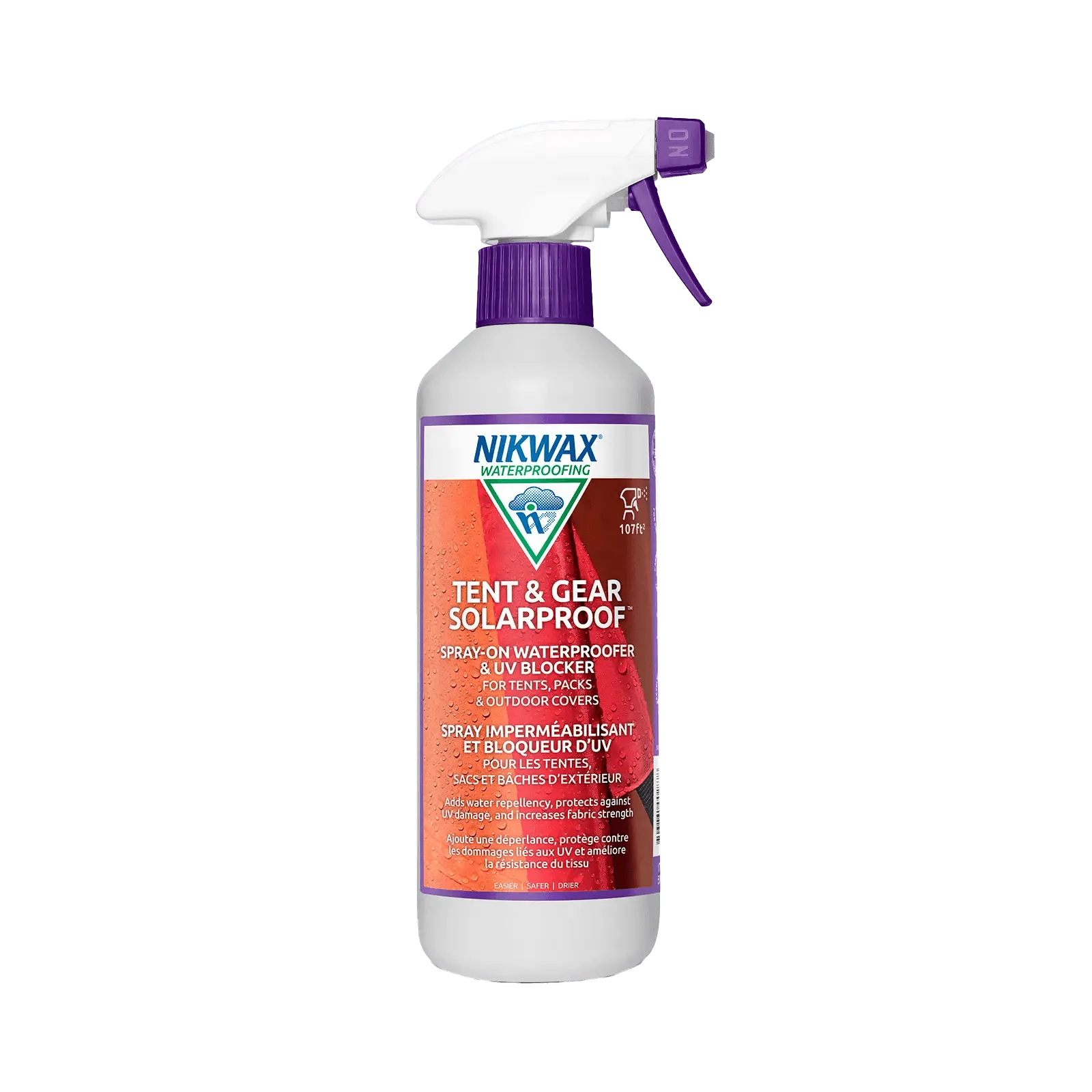
Nikwax Tent & Gear SolarProof is a spray-on treatment that restores water repellency and adds UV protection to tent fabrics. That pairing matters on a camping tent: a fabric that absorbs water becomes heavier and can feel clammy, while sun exposure wears on the surface over seasons of use.
Think of it as a re-proofing step rather than a repair. It refreshes the fabric's ability to shed water and adds a layer of sun protection, but it does not replace a physical fix for a hole, tear or broken hardware.
SolarProof at a glance
-
Nikwax Tent & Gear SolarProof: Spray-on treatment that restores water repellency and adds UV protection to tent fabrics. This is the core job of the product, so you know what to expect before you start.
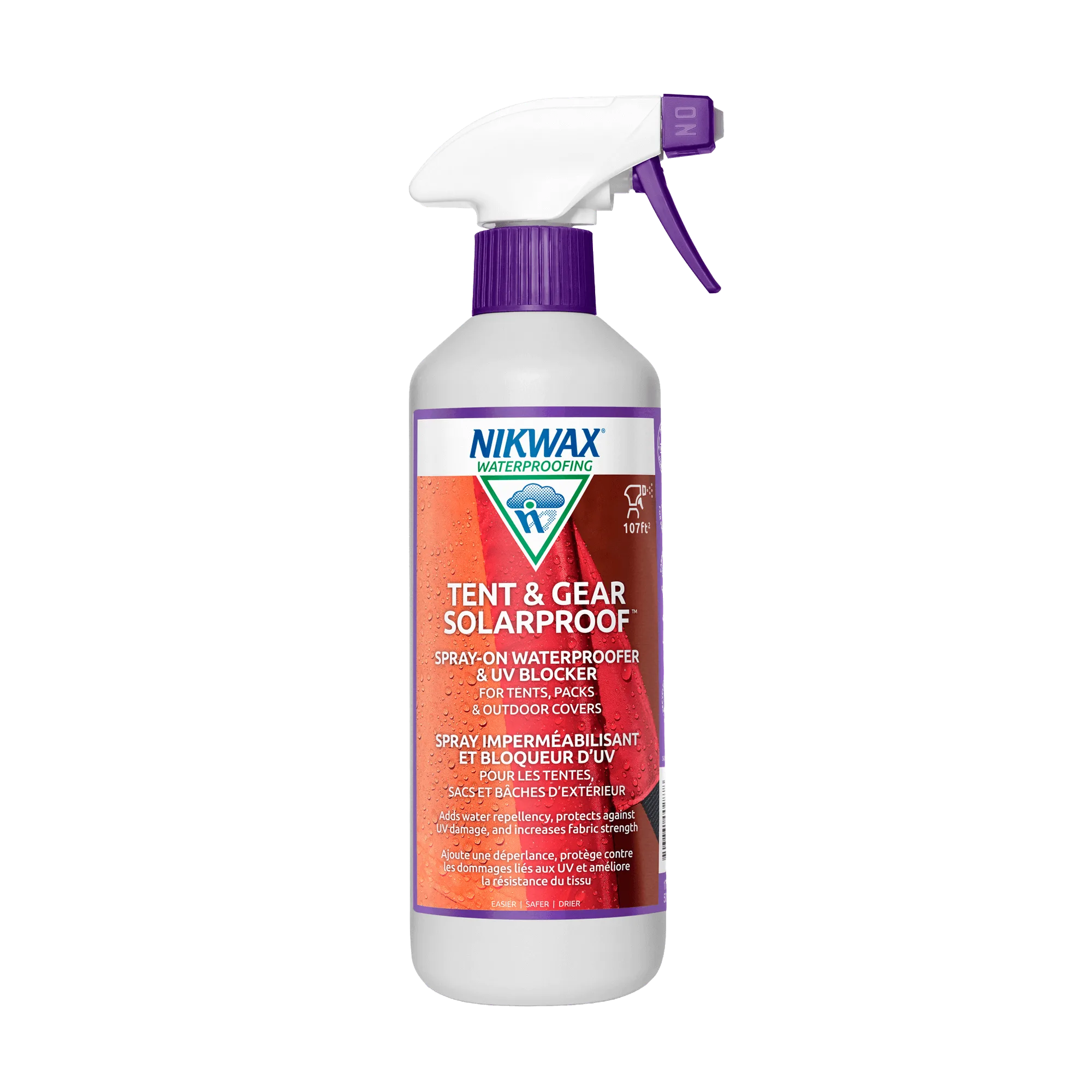
Nikwax Tent & Gear SolarProof
-
Nikwax Tent & Gear SolarProof: Helps reduce water absorption and protect against sun damage. Explains why re-proofing is worth doing on a tent that still looks fine but no longer beads water.
-
Nikwax Tent & Gear SolarProof: Listed at USD 14.48 (catalog comparison price USD 20.99). Gives you a cost reference when deciding whether to re-proof or replace gear.
When to reproof a camping tent
The clearest signal is water behavior. If rain no longer beads on the rainfly or panels and the fabric starts looking dark and saturated, the surface repellency has faded. That is the moment to reapply SolarProof.
Seasonal timing is a useful second cue. If your tent has spent a long summer in the sun, the UV protection angle is worth considering even when water still beads. Re-proofing before storage or before a wet-season trip keeps the job off your list at the trailhead.
How to apply Nikwax Tent & Gear SolarProof
The supplied product information confirms this is a spray-on treatment, but it does not list a step-by-step procedure, dry times or coverage rates. The steps below are a practical framework for working cleanly with a spray-on fabric treatment, not manufacturer instructions. Check the product label for the authoritative method before you start.
- Set up a clean, sheltered work area: Pitch or hang the tent so the fabric is taut and you can reach the panels and rainfly. Choose a calm day or a sheltered spot so spray lands where you aim it rather than drifting.
- Start with a clean, dry tent: Dirt and residue can interfere with how a treatment bonds to fabric. Clean the tent first and let it dry fully before spraying.
- Treat the rainfly and panels evenly: Work in sections and keep the spray pattern even so you do not leave dry patches. The rainfly and main panels are the surfaces most exposed to rain and sun.
- Cover seams and high-wear zones: Seams, corners and areas that rub against poles or the ground see the most stress. Give them attention as you pass over them.
- Let it dry completely before packing: Do not fold or stuff the tent while the treatment is still wet. Allow full drying in a ventilated area, following the label's guidance.
Rainfly, panels and seams: where to focus
The rainfly is the first line of defense, so it deserves the most thorough pass. Main body panels come next, since they face both rain and sun. Seams and stress points get a second look because they take concentrated wear.
The supplied information does not confirm whether SolarProof is intended as a seam-sealer or a standalone seam treatment. If you have an active leak at a seam, treat re-proofing as fabric maintenance and address the leak separately.
Practical checks before and after spraying
- Confirm the fabric is dry: Spray-on treatments work best on dry fabric. Damp fabric can dilute the effect and extend drying time.
- Test a small area first: A quick pass on a less visible section lets you see how the fabric responds before treating the whole tent.
- Watch the water bead after drying: Once fully dry, a light splash should bead on treated fabric. If it soaks in immediately, review your coverage and the label's guidance.
- Store only when fully dry: Packing a treated tent while damp risks mildew and undoes the care you just put in.
What the catalog does and does not confirm
- Nikwax Tent & Gear SolarProof: The supplied information describes SolarProof as an easy-to-use spray-on treatment. Confirms the application format so you can plan your work area and tools.
- Nikwax Tent & Gear SolarProof: The supplied information does not list coverage rates, dry times or a full application procedure. Plan to read the product label for exact quantities and timing rather than guessing.
Where SolarProof fits in your tent care routine
Treat re-proofing as part of a cycle: clean the tent after trips, store it dry, and reapply SolarProof when water stops beading or after heavy sun exposure. Paired with good packing habits, that routine keeps a tent in service longer and makes wet mornings less of a surprise.