Quick answer
Most 'dull nipper' complaints are actually alignment, dirt, or technique problems — not a worn edge. Before you sharpen, clean the pivot, check for light gaps between the blades, and cut only polystyrene. If the edge still tears instead of slices after cleaning and alignment, sharpen once with a fine diamond file at the original bevel angle; if that fails, replace the nipper or send it to a professional service.
Symptom check: what your cuts are telling you
A clean cut leaves a small white stress mark you can sand away. A dull or misaligned nipper leaves a torn, jagged edge, a cracked part, or a blade that slides off the runner instead of biting. Before you blame the edge, cut a scrap of polystyrene runner and look at the mark under good light. If the mark is clean but the part still cracks, the problem is technique, not the tool.
Also check the pivot screw tension. If the blades separate when you squeeze, you will get a fold instead of a slice. A quarter-turn on the pivot screw often restores a clean bite. Do not overtighten; the handles should close smoothly without grinding.
Clean the cutting edge and pivot
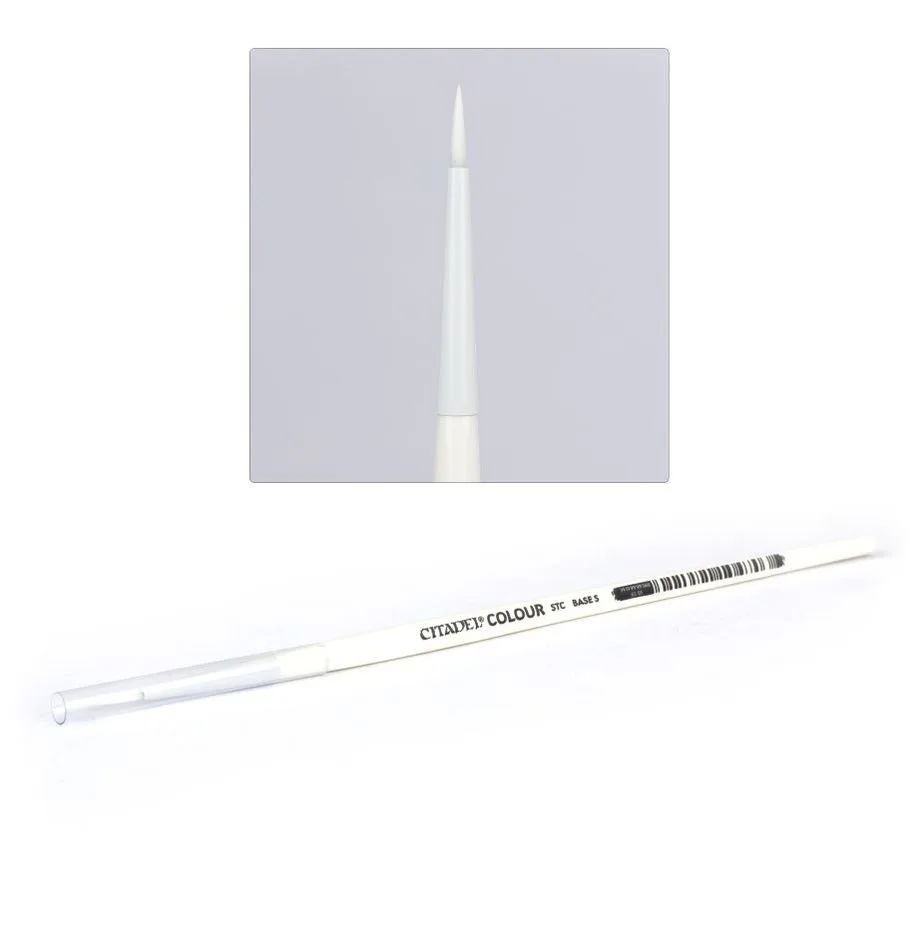
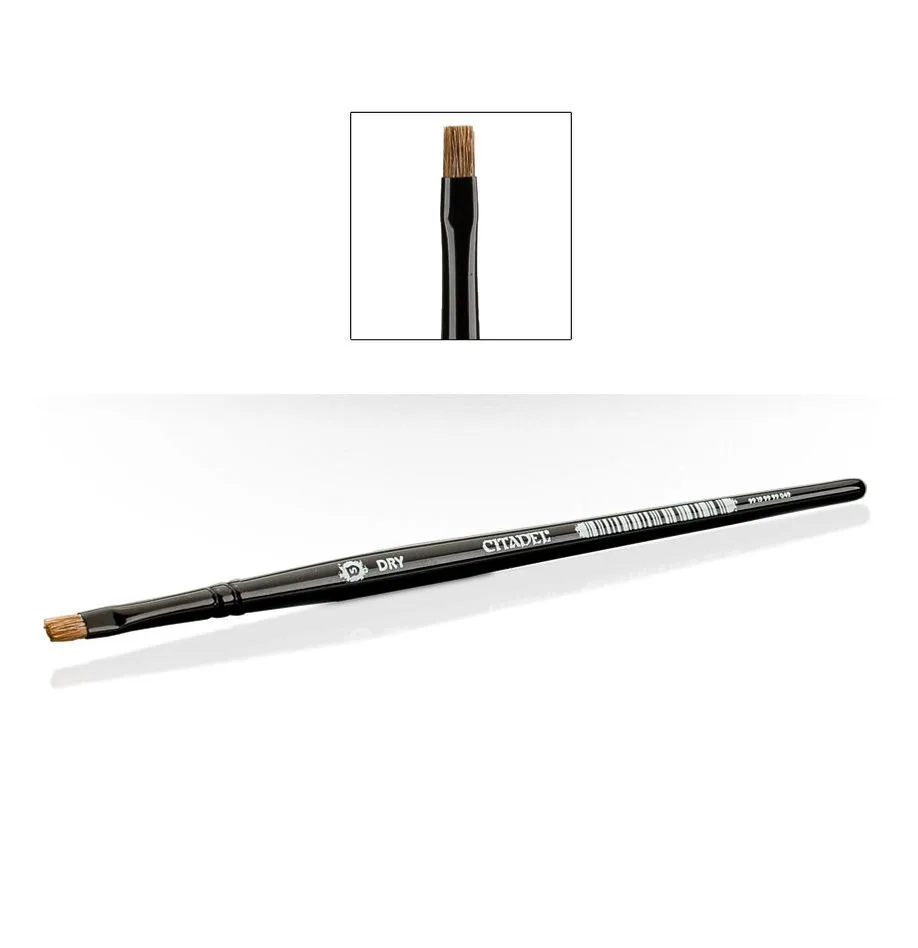
Plastic dust and mold release agent pack into the pivot and along the flat side of the blade. That grit holds the blades apart by a few microns — enough to tear instead of cut. Use a dry, soft brush to sweep the edge and pivot. If the nipper has a spring, remove it if the manufacturer allows, then brush the spring seat. Never use water or oil near the pivot unless the manufacturer explicitly says the tool is rust-proof; moisture wicks into the joint and starts rust from the inside.
For stubborn residue, a short bristle brush with a 0.7 mm tip reaches the bevel without bending the edge. The Sujiborido EXCELLON Detailing Brush (Width 0.7mm Length 6.0mm) is designed for this kind of precision cleaning — its synthetic bristles are engineered to mimic natural sable, so they sweep grit without scratching hardened steel. Use it dry, and never press the bristles into the cutting edge at an angle.
How to sharpen model nippers without ruining them
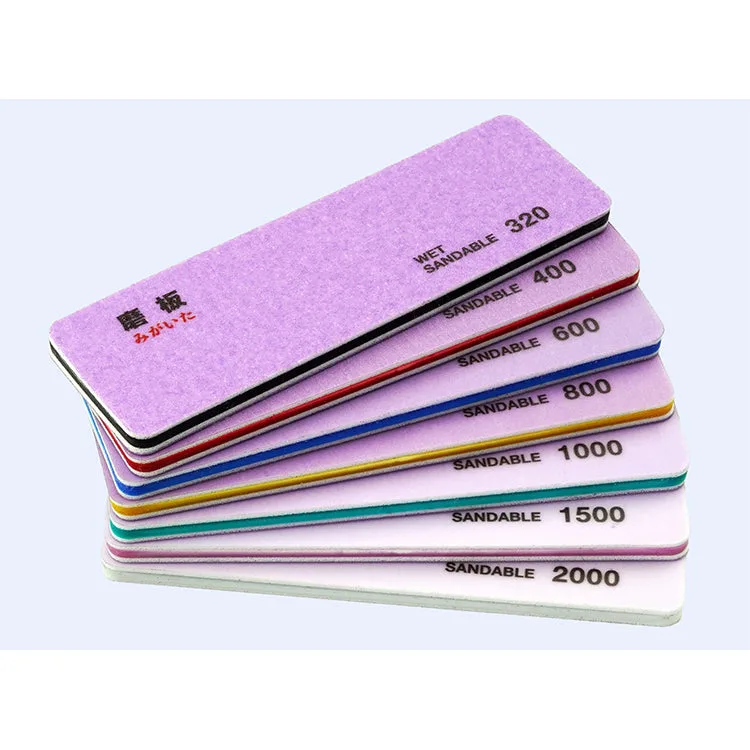
Most hobby nippers are hardened to a high Rockwell hardness and have a single bevel. Sharpening by hand removes material fast, and a few strokes at the wrong angle will round the edge permanently. If you decide to sharpen, use a fine diamond file or a 1000–3000 grit water stone, lay the bevel flat against the abrasive, and make three to five light passes in one direction only. Do not saw back and forth. Wipe the edge clean and test on a scrap runner.
Stop immediately if the edge feels rougher than before, if the blade no longer meets its partner cleanly, or if you cannot maintain the original bevel angle. At that point you are more likely to make it worse. For most hobbyists, replacing a worn nipper is cheaper than a ruined edge. If the nipper is a high-end model with a replaceable blade, buy the replacement blade instead of sharpening.
Nipper rust prevention and storage that works
Rust starts in the pivot and along the flat face where your fingers touch. After every session, wipe the blades with a dry cloth, then apply a micro-drop of light machine oil to the pivot only. Do not oil the cutting edge; oil attracts dust and can stain plastic. If you live in a humid climate, store nippers in a sealed box with a silica gel packet. A simple plastic case with a foam insert is enough.
Never store nippers loose in a drawer with files, screwdrivers, or other hard tools. A single knock against a hardened file can chip the edge. If your nipper came with a plastic cap, use it. If not, a short piece of vinyl tubing slit lengthwise will protect the blades. The best way to store nippers is closed, dry, and isolated from harder steel.
Dull nipper fix: when to stop and replace
If you have cleaned the pivot, checked alignment, sharpened once at the correct angle, and the nipper still tears plastic, the edge is gone. Further sharpening removes more metal and changes the blade geometry, which can make the cut worse. At that point, stop. A replacement nipper costs less than a ruined kit. If the nipper is a budget model, replace it. If it is a premium brand with a service option, contact the manufacturer or a reputable sharpening service.
Do not use a dull nipper on clear or plated parts. The extra force required will crack the plastic or flake the coating. Keep a spare sharp pair for final cuts and use the dull one only for rough trimming runners where tear-out does not matter.
Diagnosis: match the symptom to the fix
- Jagged white stress marks on every cut: The blades are likely misaligned or the pivot is loose. Tighten the pivot screw a quarter turn and test on a scrap runner. If the mark improves but is not clean, clean the pivot and bevel with a dry brush. If the cut is still jagged after cleaning and tightening, the edge may be worn — move to sharpening or replacement.
- Blade slides off the runner instead of biting: This is usually a sign of a rounded edge or a burr. Inspect the bevel under magnification. A burr can be removed with three light passes on a fine diamond file at the original angle. If the bevel is rounded, sharpening will not restore it — replace the nipper. Stop sharpening if the blade no longer bites after five passes; further filing will ruin the geometry.
- Rust spots on the blade or pivot: Rust in the pivot is the most serious. Disassemble only if the manufacturer allows it. Otherwise, apply a drop of light oil to the pivot, work it in, and wipe away excess. For surface rust on the flat, use a fine abrasive pad lightly, then oil. If rust has pitted the cutting edge, the nipper is done. Prevent rust by storing nippers dry with a silica packet and never cutting wet or painted plastic.
- Clean cut but parts still crack: This is a technique problem, not a tool problem. You are likely twisting the nipper or cutting too close to the part. Cut runners in two stages: first a rough cut leaving a nub, then a flush cut with a sharp nipper. Support the part with your finger to absorb stress. Do not sharpen a nipper that already cuts cleanly — fix your technique instead.
Product facts that matter for nipper care
- Sujiborido EXCELLON Detailing Brush (Width 0.7mm Length 6.0mm): Sujiborido EXCELLON Detailing Brush (Width 0.7mm Length 6.0mm) has synthetic bristles developed with a fiber manufacturer to replicate natural Kolinsky sable performance, and a 0.7 mm brush width with 6.0 mm bristle length. The narrow 0.7 mm tip reaches into the pivot and along the blade bevel without forcing the edge apart, so you can clear plastic dust and grit that cause misalignment and tearing. The synthetic bristles are soft enough not to scratch hardened steel when used dry.
- Warhammer 40000: Kill Team: SANCTIFIERS: Warhammer 40000: Kill Team: SANCTIFIERS is a Kill Team expansion that includes components for a new kill team, the Sanctifiers. If you also build Kill Team miniatures, the same nipper care rules apply: clean cuts matter even more on detailed plastic because tear-out is harder to hide. Keep your nippers clean and sharp for both Gunpla and Kill Team projects.