Quick answer
A standard circular polarizer removes glare but often adds a warm or greenish cast you have to fix later. The NiSi 105mm True Color Pro Nano CPL cuts the same reflections while keeping colours neutral, thanks to its True Color design and Cine Sealed film. If you shoot landscapes, water, or foliage and want less time in editing, choose the True Color CPL; if budget is the only factor, a standard CPL still works.
What actually changes between the two
Both filters do the same optical job: they block polarized light to deepen skies, cut glare from water and glass, and boost saturation. The difference is what happens to the rest of the frame. Many standard CPLs leave a visible warming cast, so a neutral grey rock or white cloud can pick up a yellow or brown tone. The NiSi True Color CPL is built to avoid that cast, so the image you see on the back of the camera is closer to the scene in front of you. That matters most when you shoot in changing light and cannot easily rebalance colour later.
Build and handling details that affect daily use
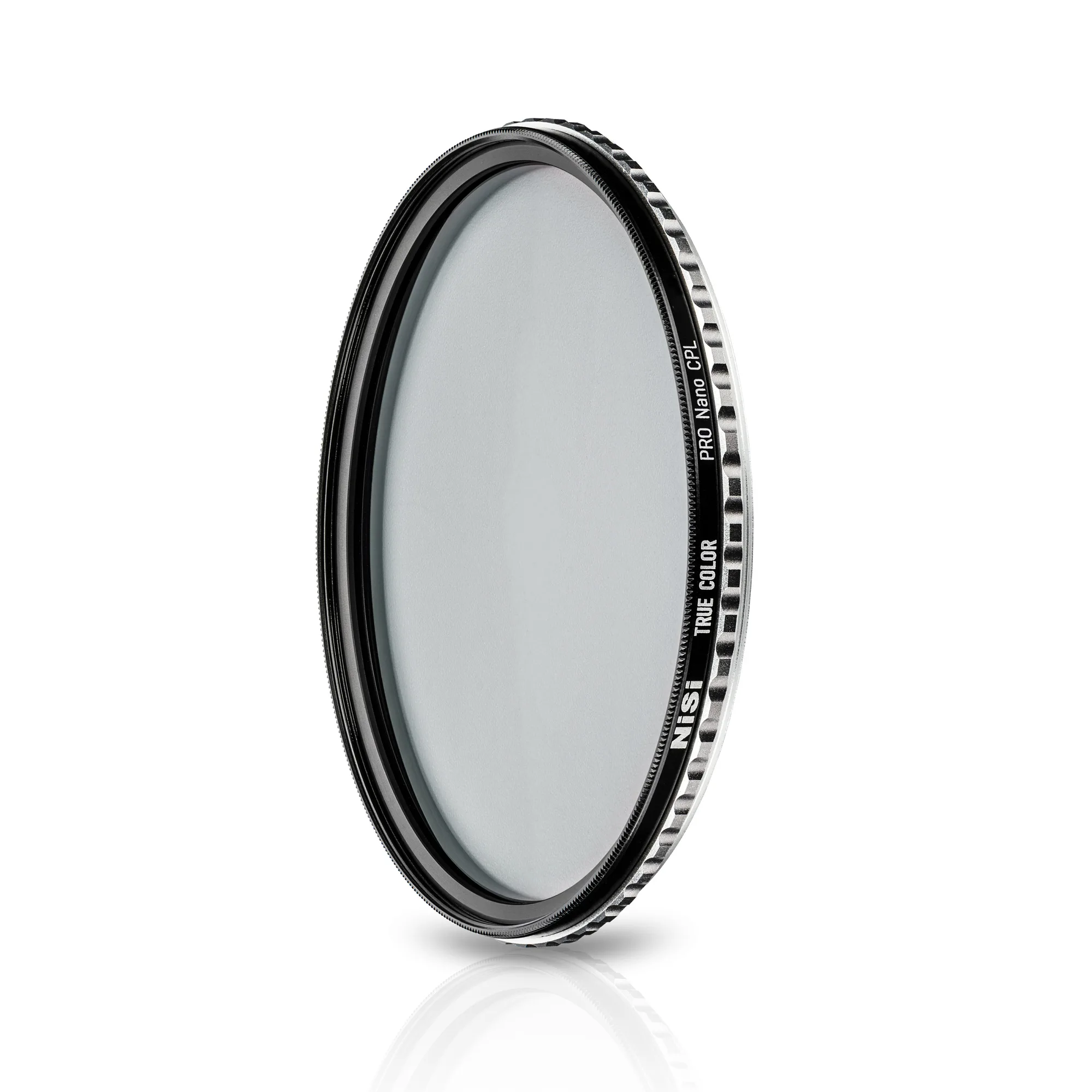
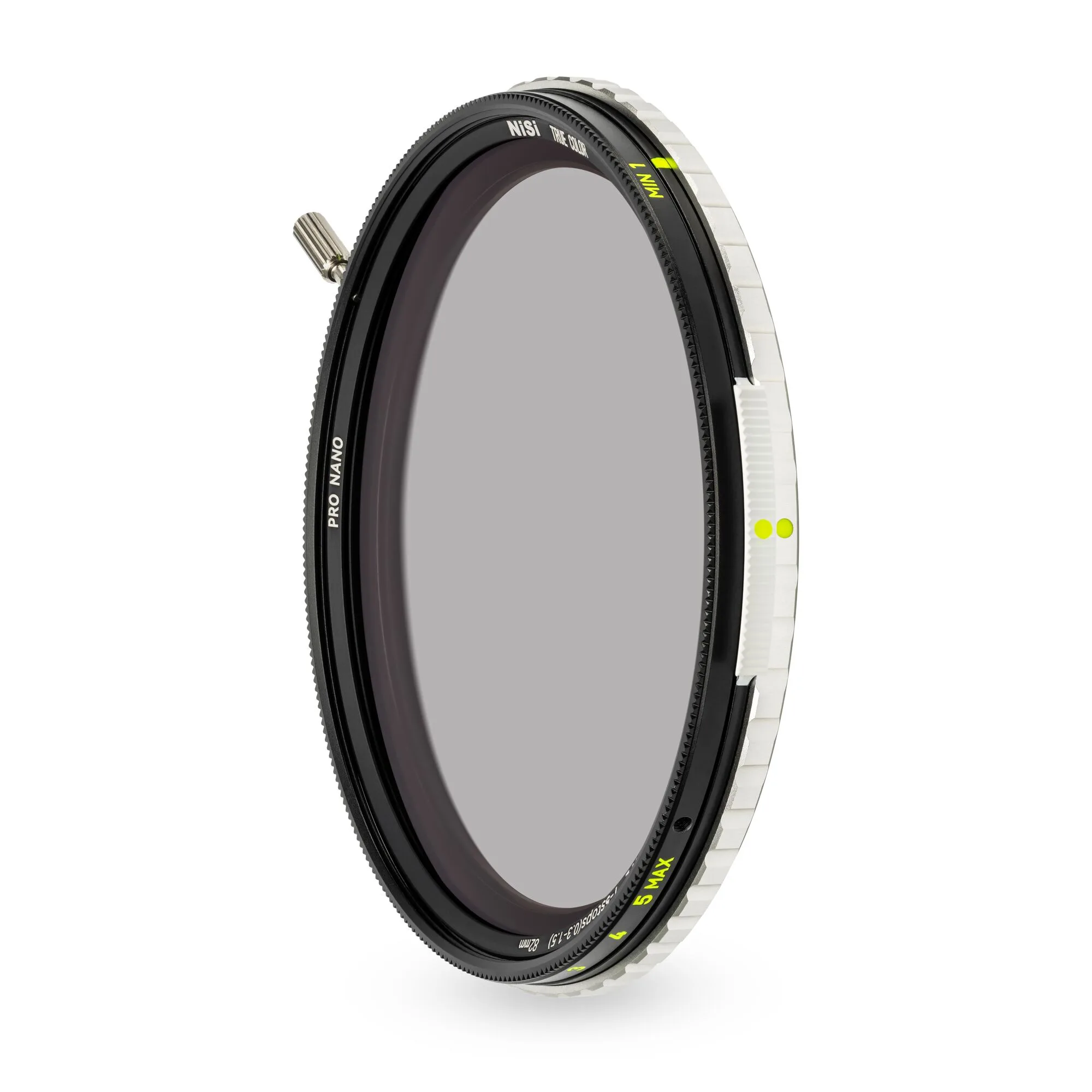
The NiSi 105mm True Color Pro Nano CPL uses knurled sides so you can grip and rotate the filter without smearing the glass, and a two-colour frame that makes it easy to see how far you have turned the polarizer. Its Cine Sealed Technology seals the polarizing film, which helps keep moisture and dust out of the filter over time. Pro Nano coating and a waterproof nano coating reduce unwanted reflections and make cleaning easier. If you often shoot near salt spray or in rain, those sealing and coating choices are a practical advantage over a basic CPL that only offers a single coating.
When a variable ND/PL makes more sense than a fixed CPL
If you shoot video or need to hold a slow shutter speed in bright sun, a fixed CPL alone will not cut enough light. The NiSi 52mm True Color VND/PL Pro Nano gives you 1–5 stops of density and polarization in one filter, and you can adjust each independently, so changing density does not disturb the polarization setting. It also uses the same True Color approach to avoid colour casts. For stills shooters who only need glare control, a dedicated CPL is simpler and avoids the risk of over-darkening the frame.
Filter size and system compatibility
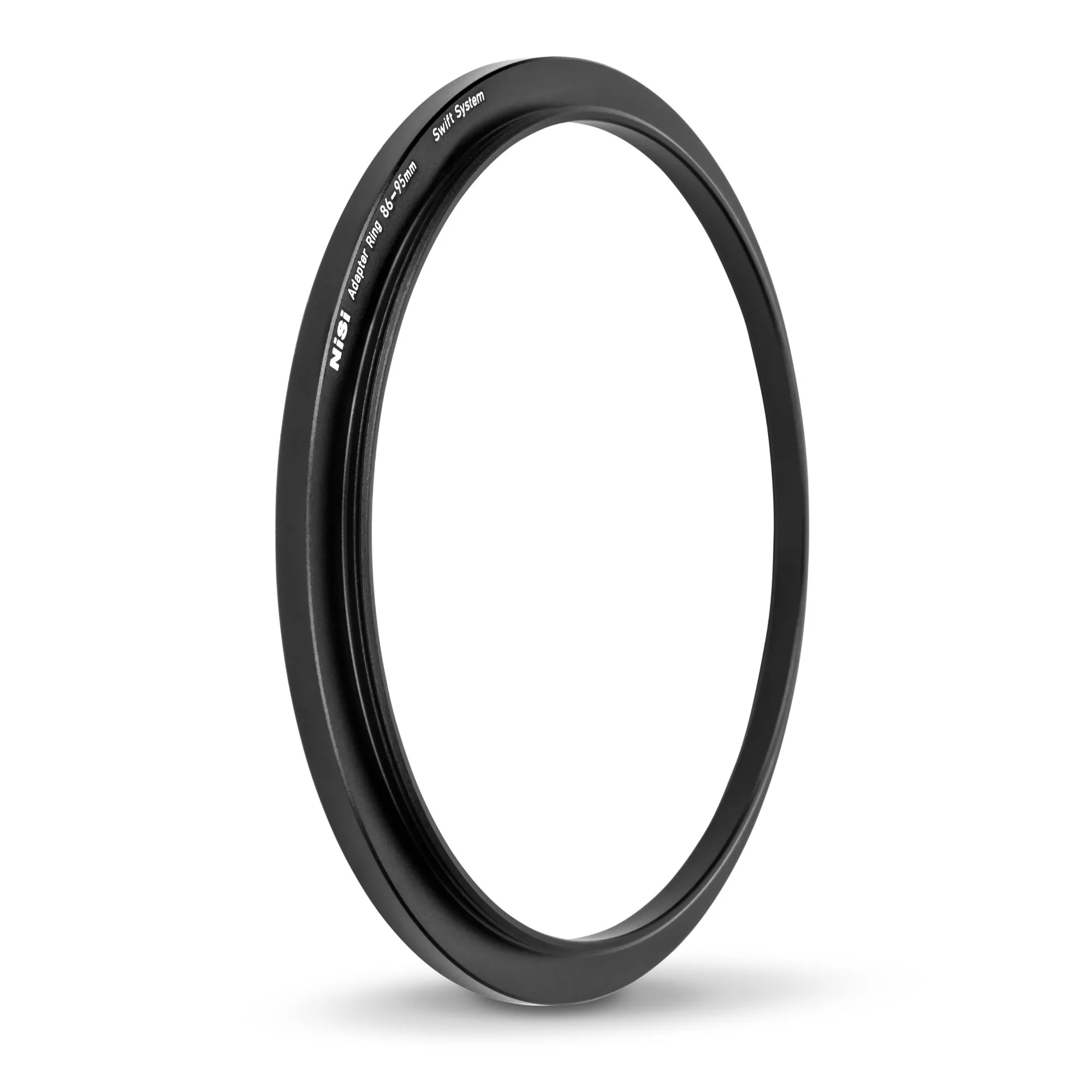
The True Color CPL in this comparison is a 105mm filter, so it suits lenses that take that thread size or a holder system built around it. If your lens uses a different thread, check the available sizes before buying; the catalog does not list every thread option here. For square or magnetic systems, the NiSi SWIFT 86-95mm System Adaptor Ring lets you press 95mm Swift filters onto an 86mm thread lens, which is useful if you already own Swift filters and want to avoid buying a separate circular polarizer. The adaptor ring is made from high-grade aluminium and attaches by pressing the filter onto the ring.
Trade-offs to weigh before you buy
- Colour neutrality vs price: The NiSi True Color CPL is designed to avoid the warming cast common in standard CPLs, but that engineering costs more than a basic polarizer. If you shoot colour-critical work, the time saved in editing usually justifies the higher price.
- Fixed CPL vs VND/PL flexibility: A dedicated CPL is simpler and has fewer glass surfaces, while a VND/PL adds 1–5 stops of density and independent polarization control. Choose the VND/PL if you shoot video or need slow shutter speeds in daylight; choose the CPL if you only need glare control.
- Thread size and system lock-in: The 105mm True Color CPL fits 105mm threads, while the Swift adaptor ring bridges 86mm lenses to 95mm Swift filters. Check your lens thread and existing filter system before ordering so you do not need an extra step-up ring.
Product facts
- NiSi 105mm True Color Pro Nano CPL Circular Polarizing Filter: Eliminates reflections and glare, increases colour and tonal saturation, and reduces haze in landscapes. These are the core reasons to carry a CPL at all, and they apply whether you shoot water, foliage, or distant mountains.
- NiSi 105mm True Color Pro Nano CPL Circular Polarizing Filter: True colour without the warming cast seen with many other CPLs, plus Cine Sealed Technology and Pro Nano coating. Less colour correction in post and better protection against moisture and reflections, which matters in coastal or humid conditions.
- NiSi 52mm True Color VND/PL Pro Nano 1-5 Stops (0.3-1.5) Variable ND and Polarizer: Independent VND and PL control, 1–5 stops of light reduction, and True Color Technology in a single filter. Lets video shooters and bright-light stills photographers adjust exposure and polarization separately without swapping filters.
- NiSi SWIFT 86-95mm System Adaptor Ring for Swift System Filters (86mm Standard Thread – 95mm Swift Filter): Adapts 95mm Swift System filters to 86mm thread lenses and removes the need for a separate True Color 1-5 Stops VND. A low-cost way to reuse Swift filters across lens sizes instead of buying a second polarizer or ND.
Which filter fits your shooting
Best for
- Landscape photographers who want neutral colours straight out of camera
- Shooters working near water, foliage, or glass who need glare control without a colour cast
- Photographers who already use 105mm thread lenses or a compatible holder
Not for
- Video shooters who need to cut 3–5 stops of light in bright sun (a VND/PL is more practical)
- Photographers on a tight budget who do not mind correcting a warm cast in editing
- Lenses with an 86mm thread unless you add the Swift adaptor ring or a step-up ring