Quick answer
For most first aid situations, nitrile gloves are the better choice because they offer strong barrier protection, are latex-free (avoiding common allergies), and provide excellent durability and dexterity.
Why material matters in first aid
The glove material directly affects your safety and comfort during medical care. Latex gloves have been a standard for years due to their snug fit and sensitivity, but natural rubber latex can cause allergic reactions in both the wearer and the patient. Nitrile gloves are a synthetic alternative that eliminates that allergy risk while still providing a tough, reliable barrier.
Another difference is durability. Latex can tear more easily when stressed, while nitrile is generally more puncture- and chemical-resistant. This makes nitrile a strong choice for messy or high-risk first aid tasks.
Comparing cost and availability
Latex gloves are often less expensive per pair, which can matter if you are stocking a large kit on a tight budget. However, the price gap has narrowed as nitrile manufacturing has become more efficient. For personal or household first aid kits, the added safety of nitrile usually justifies the small extra cost.
Both types are widely available in various sizes. The key is to match the glove to the user's hand size for proper fit and control.
Nitrile vs. Latex: key trade-offs
- Allergy safety: Nitrile is latex-free, making it safe for people with latex allergies. Latex can cause mild to severe allergic reactions.
- Barrier and durability: Nitrile is more puncture- and chemical-resistant than latex, offering a stronger barrier in messy or high-risk situations.
- Fit and feel: Latex provides a very snug fit and high tactile sensitivity. Nitrile is slightly less elastic but modern formulations offer good dexterity. If you need maximum fingertip sensitivity and have no allergy concerns, latex may still work. Otherwise, nitrile is the safer all-around choice.
Product spotlight
-
Nitrile Gloves: Our nitrile gloves provide a barrier to potential threats in a variety of medical situations. The durable latex-free material is tough while still allowing dexterity and movement. This means you get reliable protection without worrying about latex allergies, and you can still perform detailed tasks like bandaging or wound care with good finger control.
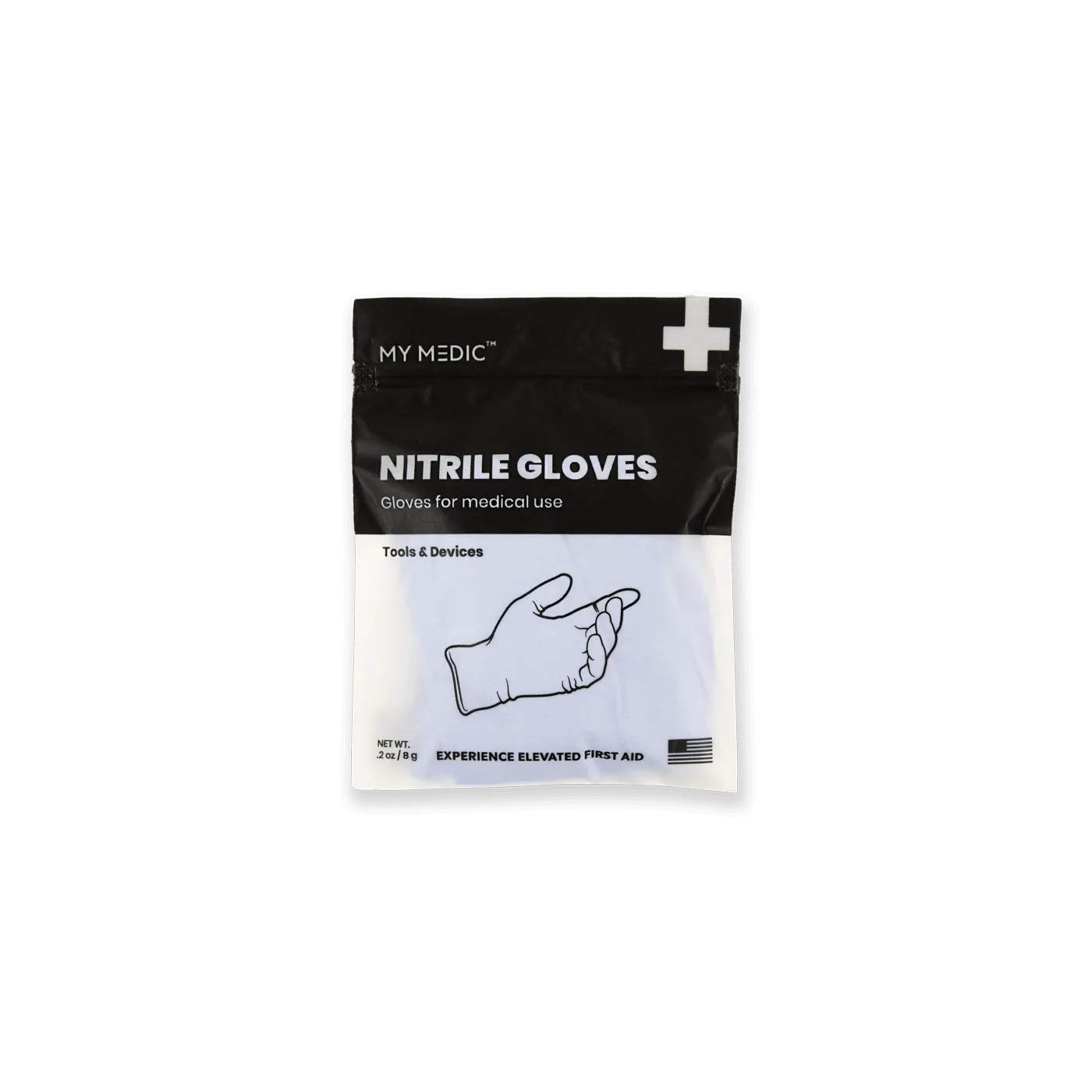
Nitrile Gloves
Which glove is right for you?
Best for
- First aiders who want to avoid latex allergy risks
- General household or workplace first aid kits
- Situations involving blood or bodily fluids where a strong barrier is needed
Not for
- Users who need the absolute lowest cost per glove and have no latex allergy concerns