Quick answer
A front-clip no-pull harness gives you steering control without putting pressure on your dog's neck, making it the safer default for most strong pullers. A head collar offers more precise, immediate control by guiding the head, but many dogs resist wearing it at first and it requires careful conditioning.
How each tool actually stops pulling
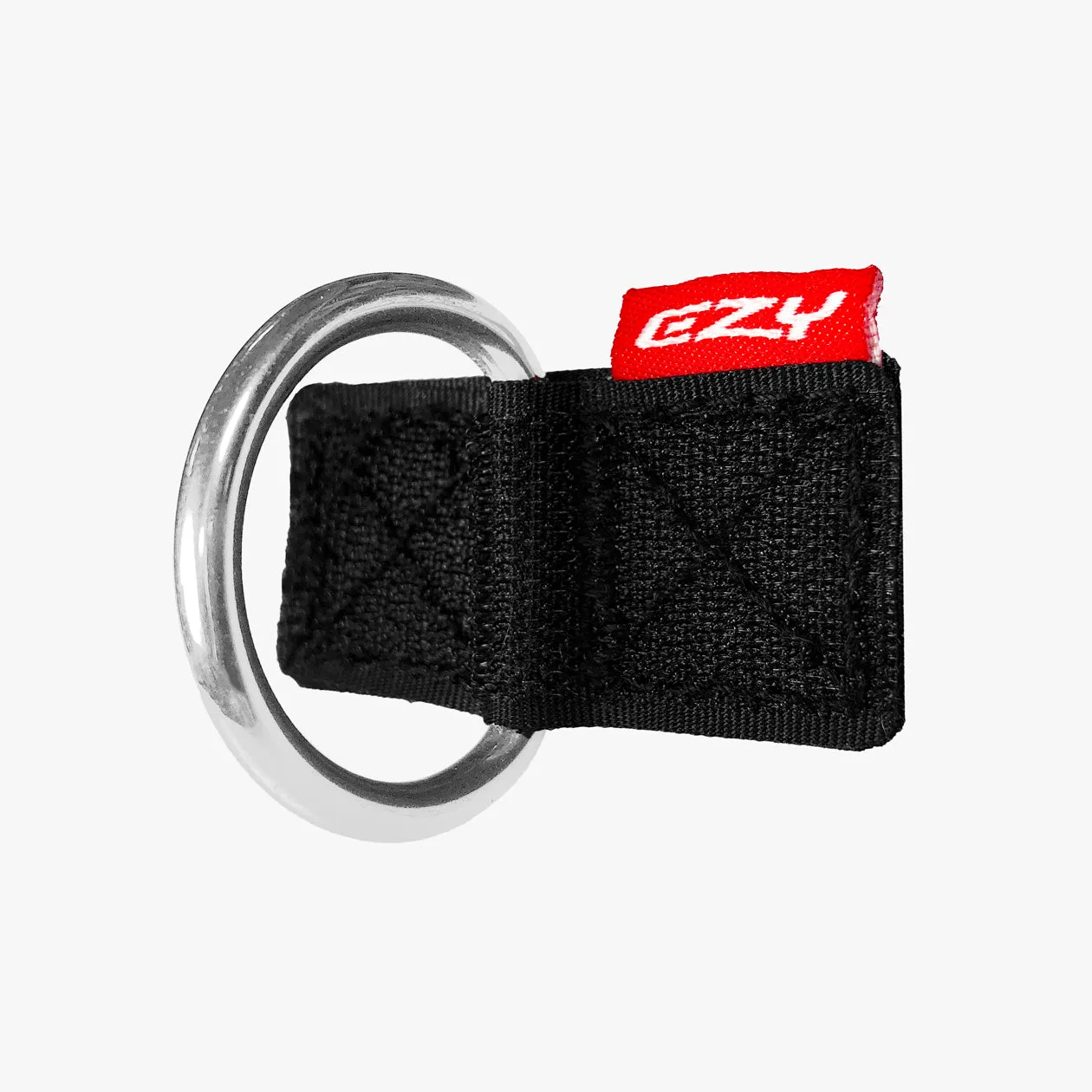
A front-clip no-pull harness redirects your dog's momentum sideways when they lunge forward, so you can steer rather than fight. The EzyDog UpFront leash attachment turns a Convert or Express harness into a training harness by adding a front anchor that reminds your dog who is leading the walk. A head collar works differently: it fits over the muzzle and behind the ears, so when your dog pulls, their head is gently turned back toward you, interrupting the forward drive.
Control and comfort trade-offs
Front-clip harnesses distribute pressure across the chest, which is safer for dogs with sensitive necks or flat faces. They are also harder for a determined dog to back out of when fitted correctly. Head collars give you finer control with less physical effort, but the learning curve is steeper: many dogs paw at the strap initially, and you need to pair the head collar with positive reinforcement so it does not become a source of stress. Neither tool teaches loose-leash walking on its own, but both make training sessions more manageable.
Fit and sizing considerations
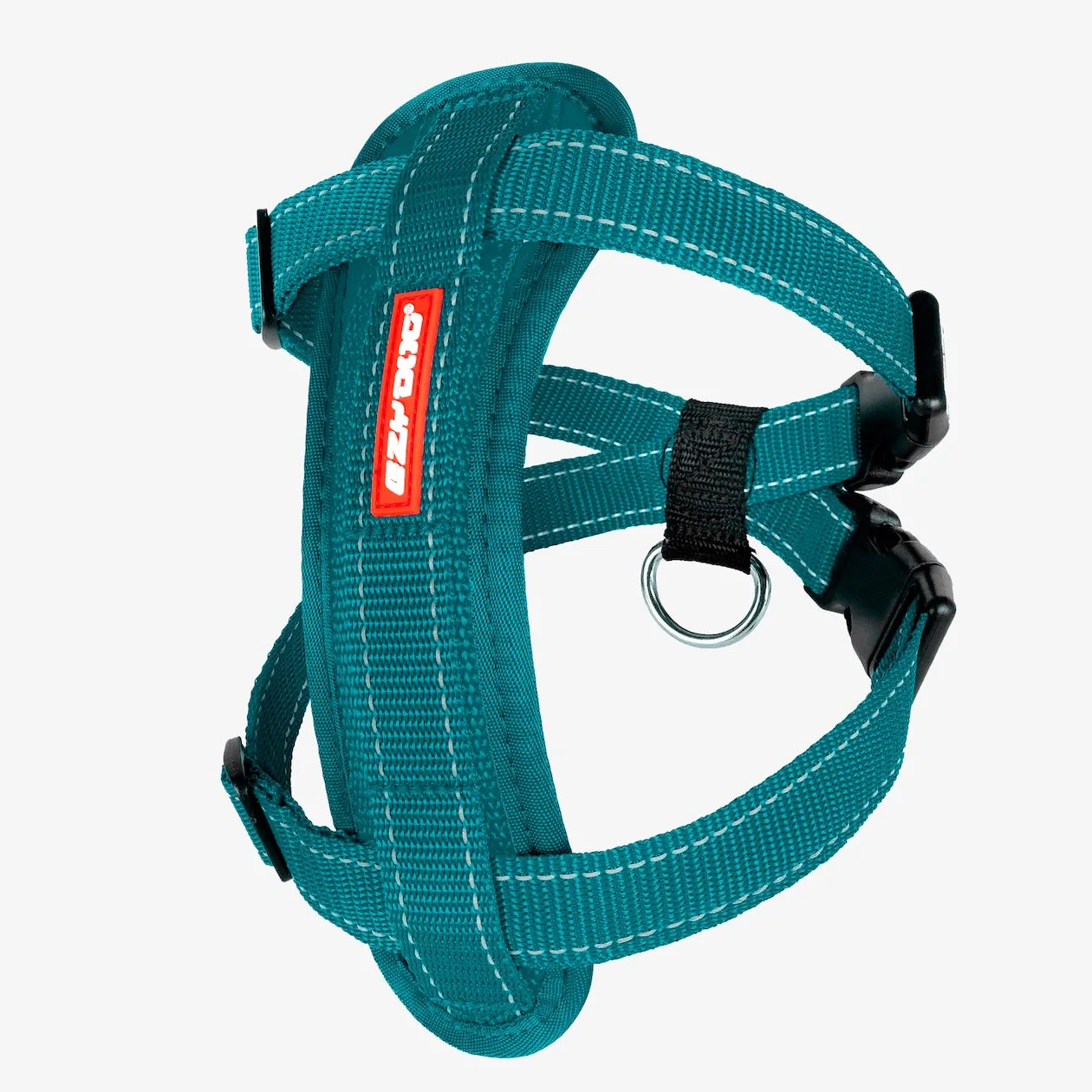
A no-pull harness must fit snugly without restricting shoulder movement. The EzyDog Chest Plate Dog Harness uses a contoured EVA foam chest plate that molds to deep-chested breeds like Dobermans, Staffies, and Boxers, and it fits dogs from 7 lbs and up. For head collars, sizing is more critical: the nose loop should sit just below the eyes and the neck strap should be snug behind the ears. If your dog has a very short snout, a head collar may not stay in place, making a front-clip harness the better choice.
Trade-offs at a glance
- Control precision: Head collars give you instant head control with minimal effort; front-clip harnesses require you to steer the body. Choose a head collar if you need the most immediate response; choose a front-clip harness if you prefer full-body guidance.
- Comfort and acceptance: Front-clip harnesses are generally well tolerated from the first walk; head collars often need weeks of positive conditioning. If your dog hates things on their face, a front-clip harness will likely be easier to introduce.
- Safety for the dog: Front-clip harnesses avoid neck pressure entirely; head collars can cause neck strain if the dog lunges hard. For dogs with neck or respiratory issues, a front-clip harness is the safer option.
Key products for no-pull walking
- UpFront™ Leash Attachment: The UpFront leash attachment point transforms your EzyDog Convert or Express Harness into a training harness. The front leash anchor provides enhanced control over dogs that pull, reminding them who is leading the walk when they begin to take the lead for themselves. This is a low-cost way to add front-clip control to a harness you already own, without buying a whole new setup.
- Chest Plate™ Dog Harness: The Chest Plate Dog Harness offers a snug, escape proof fit with the added benefit of all-day comfort and control. Built for strength, it features a contoured EVA foam chest plate that molds to your dog’s shape—perfect for deep-chested breeds like Dobermans, Staffies, and Boxers. Designed to fit dogs from 7lbs and up, this adjustable dog chest harness stays secure even on strong pullers. Reflective stitching... If you need a complete no-pull harness that stays put on a strong dog, this is a strong candidate, especially for deep-chested breeds.
Which should you choose?
Best for
- Dogs that pull hard and need steering without neck pressure
- Owners who want a simple, well-tolerated setup for daily walks
- Deep-chested breeds that need a secure, escape-proof fit
Not for
- Dogs with very short snouts (head collars may not fit)
- Owners who need the lightest possible touch on the leash
- Dogs that panic when something touches their muzzle