What this set is, and what it is not
The Plan Toys Numbers and Symbols set is a wooden toy for practicing adding, subtracting, multiplying, dividing and more, according to the supplied product description. That makes it a versatile math-play tool rather than a one-game toy: the pieces are meant to be arranged, rearranged, and used alongside whatever your child is working on.
It is also not a curriculum. The supplied information does not include an age range, piece count, piece dimensions, material details, or care instructions, so treat those as open questions to confirm before you buy rather than assumptions. What the description does support is the core idea: children can practice number and symbol work by handling physical pieces.
The catalog facts that shape the play
-
Numbers And Symbols: Kids can practice adding, subtracting, multiplying, dividing and more with the Numbers and Symbols set from Plan Toys. This tells you the set is designed for arithmetic play, not just number recognition, so your games can grow with your child.
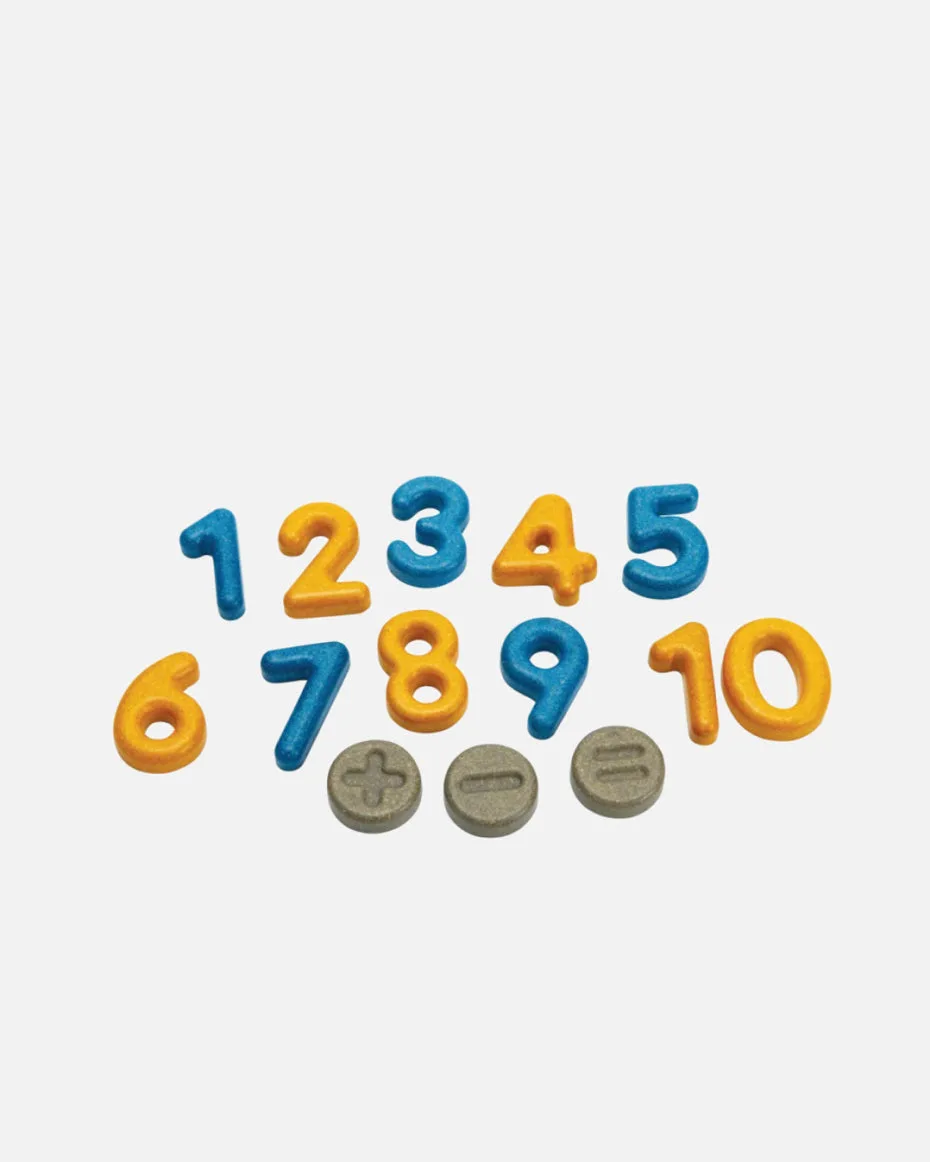
Numbers And Symbols
-
Numbers And Symbols: The set is a wooden toy from Plan Toys. If you prefer wooden play materials over plastic, this matches that preference without needing any extra claims.
A four-stage play progression to try
Start at the stage that matches what your child already does, and move on when they seem ready rather than on a schedule. Because the supplied information does not specify an age range, let your child's attention and comfort guide the pace.
- Stage 1: Free exploration: Hand over the pieces and let your child pick them up, sort them, and line them up. Name what they touch: 'that's a number,' 'that's a symbol.' No correct answer required.
- Stage 2: Number recognition: Ask your child to find a number you name, or to name a piece you hold up. Keep it to a handful of pieces at a time so the task stays light.
- Stage 3: Symbol recognition: Introduce one symbol at a time and say what it does in plain words: plus means putting together, minus means taking away. Then ask your child to point to it among two or three pieces.
- Stage 4: Simple equations: Build a small equation together with the pieces, such as two numbers and a plus sign, and count out the answer with your child. The set's description includes adding, subtracting, multiplying and dividing, so you can extend this as your child grows.
Toddler-friendly games that use the pieces
- Number hunt: Hide a few pieces around the room and ask your child to bring back a specific number. It adds movement to number recognition without changing the toy's purpose.
- Symbol sorting: Separate numbers from symbols into two piles. This is a simple symbol recognition activity that works even before your child can name each sign.
- Build an equation: You place the first number and a symbol; your child chooses the second number. Then count the total together. This keeps the child making decisions rather than watching.
- Take-away story: Use the minus symbol to act out a tiny story with the pieces: you had some, and some went away. Say the numbers aloud as you move the pieces.
- Copy my row: Lay out a short row of pieces and have your child copy it. This builds left-to-right sequencing, which supports later equation reading.
How to keep sessions short and repeatable
Early math activities for toddlers work best in small doses. Aim for a few minutes of focused play, then let your child move on or keep exploring freely. Ending while it is still fun makes the next session easier to start.
Repetition does more than variety here. Reusing the same two or three games lets your child build familiarity with the pieces and the words you use, so the symbols start to feel like old friends rather than new instructions.
What to check before you buy
The supplied record does not confirm an age range, small-part warnings, piece count, or cleaning guidance. If those details matter for your household, especially if there is a younger sibling who mouths toys, confirm them with the retailer before ordering. That is a limitation of the available information, not a statement about the product itself.
The set is listed at USD 19.79, compared with a catalog comparison price of USD 29.99, and it is offered in a Standard variant. If you are choosing between this and another wooden math toy, the honest differentiator in the supplied information is the range of operations it supports: adding, subtracting, multiplying and dividing rather than counting alone.