Quick answer
Odor-proof barrier bags are a lightweight, flexible way to contain food smells on trail, but they are not a standalone bear-resistant solution. Use them inside a bear canister or Ursack for best results, or as a backup inside a stuff sack when local regulations allow.
How odor-proof bags fit into a bear safety system
Hard-sided bear canisters are the gold standard for mandated areas, but they are heavy and bulky. Odor-proof barrier bags offer a lighter alternative for containing smells, but they are not chew-proof or crush-proof. Most land managers require a certified bear-resistant container in grizzly country, so check local rules before relying on a bag alone.
In black bear habitat or areas that allow soft-sided storage, an odor-proof bag inside a durable stuff sack or Ursack can work well. The bag keeps smells from leaking out, and the outer layer provides physical protection.
Trade-offs to consider
Odor-proof bags are single-use or limited-use. The seal relies on a zipper closure that can fail after repeated opening. They are also thin—puncture from a stray twig or a careless pack is possible. On the plus side, they weigh almost nothing (about 0.8 oz per bag for the 12" x 20" size) and pack flat when empty.
Another trade-off: odor-proof bags do not mask smells—they contain them. If the bag tears or the seal is not fully closed, odors escape. They also do nothing to stop a determined bear from crushing the bag to get at the contents.
Decision rules for choosing odor-proof barrier bags
- Check regulations first: If your route requires a hard-sided bear canister (e.g., Sierra Nevada, Rocky Mountain National Park), you must use an approved canister regardless of bags. Odor-proof bags can go inside the canister to reduce smell leakage when opening it.
- Match bag size to your food load: A 12" x 20" bag holds about 3–4 days of food for one person. For longer trips or bulkier items, consider multiple bags or a larger size. Overstuffing stresses the zipper seal. Test the seal after packing: close the bag, press out air, and check that the zipper track is fully engaged.
- Use as a liner, not a standalone solution: Place the odor-proof bag inside a stuff sack, Ursack, or bear canister. The bag contains smells; the outer container provides physical protection. This layered approach works best in black bear areas or where soft-sided storage is permitted.
- Plan for limited lifespan: The zipper seal degrades with use, especially in cold or dusty conditions. Carry a spare bag or plan to replace after 2–3 trips. Do not rely on a bag that has been opened many times. Mark the bag with a sharpie after first use so you remember how many trips it has been on.
Product facts
-
LOKSAK OPSAK Odor-Proof Barrier Bags - 12" x 20" - Package of 2: Each bag weighs 0.8 oz (23 g) and is sold in a pack of two. Ultralight hikers can add odor protection without a noticeable weight penalty, and having a spare bag allows for a backup or separating waste from food.
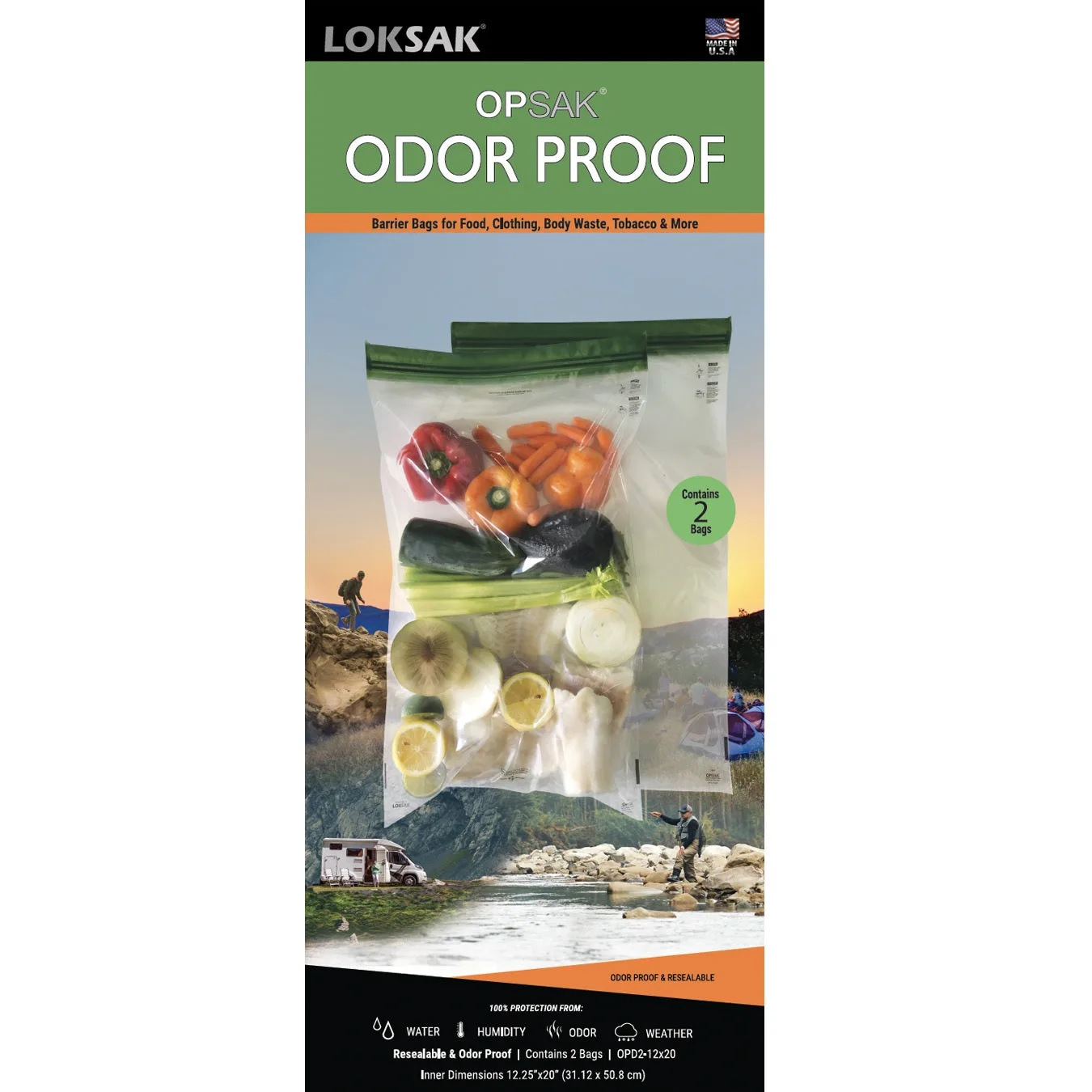
LOKSAK OPSAK Odor-Proof Barrier Bags - 12" x 20" - Package of 2
Who should use odor-proof barrier bags
Best for
- Ultralight backpackers who want to reduce smell leakage from a soft-sided food storage system
- Hikers in black bear country where hard-sided canisters are not required and a Ursack or stuff sack is the primary container
- Thru-hikers who need a lightweight backup for bear canister storage or to isolate smelly trash
Not for
- Trips in areas that mandate hard-sided bear canisters—odor-proof bags alone do not meet the requirement