Quick answer
For most general-purpose optical domes, N-BK7 offers the best balance of cost and performance. Choose fused silica when you need better thermal stability and UV transmission, and sapphire when scratch resistance and durability are the top priorities.
Why material choice matters for optical domes
The material of an optical dome determines how well it transmits light, how it handles thermal stress, and how long it lasts in harsh environments. N-BK7, fused silica, and sapphire each have distinct strengths, so the right choice depends on where and how the dome will be used.
N-BK7 is a borosilicate crown glass that is widely used for its excellent transmission in the visible and near-infrared range. It is also cost-effective and easy to fabricate, making it a default choice for many applications.
Fused silica is a high-purity glass with superior thermal stability and transmission from the UV through the near-infrared. It withstands higher temperatures and is less prone to thermal expansion, which is critical for laser systems and aerospace environments.
Sapphire is a crystalline material with exceptional hardness and scratch resistance. It transmits well from the UV to the mid-infrared, but it is more expensive and can introduce birefringence in certain orientations, which may affect polarized light applications.
Cost vs. performance trade-offs
Budget often drives material selection. N-BK7 is the most economical option, and for many standard industrial or laboratory setups, its optical performance is more than sufficient.
Fused silica costs more than N-BK7 but offers better thermal performance and broader spectral range. If your application involves high temperatures or deep UV light, the extra cost is justified.
Sapphire is the most expensive of the three. Its hardness and durability make it ideal for harsh environments like underwater housings, military optics, or high-wear industrial settings. However, if you don't need that extreme robustness, you may be paying for capability you won't use.
Material trade-offs at a glance
- N-BK7: Best for general-purpose use where cost matters and operating conditions are moderate. Offers good visible and NIR transmission. Not ideal for extreme temperatures or UV applications.
- Fused silica: Choose when you need low thermal expansion, high temperature resistance, or deep UV transmission. Costs more than N-BK7 but less than sapphire. Not necessary for standard indoor applications. Verify your system's UV wavelength range before choosing fused silica.
- Sapphire: Use when scratch resistance and durability are critical, such as in ruggedized or outdoor optics. Be aware of higher cost and potential birefringence in polarized light setups. If you use polarized light, ask about the crystal orientation to avoid birefringence issues.
Product spotlight: N-BK7 optical dome
-
N-BK7 or Equivalent: This stock N-BK7 optical dome has a 50 mm outer diameter, 25 mm thickness, and 2 mm wall thickness. These dimensions suit applications needing a compact, robust dome with good optical clarity, and the stock availability means faster delivery.
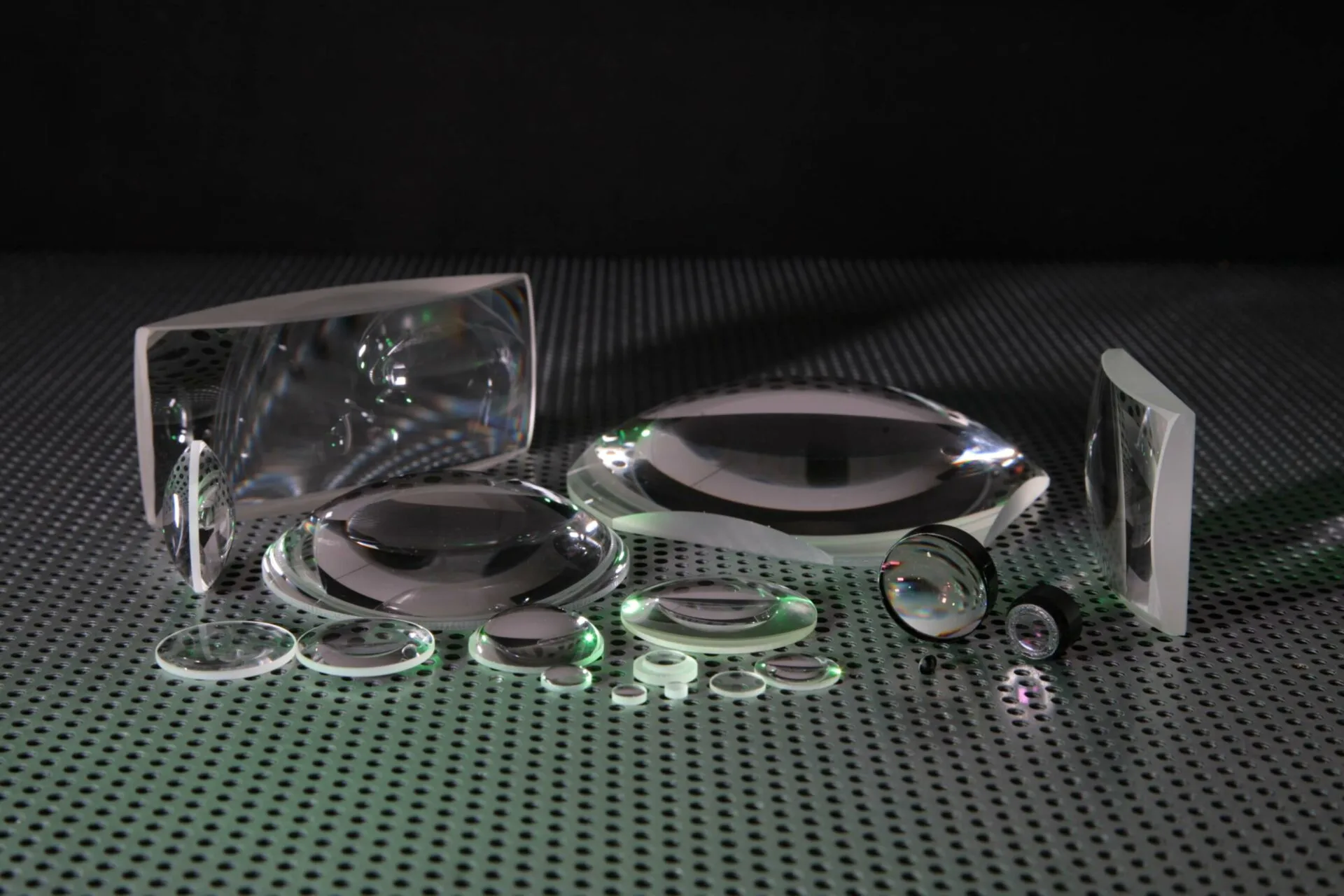
N-BK7 or Equivalent
Which material fits your project?
Best for
- N-BK7: cost-sensitive projects in controlled environments like laboratory benches
- Fused silica: high-temperature or UV-sensitive applications such as laser systems
- Sapphire: harsh, high-wear environments like underwater or military optics
Not for
- N-BK7: extreme thermal cycling or deep UV transmission
- Fused silica: budget-limited projects with no thermal or UV demands
- Sapphire: polarized-light applications unless orientation is verified