Quick answer
Organic cotton baby fitted sheets are grown without synthetic pesticides or fertilizers and are GOTS-certified, making them a safer, non-toxic choice for your baby's sensitive skin. Regular cotton sheets are often more affordable but may contain chemical residues. The choice depends on your budget and priority for organic certification.
What makes organic cotton different?
Organic cotton is grown using methods that avoid synthetic pesticides, herbicides, and genetically modified seeds. For baby bedding, this means the fabric is free from chemical residues that could irritate delicate skin. GOTS (Global Organic Textile Standard) certification ensures the entire production process meets strict environmental and social criteria.
Regular cotton, while natural, is conventionally grown with chemical inputs. Even after processing, trace amounts of these chemicals can remain in the fabric. For babies who spend many hours sleeping, this difference can matter, especially for those with eczema or allergies.
Softness and durability trade-offs
Organic cotton sheets are often softer because the fibers are not weakened by harsh chemicals during processing. They also tend to become softer with each wash. However, they can be more expensive upfront.
Regular cotton sheets can be pre-treated to feel soft initially, but the fibers may break down faster over time. They are usually more budget-friendly, making them a practical choice for families who change bedding frequently.
Organic vs regular cotton: trade-offs at a glance
- Chemical exposure: Organic cotton is grown without synthetic pesticides or fertilizers, reducing the risk of chemical residues. Regular cotton may contain trace chemicals from conventional farming.
- Certification: Look for GOTS-certified organic sheets to ensure the entire supply chain meets strict standards. Regular cotton has no equivalent certification. Check for GOTS label on organic sheets to verify authenticity.
- Price and longevity: Organic sheets are typically more expensive but can last longer due to stronger fibers. Regular sheets are cheaper but may wear out faster.
- Softness over time: Organic cotton often becomes softer with washing. Regular cotton may start soft but can lose its feel after repeated washes.
Product comparison
-
Seaside Stripe Organic Cotton Baby Fitted Sheet: Our Staples Seaside Stripe organic fitted sheet features vertical blue and white thin stripes and is the perfect piece to base your bedroom styling. This sheet combines organic cotton with a classic stripe pattern, making it easy to coordinate with other nursery decor while ensuring a non-toxic sleep surface.
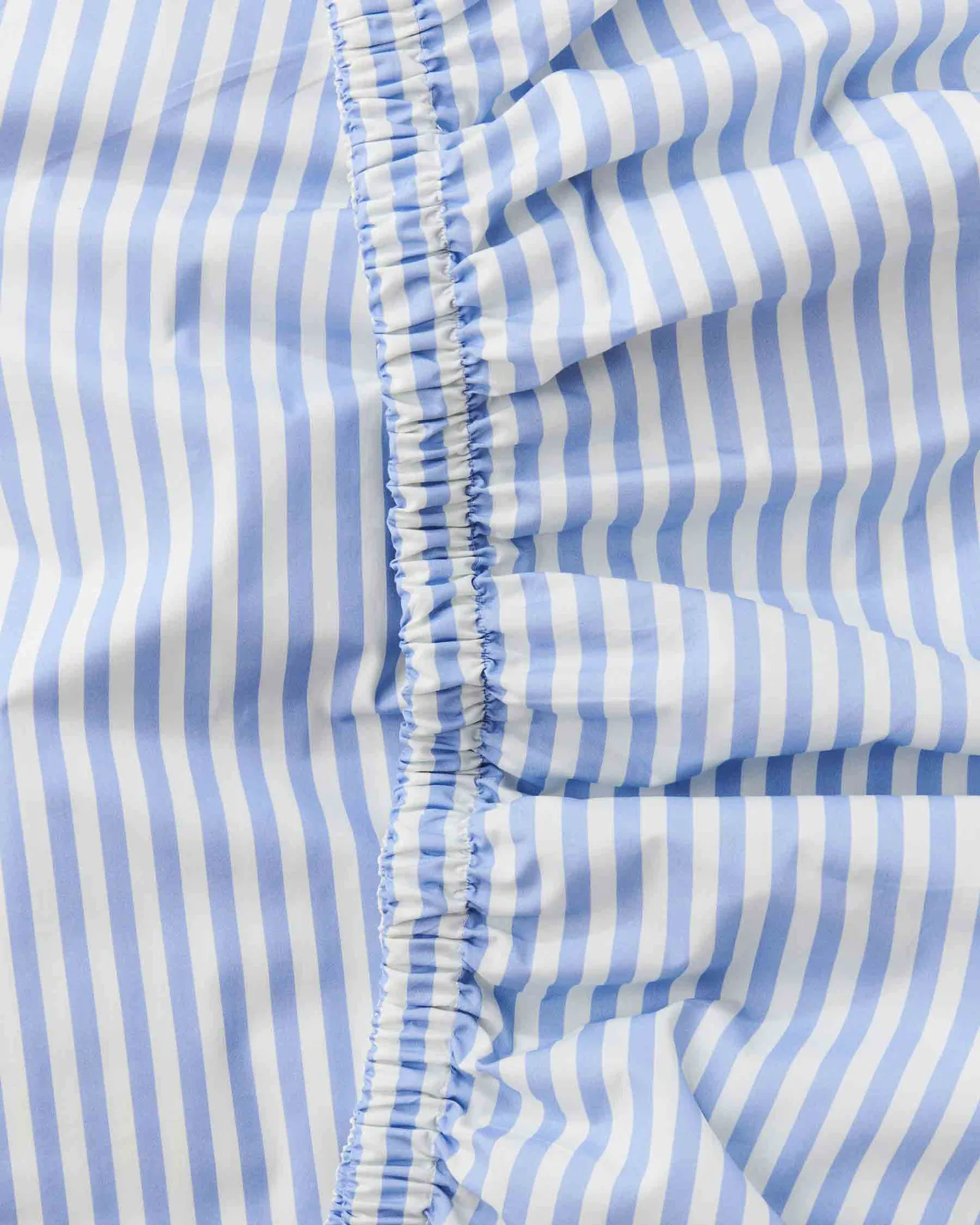
Seaside Stripe Organic Cotton Baby Fitted Sheet
-
Lilac Gingham Organic Cotton Baby Fitted Sheet: Crafted from 100% GOTS-certified organic cotton, this soft and gentle sheet ensures the very best of comfort for your baby. Showcasing a simple and sweet lilac purple and white gingham pattern. GOTS certification guarantees no harmful chemicals from field to finished sheet, and the gingham pattern adds a cheerful pop of color to the nursery.
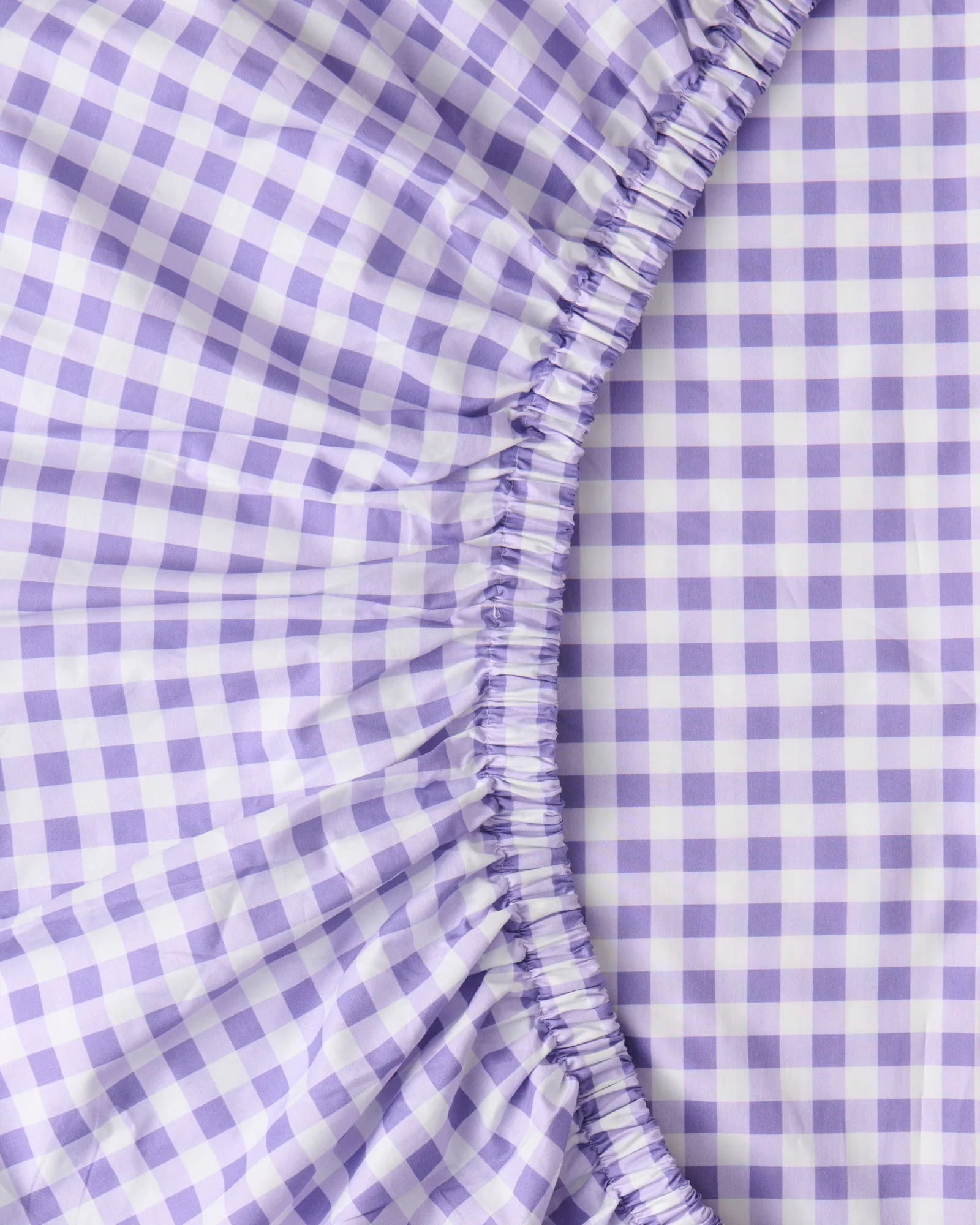
Lilac Gingham Organic Cotton Baby Fitted Sheet
Which one fits your nursery?
Choose organic cotton if
- Your baby has sensitive skin, eczema, or allergies
- You prioritize non-toxic, eco-friendly nursery products
- You want a sheet that gets softer over time
Choose regular cotton if
- You need a more budget-friendly option
- You plan to change sheets frequently and don't need long-term durability
- Organic certification is not a priority for your household