Quick Answer
Both organic cotton and linen duvet covers can last for years, but they age differently. Organic cotton tends to soften and become more comfortable over time, while linen is naturally stronger and more resistant to wear. Your choice depends on whether you prioritize a soft, lived-in feel or a crisp, breathable fabric that stands up to frequent washing.
How Durability Differs Between Organic Cotton and Linen
Linen fibers are longer and thicker than cotton, which gives linen a reputation for being one of the most durable natural fabrics. It resists pilling and holds up well to regular machine washing. Organic cotton, especially when woven into a matelasse or percale weave, also offers strong durability but tends to show wear faster at creases and folds if not cared for properly.
The key trade-off is feel versus toughness. Linen starts out crisp and can feel slightly rough, but it softens with each wash without losing structural integrity. Organic cotton, particularly garment-washed varieties, feels soft from day one and gets even softer, but the fibers may break down sooner under heavy use or high heat drying.
What to Look for in a Long-Lasting Duvet Cover
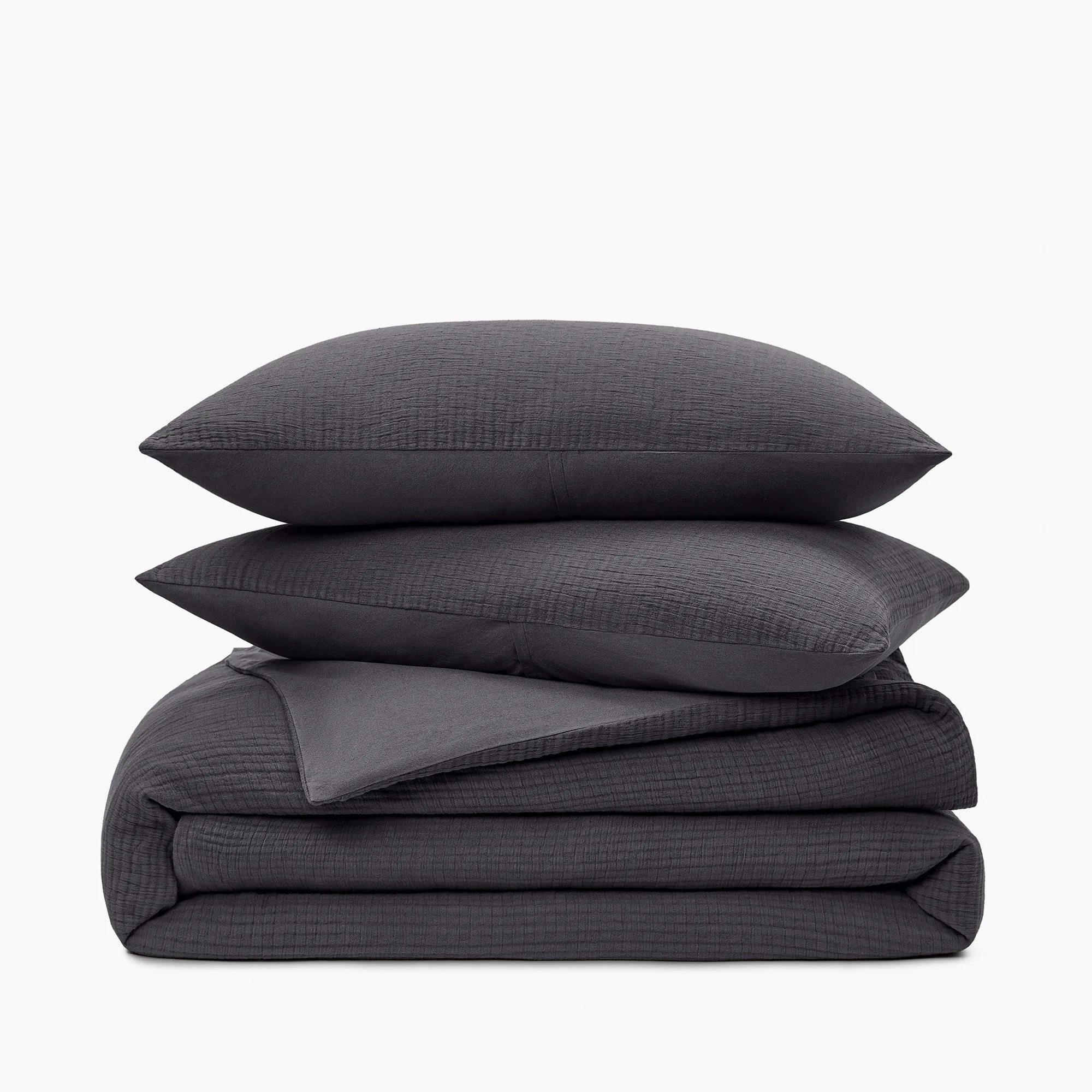
Construction matters as much as fiber content. A duvet cover with a jacquard weave or matelasse texture, like the Organic Crinkle Matelasse Duvet Set, adds density that can resist wear over time. Garment-washed finishes, found on both organic cotton and linen options, pre-shrink the fabric and relax the weave, which reduces future distortion.
Check the closure type and corner ties. Duvet covers with sturdy button closures or hidden zippers and internal ties keep the insert in place, reducing stress on the fabric. These details often separate a cover that lasts five years from one that needs replacing after two.
Organic Cotton vs Linen: Trade-Offs at a Glance
- Softness from the start: Organic cotton duvet covers, especially garment-washed styles, feel soft immediately. Linen requires several washes to reach a similar level of softness. Choose organic cotton if you want instant comfort without a break-in period.
- Long-term fiber strength: Linen fibers are naturally stronger and less prone to fraying. Organic cotton can wear at crease points over many wash cycles. Choose linen if you wash bedding frequently and want maximum fabric longevity.
- Breathability and temperature regulation: Linen is highly breathable and wicks moisture away, making it ideal for warm sleepers. Organic cotton percale is also breathable but may retain more heat than linen. Choose linen if you sleep hot or live in a humid climate; organic cotton is a versatile year-round option.
Product Facts at a Glance
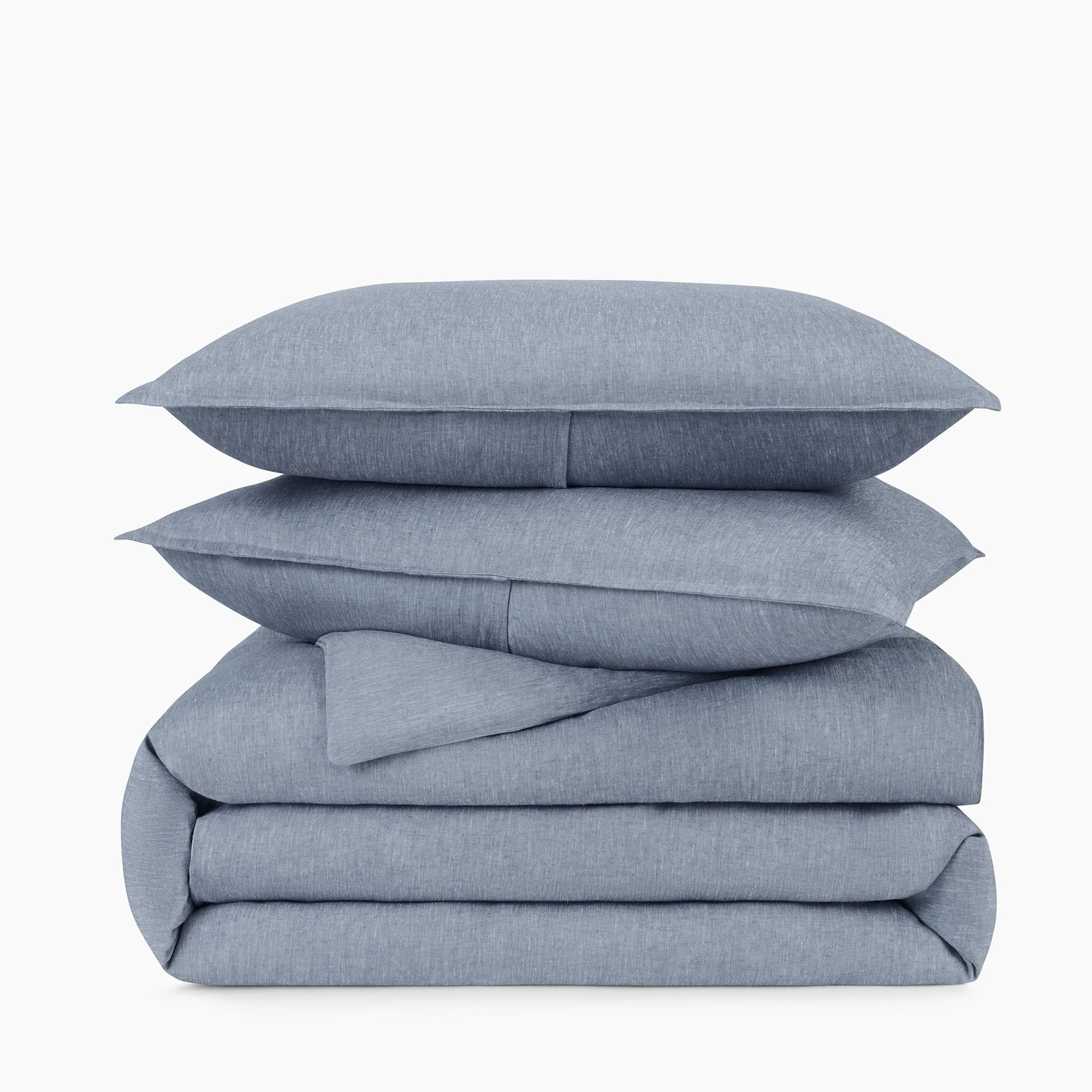
- Organic Crinkle Matelasse Duvet Set: The Organic Crinkle Matelasse Duvet Set is woven with 100% organic cotton for a gently quilted, gauzy effect that gets softer with every wash. It features a jacquard matelasse weave on top and garment-washed percale sheeting on the back. The matelasse weave adds density and texture, which helps the cover resist pilling and maintain its shape over years of use. The percale back feels crisp and breathable, balancing softness with durability.
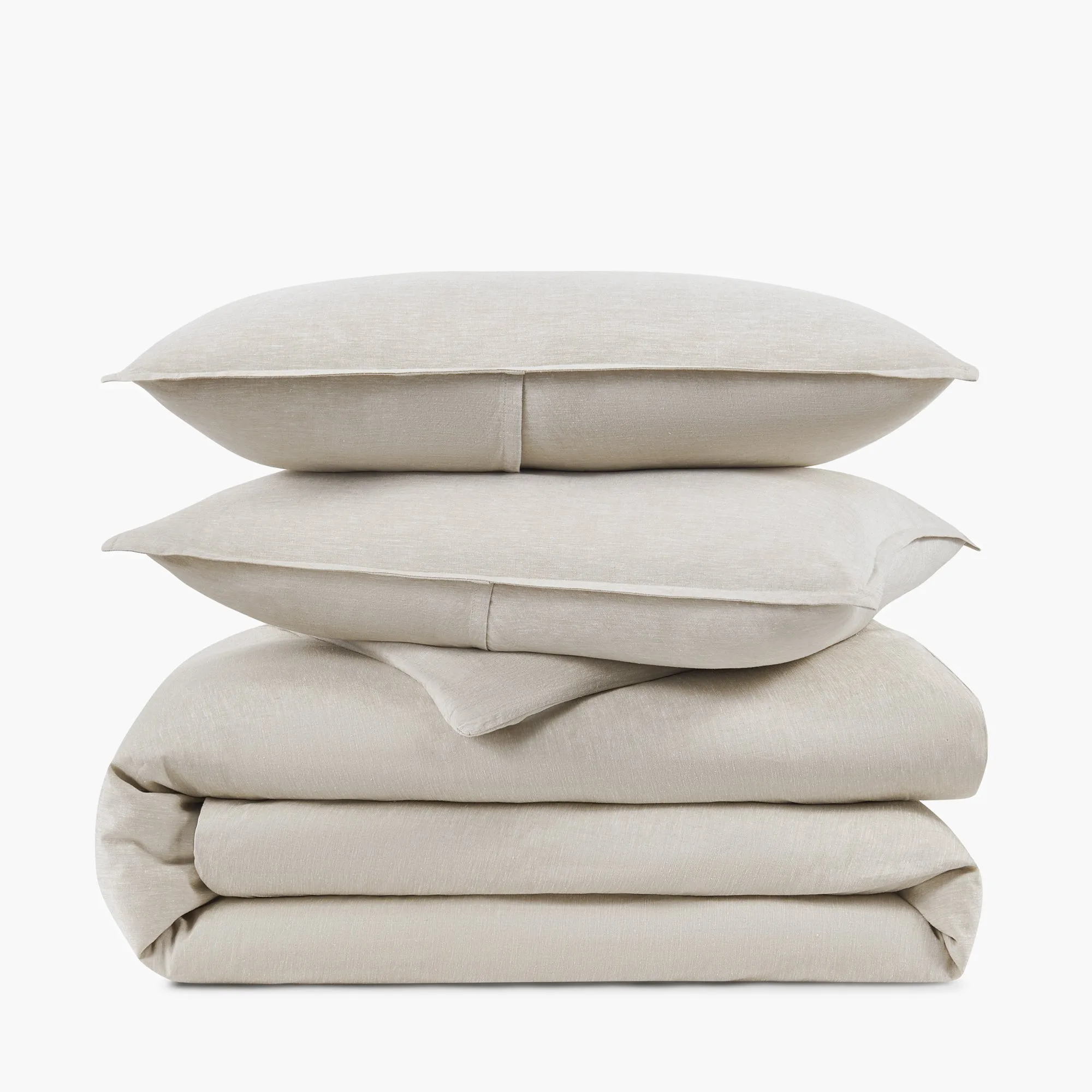
- Linen Eucalyptus Duvet Set - Stone: The Linen Eucalyptus Duvet Set combines the softness of eucalyptus with the breathability of linen. It is garment washed for a relaxed, lived-in feel from the first night and yarn dyed for a slightly heathered look. Linen blended with eucalyptus fibers offers natural strength and moisture-wicking properties. The garment wash pre-softens the fabric, reducing the break-in period while preserving linen's long-term durability.
Which One Should You Choose?
Best For
- Sleepers who want a soft, lived-in feel from night one and prefer organic cotton's gentle texture
- Anyone looking for an eco-friendly duvet cover that softens over time without a rough break-in period
Not Ideal For
- Those who prioritize maximum fiber strength and plan to wash their duvet cover more than once a week
- Hot sleepers who need the highest level of breathability and moisture-wicking performance