Quick Answer
For toddlers, an organic liquid probiotic with multiple strains and a moderate CFU count (around 150 million) is a gentle, easy-to-administer choice. MaryRuth Organics' Organic Toddler Liquid Probiotic fits this profile, offering five targeted strains in a simple drop format.
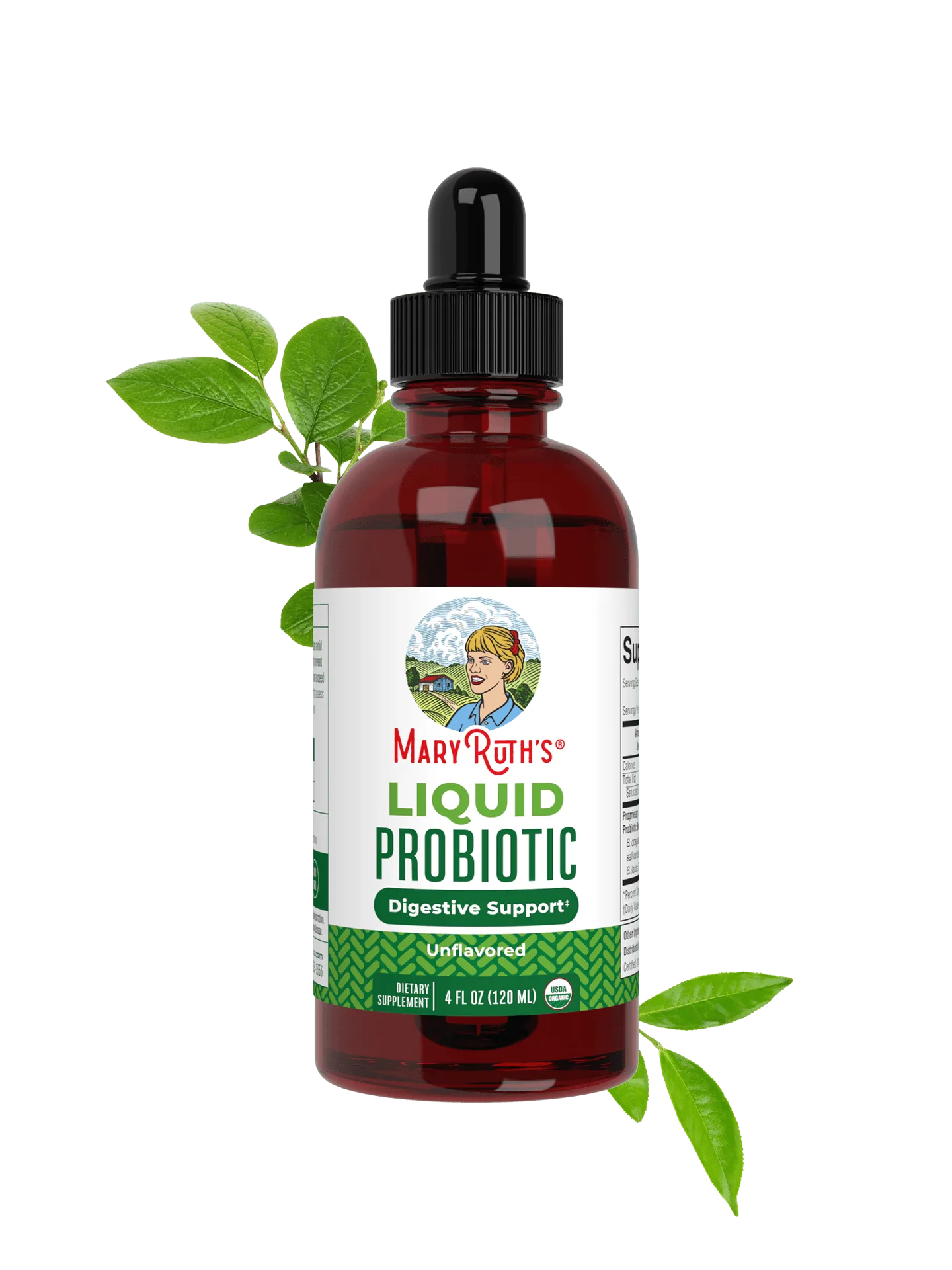
organic liquid probiotic
Why Toddlers Need Their Own Probiotic
A toddler's digestive system is still developing, and the balance of gut bacteria can be easily disrupted by diet changes, travel, or antibiotics. A probiotic formulated specifically for young children helps maintain that balance, supporting regular digestion and immune function. Unlike adult probiotics, toddler versions typically use lower CFU counts and strains that are well-studied for pediatric use.
What to Look for in a Liquid Probiotic for Toddlers
Strain variety matters. Look for a product that includes multiple well-researched strains such as Bifidobacterium lactis, Bifidobacterium infantis, and Lactobacillus reuteri. These strains are naturally found in a healthy infant gut and are known to support digestive comfort. CFU counts for toddlers typically range from 1 billion to 5 billion, but some effective products use lower counts like 150 million CFU per serving, which can be sufficient for daily maintenance. Liquid formats are ideal because they can be easily mixed into food or drink, and they avoid the choking hazard of pills or gummies.
How to Administer a Liquid Probiotic to Your Toddler
Most liquid probiotics come with a dropper. Simply add the recommended number of drops to a small amount of cool or room-temperature food or drink—avoid hot liquids as heat can kill the beneficial bacteria. Yogurt, applesauce, or a sippy cup of water work well. Consistency is key: give the probiotic at roughly the same time each day to help establish a routine. If your toddler is resistant, try mixing it into a favorite smoothie or a small serving of oatmeal.
Decision Rules for Choosing a Toddler Probiotic
- Check the strain list: Look for strains like Bifidobacterium lactis, Bifidobacterium infantis, and Lactobacillus reuteri. These are well-studied for pediatric digestive health. A product with at least 3–5 strains offers broader support. More strains can mean more comprehensive gut support, but quality matters more than quantity.
- Evaluate the CFU count: For toddlers, CFU counts between 150 million and 5 billion are common. Lower counts (like 150 million) are often sufficient for daily maintenance and are less likely to cause gas or bloating. Higher counts may be used for specific short-term needs, such as after antibiotics. Start with a moderate CFU and adjust based on your child's response.
- Consider the delivery format: Liquid drops are the easiest to dose and mix into food or drink. They avoid choking hazards and are generally well-tolerated. Some liquids require refrigeration after opening, so check storage instructions. Liquid drops offer the most flexibility for picky eaters.
Featured Product Details
- Organic Toddler Liquid Probiotic: Organic Toddler Liquid Probiotic from MaryRuth Organics contains five unique probiotic strains: Bacillus coagulans Unique IS-2, Bifidobacterium lactis, Bifidobacterium infantis, Bifidobacterium bifidum, and Lactobacillus reuteri, with 150 million CFU per serving. A diverse blend of strains targets different aspects of toddler gut health, and the moderate CFU is gentle enough for daily use without overwhelming a developing system.
- Organic Women's 40+ Precision Probiotic Digestive Liquid Drops: Organic Women's 40+ Precision Probiotic Digestive Liquid Drops are formulated to support digestive health for women 40 and over, helping with stress-related GI issues and occasional digestive discomfort with just 10 drops per day. This product is designed for a different life stage—women over 40—and uses a different strain profile and CFU count. It is not suitable for toddlers, but it shows how probiotics can be tailored to specific age groups and needs.
Is This Probiotic Right for Your Toddler?
Best For
- Parents seeking a gentle, daily probiotic for toddlers aged 2 and up
- Children who have occasional digestive discomfort or irregular bowel movements
- Families who prefer organic, liquid supplements that are easy to mix into food
Not For
- Infants under 2 years (formulated for toddlers 2+)
- Children who need a very high CFU count for short-term therapeutic use (e.g., after antibiotics) without consulting a pediatrician