Quick answer
Choose an outdoor kitchen island for a compact, social-friendly setup, or an L-shape outdoor kitchen if you want more counter space and a dedicated cooking zone. Your decision hinges on available square footage and how you entertain.
Space and workflow: the core trade-off
An island layout puts everything within arm's reach in a single line, which suits smaller patios and keeps the cook facing guests. An L-shape wraps the cooking zone around a corner, creating a natural separation between prep and serving areas—ideal for larger gatherings but requiring more floor space.
Think about how you move while cooking: an island forces a back-and-forth pattern, while an L-shape allows a triangular flow between grill, prep, and sink. If you regularly cook with a partner, the L-shape gives each person a dedicated station without bumping elbows.
Built-in grill placement and ventilation
Both layouts can house a built-in grill, but placement affects heat and smoke. On an island, the grill sits in the open, so wind can carry smoke toward seating. In an L-shape, the corner can shield the grill from prevailing breezes, though you'll want to ensure proper clearance for the lid and side burners.
Consider where you'll place hot trays and platters: an island offers limited landing space next to the grill unless you add an overhang, while an L-shape naturally provides counter on both sides of the cooking surface.
Island vs L-shape: your decision checklist
- Measure your footprint: Islands need roughly 3–4 feet of clearance on all sides for safe movement. L-shapes require a larger open area but can hug a corner to save space. Sketch your patio dimensions before comparing models.
- Count your cooking stations: If you cook solo and keep meals simple, an island with a built-in grill is enough. If you often run multiple dishes at once, an L-shape with a pizza oven gives you a second cooking zone. List the appliances you actually use weekly, not just on holidays.
- Set your budget: Island layouts generally cost less because they use fewer materials and appliances. L-shapes add a counter leg and often include extras like a pizza oven, raising the price. Compare the Emory's price against the Lancaster's to see which fits your budget.
Layouts in action
-
Emory | 9-Foot Outdoor Kitchen Island with Built-In Grill: The Emory is a 9-foot outdoor kitchen island with a built-in grill, constructed from fully powder-coated galvanized steel. Its straight-line design fits tight spaces and keeps the grill within easy reach of the host, making it a strong pick for smaller patios.
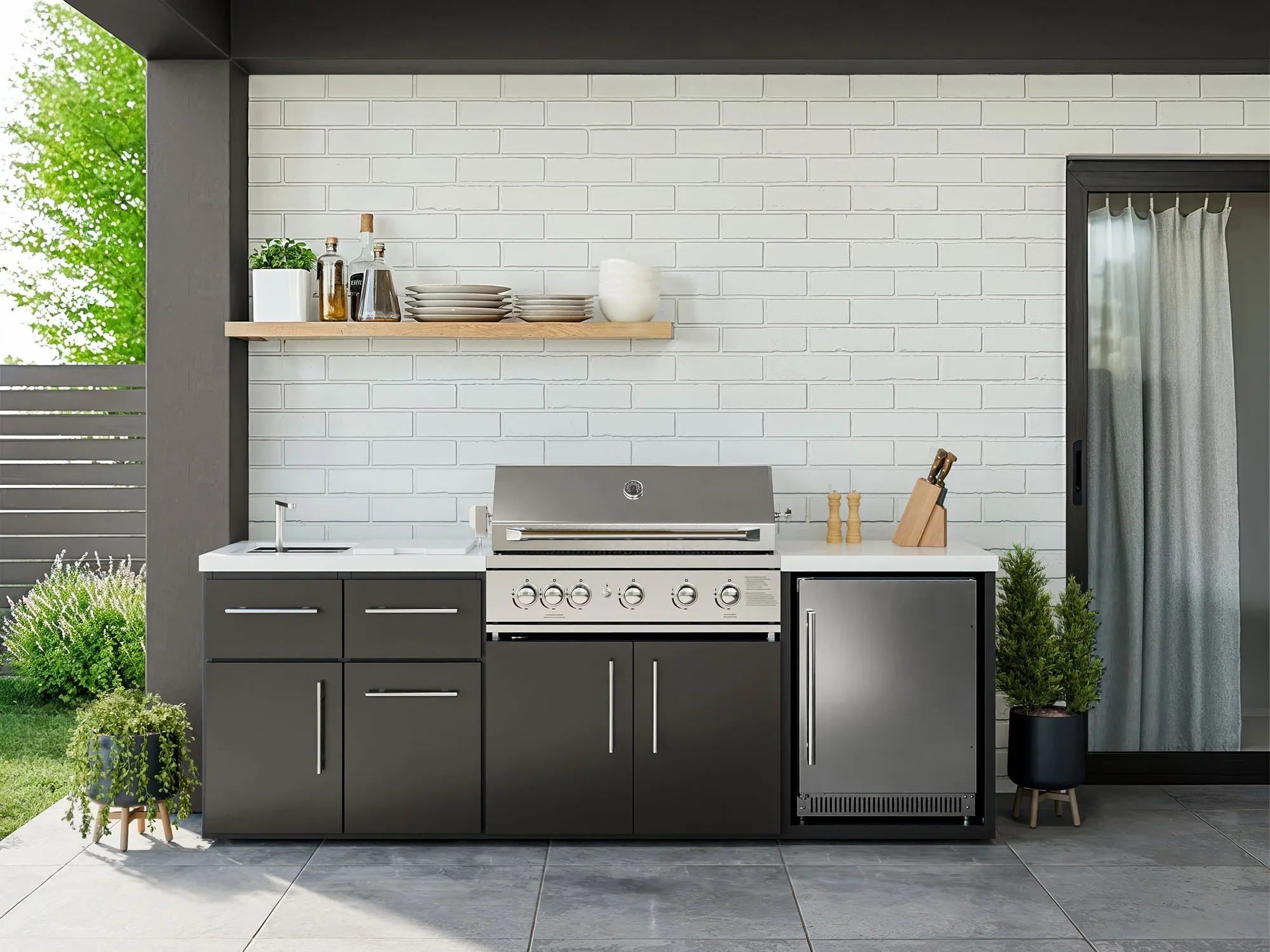
Emory | 9-Foot Outdoor Kitchen Island with Built-In Grill
-
Lancaster | L-Shape Outdoor Kitchen with Built-In Grill & Pizza Oven: The Lancaster is an L-shape outdoor kitchen with a built-in grill and pizza oven, also built from fully powder-coated galvanized steel. The L-shape adds a second counter leg for prep and serving, and the pizza oven expands your cooking options—great for dedicated outdoor chefs.
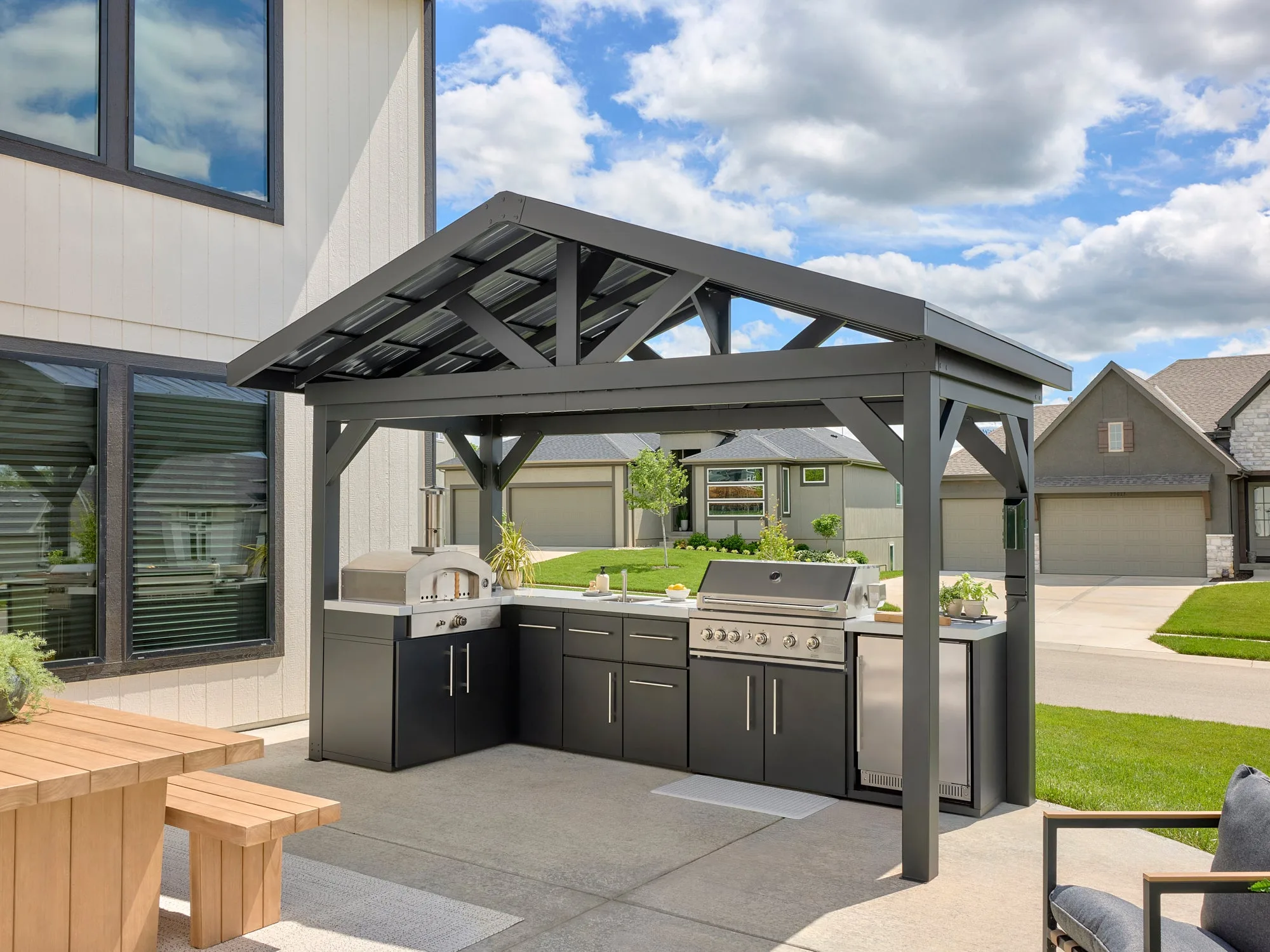
Lancaster | L-Shape Outdoor Kitchen with Built-In Grill & Pizza Oven
Which layout is right for you?
Best for
- Compact patios or balconies where a straight-line island maximizes usable space
- Hosts who want to stay face-to-face with guests while grilling
Not for
- Large outdoor kitchens where you need multiple prep zones and a dedicated cooking corner
- Serious cooks who want a pizza oven or extra counter space for elaborate meals