Quick answer
Start with your backyard dimensions and your child's age. A smaller yard suits a compact wooden playhouse with a slide and sensory panel, while larger spaces can handle a full clubhouse with climbing stairs. Cedar or pine construction offers durability without the high cost of plastic, and add-ons like slides and gear panels extend play value.
Size: Measure your yard before you shop
The biggest mistake is buying a playhouse that overwhelms the yard or leaves no room for safe play around it. Measure the available flat area and subtract at least 3 feet on all sides for clearance. A compact model like the Mimosa Wooden Outdoor Playhouse with Slide (roughly 5 x 6 feet footprint) fits most small to medium backyards, while larger jungle gyms need 10 x 12 feet or more.
Also consider ceiling height if you plan to place it under a patio or near trees. Most wooden playhouses are 4 to 6 feet tall at the peak, so a low-hanging branch or awning can block the slide or climbing area.
Material: Wood vs. plastic vs. metal
Wooden playhouses (cedar or pine) are the most popular choice for durability and a natural look that blends with landscaping. They require annual sealing or staining to prevent weathering, but they last for years and can be repainted. Plastic playhouses are lighter and never need painting, but they can fade in direct sun and feel less sturdy during active climbing. Metal playhouses are rare for toddlers because they heat up in summer and have sharper edges.
The Mimosa and other Avenlur wooden playhouses use sustainably sourced pine with smooth, splinter-free finishes. If you prefer a foldable option that can move indoors or out, the Chestnut Jungle Gym offers a hybrid wood design with multiple activities.
Add-ons: Slides, climbing stairs, and sensory panels
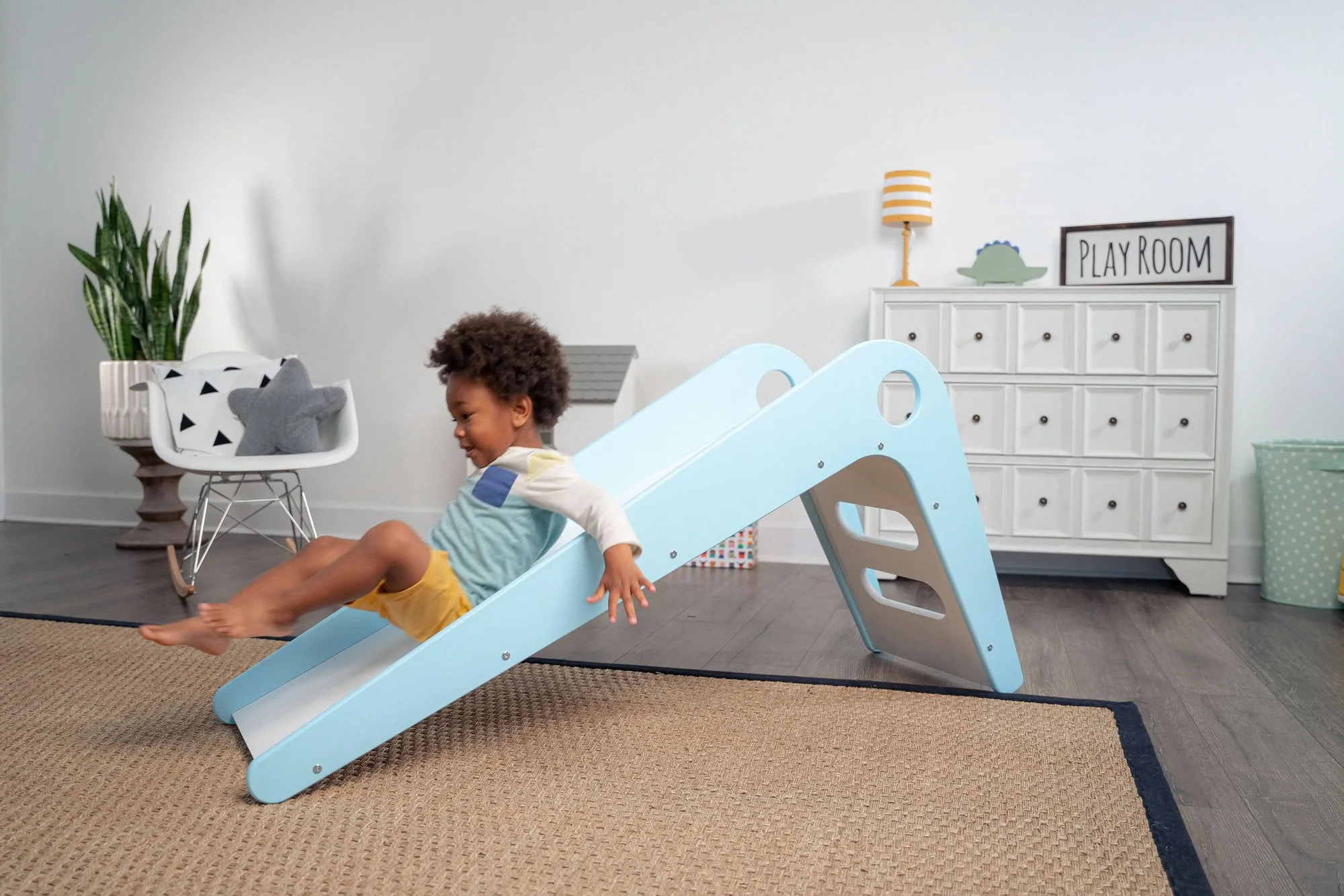
A slide is the most requested add-on, but not all slides are the same. Look for a wavy or straight slide with a gentle slope for toddlers (under 3) and a taller, faster slide for preschoolers. Climbing stairs or a rock wall add gross motor challenge, while sensory gear panels (like the one on the Mimosa) engage fine motor skills and pretend play.
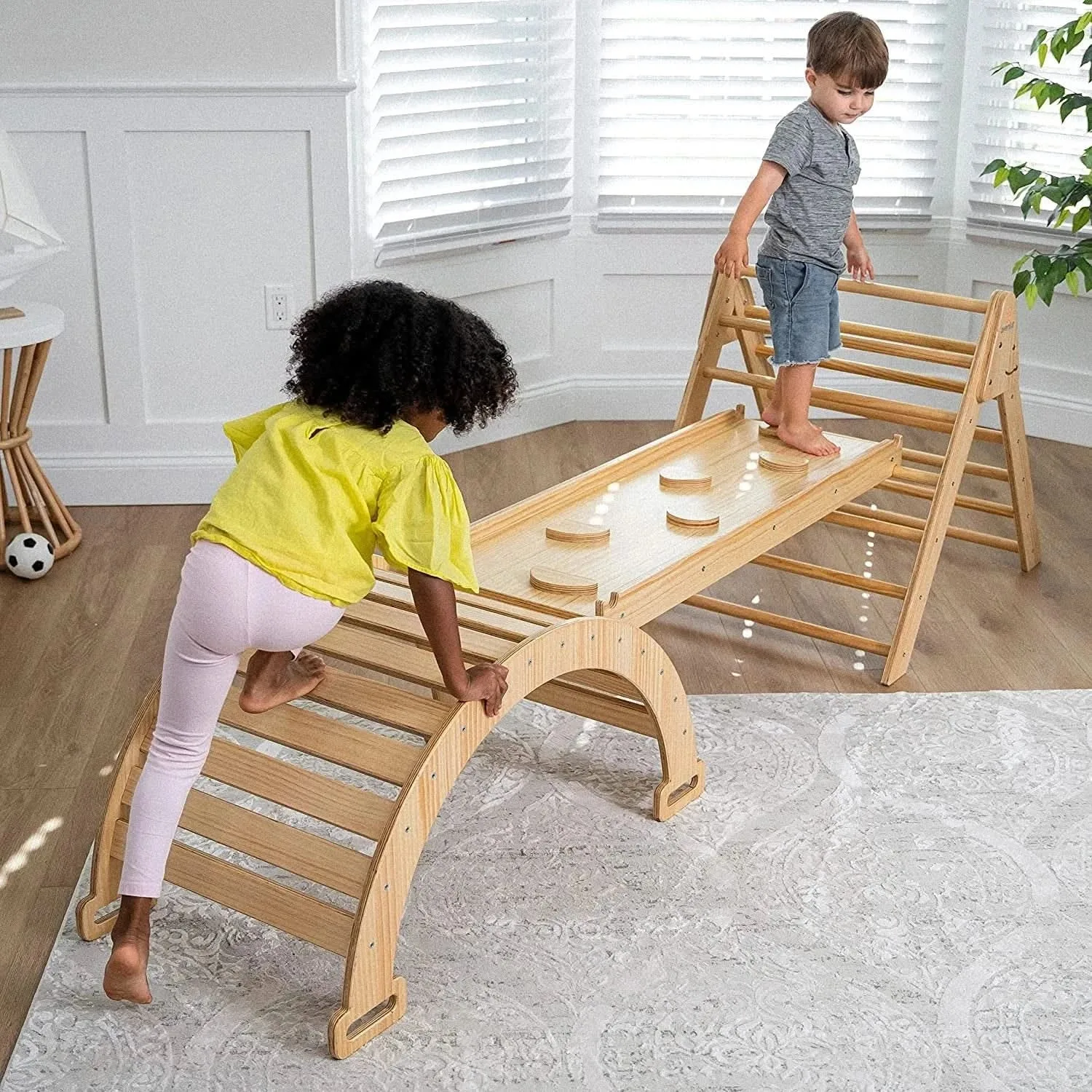
The Mimosa includes both a wavy slide and a climbing staircase plus a built-in sensory gear panel, making it a complete playset in one purchase. If you already have a playhouse, standalone add-ons like a Pikler triangle (e.g., the Olive Pikler Triangle) can be placed nearby for extra climbing variety without replacing the whole structure.
Decision rules for choosing your outdoor playhouse
- Rule 1: Size first: Measure your yard's usable flat space and subtract 3 feet of clearance on all sides. If the footprint is under 6 x 8 feet, choose a compact playhouse like the Mimosa. For larger yards, a jungle gym with multiple stations works better. Checkpoint: Your playhouse should leave at least 3 feet of open space around it for safe running and sliding.
- Rule 2: Material matches climate: Wooden playhouses need annual sealing in rainy or humid climates but last longer than plastic in direct sun. Plastic is lower maintenance but can warp in extreme heat. For most backyards, a well-sealed pine or cedar playhouse is the best balance of durability and cost. Verdict: Choose wood if you're willing to seal it once a year; choose plastic if you want zero maintenance.
- Rule 3: Add-ons should match your child's age: Toddlers (1–3 years) benefit from a low slide, climbing stairs, and sensory panels. Preschoolers (3–6 years) want a taller slide, monkey bars, or a swing. A playhouse with interchangeable add-ons (like the Chestnut jungle gym) adapts as your child grows. Next step: Pick a playhouse that includes at least one age-appropriate add-on now and allows future upgrades.
Playhouse features that matter
- Mimosa Wooden Outdoor Playhouse with Slide, Climbing Stairs & Sensory Gear Panel: Turn your backyard into a world of imagination with the Avenlur Mimosa, a beautifully crafted wooden playhouse that blends classic cottage charm with active, hands-on play. With an elevated clubhouse, a wavy slide, a climbing staircase, and a built-in sensory gear panel, the Mimosa keeps little ones busy climbing, sliding, building, and pretending for hours. This all-in-one design means you don't need to buy separate add-ons. The sensory panel adds fine motor play, and the elevated clubhouse gives older toddlers a cozy hideout.
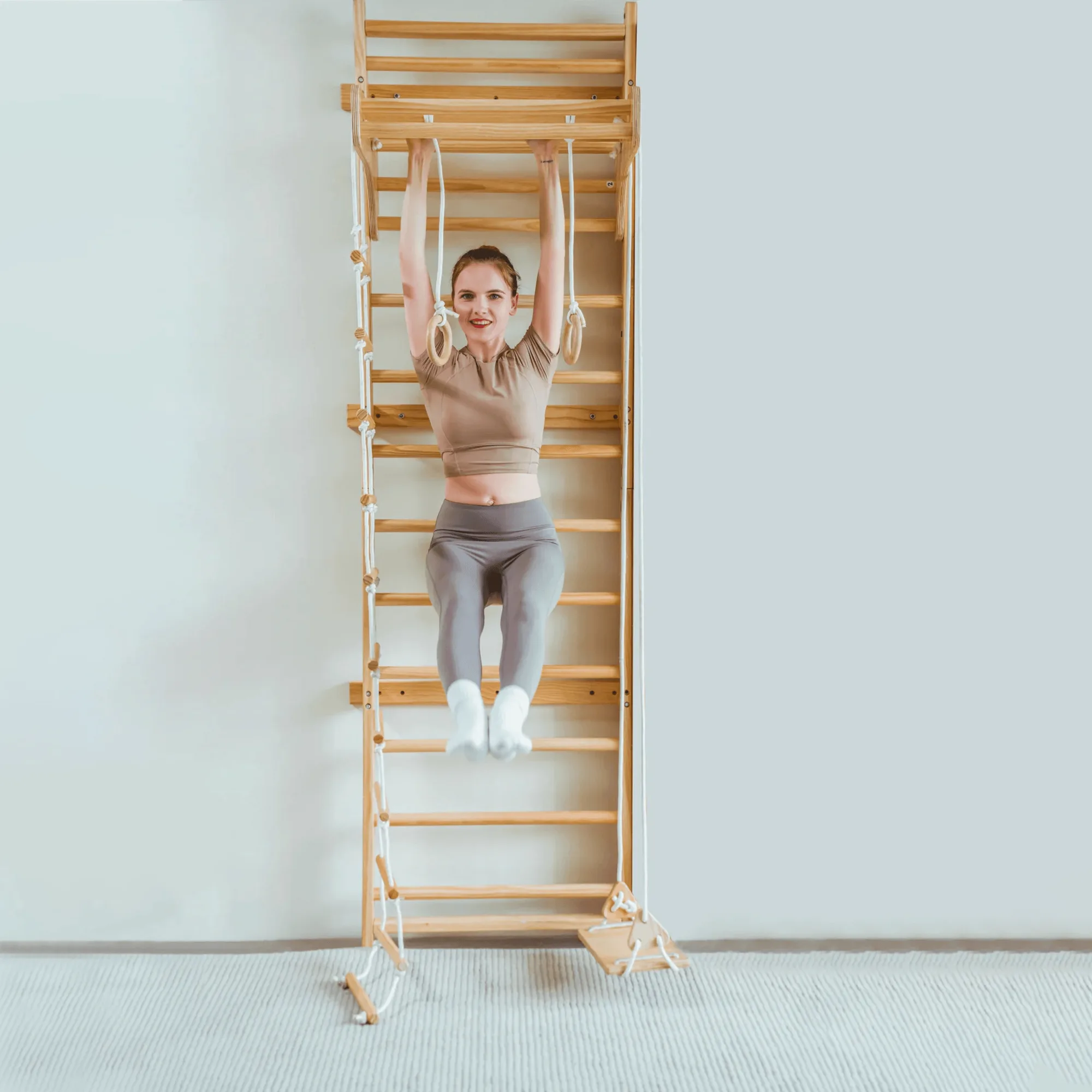
- Chestnut | Foldable Jungle Gym: Let your little adventurer explore, climb, and grow with the Chestnut 8-in-1 Jungle Gym for Toddlers—a premium wooden playset built for both indoor and outdoor fun. Designed to support your child’s motor development, confidence, and creativity, this all-in-one play center features multiple engaging activities including a climbing wall, slide, monkey bars, rope ladder, swing, and more. If your child outgrows a stationary playhouse, the Chestnut's foldable design and 8 activities (including monkey bars and a swing) offer a longer useful life and can be moved between indoor and outdoor spaces.
Which playhouse fits your family?
Best for
- Families with toddlers (1–4 years) who want a complete playhouse with slide, stairs, and sensory play in one purchase – choose the Mimosa Wooden Outdoor Playhouse.
- Families with preschoolers (3–6 years) who need more active climbing and swinging options – choose the Chestnut 8-in-1 Jungle Gym.
Not for
- Very small balconies or patios under 4 x 5 feet – consider an indoor Pikler triangle like the Olive Pikler Triangle instead.
- Parents who want zero maintenance – wooden playhouses require annual sealing.