Quick answer
If you have two or more kids, a wide or deep yard, and a budget that can stretch past a thousand dollars, buy the swing set first: it absorbs the most energy and the most children at once. If your yard is small, your kids are mostly under six, or you want a lower entry price, buy the playhouse first and add swings later. The deciding factors are yard footprint, how many kids play at once, and whether you want climbing and sliding or quiet pretend play as your starting point.
How to compare swing sets and playhouses fairly
These are not competing versions of the same toy, so compare them on the jobs they do rather than on features. A swing set is active play equipment: it needs clearance for swinging, sliding, and climbing, and it rewards you by keeping several kids busy at the same time. A playhouse is imaginative play equipment: it needs less clearance, works in a corner or against a fence, and rewards you with longer, quieter sessions for one or two children. Match the job to your household before you match the product to your Pinterest board.
One practical shortcut is to count the children who will use it on a normal Tuesday, not the number who visit at a birthday party. Then measure the flattest, most level part of your yard. If that patch is narrow or sloped, a playhouse will fit where a swing set will not.
Space and placement: where each option actually works
Swing sets need a safety perimeter around moving parts, so the footprint you buy is smaller than the footprint you must keep clear. Playhouses need far less clearance because nothing swings, but they still need a level base and a sightline from the house so you can supervise. Walk your yard at the time of day your kids usually play: a spot that is shaded at 4 p.m. in summer is worth more than a spot that is merely large.
If your only flat area is also your patio or garden bed, you are choosing between relocating that use or choosing the smaller-footprint option. Neither choice is wrong, but pretending you have room you do not have is how playsets end up unused.
Age, kid count, and how play changes over time
Toddlers and preschoolers tend to get more repeat play from a playhouse, because pretend play does not require physical skill or a playmate. Once kids are five or six and have siblings or neighborhood friends, a swing set usually wins on minutes played per dollar, because it gives several children something to do at once and adds climbing and sliding challenges as they grow.
Think in phases rather than in one purchase. Many families start with the quieter option when kids are small, then add active equipment when the kids are bigger and the budget has recovered. If you expect a second child within a couple of years, the swing set's higher capacity often makes it the better first buy.
Budget, assembly, and installation realities
The sticker price is not the whole cost. Wooden swing sets arrive as a large, heavy delivery and typically need either a full weekend of assembly or professional installation, which some listings include as an option. Playhouses and activity tables are smaller, lighter, and far more likely to be a one-person afternoon project.
Decide now who is building it and where the boxes will sit while you do. If you cannot give up a weekend, pay for installation or choose the smaller item first. Also check whether your chosen spot has a gate wide enough for the largest box, because a playset that cannot reach the backyard is a problem no instruction manual solves.
Play value beyond the big two: tables and add-ons
You do not have to choose between a full swing set and a full playhouse on day one. Smaller wooden activity pieces give younger kids a dedicated play zone indoors or on a covered patio while you save for the bigger build, and they keep their value as a rainy-day option afterward. This is the lowest-risk way to test whether your child actually gravitates toward building, pretending, or climbing before you commit a large footprint and a large budget.
If you already own one of the big two, add the other category as a complement rather than a replacement: pretend-play pieces near the clubhouse level, and active pieces where you have clearance.
Decision rules: pick your first backyard buy
- Rule 1: Two or more kids playing at once: Choose the swing set. Active equipment with swings, a slide, and climbing holds several children simultaneously, while a playhouse comfortably serves one or two. Buy the swing set first if sibling play is your daily reality.
- Rule 2: Mostly under six years old: Choose the playhouse or a pretend-play piece first. Younger children get more repeat play from imagination than from climbing equipment they cannot yet use independently. Start small and pretend; add swings when they are bigger.
- Rule 3: One small level patch of yard: Choose the playhouse. Swing sets need clearance around moving parts and a level base, so a corner or narrow strip is playhouse territory. Measure the flat, clear area before you measure the product.
- Rule 4: You cannot give up a weekend: Choose the smaller item, or pay for installation on the swing set. Large wooden sets ship heavy and need real assembly time; playhouses and activity pieces do not. Budget assembly time as a real cost, not an afterthought.
- Rule 5: You want one purchase to do both jobs: Look for a set with a clubhouse level plus active features, so pretend play and climbing live in the same structure. Hybrid sets cost more but can replace two separate buys.
Products that show the trade-off in practice
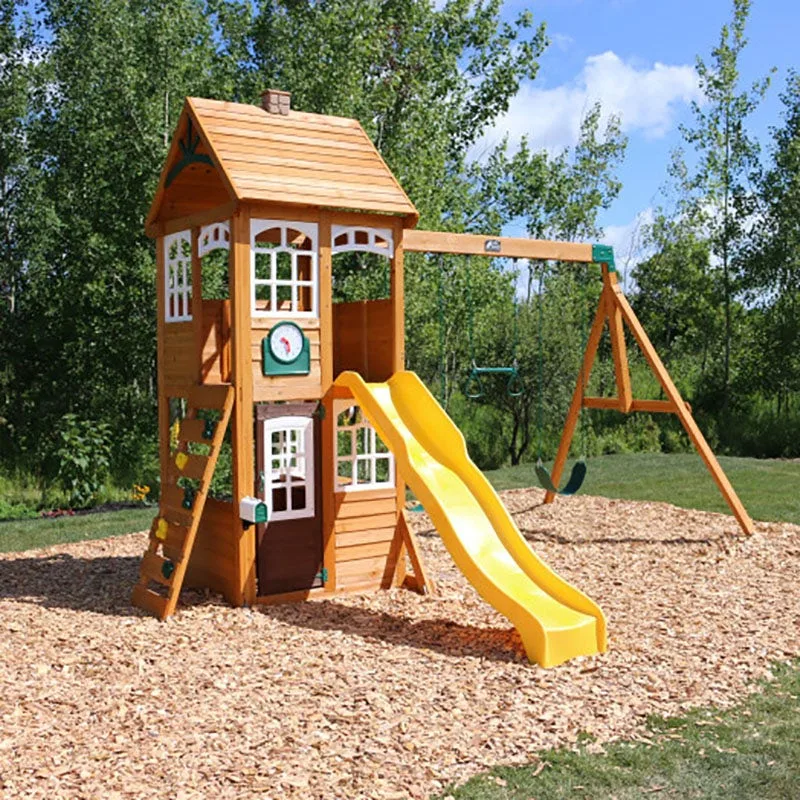
- McKinley Wooden Swing Set / Playset - Installation Available (Assembly): The McKinley Play / Swing Set by KidKraft accommodates up to nine energetic kids and packs a high-rail wave slide, a rockwall ladder to an upper clubhouse, two belt swings, and a gymnastic acro bar into a smaller-backyard footprint. This is the swing-set-first pick when you have multiple kids and a yard that is small but level, because it concentrates climbing, sliding, and swinging into one compact structure.
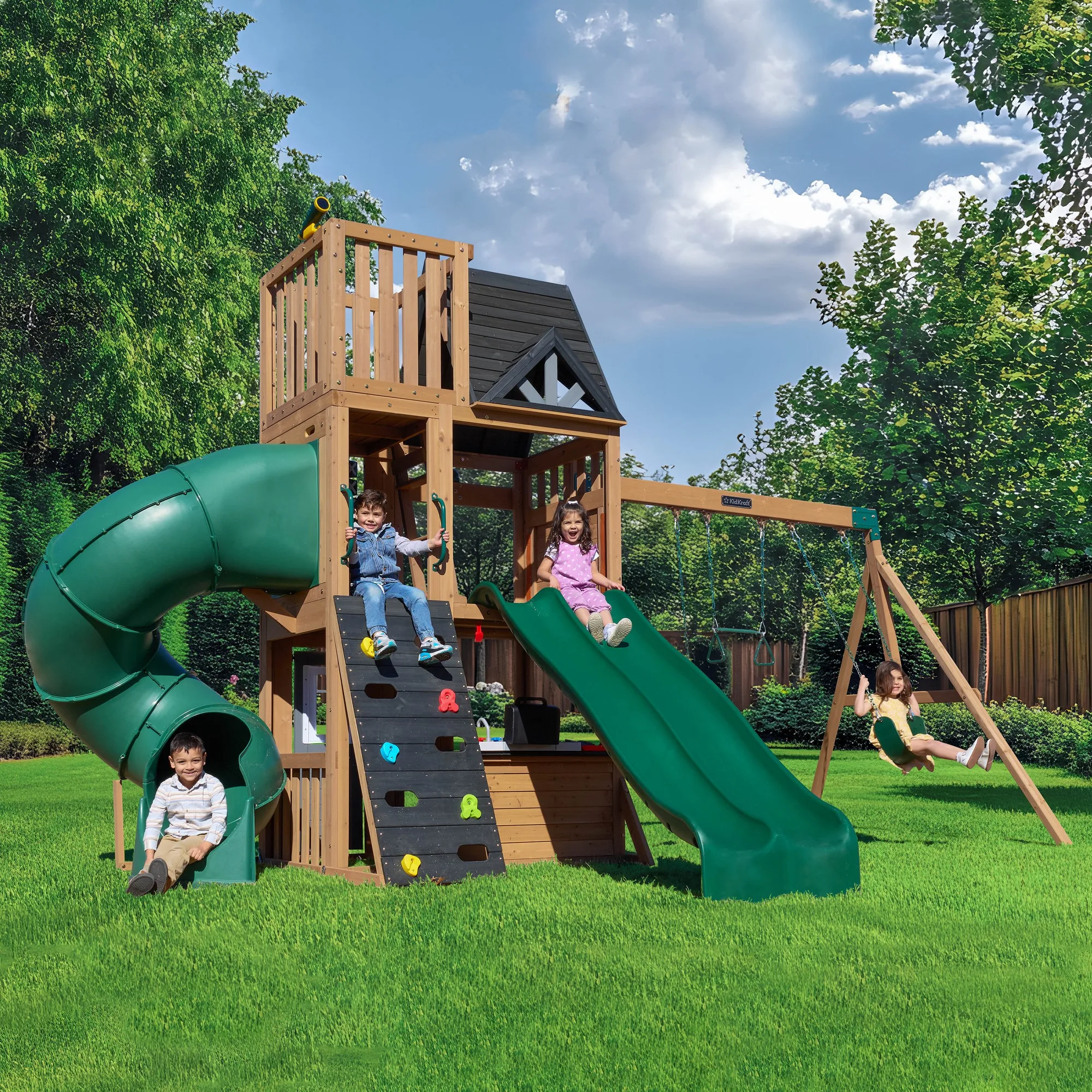
- Horizon Lookout Wooden Outdoor Swing Set - Installation Available (Assembly Included): The KidKraft Horizon Lookout Swing Set spreads play across three levels, with a ground-level clubhouse that includes a play kitchen with grill, sink, and play food accessories, a second level reached by rock wall, and a shaded area. It bridges both categories: kids get active climbing plus pretend cooking, which suits families who want one purchase to cover active and imaginative play.
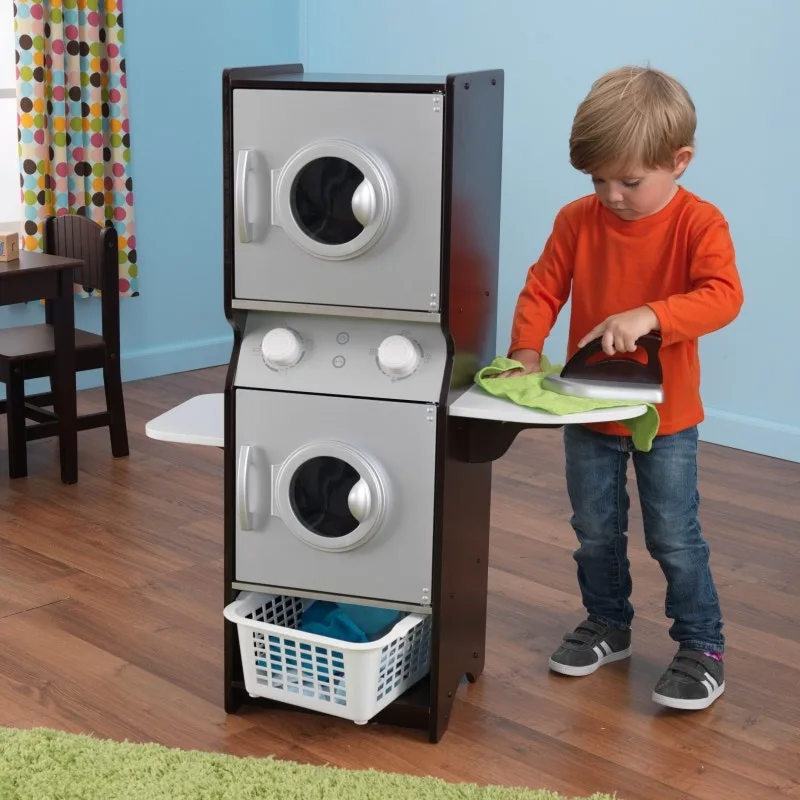
- Laundry Play Set - Espresso: The KidKraft Laundry Play Set is a kid-sized stacking washer and dryer in espresso with a play iron, laundry basket, shelving, and a side chalkboard, built to teach social and interactive life skills through realistic pretend play. A playhouse-style pretend option at a fraction of the footprint and price, ideal for younger kids or a small indoor corner while you plan the bigger backyard buy.
Who should buy which first
Buy the swing set first if you have
- two or more children who play together regularly
- a level yard with clearance around moving parts
- kids aged five and up who want climbing and sliding
- a budget that can cover the set plus assembly or installation
Buy the playhouse or pretend-play piece first if you have
- a small, sloped, or heavily shaded yard with no clear swing zone
- one child under six who mostly plays alone
- a tight budget or no weekend available for a large build
- a renter or short-term home where a permanent structure is impractical