Start with the tips you are protecting
The OWL EYE Embroidery Scissors are built around small, extremely precise tips. That precision is what makes them useful for hand embroidery, where you uproot errant threads and snip floss close to the fabric. It also means your care routine should protect those tips before you worry about anything else.
These scissors measure 3.25" (8.25 cm) from handle to tip, so they are compact enough to keep close at hand. The handles are substantial and quite hefty, which gives you a clear sense of the tool in your hand. Treat the blades and tips as the delicate working end, and the handle as the part that can take normal handling.
What the OWL EYE scissors give you to work with
-
OWL EYE Embroidery Scissors: Small, extremely precise tips for uprooting errant threads and snipping floss. The tip geometry is the reason these scissors suit hand embroidery, and it is the part most affected by careless storage or cutting the wrong materials.
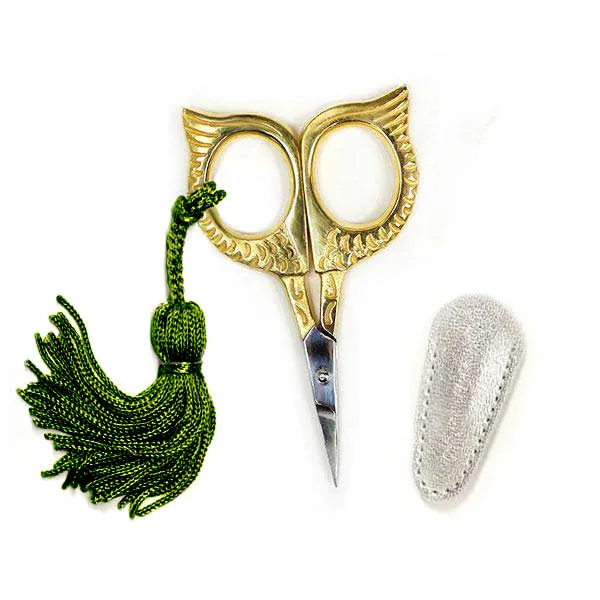
OWL EYE Embroidery Scissors
-
OWL EYE Embroidery Scissors: Half-tone gold handle with silver blades and a forest green tassel fob. Knowing which end is which helps you handle the scissors deliberately and keep the blades clean without unnecessary contact.
-
OWL EYE Embroidery Scissors: A silver sheath (non-leather / vegan) is included. The sheath gives you a dedicated place to put the scissors between tasks, which is the simplest way to protect precise tips from knocks.
A practical blade-cleaning routine
The supplied product information does not include a manufacturer cleaning procedure, so use this as general workshop practice rather than a set of official instructions. The goal is to remove lint and thread residue without dulling the edge or bending the tips.
- Wipe the blades after each session: Close the scissors and wipe the flat sides of the blades with a clean, dry cloth. This removes loose lint and floss fibers before they collect near the pivot.
- Clean around the pivot with a dry brush: Use a small dry brush or a corner of cloth to lift debris from the screw area. Avoid pushing debris toward the tips, where it can interfere with a clean cut.
- Leave the tips alone unless they need attention: The small, precise tips are the most fragile part of the tool. Wipe them gently and do not pry at the blades or use the tips to scrape residue.
- Dry completely before sheathing: If any moisture reaches the blades, dry them fully before putting the scissors back in the silver sheath. Storing them damp works against the protection the sheath provides.
Cutting habits that keep the edge working
Most blade wear comes from what you cut, not from how often you cut. Reserve the OWL EYE scissors for embroidery tasks: snipping floss and uprooting errant threads. Paper, cardboard, wire, and other craft materials can dull or damage a fine edge, and the small tips are not designed for leverage.
Keep the scissors closed when you are not using them, and put them in the silver sheath rather than leaving them loose in a project bag. The supplied information does not confirm whether the blades can be adjusted or disassembled, so do not loosen the pivot screw to clean inside the scissors. If debris will not come out with a dry brush, treat that as a sign to seek professional sharpening or service rather than forcing the mechanism.
How to decide whether sharpening is the next step
Before you consider sharpening, test the scissors on a scrap of embroidery floss. If the blades cut cleanly along their length and the tips still snip close to the fabric, the edge is doing its job. If you feel a consistent drag or the floss folds instead of cutting, the blades may need attention.
The supplied product information does not include a manufacturer sharpening procedure, so there is no official angle or method to quote here. For small, precise embroidery scissors, professional sharpening is the safer route than attempting to reshape the edge yourself. A sharpener who understands fine embroidery tools can assess the tips and the pivot without risking the geometry that makes these scissors useful. If you cannot find a suitable sharpener, contact the retailer or the maker for guidance before trying anything abrasive.
Care habits worth keeping and shortcuts to avoid
- Keep: Wipe blades after each session, store in the silver sheath, and cut only embroidery threads and floss.
- Avoid: Cutting paper or craft materials, leaving the scissors open in a project bag, and using the precise tips to scrape or pry.
- Keep: Dry the blades completely if they get damp, and keep the pivot area free of lint with a dry brush.
- Avoid: Loosening the pivot screw or attempting to sharpen the blades yourself without manufacturer guidance.