Quick answer
Compression bags win on raw volume because they squeeze air out of soft items, but packing cubes win on daily usability, wrinkle control, and keeping a suitcase organized. For most trips, cubes are the better default and compression bags are the specialist tool you add for bulky items like jackets or when you are flying carry-on only.
If your suitcase closes but feels heavier and fuller than it should, the fix is usually not a bigger bag. It is deciding whether you need a packing cube or a compression bag, because they solve two different problems. One organizes, the other shrinks.
This comparison looks at how each one behaves in a real suitcase: how much space they actually save, what they do to your clothes, and which trips make one clearly better than the other. There is no single winner, but there is a right answer for your packing style.
How a packing cube saves space
A packing cube does not remove air. It creates a fixed rectangular block out of soft, irregular clothing, which lets you stack and fill a suitcase without dead corners. That structure is why packing cubes often feel like they save more space than they technically do. You stop overpacking because the cube sets a limit.
Cubes also act as drawers. On a multi-stop trip you lift one out instead of unpacking the whole bag. The trade-off is that a cube cannot compress a puffy jacket or a thick sweater beyond what the zipper allows. If volume is your only problem, a cube alone may not be enough.
- Use one cube per category: tops, bottoms, underwear, and cables.
- Pack cubes side by side rather than stacking them deep so you can see everything.
How a compression bag saves space
Compression bags remove air. You fill the bag, seal it, and either roll it or press it to push air out through a one-way valve. Soft, bulky items like fleece, down, and knitwear can shrink dramatically, which is why travel compression bags are popular for cold-weather trips and carry-on-only flights.
The catch is that compression has a cost. Clothes come out creased, and a fully compressed bag becomes a stiff, heavy slab that can be awkward to fit around other items. Compression also does not help hard or structured items at all, so it is a targeted tool rather than a full packing system.
- Compress only soft items; hard items do not shrink and can damage the bag.
- Leave a little air in the bag so it stays flexible enough to fit around shoes.
The real space difference
For a week of mixed clothing, a set of packing cubes plus one compression bag usually beats either option alone. Cubes handle the everyday clothes and keep the bag organized, while the compression bag handles the one bulky layer that would otherwise take up a third of your space.
If you only want to buy one, ask what is filling your bag. If it is many small items and clutter, cubes solve it. If it is two or three oversized soft items, compression bags solve it. Buying the wrong one for your actual contents is the most common reason people feel neither works.
Wrinkles, weight, and wear
Compression bags flatten fabric under pressure, so woven shirts and dresses will crease. Packing cubes keep clothes closer to their natural shape and are gentler on structured garments. If you need to look presentable on arrival, cubes are the safer choice, and you can fold shirts around a cube rather than inside it.
Weight is another factor. A compressed bag concentrates the same weight into a smaller area, which can make a suitcase feel heavier on one side. Cubes distribute weight more evenly, which matters when you are carrying a bag through an airport rather than rolling it.
Trade-offs at a glance
- Space saved: Compression bags remove air and shrink soft items the most. Packing cubes save space mainly by creating a tidy, stackable block. Choose compression for bulky soft items; choose cubes for many small items.
- Wrinkles: Compression flattens fabric and causes creases. Cubes keep clothes closer to their folded shape. Pack wrinkle-prone clothing in cubes and keep compression for knits and fleece.
- Daily use: Cubes act like drawers and make repacking fast. Compression bags must be reopened and resealed, which is slower on multi-stop trips. For one hotel and daily access, cubes are easier.
- Durability and fit: A fully compressed bag becomes a stiff slab that can be hard to fit around shoes and hard items. Cubes are more flexible in shape. Compress last, after the rest of the bag is packed.
Products that work with either method
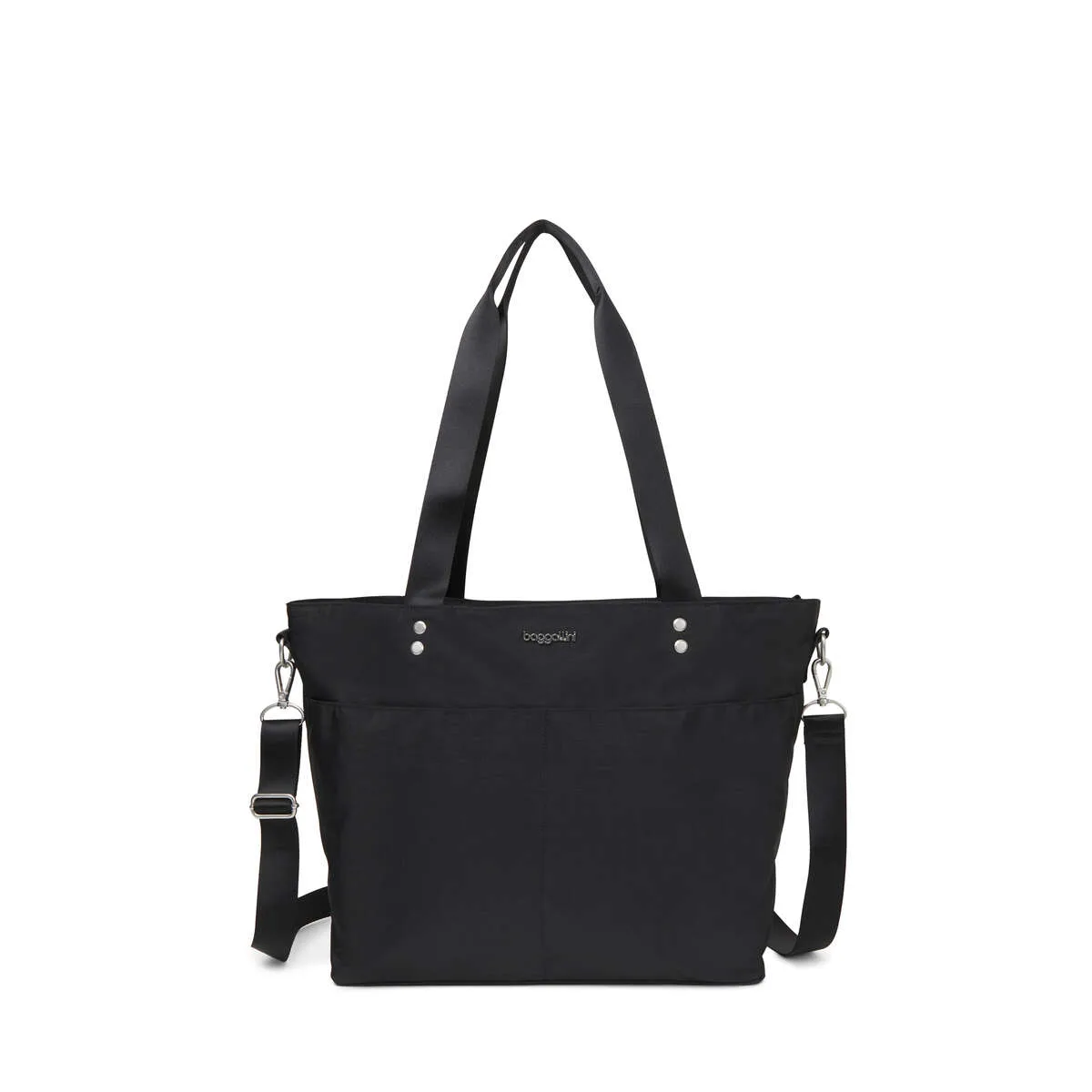
- Medium Carryall Tote Bag: Designed for work and home use with quick-access pockets and a hands-free design, with lining and zippers made from recycled materials. A tote with quick-access pockets pairs well with packing cubes because you can pull one cube out and still reach your phone or notebook without unpacking the whole bag.
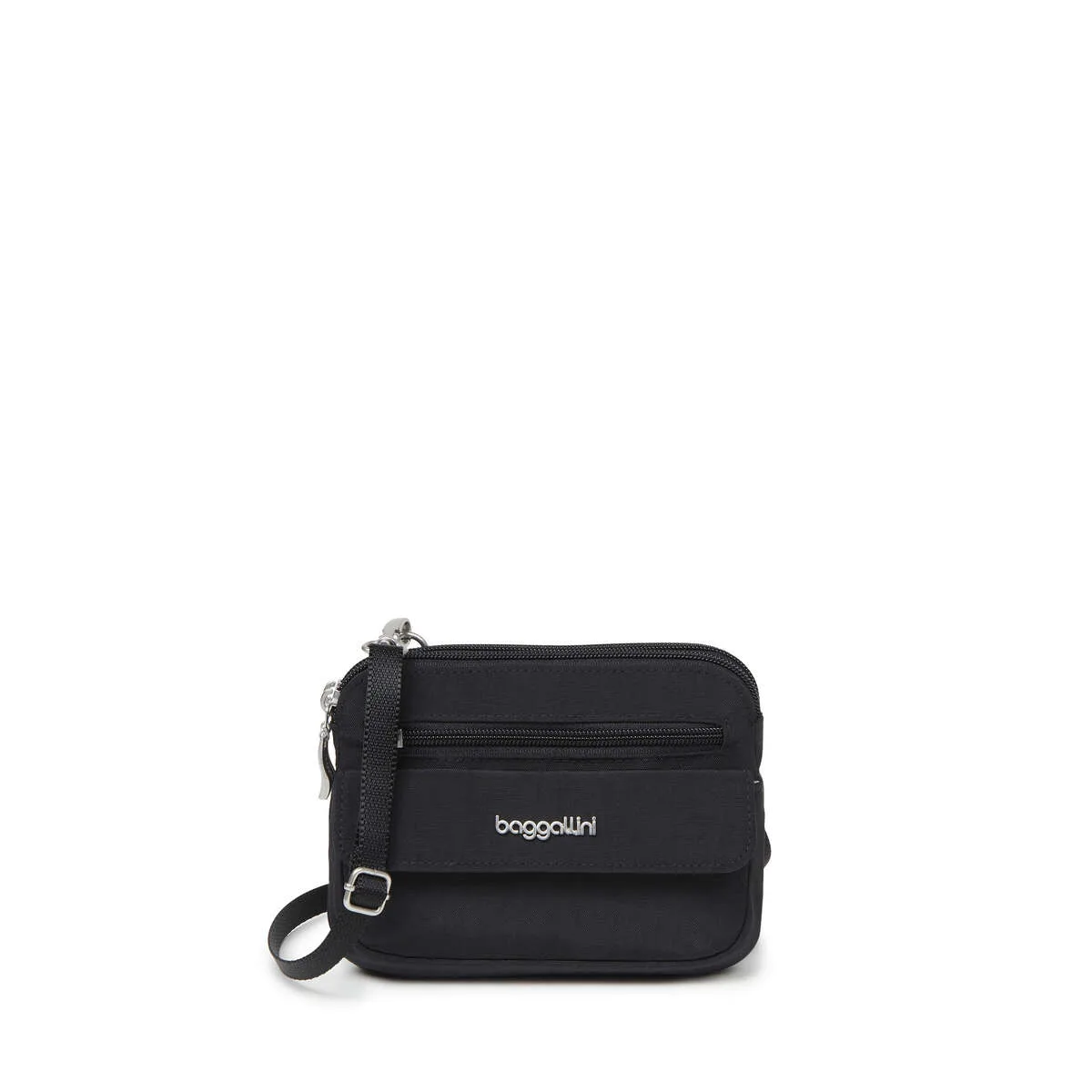
- Modern Everywhere Mini Bag: Features quick-access pockets, an adjustable crossbody strap, machine washable fabric, and zippers and lining crafted from recycled materials. A small crossbody like this is useful on trips where your main bag is packed with cubes or compression bags, because you keep essentials separate and avoid reopening your luggage at the gate.
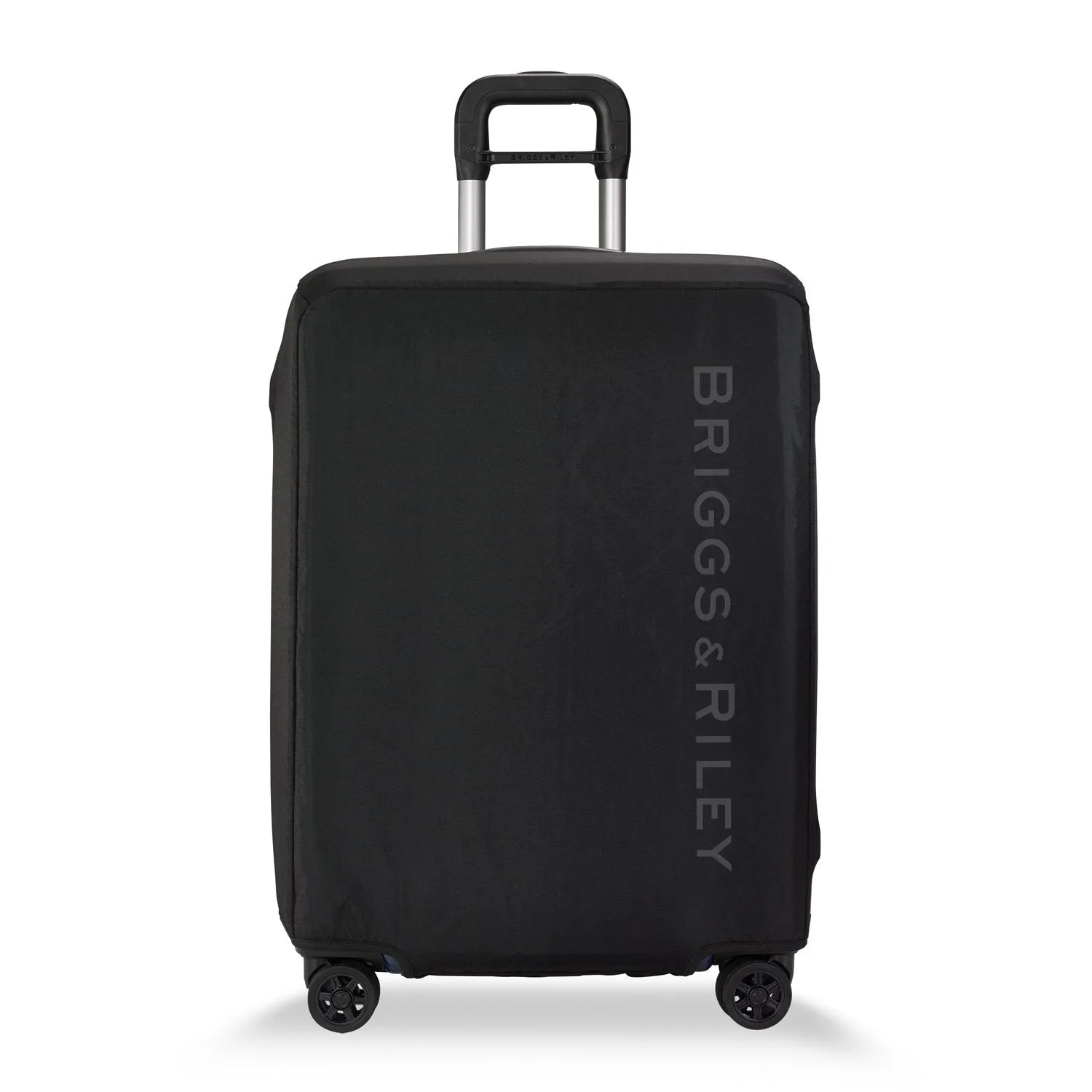
- TRAVEL ACCESSORIES Medium Luggage Cover: Made with lightweight nylon and an antimicrobial coating, with wheel and handle openings and a form-fitting design. If you pack a suitcase tight with cubes or compression bags, a fitted cover adds protection from scuffs and weather without adding meaningful bulk.
Which should you pack?
Best for
- Travelers who want a suitcase that stays organized and repacks quickly
- Trips with many small items such as shirts, underwear, and cables
- Anyone who wants to reduce wrinkles on structured clothing
Not for
- Trips dominated by bulky soft items like jackets or fleece, where compression bags save more room
- Packing hard or structured items, which do not compress and can damage compression bags
Packing cubes and compression bags are not rivals so much as different tools. Start with cubes for organization and wrinkle control, then add one compression bag for the bulky layer that would otherwise crowd your suitcase. That combination saves space without turning every trip into a packing puzzle.