Quick answer
For the finest details on model kits, choose the Painta Professional Brush size 5-0. For slightly larger details and controlled color transitions, the size 0 is a better fit.
Why brush size matters for model details
Fine detail painting on plastic models requires a brush tip that holds a sharp point and releases paint evenly. A brush that is too large will flood panel lines and recesses; one that is too small may dry out before you finish a stroke. Painta Professional Brushes use high-quality synthetic fibers designed to maintain a consistent tip shape, which is critical for clean results.
Size 5-0 vs size 0: what each does best
The Painta size 5-0 is built for extreme precision—think cockpit instruments, canopy frames, or tiny stencil markings. Its ultra-fine point lets you paint individual rivets without touching surrounding areas. The size 0 offers a slightly broader tip that still holds a sharp point, making it ideal for painting raised details, camouflage demarcations, and small panel lines where you need a bit more paint flow for even coverage.
When to use both in one project
Many modelers keep both sizes on the bench. Use the 5-0 for the most delicate work and the 0 for adjacent areas that need a smooth, controlled coat. Switching between them avoids overworking a single brush and helps maintain consistent paint consistency.
Step-by-step guide to choosing and using Painta brush sizes for fine details
- Assess the detail size: Hold the unpainted part next to the brush tip. If the detail is smaller than the brush tip width, choose size 5-0. If it is about the same size or slightly larger, size 0 will work better. A common mistake is using a brush that is too large; always compare tip to detail before dipping.
- Thin your paint properly: For both sizes, thin acrylic or enamel paint to a skim-milk consistency. Dip only the lower third of the bristles and wipe off excess on a paper towel. This prevents flooding and keeps the tip sharp. Paint that is too thick will clog the fine tip of the 5-0 and cause blobby strokes.
- Test on a scrap sprue: Paint a few lines on a leftover sprue or plastic card. If the line spreads or bleeds, your paint is too thin or your brush is overloaded. Adjust until you get a crisp, clean line. Skipping the test is the most common cause of ruined detail work.
- Use light, short strokes: For fine details, apply paint with the side of the tip rather than the point. Use short, light strokes and let each layer dry before adding another. This avoids pooling and gives you control over opacity. Pressing too hard bends the bristles and ruins the tip shape.
- Clean immediately after use: Rinse the brush in appropriate thinner (water for acrylics, mineral spirits for enamels) and reshape the tip with your fingers. Store upright or flat, never resting on the bristles. Dried paint in the ferrule will permanently spread the bristles and ruin the brush.
Product facts
-
Painta Professional Brush, Size 5-0: Painta Professional Brush 5/0 uses innovative synthetic fiber for controlled color guidance and clean results on the smallest details. This ultra-fine tip is ideal for painting cockpit dials, instrument panels, and other tiny features where even a slight wobble shows.
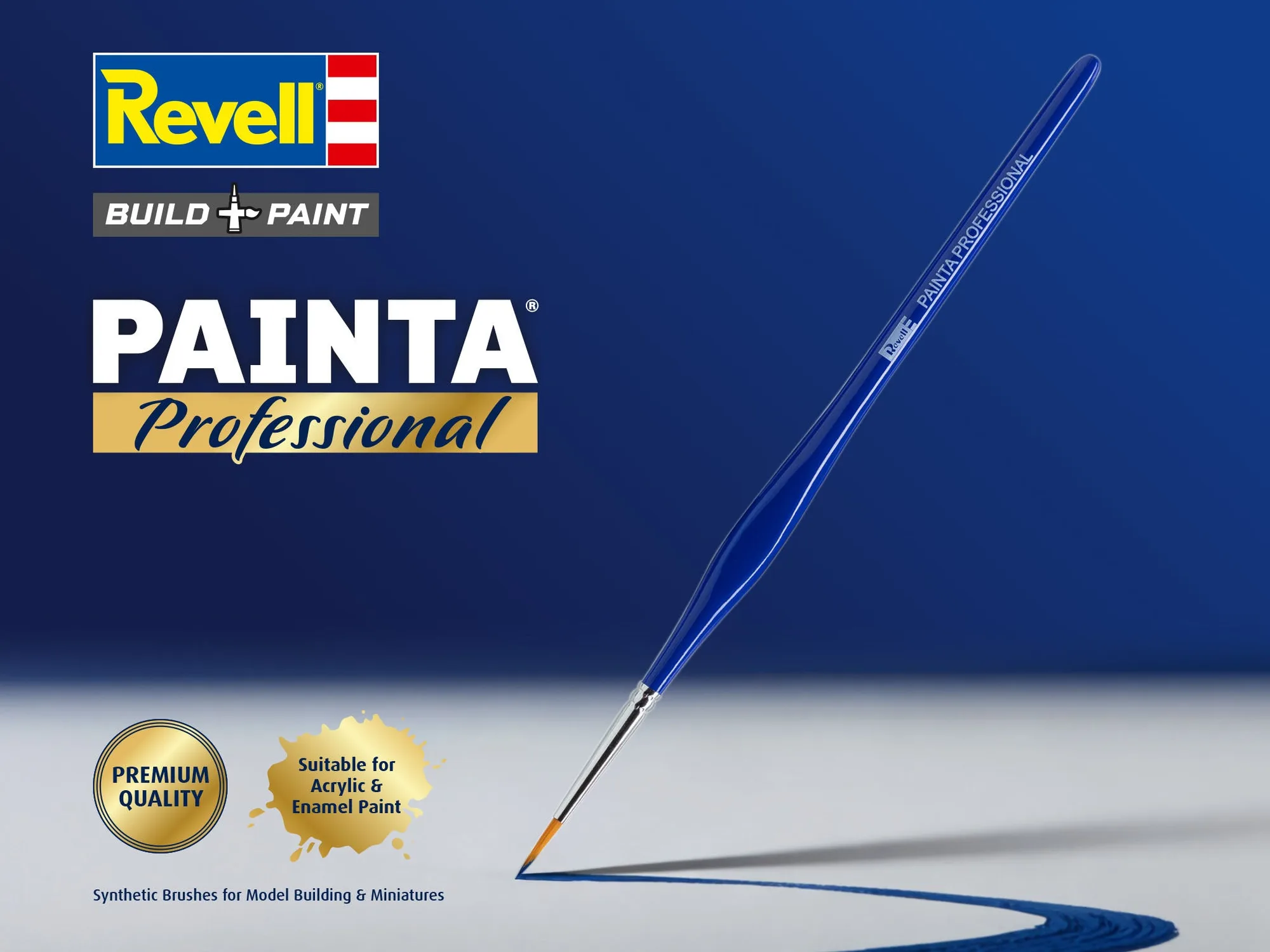
Painta Professional Brush, Size 5-0
-
Painta Professional Brush, Size 0: Painta Professional Brush size 0 has an optimized tip and high-quality synthetic fibers for exceptionally controlled color control with fine details. It provides enough paint capacity for clean color transitions on raised details and small panel lines without needing constant reloading.
Painta Professional Brush, Size 0